
Career guide
Recruiter Shortlisting Secrets: Boost Your Job Chances — Explained
Unlock recruiter shortlisting secrets! Learn what makes candidates stand out and boost your job prospects with expert tips.
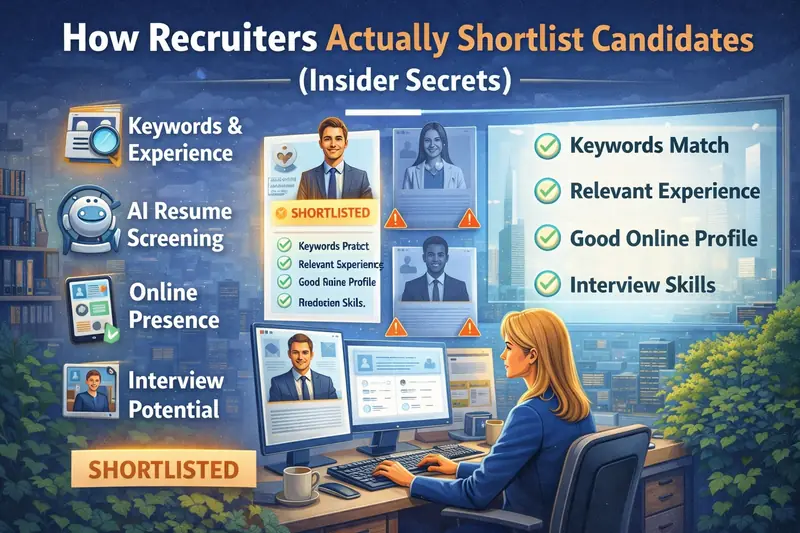
Navigating the competitive landscape of government and private sector jobs in India can feel like an uphill battle. You spend hours perfecting your application, only to face the disheartening silence of rejection. This comprehensive guide is designed to demystify the recruitment process, offering you an insider's perspective on how recruiters truly shortlist candidates and providing actionable strategies to significantly boost your chances of success.

How Recruiters Actually Shortlist Candidates (Insider Secrets)
Picture this: You find the perfect job listing on a Tuesday morning. It feels like the Job Description (JD) was written just for you. You spend two hours tweaking your resume, writing a thoughtful cover letter, and hitting "Submit" with a surge of hope.
Then... silence.
Three weeks later, you get an automated email: "Thank you for your interest, but we have decided to move forward with other candidates."
It stings, doesn't it? But here is the burning question keeping you awake at night: What did those other candidates have that you didn't?

The truth is, hiring is not a lottery, but it isn't entirely merit-based in the way you might think either. It is a process of elimination driven by specific metrics, psychology, and sometimes, sheer speed. In today's hyper-competitive job market, especially in India, understanding this process is your secret weapon.
In India, a single job posting for a Junior Developer or Marketing Associate can attract over 2,000 applications in 48 hours. Imagine the sheer volume! A human recruiter simply cannot read 2,000 resumes word-for-word. They need shortcuts. They need filters. This isn't a sign of indifference; it's a necessity born out of operational efficiency.
In this comprehensive guide, we are pulling back the curtain. We will walk you through exactly what happens after you click apply, from the ruthless algorithms of the Applicant Tracking System (ATS) to the "6-second scan" by human eyes. By the end of this article, you'll not only understand the system but also learn how to strategically navigate it to significantly increase your chances of getting shortlisted.
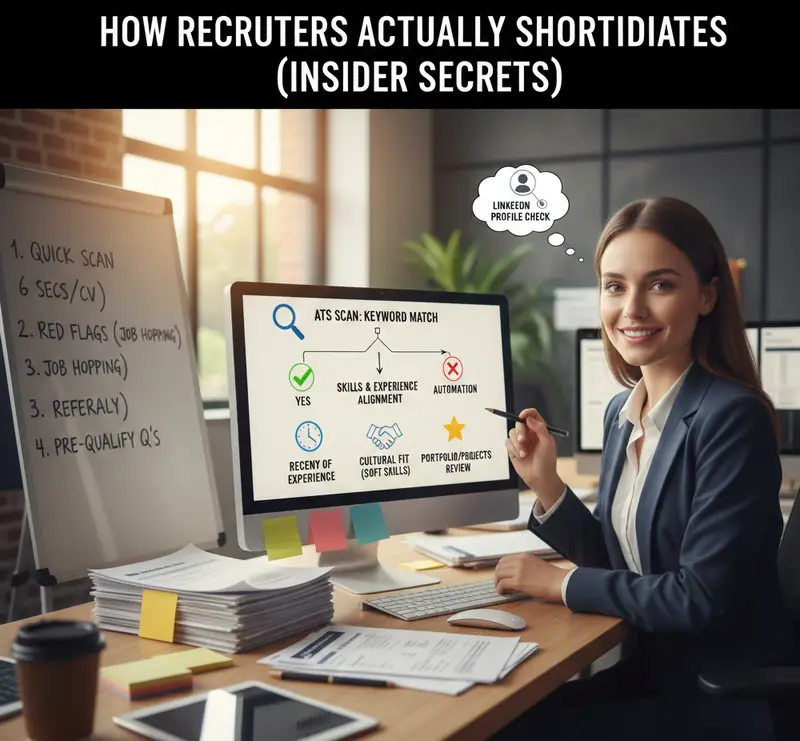
Section 1: The First Gatekeeper, The Applicant Tracking System (ATS)
Before a human being ever sees your name, a robot has likely already judged you. This might sound dystopian, but it's the reality of modern recruitment. In 2026, almost 98% of Fortune 500 companies and a rapidly growing number of Indian startups and SMEs use an ATS. It's the first, and often the most formidable, hurdle your application faces.
What is the ATS?
Think of the ATS as a digital gatekeeper, a sophisticated database, and a powerful sorting machine all rolled into one. It is software used by HR departments and recruitment agencies to collect, store, manage, and ultimately, rank resumes. When you apply online, your resume doesn't go directly to a recruiter's inbox; it's uploaded into this database, where it's processed and analyzed.
Beyond just collecting, the ATS standardizes the information from diverse resume formats into a uniform, searchable profile. This allows recruiters to quickly search for specific skills, experiences, and qualifications across thousands of applications, making their job manageable. It acts as a central repository, streamlining the entire hiring workflow from initial application to onboarding. For large organizations, especially those dealing with thousands of applications for Sarkari Naukri, an ATS is indispensable for maintaining efficiency and compliance.
How the ATS "Reads" You
The ATS doesn't "read" your resume in the human sense. Instead, it parses your document, stripping away your fancy formatting, graphics, and sometimes even columns, to extract raw text. It then analyzes this text, identifying keywords, job titles, company names, dates, and educational qualifications. The primary function here is to compare this extracted text against the keywords and criteria defined in the Job Description (JD) and the recruiter's search parameters.
Modern ATS systems use increasingly sophisticated algorithms, including natural language processing (NLP), to understand context and synonyms. However, many still rely heavily on exact or near-exact keyword matches. This means that while some advanced systems might infer "project management" from "managed projects," many older or simpler systems will not, leading to a missed match.
The Reality Check: Keyword Matching
This is where many qualified candidates stumble. If the Job Description asks for "Project Management" and your resume says "Managed Projects," older or less sophisticated ATS models might miss the connection entirely. Similarly, if the JD requires "Python" and you've only mentioned "coding in scripting languages" or "experience with data analysis tools," you might get a 0% match score for that specific skill.
Consider other common variations: "Customer Relationship Management" vs. "CRM," "Human Resources" vs. "HR," or "Digital Marketing" vs. "Online Marketing." While a human would understand these are often interchangeable, an ATS might not. The closer your language is to the JD's language, the higher your match score will be. It's not about tricking the system, but rather speaking its language. This is particularly crucial for roles where specific technical skills or certifications are mandatory, as the ATS will be programmed to look for precise terms.
Why Good Candidates Get Rejected by ATS
- Fancy Formatting: While visually appealing to humans, complex layouts with multiple columns, text boxes, graphics, icons, or non-standard fonts can confuse the ATS parser. It might misinterpret sections, reading your contact info as part of your skills section, or entirely skip crucial experience details. Stick to clean, simple, and standard resume templates. For instance, a two-column resume might look modern but can often be parsed incorrectly, leading to critical information being missed or jumbled.
- Wrong File Type: Always use PDF (unless Word is specifically requested). However, ensure it is a text-based PDF, not an image-based one. If you scan a physical resume or save an image as a PDF, the ATS won't be able to extract text from it. To check, try copying and pasting text from your PDF into a plain text editor. If it copies cleanly, you're good. If it's garbled or doesn't copy, it's likely an image-based PDF. Some ATS systems also struggle with PDFs created in certain design software, so a simple "Save As PDF" from a word processor is usually the safest bet.
- Keyword Stuffing vs. Natural Language: The old trick of hiding keywords in white text or listing them repetitively is outdated and detrimental. Modern ATS systems can detect this as spam and might even flag your application, leading to an immediate rejection or blacklisting. You need to use keywords contextually, naturally integrating them into your experience descriptions and skills sections. The goal is to demonstrate your proficiency, not just list words.
- Missing Key Sections: An ATS expects certain sections (e.g., Experience, Education, Skills). If your resume deviates too much from standard headings, the ATS might struggle to categorize your information correctly. Using standard headings like "Work Experience," "Education," "Skills," "Projects," and "Certifications" ensures the ATS can correctly identify and extract relevant data.
- Acronyms and Abbreviations: Be mindful of how you use acronyms. While "SEO" is widely understood, it's often safer to use "Search Engine Optimization (SEO)" at least once, especially for less common terms. The ATS might be programmed to look for the full phrase or the acronym, but not necessarily both interchangeably.
- Irrelevant Information: Including hobbies or personal details that are not relevant to the job can sometimes dilute the keyword density or distract the ATS from parsing essential information. Keep your resume focused and professional.
The Fix: Optimizing for ATS
The solution is straightforward: tailor your resume for each application. Use tools like Jobscan, Resume Worded, or even simply "Control+F" (or "Command+F" on Mac) on the Job Description. Identify the top 5-10 hard skills, software proficiencies, and key responsibilities repeated most often in the JD. Ensure those exact words (and relevant synonyms) appear in your resume's "Skills" section, "Experience" bullet points, and "Summary/Objective" statement.
Focus on incorporating keywords into your achievement-oriented bullet points. For example, instead of just listing "Managed projects," try "Managed end-to-end software development projects using Agile methodologies, resulting in a 15% reduction in delivery time." This demonstrates both the skill and its impact. This approach not only satisfies the ATS but also provides a human recruiter with concrete evidence of your capabilities.
Create a dedicated "Skills" section that lists your technical skills, software proficiencies, and relevant certifications. This section is a prime target for ATS keyword matching. Break it down into sub-categories like "Programming Languages," "Tools & Technologies," "Operating Systems," and "Certifications" for better readability and ATS parsing. For example:
- Programming Languages: Python, Java, C++, JavaScript
- Tools & Technologies: AWS, Docker, Kubernetes, Git, Jira, Salesforce
- Databases: MySQL, PostgreSQL, MongoDB
- Operating Systems: Linux, Windows, macOS
- Certifications: AWS Certified Solutions Architect, PMP
Remember, the goal is to make it as easy as possible for the ATS to identify you as a match. Think of it as a search engine; you want your resume to rank high for the relevant search queries.
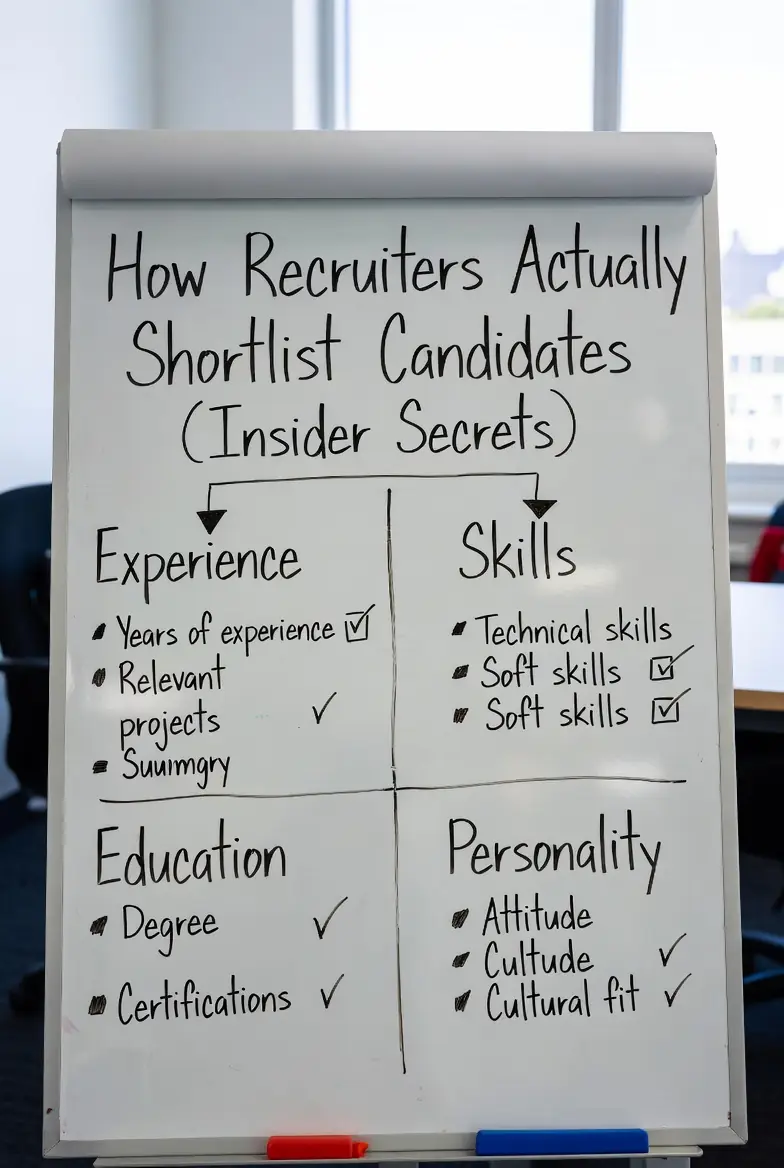
Section 2: The Human Element, The 6-Second Scan
Congratulations! You beat the bot. Your resume has passed the initial ATS screening and is now on a recruiter's screen. But don't get too comfortable. The next hurdle is the human eye, and it's notoriously quick. According to numerous eye-tracking studies, recruiters spend an average of just 6 to 7 seconds on a resume before deciding to "Keep" or "Reject." This rapid assessment means your resume must be incredibly clear, concise, and strategically organized.
What Are They Looking For in 6 Seconds?
Recruiters are not reading your career objective or detailed descriptions in this initial scan. They are scanning for specific "anchors" in a Z-shaped or F-shaped pattern, quickly looking for critical information that tells them if you're a potential fit. Their eyes typically dart across the top, down the left side, and then across again. Here's what they prioritize:
- Current Title & Company: This is often the first thing they see. Are you doing a similar job right now? Is the company name recognizable or in a relevant industry? This provides immediate context about your experience level and industry exposure. For instance, working at a competitor or a well-known company in the same sector immediately signals relevance.
- Dates of Employment: Recruiters quickly check for tenure. Do you have significant gaps? Have you job-hopped every 3 months? Consistent employment or logical career progression is a positive signal. They are looking for stability and growth within roles.
- Education: For senior roles, it's less critical unless specific advanced degrees are required. For freshers or entry-level positions, the degree, institution, and sometimes GPA/CGPA are critical. Is the degree relevant to the job? For many government jobs, specific educational qualifications are non-negotiable, and recruiters will quickly verify these.
- Location: Do you live in the city where the job is based? Are you willing to relocate? This is a practical consideration to avoid unnecessary interview processes. If the job is in Bangalore and your address is in Delhi, a recruiter will immediately look for a "willing to relocate" note.
- Key Achievements/Metrics: While not a deep read, recruiters' eyes are trained to spot numbers, percentages, and bolded achievements. Quantifiable results immediately signal impact and value. They want to see what you accomplished, not just what you did.
- Contact Information: Believe it or not, sometimes candidates make it difficult to find their phone number or email address. Ensure your contact details are prominently displayed at the top of your resume.
If these anchors are missing, hard to find, or raise immediate red flags, your resume is likely to be discarded within those crucial seconds. The recruiter is looking for reasons to keep you, but if they can't quickly find the essential information, they'll move on.
Making Your Resume Skimmable: Design for the Human Eye
To pass the 6-second scan, your resume needs to be a masterclass in visual communication. Here's how to make it highly skimmable:
- Clear Headings: Use bold, consistent headings (e.g., "Experience," "Education," "Skills") that stand out. These act as signposts, guiding the recruiter's eye to the information they are seeking.
- Strategic Bolding: Bold job titles, company names, and key achievements/metrics to draw the eye to the most important information. This creates a visual hierarchy, emphasizing what you want the recruiter to see first.
- Bullet Points: Ditch long paragraphs. Use concise, action-oriented bullet points (max 2 lines per bullet) to describe responsibilities and achievements. Bullet points are easier to scan and digest quickly than dense blocks of text.
- White Space: Don't cram too much information. Ample white space makes the document less intimidating and easier to navigate. A cluttered resume is overwhelming and often leads to quick rejection. Aim for margins of at least 0.5 to 1 inch on all sides.
- Consistent Formatting: Use one or two professional fonts consistently. Ensure margins, spacing, and font sizes are uniform throughout. Inconsistencies signal a lack of attention to detail. Choose professional, easy-to-read fonts like Arial, Calibri, or Georgia.
- Reverse Chronological Order: Always list your experience and education from most recent to oldest. This is the standard and what recruiters expect. Deviating from this can confuse the reader.
- One-Page vs. Two-Page: For entry-level to mid-career professionals (up to 10 years of experience), a one-page resume is generally preferred. For more experienced professionals, a well-structured two-page resume is acceptable, but ensure the most critical information is on the first page. Never go beyond two pages unless you are in academia or a highly specialized field requiring extensive publications.
- Professional Email and Voicemail: Ensure your email address is professional (e.g., firstname.lastname@email.com) and your voicemail message is clear and professional. These small details contribute to a positive first impression.
Section 3: The "Three Piles" Method
Once the 6-second scan is done, recruiters mentally (or sometimes physically, in the old days) sort resumes into three distinct piles. This categorization determines your immediate fate in the hiring process.
Pile 1: The "Maybe" (The Backup Plan)
These candidates possess 60-70% of the required skills and experience. They might be missing a specific certification, have slightly less experience than requested, or their resume might not be perfectly optimized. They are not an immediate "yes," but they're not an outright "no" either. They only get called if Pile 2 is empty or if the primary candidates don't work out. This pile represents potential, but not immediate fit. If you land here, you might get a call later, but it's not guaranteed. Recruiters might revisit this pile if their initial outreach to "Yes" candidates doesn't yield enough suitable interviewees.
Pile 2: The "Yes" (The Shortlist)
These are the golden resumes. They hit all the keywords, present clear and concise formatting, demonstrate highly relevant experience, and show good tenure. These candidates often have a strong track record of achievements that align perfectly with the job's requirements. They get a screening call immediately, often within hours or a day of their application being reviewed. This is the pile you want to be in. These candidates are perceived as low-risk, high-potential hires who can quickly contribute to the team. Their resumes often clearly articulate their value proposition and directly address the job description's requirements.
Pile 3: The "No" (The Trash)
This pile is for resumes that fail to meet basic requirements or contain significant red flags. This includes unprofessional email addresses (e.g., 'coolguy@email.com'), glaring spelling or grammatical errors, irrelevant experience for the role, or a complete lack of required skills. Resumes that are poorly formatted, difficult to read, or excessively long also often land here. These applications are typically rejected without further consideration. This pile also includes candidates who are clearly overqualified or underqualified, or those who have not followed basic application instructions. For instance, if a job explicitly asks for a specific qualification and it's missing, the resume goes straight to this pile.
Insider Secret: Speed Matters
Recruiters often operate under immense pressure to fill roles quickly. They don't wait to review every single application before starting the interview process. Instead, they often start calling candidates from the "Yes" pile the moment they find 5-10 good candidates who meet the core requirements. Even if candidate #100, who applies a week later, is objectively "better," if they fill all the interview slots with the first 5-10 strong applicants, candidate #100 might never get seen. This highlights a critical truth: speed matters. Apply early. Set up job alerts and apply within the first 24-48 hours of a job posting going live. Many companies use a "first-come, first-served" approach for initial screening, especially for high-volume roles. Being among the first applicants means your resume gets reviewed when the recruiter is fresh and hasn't yet been overwhelmed by hundreds of other applications. This is particularly true for popular Sarkari Naukri postings which can receive thousands of applications within hours.
Section 4: The Hidden Criteria, What Is Not in the JD
This is the part that frustrates job seekers the most. Beyond the explicit requirements in the Job Description, there are unspoken, underlying criteria that recruiters use to filter candidates. These are often driven by company culture, market realities, and past hiring experiences.
1. The "Stability" Factor
Indian employers, like many globally, are deeply concerned about attrition. High employee turnover is costly (recruitment, training, lost productivity) and disruptive. If your resume shows you leave every job after 8-12 months, you are immediately flagged as a "flight risk." Recruiters will question your commitment and the return on investment for hiring you.
How to overcome this: If you have short stints, proactively explain them on your resume using brief, parenthetical notes. For example: "(Contract Role - Project Completed)," "(Startup Acquired - Role Eliminated)," "(Company Downsized due to Market Conditions)," or "(Career Transition - Gained New Skills)." Be honest and concise. If you have a pattern of short stays, be prepared to discuss the reasons maturely during a screening call, focusing on growth, learning, or external factors rather than dissatisfaction. Avoid blaming previous employers; instead, frame it as a positive career move or an unavoidable external circumstance. For instance, if you worked for a startup that failed, highlight the skills you gained and the challenges you overcame, rather than just stating the company closed.
2. The "Brand" Bias
Recruiters often have a bias toward recognized names. If you worked at a large, reputable Indian conglomerate (like Tata, Reliance), a top-tier IT service company (TCS, Infosys, Wipro), or a well-funded, successful startup (Zomato, Swiggy, Byju's), you often get extra points. This isn't necessarily fair, but it's a reality. These brands are perceived to offer structured training, rigorous processes, and a certain level of employee quality.
How to overcome this: If you worked at a small, unknown firm, don't just list the company name. Describe it using numbers and context. Instead of "Marketing Manager at ABC Corp," write "Marketing Manager at ABC Corp (Mid-sized Fintech serving 50k+ customers, achieved 20% user growth)." Quantify the impact and scale of your previous employer to demonstrate your experience is relevant and impactful, regardless of brand recognition. You can also highlight any notable clients your previous company served, or specific projects you worked on that gained industry recognition. The goal is to translate the unknown into something recognizable and impressive.
3. The "Gap" Stigma
A gap of 6 months or more in your employment history often raises eyebrows. Recruiters might assume a lack of productivity, skill decay, or difficulty finding employment. Unexplained gaps are a major red flag.
How to overcome this: Never leave a gap unexplained. Be transparent and positive. Label it clearly on your resume: "Sabbatical for Upskilling (Completed Advanced Data Science Certification)," "Freelance Consulting (Managed 3 client projects in digital marketing)," "Family Care Break (Returned to work after 1 year)," "Competitive Exam Preparation (Cleared UPSC Prelims)," or "Entrepreneurial Venture (Launched e-commerce platform)." Frame it as a period of growth, learning, or necessary personal commitment. This demonstrates accountability and continuous development. If you took time off for personal reasons, you can simply state "Personal Leave" or "Family Responsibilities" and then pivot to what you learned or how you stayed engaged professionally during that time. The key is to show that you were not idle and are ready to re-engage fully.
4. Cultural Fit & Soft Skills (Implied)
While not explicitly listed in the JD, recruiters are always looking for signals of cultural fit and essential soft skills like teamwork, leadership, problem-solving, and communication. Your resume can subtly convey these through:
- Volunteer Work: Shows community involvement and initiative, demonstrating empathy and a willingness to contribute beyond your job description.
- Leadership Roles: Even in college clubs or project teams, indicates leadership potential and the ability to guide others.
- Project Collaboration: Describing how you worked with cross-functional teams highlights your ability to collaborate and communicate effectively in a diverse environment.
- Impact-Oriented Language: Using action verbs that highlight problem-solving and results, such as "resolved," "implemented," "optimized," or "streamlined," conveys a proactive and results-driven mindset.
- Awards and Recognition: Any accolades, whether academic or professional, can signal excellence, dedication, and a strong work ethic.
- Interests (if relevant): While generally advised against for ATS, if your interests genuinely align with the company culture (e.g., "avid reader" for a publishing house, "trekking enthusiast" for an outdoor gear company), they can subtly enhance your profile. Use discretion.
These elements, while not directly scannable, contribute to a holistic impression of your candidacy. They help paint a picture of you as a well-rounded individual who can thrive within a team and contribute positively to the company's environment.
5. Industry-Specific Nuances
Different industries have different unspoken expectations. For instance, in the finance sector, attention to detail and compliance are paramount. In a creative agency, innovation and adaptability are highly valued. Research the industry and the specific company's values to subtly weave these themes into your resume and cover letter. For example, if applying to a startup, showcasing your ability to wear multiple hats and adapt quickly would be beneficial. For a government role, highlighting adherence to protocols and public service orientation would be key.
Section 5: The Screening Call, The First Human Interaction
Shortlisting doesn't end with the resume. If your resume makes it through the ATS and the human 6-second scan, the next stage is typically a screening call. This is often an unscheduled phone call from an HR executive or recruiter and is actually the final stage of shortlisting before the hiring manager sees you. It's a quick, typically 15-30 minute conversation designed to validate your resume and assess basic fit.
The HR executive calls you to check three critical things:
- Communication Skills: Can you articulate your thoughts clearly, concisely, and confidently? Do you listen actively? Recruiters are assessing your ability to convey information effectively, which is crucial for almost any role. They'll note your tone, clarity, and professionalism. This is also where they gauge your enthusiasm and general demeanor. A positive and professional attitude can make a significant difference.
- Salary Expectations: Are you within their budget? This is a crucial filter. If your expectations are significantly higher than what they've allocated for the role, they might not proceed. Be prepared to state a realistic range based on market research, or indicate that you're open to discussion based on the complete compensation package. It's often best to provide a range rather than a single number, and to express flexibility. Research average salaries for similar roles in your city and industry using platforms like Glassdoor, LinkedIn, or Naukri.com.
- Notice Period: Can you join when they need you? This is a major logistical consideration, especially in fast-paced environments. Companies often have project deadlines or immediate staffing needs, and a long notice period can be a deal-breaker.
The "Notice Period" Trap in India
In India, the 90-day notice period is a common and significant hurdle for many candidates. If a project needs to start next month, a candidate with a mandatory 90-day notice period might be rejected instantly, even if they are highly skilled and a perfect fit otherwise. Companies often can't afford to wait three months.
Strategy: If you have a long notice period, be proactive and transparent. During the screening call, mention if it is negotiable. For example: "Official notice is 90 days, but my current employer is open to a buy-out option," or "I have accumulated leave that could potentially shorten my effective notice period to 60 days if mutually agreed upon." It's also wise to start discussions with your current employer about potential early release if you are actively looking. Never lie about your notice period; it can lead to rescinded offers. If you are currently unemployed, clearly state "Immediately Available" to highlight your readiness to join. This can be a significant advantage over candidates with long notice periods.
Preparing for the Screening Call
Even though it might be unscheduled, you should always be somewhat prepared:
- Keep Your Resume Handy: Have a copy of the resume you submitted and the job description open. This allows you to quickly reference details and ensure your answers align with what's on your application.
- Find a Quiet Space: If they call unexpectedly, ask if you can call them back in 5 minutes from a quieter location. This shows professionalism and ensures you can focus on the conversation without distractions.
- Research the Company and Role: Show genuine interest and knowledge. Understand their business, recent news, and the specific responsibilities of the role. This helps you tailor your answers and ask informed questions.
- Practice Your Pitch: Be ready to briefly summarize your experience and why you're a good fit. This "elevator pitch" should be concise (30-60 seconds) and highlight your most relevant skills and achievements.
- Have Questions Ready: This shows engagement and helps you assess if the role is right for you. Prepare 2-3 thoughtful questions about the role, team, or company culture. Avoid asking questions whose answers are easily found on their website or in the job description.
- Be Enthusiastic: Your tone of voice conveys a lot over the phone. Sound engaged, positive, and eager to learn more.
- Validate Key Information: Be prepared to quickly confirm your eligibility, such as visa status (if applicable), willingness to relocate, and educational qualifications.
Section 6: Your "Get Shortlisted" Checklist
Stop shooting in the dark. Before you send your next application, run it through this comprehensive checklist. This systematic approach will significantly improve your chances of moving past the initial screening stages.
-
Step 1: The "Keywords" Audit
Copy the entire Job Description into a word cloud generator (e.g., Wordle, TagCrowd) or simply paste it into a text editor and use "Control+F" to count repetitions. Identify the 5-10 most frequently used keywords, especially hard skills, software, and core responsibilities. Now, meticulously check if these exact words (and relevant synonyms) exist in your resume. Ensure they are integrated naturally into your "Skills" section, "Experience" bullet points, and summary. Remember, the ATS is looking for these matches. Don't just list them; demonstrate how you've applied them. For example, if "data analysis" is a keyword, don't just say "proficient in data analysis." Instead, write "Performed comprehensive data analysis on customer feedback, identifying key trends that led to a 10% improvement in product satisfaction." This shows application and impact.
-
Step 2: The "Skimmability" Test
Print your resume or open it on a screen. Hand it to a friend, family member, or even just look at it yourself. Take it away after 10 seconds. Then, ask them (or yourself): "What is my current job title?" "What is my top skill?" "What was my biggest achievement?" If they can't answer these questions quickly and accurately, your resume is not skimmable enough. Reformat your resume to ensure key information (job titles, company names, dates, and quantifiable achievements) jumps out immediately through strategic bolding, clear headings, and ample white space. Consider using a professional resume template that prioritizes readability and visual hierarchy. Tools like Canva or Google Docs offer excellent, clean templates that are ATS-friendly and human-readable.
-
Step 3: The "Proof" Check (Quantify Your Impact)
Look at your bullet points under each job role. Are they just lists of tasks and responsibilities? Change "Responsible for sales" to "Increased sales by 20% in Q3 by implementing a new cold-calling script, exceeding targets by ₹5 lakhs." Use the CAR (Challenge-Action-Result) or STAR (Situation-Task-Action-Result) method to transform duties into achievements. Every bullet point should ideally start with an action verb and, where possible, include numbers, percentages, or quantifiable outcomes. This demonstrates your value and impact, not just your duties. Even for non-sales roles, quantification is possible: "Reduced customer support ticket resolution time by 15% through process optimization, improving customer satisfaction scores by 8%." Or "Trained a team of 5 junior analysts, resulting in a 25% increase in team productivity." If you can't quantify, describe the scope or scale of your work (e.g., "Managed a portfolio of 20+ key clients," "Developed software for a user base of 10,000+").
-
Step 4: The Application Timing
Apply within the first 48 hours of the job posting. Recruiters often start reviewing applications as they come in, and the earliest applicants face less competition and get fresh eyes on their resumes. Additionally, aim to apply on Tuesday, Wednesday, or Thursday mornings (between 9 AM - 12 PM). These are generally peak recruiter activity times, meaning your application is more likely to be seen quickly after submission rather than getting buried over a weekend or at the end of a busy Monday. Avoid applying late on Friday or over the weekend, as your application might get lost in the influx of Monday morning submissions.
Set up job alerts on portals like TrueJobs.co.in, LinkedIn, and Naukri.com to be notified instantly when relevant jobs are posted. This proactive approach significantly increases your chances of being among the first to apply.
-
Step 5: Proofread Meticulously
A single typo or grammatical error can send your resume straight to the "No" pile, especially for roles requiring strong written communication. Use spell check, grammar check tools, and have a trusted friend or colleague review your resume and cover letter. Read it aloud to catch awkward phrasing. This is your professional document; it must be flawless. Pay particular attention to company names, job titles, and dates, as these are critical pieces of information recruiters scan for.
-
Step 6: Customize Your Cover Letter (When Applicable)
As mentioned in the "Pro Tips" section, a cover letter is crucial for career changers or when you want to highlight specific connections to the role or company. Even when not explicitly required, a well-written, concise cover letter that demonstrates genuine interest and explains your fit can set you apart. Avoid generic cover letters; always tailor it to the specific job and company. Address it to the hiring manager by name if possible.
-
Step 7: Check Your Online Presence
Recruiters often conduct quick online searches. Ensure your LinkedIn profile is up-to-date, professional, and consistent with your resume. Remove any unprofessional content from other public social media profiles. Your online brand should reinforce your professional image. A strong LinkedIn profile can serve as an extended resume, offering more details and endorsements, and is often checked after a resume has passed initial screening.
Section 7: Pro Tips From Recruiters, Direct from the Source
We interviewed senior talent acquisition leaders from top Indian metros to get their unfiltered advice. Here is what they confessed, offering invaluable insights into their decision-making process.
-
"Cover Letters Matter When You Are Pivoting"
- Sneha, Tech Recruiter, Pune: "If you are a Java Developer applying for a Java role, honestly, I don't read the cover letter unless something in your resume specifically prompts me to. But if you are a Sales guy applying for a Digital Marketing role, I NEED the cover letter to explain your career pivot. It's your chance to connect the dots between your past experience and the new role, highlighting transferable skills and your genuine motivation."
Actionable Tip: For career changers, a well-crafted cover letter is non-negotiable. Clearly articulate your passion for the new field, explain how your previous experience provides a unique advantage, and demonstrate any self-learning or certifications you've acquired for the new domain. Use specific examples of how your sales skills (e.g., communication, negotiation, client management) translate directly to digital marketing (e.g., client acquisition, campaign management). This shows foresight and a clear career trajectory, rather than just a random jump.
-
"Referrals Skip the Line"
- Vikram, HR Manager, Gurgaon: "I have 500 unread emails in my inbox on any given Monday. But if the VP of Sales sends me a resume with a personal recommendation, that resume goes to the top of the pile immediately. It's a matter of trust and efficiency. A referral from an existing, trusted employee significantly reduces the perceived risk of a bad hire."
Actionable Tip: Leverage your network. Connect with people working at your target companies on LinkedIn. Attend industry events. Ask for informational interviews. A warm introduction or a direct referral from an employee can bypass the ATS and put your resume directly into a recruiter's hands, often with a positive endorsement. This is one of the most effective ways to get noticed, especially in competitive markets. Don't just ask for a referral; build genuine relationships and demonstrate your qualifications before making the request. A strong referral can often lead to an interview even if your resume isn't a perfect match for all criteria.
-
"Formatting is a Signal of Competence"
- Anjali, Startup Founder, Bangalore: "If a candidate applies for a Detail-Oriented Operations role but their resume has different fonts, inconsistent spacing, and misaligned margins, I reject them instantly. Your resume is your first work sample. It tells me about your attention to detail, your professionalism, and your ability to present information clearly. If you can't get your resume right, how can I trust you with critical operational tasks?"
Actionable Tip: Treat your resume as a design project where precision and consistency are paramount. Use a single, professional font (or two complementary ones). Ensure consistent spacing between sections, bullet points, and lines. Check for uniform margins. Use a template that is clean, modern, and easy to read. Even subtle inconsistencies can create a negative impression. This applies not just to operations roles but to any professional position; it reflects your overall work ethic and attention to quality.
-
"Show, Don't Just Tell, Your Skills"
- Rajesh, Senior Recruiter, Mumbai: "Many candidates list 'problem-solving' or 'leadership' as skills. That's great, but it's generic. I want to see *how* you demonstrated problem-solving. Give me a bullet point that starts with 'Analyzed complex data to identify root causes of...' or 'Led a cross-functional team of 5 to successfully deliver...' Concrete examples are far more impactful than buzzwords."
Actionable Tip: For every soft skill you claim, ensure there's at least one corresponding bullet point in your experience section that provides a tangible example of you applying that skill. Use the STAR method (Situation, Task, Action, Result) to structure these examples concisely. This transforms your resume from a list of claims into a compelling narrative of your capabilities.
-
"Be Honest About Your Experience Level"
- Priya, HR Head, Delhi: "We often get applications from freshers applying for senior management roles, or experienced professionals applying for entry-level positions without explanation. It wastes everyone's time. If you're a fresher, apply for fresher jobs. If you're experienced and looking for a career change that means starting lower, explain that in your cover letter. Don't assume we'll guess your intentions."
Actionable Tip: Carefully read the experience requirements in the job description. If you don't meet them, either don't apply, or if you have a compelling reason (e.g., career change, significant transferable skills), address it directly and concisely in your cover letter. Applying for roles that are clearly outside your experience bracket often leads to immediate rejection and can even flag you as someone who doesn't read instructions carefully.
FAQ
What is the most common reason for resume rejection by an ATS?
The most common reason for rejection by an ATS is a lack of relevant keywords from the job description. If your resume doesn't contain enough of the specific terms, skills, and qualifications that the ATS is programmed to look for, it will assign a low match score, and your application will likely not be passed on to a human recruiter. Additionally, complex formatting that the ATS cannot parse correctly is a frequent culprit, leading to essential information being missed.
Should I include a photo on my resume for jobs in India?How Recruiters Shortlist Candidates: Insider Secrets
Related: Resume Tips | Latest Govt Jobs | Interview Prep
FAQs
What's the first thing recruiters look for?Relevant experience and skillsDo cover letters matter?Yes, they personalize applicationsTrueJobs Editorial Team
TrueJobs editorial desk
This article is prepared from the sources referenced in the guide and reviewed for clarity, links and dated information. Read our editorial and corrections policy.
Continue This Topic
Follow the closest earlier and newer coverage so older archive posts keep real contextual crawl paths.
How to Find Hidden Jobs That Are Never Posted Online
Discover India's hidden job market strategies. Access 70% unadvertised opportunities through networking and referrals.
ATS-Friendly Resume: How to Beat Applicant Tracking Systems
Learn how to create an ATS-friendly resume that passes applicant tracking systems and gets you interviews.
Read Next
Step-by-Step Guide to Getting Your First Job in 2026

How to Get a Job in India With No Experience

Career Planning Guide for Students: Your Roadmap to Success

Women Returning to Work After a Career Break: A Complete Guide
Explore Topics
Perfect Your Resume
Use our AI-powered Resume Builder to create ATS-optimized resumes.
AI Resume Builder