
Recruitment guide
State vs Central Govt Jobs 2026: Salary & Career — Explained
Explore 2026 state vs central govt jobs: salary comparisons, transfer policies, and growth trajectories. TrueJobs.co.in analysis
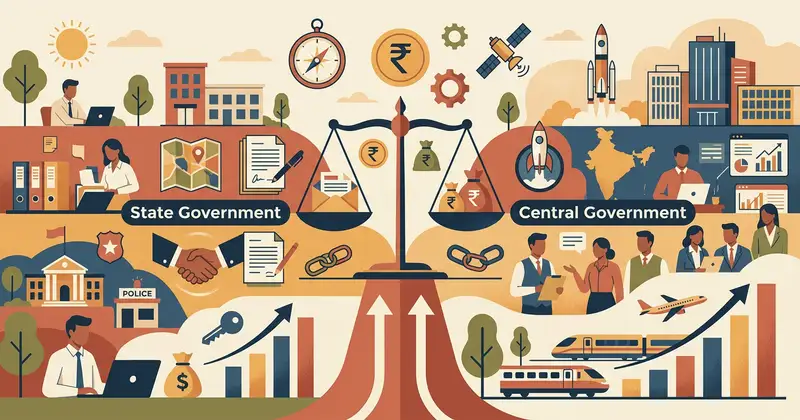
Aspiring for a stable and rewarding career in the government sector is a dream for millions in India. The allure of a 'Sarkari Naukri' transcends mere employment; it represents a promise of job security, attractive benefits, a respectable social standing, and a profound opportunity to contribute to public service and national development. However, for many job seekers, the initial excitement often gives way to a perplexing choice: whether to pursue a career with the Central Government or an individual State Government. As we look towards 2026, understanding the intricate nuances of each — particularly concerning salary structures, transfer policies, and long-term career growth trajectories — becomes absolutely crucial for making an informed and strategic decision.
This comprehensive guide from TrueJobs.co.in aims to meticulously break down these key aspects, providing you with the clarity and insights needed to navigate your career path confidently and choose the option that best aligns with your personal and professional aspirations.
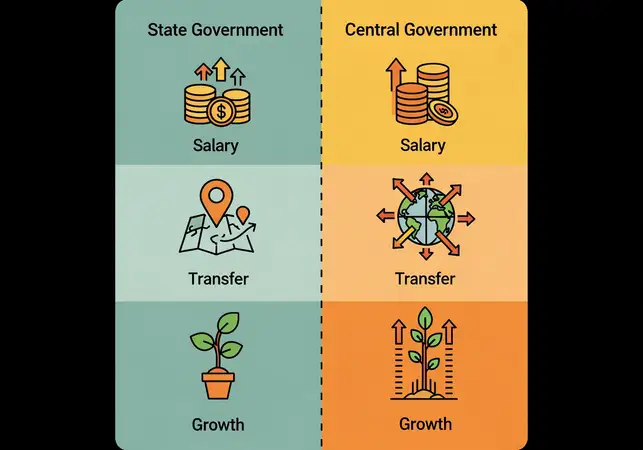
Understanding the Landscape: State vs. Central Government
Before delving into a detailed comparison of specific features, it's absolutely essential to grasp the fundamental differences in the operational frameworks and employment philosophies between State and Central Government roles. India's unique federal structure, as enshrined in its Constitution, mandates a clear division of powers and responsibilities between the Union (Central) Government and the various State Governments. This division directly translates into distinct employment opportunities, service conditions, and administrative hierarchies.
Constitutional Framework and Jurisdiction
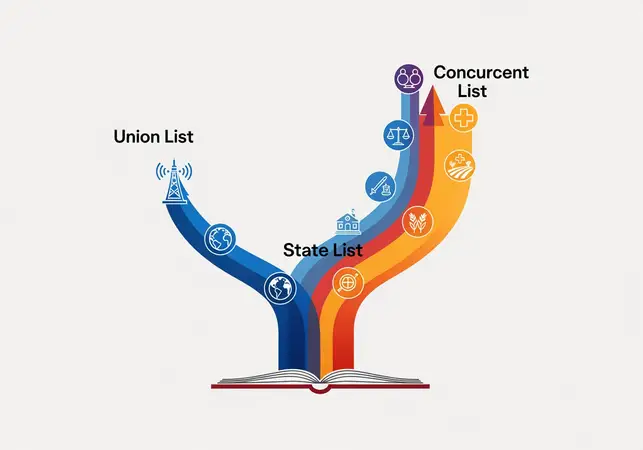
The Indian Constitution delineates the legislative and administrative powers between the Union and the States through three lists: the Union List, the State List, and the Concurrent List. This constitutional division directly impacts the types of jobs available, the scope of work, and the governing rules and regulations for employees.
- Union List: This list includes subjects of national importance such as defence, foreign affairs, railways, banking, communication, and atomic energy. Jobs under the Central Government primarily fall under these domains. Employees in these sectors are governed by central laws and policies, and their services are applicable across the entire nation. For example, an employee of Indian Railways or a bank under the Ministry of Finance serves the Central Government. The scope here is vast, covering everything from national security to economic policy, and employees often contribute to initiatives that have a pan-Indian impact. This national reach means that decisions made at the central level can affect millions of citizens across all states.
- State List: This list covers subjects of local and regional importance like public order, police, public health, sanitation, agriculture, local government, and prisons. State Government jobs are concentrated in these areas. Employees are governed by the respective state's laws, rules, and regulations, and their jurisdiction is typically confined to the boundaries of that particular state. A police constable in Uttar Pradesh or a teacher in a state-run school in Maharashtra are examples of State Government employees. These roles are often more directly involved in the day-to-day lives of citizens within a specific state, focusing on immediate public service delivery and local governance. The policies and implementation strategies are tailored to the unique needs and cultural contexts of each state.
- Concurrent List: This list includes subjects where both the Union and State Governments can legislate, such as education, forests, trade unions, marriage, and adoption. In cases of conflict, central law generally prevails. While some central government bodies operate in these areas, many state government departments also function under subjects from the Concurrent List, often with state-specific adaptations. For instance, while the Central Government sets national education policies, state governments implement them through their own education departments, often adapting curricula and teaching methodologies to local requirements. This shared responsibility can sometimes lead to complex administrative structures and coordination efforts.
Understanding this fundamental division is the first step in appreciating why Central and State Government jobs operate under different sets of rules and offer varying career trajectories. It explains why a Central Government employee might have a pan-India transfer liability, while a State Government employee's transfers are usually restricted within the state. This constitutional framework is the bedrock upon which all other differences, from salary to career progression, are built.
Administrative Structure and Hierarchy
Both Central and State Governments have complex administrative structures, but their scale and scope differ significantly. The Central Government operates through various ministries, departments, and attached/subordinate offices spread across the country. Its hierarchy often involves multiple layers, from entry-level positions to Secretary-level roles, with a clear chain of command extending to the highest levels of national governance. For example, the Ministry of Finance has departments like Economic Affairs, Revenue, Expenditure, Financial Services, and Disinvestment, each with its own elaborate structure and thousands of employees. This vast network requires intricate coordination and robust administrative mechanisms.
State Governments, on the other hand, have their own set of ministries and departments, typically mirroring some central functions but tailored to state-specific needs. The administrative hierarchy within a state government is also multi-layered, but its geographical and functional scope is limited to the state's boundaries. For instance, while the Central Government has a Ministry of Home Affairs, each state has its own Home Department and Police force, operating under the state's jurisdiction. Similarly, a state's Public Works Department (PWD) handles infrastructure projects within that state, while the Central PWD (CPWD) focuses on central government buildings and projects. The scale of operations within a state, while significant, is generally smaller than that of the Central Government.
These structural differences influence everything from recruitment patterns and training methodologies to promotion policies and employee welfare schemes. Central Government roles often involve larger teams, more diverse projects, and exposure to national and sometimes international policy-making. Employees might work on projects that span multiple states or involve international collaborations. State Government roles, while equally vital, tend to be more focused on grassroots implementation and direct public service delivery within a specific geographical area. This often means more direct interaction with the local populace and a deeper understanding of regional challenges and solutions.
The administrative structures also dictate the flow of information and decision-making processes, with central government often having a more centralized approach, while state governments can be more decentralized within their own boundaries.
For those interested in exploring various government job opportunities, TrueJobs.co.in provides extensive listings for both Sarkari Naukri across India.
Salary and Emoluments: A Detailed Comparison
One of the most significant factors influencing a job seeker's decision is the compensation package. While both Central and State Government jobs offer competitive salaries and a range of benefits, there are discernible differences that can impact an individual's financial well-being and long-term planning.
Central Government Salary Structure
Central Government salaries are primarily determined by the recommendations of the Central Pay Commissions (CPCs), which are constituted periodically (typically every ten years). The 7th Central Pay Commission (CPC) recommendations are currently in effect. These recommendations standardize pay scales, allowances, and other benefits across various ministries and departments. The implementation of CPC recommendations usually involves a comprehensive review of existing pay structures, job classifications, and benefits, aiming to ensure fair compensation and attract skilled talent.
The salary structure for Central Government employees typically includes:
- Basic Pay: The fundamental component of the salary, determined by the pay matrix level. This is the base upon which most other allowances are calculated. The pay matrix is a new system introduced by the 7th CPC, which provides a clear progression path for employees.
- Dearness Allowance (DA): A cost-of-living adjustment, revised semi-annually (January and July) based on the Consumer Price Index for Industrial Workers (CPI-IW). It helps to offset the impact of inflation. The DA is a percentage of the basic pay and is a crucial component in maintaining the purchasing power of employees.
- House Rent Allowance (HRA): Provided to employees who do not occupy government accommodation. The rates vary based on the classification of the city (X, Y, Z categories), with X cities (metros) receiving the highest HRA (e.g., Delhi, Mumbai, Chennai, Kolkata, Bengaluru, Hyderabad, Ahmedabad, Pune). Y cities receive a lower percentage, and Z cities (smaller towns and rural areas) receive the lowest. This differentiation helps account for varying living costs across the country.
- Transport Allowance (TA): Compensates for commuting expenses, varying based on pay level and city classification. Higher pay levels and X-category cities generally receive higher TA. This allowance helps employees cover the costs associated with daily travel to and from their workplace.
- Other Allowances: Depending on the nature of the job, employees may be eligible for various other allowances such as Special Duty Allowance (for specific duties or locations), Hardship Allowance (for difficult postings), Children Education Allowance (reimbursement for children's schooling), Leave Travel Concession (LTC) (reimbursement for travel during leave), Medical Allowance (for healthcare expenses), Dress Allowance (for uniforms), and many more. The specific allowances can significantly enhance the overall compensation package and vary widely based on the department and role.
Key Characteristics of Central Government Salaries:
- Uniformity: Pay scales and allowances are largely uniform across all Central Government departments for equivalent posts, ensuring parity irrespective of the posting location. This standardization promotes fairness and reduces internal disparities.
- Regular Revisions: DA is revised regularly, and pay commissions ensure a periodic review and upward revision of the entire pay structure, often leading to significant hikes. This systematic approach helps government salaries keep pace with economic changes and inflation.
- National Standards: The emoluments are designed to attract talent from across the nation and maintain a standard of living that is generally competitive with the private sector for comparable roles, especially at entry and mid-levels. The aim is to ensure that central government jobs remain attractive to a diverse pool of qualified individuals.
State Government Salary Structure
State Government salaries are determined by the respective State Pay Commissions, which are constituted by individual state governments. While many states often try to align their pay structures with the Central Pay Commission recommendations to avoid disparity and talent drain, there can be significant variations. The process in states mirrors the central government, but with a focus on the state's specific economic conditions and revenue capabilities.
The components of a State Government salary are similar to the Central Government:
- Basic Pay: Determined by the state's own pay matrix or scales. These scales are often designed to be broadly comparable to central government scales but might have different increments or levels.
- Dearness Allowance (DA): States also provide DA, often following the Central Government's DA rates and revision schedule, but sometimes with a slight lag or different calculation methods. Some states might announce DA revisions later than the central government, or the percentage might differ slightly based on state-specific economic indicators.
- House Rent Allowance (HRA): State HRAs are also based on city classification within the state, but the rates and classifications can differ from central norms. A city classified as 'Y' by the central government might be classified differently by a state government, leading to variations in HRA.
- Transport Allowance (TA): Similar to HRA, TA rates are state-specific. The amount can vary based on the state's policies and the cost of transport within its cities.
- Other Allowances: States also offer various other allowances, which might be similar to central allowances or include state-specific benefits tailored to local conditions or policies. For instance, some states might offer specific allowances for working in remote or tribal areas, or for certain professional qualifications that are particularly valued within the state.
Key Characteristics of State Government Salaries:
- Variability: There can be considerable differences in salary structures and allowance rates between different states. A Group B officer in one state might earn more or less than a similar officer in another state. This variability is a direct consequence of each state's autonomy in setting its own pay scales.
- Fiscal Health Dependent: The ability of a state government to match central pay scales or implement generous pay revisions often depends on its fiscal health and revenue generation capacity. States with stronger economies and higher tax revenues are generally in a better position to offer competitive salaries and benefits. Conversely, states facing financial constraints might lag in implementing pay commission recommendations or offer lower allowances.
- Local Cost of Living: While HRA and TA attempt to account for local costs, the overall package might be more tailored to the cost of living within that specific state rather than a national average. This can be an advantage for employees in states with a lower cost of living, where their salary might have greater purchasing power.
Comparative Analysis of Salary
In general, for equivalent posts, Central Government salaries are often perceived to be slightly higher or at par with the better-paying State Governments. This is particularly true for entry-level and mid-level positions. The regular and timely implementation of Central Pay Commission recommendations, along with consistent DA revisions, ensures that Central Government employees often maintain a competitive edge in terms of purchasing power.
However, this is not a universal rule. Some economically prosperous states with strong revenue bases might offer very competitive salary packages that are on par with or even exceed certain Central Government roles, especially for positions that are critical to state administration or public service delivery. For example, a teacher in a well-funded state might find their salary and benefits package highly attractive within their state's context. States like Maharashtra, Gujarat, Tamil Nadu, and Karnataka, with robust economies, often have more competitive state government salaries compared to some other states.
It's also important to consider the overall economic environment. In times of economic slowdown, state governments might face greater pressure to curtail expenses, potentially impacting salary revisions or allowance increases more than the central government. Conversely, a booming state economy might allow for more generous pay packages.
Practical Tip: When comparing salaries, don't just look at the basic pay. Calculate the total emoluments (Basic + DA + HRA + TA + other significant allowances) to get a true picture. Also, consider the tax implications and net take-home pay. Furthermore, research the specific pay commission reports and implementation status for the state you are interested in. Websites like TrueJobs.co.in often provide detailed breakdowns of salary structures for various government positions, helping you make an informed comparison.
Transfer Policies: Mobility and Stability
The prospect of transfers is a significant consideration for many job seekers, impacting family life, social connections, and personal preferences. Both Central and State Governments have distinct transfer policies, reflecting their operational jurisdictions and administrative needs.
Central Government Transfer Policies
Central Government jobs often entail a higher likelihood of transfers across different states and regions of India. This is inherent in the nature of central services, which are designed to operate nationally.
- Pan-India Liability: Employees in All India Services (IAS, IPS, IFS) are liable to serve anywhere in India, typically allocated to state cadres but with central deputation opportunities. For other Central Government services (e.g., Railways, Banks, Income Tax, Customs, Postal Services), employees can be transferred to any office or branch located anywhere in the country. For example, an officer in the Indian Revenue Service (IRS) might start their career in Mumbai, be transferred to Delhi, then to Kolkata, and later to a smaller city, all within their service tenure. This national scope is a defining characteristic of central government employment.
- Frequency: The frequency of transfers can vary widely depending on the department, the specific role, and the employee's seniority. Some departments have fixed tenure policies (e.g., 3-5 years in a particular posting), while others might have more flexible or need-based transfers. For instance, in sensitive positions or those involving project management, transfers might be more frequent to ensure fresh perspectives or to align with project cycles.
- Reasons for Transfer: Transfers can occur due to administrative exigencies (e.g., filling a vacant critical post, balancing staff strength), promotion (moving to a higher-level post in a different location), disciplinary action, or on request (though request transfers are subject to availability, departmental discretion, and often require a minimum tenure in the current posting). The government's need for efficient administration often takes precedence.
- Benefits and Challenges:
- Benefits: Exposure to diverse cultures, work environments, and administrative practices across the country. This broad exposure can significantly enhance an individual's professional development, adaptability, and understanding of India's diverse socio-economic landscape. Opportunities for broader professional development and networking with colleagues from different regions and backgrounds.
- Challenges: Disruption to family life, children's education, and spouse's career. Finding suitable schools for children and new employment opportunities for spouses can be a significant challenge with frequent relocations. Difficulty in settling down in new places repeatedly, leading to potential social isolation or stress. Potential for increased living expenses during relocation, despite government allowances for transfer.
State Government Transfer Policies
Transfers within State Government jobs are generally confined to the geographical boundaries of the respective state. This offers a different kind of stability and predictability.
- Intra-State Transfers: Employees are typically transferred between districts, divisions, or departments within the same state. For example, a state police officer might be transferred from one district to another within that state, or a teacher might be moved between schools in different towns within the same state. While still involving relocation, the cultural and linguistic adjustments are often less pronounced than inter-state transfers.
- Frequency: Similar to central government, frequency varies by department and role. Some state departments have well-defined transfer policies, while others might be more influenced by political or administrative considerations. In some states, certain departments (e.g., revenue, police) might have more frequent transfers due to the nature of their work and the need to prevent over-familiarity with local elements.
- Reasons for Transfer: Administrative needs, promotions, disciplinary actions, and requests are common reasons. Political influence can sometimes play a role in state-level transfers, especially for sensitive postings, which can be a point of concern for employees seeking purely merit-based postings.
- Benefits and Challenges:
- Benefits: Greater stability in terms of location, allowing for deeper community integration and less disruption to family life. Employees can build stronger local networks and their children can have more consistent schooling. Easier to maintain social networks and children's schooling, contributing to a more settled personal life. The ability to stay in one linguistic and cultural zone can also be a significant advantage for many.
- Challenges: Limited exposure to diverse work environments outside the state. This can sometimes lead to a narrower perspective compared to central government employees who experience pan-India postings. Potential for stagnation if opportunities for varied roles are limited within the state, especially in smaller departments or states with fewer districts.
Choosing Based on Transfer Preferences
Your preference regarding mobility should be a critical factor in your decision-making process:
- If you are adventurous, enjoy new experiences, and are open to living in different parts of India, a Central Government job might be a good fit. It offers a broader canvas for your career and personal growth, allowing you to experience the rich diversity of the country.
- If you prefer stability, want to stay close to your hometown or a specific region, and prioritize family continuity, a State Government job would likely be more suitable. It allows for deeper roots and community involvement, which can be very fulfilling for those who value local connections.
Practical Tip: Research the specific transfer policy of the department or service you are interested in. Some central government departments might have less frequent transfers than others, and similarly, some state government roles might involve more frequent intra-state movement. For instance, technical departments might have fewer transfers compared to general administration. It's also wise to speak with current employees in the desired roles to get a realistic understanding of transfer patterns. You can find detailed information about specific job roles and their transfer policies on TrueJobs.co.in's blog.
Career Growth and Advancement: Trajectories and Opportunities
Long-term career growth is another pivotal aspect that job seekers evaluate. Both Central and State Government jobs offer structured career paths, but the scale, scope, and pace of advancement can differ.
Central Government Career Growth
Central Government services are often characterized by well-defined hierarchical structures and clear promotion channels. Opportunities for growth can be extensive, both vertically and horizontally.
- Structured Promotion Paths: Most Central Government departments have a clear hierarchy with defined eligibility criteria for promotions (e.g., years of service, performance appraisals, departmental exams). Promotions typically lead to higher pay scales and increased responsibilities. For example, an Assistant Section Officer (ASO) in the Central Secretariat Service (CSS) can aspire to become an Under Secretary, Deputy Secretary, Director, and potentially even Joint Secretary over their career, based on performance and seniority.
- All-India Services (AIS): For services like IAS, IPS, and IFS, the career progression is highly structured, leading to top administrative positions at both central and state levels. An IAS officer, after serving in a state cadre, can be deputed to the Central Government at various levels, eventually reaching the position of Secretary to the Government of India, which is one of the highest administrative posts.
- Specialized Roles and Deputations: Central Government offers numerous opportunities for specialization in various fields (e.g., finance, technology, administration, policy analysis). Employees can also go on deputation to other central ministries, state governments, public sector undertakings (PSUs), regulatory bodies, or even international organizations, gaining diverse experience. These deputations are highly sought after as they offer exposure to different work cultures and policy environments, broadening one's professional horizons.
- Training and Development: Central Government emphasizes continuous learning and development. There are numerous training institutes (e.g., LBSNAA for IAS, SVP NPA for IPS, NADT for Income Tax, ISTM for general administration) that provide regular training programs, workshops, and opportunities for higher education. These programs are designed to enhance skills, update knowledge, and prepare employees for higher responsibilities.
- Exposure and Impact: Working for the Central Government often provides exposure to national-level policy-making, large-scale projects (e.g., national highways, digital India initiatives, space programs), and interactions with a broader range of stakeholders, potentially leading to a greater sense of impact. The decisions and policies formulated at the central level can have a transformative effect on the entire nation.
Challenges in Central Government Growth:
- Competition: Due to the large number of employees and the national talent pool, competition for higher positions can be intense. This means that while opportunities exist, advancing quickly often requires exceptional performance and continuous self-improvement.
- Seniority vs. Merit: While merit is increasingly recognized, seniority still plays a significant role in promotions in many departments, especially in the initial and mid-career stages. This can sometimes lead to a slower pace of promotion for highly meritorious individuals if they are junior in service.
State Government Career Growth
Career growth in State Government jobs is also structured, but it is typically confined within the state's administrative framework. The opportunities, while substantial, might be different in nature compared to central services.
- Intra-State Progression: Promotions occur within the state's departmental hierarchy. For instance, a Block Development Officer (BDO) in a state service might aspire to become a District Development Officer or rise to higher positions within the state's rural development department. Similarly, a state police inspector can rise to become a Deputy Superintendent of Police (DSP) and further up within the state police force.
- Deep Local Expertise: State Government employees often develop deep expertise in local issues, policies, and public administration specific to their state. This local knowledge can be highly valuable for effective governance and policy implementation at the grassroots level. They become experts in the unique challenges and opportunities of their specific region, which is crucial for tailored policy solutions.
- Direct Public Service: Many state government roles involve direct interaction with the public and immediate impact on local communities, which can be highly rewarding. Seeing the direct results of one's work in improving local infrastructure, education, or healthcare can be a powerful motivator.
- Specialized State Cadres: States have their own specialized cadres for police, education, health, revenue, etc., with defined career paths within those specific departments. These cadres are designed to meet the specific administrative and service delivery needs of the state.
- Training and Development: State governments also conduct training programs for their employees, often through state administrative training institutes. These programs focus on state-specific laws, policies, and administrative practices, ensuring that employees are well-equipped to handle their responsibilities within the state context.
Challenges in State Government Growth:
- Variability Across States: The pace and opportunities for promotion can vary significantly from one state to another, depending on the state's administrative policies, fiscal health, and departmental structures. Some states might have faster promotion cycles than others, while some departments might offer more growth avenues.
- Limited Deputation Opportunities: While state government employees can go on deputation to central government or other state bodies, these opportunities might be less frequent or competitive compared to central services. The scope for inter-state or national-level exposure through deputation is generally narrower.
- Political Influence: In some instances, political considerations might influence promotions or postings, though efforts are continuously made to professionalize state civil services. This can sometimes lead to frustration among meritorious officers if political factors override performance.
Comparative Analysis of Career Growth
For those aspiring to reach the very top echelons of national administration or engage in policy-making at a broader level, Central Government jobs, especially the All India Services, generally offer a more expansive and impactful career trajectory. The sheer scale of operations and diversity of roles in the Central Government can provide unparalleled learning and growth opportunities, allowing individuals to contribute to national narratives and global engagements.
However, for individuals who are passionate about making a direct impact within their home state, understanding local dynamics, and contributing to regional development, State Government jobs offer a deeply rewarding career. The growth might be more localized, but the ability to see the tangible results of one's work in familiar surroundings and contribute directly to the welfare of one's community can be a powerful motivator. Many find immense satisfaction in working closely with the people and addressing specific regional challenges.
Practical Tip: Research the promotion policies and typical career progression for specific posts in both central and state governments. Talk to people already in those services to get a realistic understanding of growth prospects. Look at the organizational charts and service rules of the departments you are interested in. Consider your long-term career goals: do you envision yourself as a national policy-maker or a key administrator in your home state? This will help guide your decision. TrueJobs.co.in provides resources and articles on career growth in government jobs to help you plan.
Other Important Considerations
Beyond salary, transfers, and growth, several other factors can influence your choice between State and Central Government jobs.
Job Security and Stability
Both Central and State Government jobs offer unparalleled job security compared to the private sector. Once recruited, it is extremely difficult to be terminated from service, except in cases of severe misconduct or disciplinary action. This stability is a primary attraction for millions of aspirants, providing a sense of peace of mind that is often lacking in other sectors.
- Pension and Retirement Benefits: While the Old Pension Scheme (OPS) has been replaced by the National Pension System (NPS) for new recruits in both central and most state governments, the retirement benefits are still substantial, offering financial security post-retirement. NPS involves a contribution from both the employee and the employer, with the accumulated corpus invested in market-linked schemes. Some states have reverted to OPS for their employees, which can be a significant draw, as OPS offers a defined benefit pension (typically 50% of the last drawn salary), providing greater certainty. It's crucial to understand which pension scheme applies to the specific job you are considering.
- Social Standing: A 'Sarkari Naukri' commands immense respect in Indian society, irrespective of whether it's a central or state government position. It signifies stability, integrity, and public service. This social prestige often extends to the employee's family, providing a sense of pride and security.
- Healthcare and Other Benefits: Government employees, both central and state, typically receive comprehensive healthcare benefits (e.g., CGHS for central government employees, state-specific health schemes), subsidized housing (in some cases), and various other welfare schemes. These non-monetary benefits significantly add to the overall attractiveness of government employment.
Work-Life Balance
Work-life balance can vary significantly within both central and state governments, depending on the department, role, and specific posting. However, government jobs are generally perceived to offer a better work-life balance compared to many demanding private sector roles, especially in terms of predictable working hours and generous leave policies.
- Fixed Working Hours: Most government offices adhere to fixed working hours (e.g., 9 AM to 5 PM), though field jobs or critical administrative roles (e.g., police, disaster management, revenue collection during peak periods) might require longer hours or working on weekends. The concept of a "weekend" is generally respected, allowing for personal time.
- Leave Policies: Generous leave policies, including earned leave, casual leave, medical leave, and maternity/paternity leave, are standard in both central and state governments. These policies are often more comprehensive and employee-friendly than those found in many private sector companies, allowing employees to manage personal and family commitments effectively.
- Stress Levels: While government jobs can be demanding, especially in public-facing roles or during crisis situations, the overall stress levels might be lower than in high-pressure corporate environments. The focus is often on process adherence and public service rather than aggressive targets and profit margins, which can contribute to a less stressful work environment. However, roles involving significant public interaction or policy implementation can still be challenging.
Recruitment Process
The recruitment processes for both central and state government jobs are typically multi-stage, competitive, and merit-based. They involve written examinations, interviews, and sometimes physical tests, designed to select the most qualified candidates.
- Central Government: Recruitment is conducted by bodies like the Union Public Service Commission (UPSC) for All India Services and Group A/B posts (e.g., Civil Services Exam, Engineering Services Exam), and the Staff Selection Commission (SSC) for Group B/C posts (e.g., SSC CGL, SSC CHSL). Other central organizations like Railway Recruitment Boards (RRBs) and Institute of Banking Personnel Selection (IBPS) conduct their own exams for specific sectors. These exams are known for their rigorous nature and vast syllabi, attracting millions of applicants annually.
- State Government: State Public Service Commissions (SPSCs) conduct examinations for state civil services and other Group A/B posts (e.g., PCS exams). State-level recruitment boards or departments conduct exams for Group C/D posts (e.g., police constable, teachers, clerical staff). Each state has its own SPSC and recruitment agencies, leading to a diverse range of exam patterns and schedules.
Key Differences: Central government exams often attract a larger applicant pool from across the country, making them highly competitive. The competition is pan-Indian, drawing talent from all states. State government exams might have domicile requirements or specific language proficiency tests, narrowing the competition to within the state. For example, a state might require candidates to be proficient in the local language or have studied up to a certain level in the state. This can be an advantage for local candidates but a barrier for those from other states. Information on upcoming exams and results can be found on TrueJobs.co.in's results page and admit cards section.
Making Your Informed Decision for 2026 and Beyond
Choosing between a Central Government and a State Government job is a deeply personal decision that should align with your individual priorities, aspirations, and life circumstances. As you plan your career path towards 2026, consider the following:
- Personal Priorities:
- Mobility vs. Stability: Are you open to frequent transfers and exploring different parts of India, or do you prefer to stay rooted in one region? Reflect on how comfortable you are with change and adapting to new environments.
- Family Commitments: How will transfers impact your spouse's career, children's education, or care for elderly parents? Consider the support system you have and how relocation might affect it.
- Language and Culture: Are you comfortable working in different linguistic and cultural environments (Central) or prefer a familiar state context (State)? While English is often the administrative language in central government, interaction with local populations might require proficiency in regional languages.
- Career Aspirations:
- Scope of Impact: Do you envision contributing to national policy-making and large-scale projects, or are you more passionate about grassroots development and local governance? Think about the scale at which you want your work to have an effect.
- Specialization: Are there specific specialized roles available that align with your skills in one sector more than the other? For instance, if you are an expert in tribal welfare, a state government role in a tribal-dominated state might offer more direct impact than a central government role.
- Pace of Growth: Are you looking for a faster, more competitive growth trajectory, or a steady, predictable climb within a familiar system? Understand that "faster" doesn't always mean "better" – it depends on your personal definition of success.
- Financial Considerations:
- Salary Expectations: While both offer good salaries, research the specific pay scales for the posts you are interested in, considering all allowances and potential for future revisions. Don't just compare basic pay; look at the total emoluments.
- Cost of Living: Factor in the cost of living in potential posting locations. A higher salary in a metro city might not translate to higher disposable income compared to a slightly lower salary in a tier-2 or tier-3 city where expenses are significantly lower.
- Pension Benefits: Understand the pension scheme applicable to new recruits in both central and your preferred state government. This long-term financial security aspect is crucial for retirement planning.
- Research and Networking:
- Departmental Specifics: Don't generalize. Research specific departments and roles within both central and state governments. Policies can vary even within the same government. For example, the transfer policy in the Ministry of External Affairs will be vastly different from that in the Department of Posts.
- Talk to Insiders: Connect with individuals already working in these sectors. Their firsthand experiences can provide invaluable insights into the daily realities, challenges, and rewards. LinkedIn, professional forums, and alumni networks can be great resources.
- Official Websites: Regularly check the official websites of UPSC, SSC, SPSCs, and individual ministries/departments for recruitment notifications, rules, and regulations. These are the most authoritative sources of information.
Ultimately, both Central and State Government jobs offer prestigious, secure, and impactful career paths. The "better" option is subjective and depends entirely on what you prioritize in your professional and personal life. By carefully weighing the factors of salary, transfer policies, and career growth, alongside other considerations, you can make a well-informed decision that sets you on a fulfilling journey in public service.
TrueJobs.co.in is committed to providing you with the most accurate and up-to-date information to guide your government job search. We encourage you to explore our portal for specific job notifications, exam patterns, and preparation resources for both Central and State Government opportunities.
FAQ
Are Central Government jobs always better paid than State Government jobs?
Not always. While Central Government salaries, especially after Pay Commission revisions, are generally perceived to be slightly higher or at par with the better-paying State Governments, this is not a universal rule. The salary in a State Government job can be highly competitive, or even exceed, certain Central Government roles, especially in economically prosperous states with strong revenue bases. It largely depends on the specific state's fiscal health and its own pay commission recommendations. It's crucial to compare the total emoluments (Basic + all allowances) for specific posts in both sectors to get an accurate picture.
Do State Government jobs offer the same level of job security as Central Government jobs?
Yes, both Central and State Government jobs offer a very high degree of job security compared to the private sector. Once recruited and confirmed, termination from service is extremely difficult, usually only occurring in cases of severe misconduct or disciplinary action. Both sectors provide stable employment, attractive benefits, and a respectable social standing, making them highly sought after for their inherent stability.
What is the main difference in the recruitment process for Central vs. State Government jobs?
The main difference lies in the recruiting authorities and the scope of competition. Central Government jobs are primarily recruited through national bodies like UPSC (for All India Services and Group A/B posts) and SSC (for Group B/C posts), attracting applicants from across the country, making them highly competitive. State Government jobs are recruited by State Public Service Commissions (SPSCs) and other state-level boards, with competition generally confined to within the state. State exams might also have domicile requirements or specific language proficiency tests, which are less common for central government exams (except for specific language-related roles).
State vs Central Govt Jobs 2026: Salary & Growth
Related: State Govt Jobs | Central Govt Jobs | Career Growth Tips
Related Government Job Resources
Continue with active job hubs and related government job pages on TrueJobs.
Tools for this recruitment topic
Use only the tools relevant to the dates, eligibility or documents discussed above.
TrueJobs Editorial Team
TrueJobs editorial desk
This article is prepared from the sources referenced in the guide and reviewed for clarity, links and dated information. Read our editorial and corrections policy.
Continue This Topic
Follow the closest earlier and newer coverage so older archive posts keep real contextual crawl paths.
Contract vs Permanent Government Jobs in India: Salary, Stability & Your Career Choice
Government jobs offer stability, but contract vs permanent roles differ greatly. Learn about salary structures, benefits, and career progression.
Government Job Physical Fitness Test Guide 2026: Running, Height, Chest & Medical
Prepare for the 2026 government job physical fitness test. Our guide details key standards for running, height, chest, and medicals to help you succeed.
Read Next

Contract vs Permanent Government Jobs in India: Salary, Stability & Your Career Choice

Bank PO vs SSC CGL 2026: Growth, Salary & Work-Life Balance

SBI PO vs IBPS PO — Which Should You Choose? Complete Comparison
Railway Group D vs ALP vs Technician: Salary, Work & Career
Explore Topics
Perfect Your Resume
Use our AI-powered Resume Builder to create ATS-optimized resumes.
AI Resume Builder