
Recruitment guide
Bank PO vs SSC CGL 2026: Which is Better for You? — Explained
Choosing between a career as a Bank PO and an SSC CGL officer is a major decision. Our in-depth analysis compares career growth, salary, work-life balance, and job profiles to help you decide which path is right for you in 2026.

For millions of graduates in India, securing a stable and prestigious government job is the ultimate career goal. Among the plethora of options, two choices consistently stand out: becoming a Bank Probationary Officer (PO) or clearing the Staff Selection Commission Combined Graduate Level (SSC CGL) exam. Both pathways promise job security, a handsome salary, and social respect. However, they lead to vastly different professional lives. The choice between a fast-paced banking career and a stable central government role is a significant one that will shape your future.
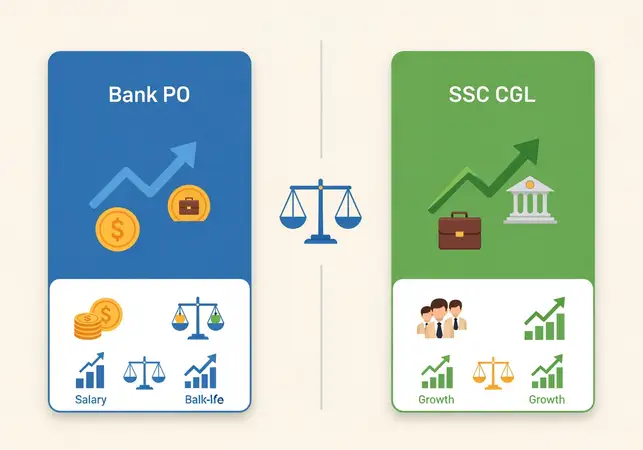
As we look towards 2026, aspirants are already strategizing their preparation. This article provides a comprehensive, head-to-head comparison of Bank PO and SSC CGL, dissecting every crucial aspect—from career growth and salary to the all-important work-life balance. Our goal is to equip you with the information you need to make a well-informed decision that aligns with your personal aspirations and lifestyle preferences.
Understanding the Roles: A Banker vs. A Central Government Officer
Before diving into the comparisons, it's essential to understand what each job entails on a day-to-day basis. The nature of your work will be the biggest determinant of your job satisfaction.
The Life of a Bank Probationary Officer (PO)
A Bank PO is an entry-level officer (Scale-I) in a Public Sector Bank (PSB). After a 1-2 year probation period, they are confirmed as Assistant Managers. The role is dynamic and customer-facing. Key responsibilities include:
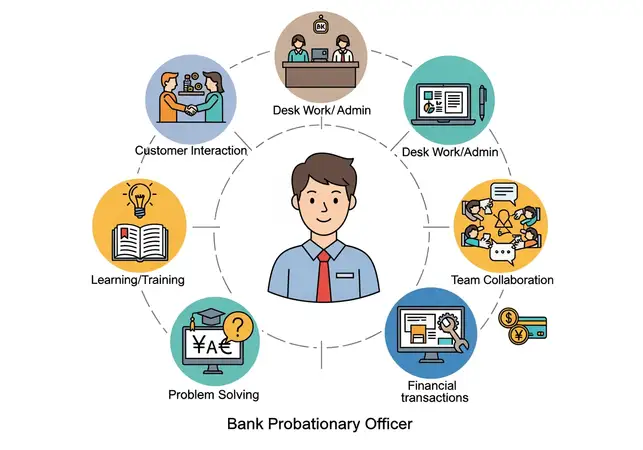
- General Banking & Operations: Overseeing daily branch activities, passing cheques, managing cash, and ensuring smooth operations.
- Customer Service: Handling customer queries, resolving complaints, and building relationships. This is a core part of the job.
- Business Development: Promoting bank products like loans, insurance, mutual funds, and credit cards. This often involves meeting sales targets.
- Credit Management: Processing loan applications, verifying documents, and managing the loan portfolio.
In essence, a Bank PO is at the forefront of the banking industry, dealing directly with money, people, and business targets.
The Diverse World of an SSC CGL Officer
SSC CGL is not a single job but a gateway to over 30 different Group 'B' and Group 'C' posts in various ministries, departments, and organizations of the Government of India. The work profile varies drastically depending on the post:
- Assistant Section Officer (ASO) in CSS: A desk job in New Delhi, involving file work, drafting notes, and assisting in policy formulation.
- Inspector (CBDT/CBIC): A mix of desk and field work. As an Income Tax Inspector, you could be part of assessment or raid teams. As a Preventive Officer or Examiner in CBIC, you'd be posted at airports, seaports, or GST offices.
- Auditor/Accountant (CAG/CGDA): Primarily a desk job involving auditing the accounts of government departments. It may involve some travel for inspection.
- Assistant Enforcement Officer (ED): A challenging field job focused on investigating economic crimes like money laundering.
An SSC CGL officer's work is more administrative and policy-driven, forming the backbone of the central government's functioning.
Selection Process and Difficulty Level
Both exams are highly competitive, attracting lakhs of applicants each year. However, their structure and focus areas are different.
| Parameter | Bank PO (IBPS/SBI) | SSC CGL |
|---|---|---|
| Exam Stages | Phase-I (Prelims), Phase-II (Mains), Phase-III (Group Discussion &/or Interview) | Tier-I, Tier-II, and subsequent skill tests (DEST/CPT) as per post requirement. |
| Key Subjects | Reasoning, Quantitative Aptitude, English, General/Financial Awareness, Computer Aptitude. | Reasoning, Quantitative Aptitude, English, General Awareness, Computer Knowledge. |
| Core Focus | Emphasis on speed, accuracy, and data interpretation. The General Awareness section is heavily focused on banking and the economy. | Emphasis on a vast syllabus. General Awareness covers history, geography, polity, science, etc. Advanced Maths in Tier-II is crucial. |
| Difficulty | The questions, especially in Mains, are complex and require quick problem-solving skills. The sectional timing makes it very challenging. | The syllabus is vast, making preparation extensive. The competition for top posts like MEA ASO or Income Tax Inspector is extremely high. |
| Recruitment Cycle | Very fast. The entire process from notification to final result is typically completed within 6-8 months. | Historically slower, but efforts are being made to speed it up. The process can still take over a year. Check the latest status on our /sarkari-result page. |
Career Growth and Promotions: The Corporate Ladder vs. The Bureaucratic Path
This is where the two careers diverge significantly. Your long-term career trajectory will be very different in a bank compared to a central government ministry.
Fast-Track Growth in Banking
Banks offer one of the fastest promotion channels in the public sector. The growth is performance-based and also depends on clearing internal promotional exams (JAIIB/CAIIB).
A typical promotion hierarchy for a Bank PO looks like this:
- Probationary Officer (Assistant Manager) - Scale I
- Manager - Scale II (after 3-5 years)
- Senior Manager - Scale III (after 3-5 years)
- Chief Manager - Scale IV
- Assistant General Manager (AGM) - Scale V
- Deputy General Manager (DGM) - Scale VI
- General Manager (GM) - Scale VII
A diligent and ambitious PO can reach the level of DGM or even GM before retirement. The growth is tangible and comes with significant increases in responsibility and authority.
Stable and Structured Progression in SSC CGL
Promotions in central government jobs are more time-bound and structured. They are generally slower than in banks but are steady and assured. The hierarchy depends on the specific department.
- For an Assistant Section Officer (ASO) in CSS:
- ASO (Level 7)
- Section Officer (SO) (Level 8/9) - after 5-8 years
- Under Secretary (Level 11)
- Deputy Secretary (Level 12)
- For an Inspector in CBDT/CBIC:
- Inspector (Level 7)
- Superintendent / Appraiser (Level 8) - after 8-10 years
- Assistant Commissioner (Level 10)
While reaching the very top echelons (like Joint Secretary) is rare, a CGL officer enjoys a stable career with periodic promotions and the immense prestige associated with being a part of the central government machinery.
Salary, Perks, and In-Hand Pay
Both jobs offer competitive salaries that are revised periodically. While the basic pay structure might seem similar, the perks and allowances create a significant difference in the overall compensation package.
Bank PO Salary Structure
Bank POs are governed by the Bipartite Settlement. The salary includes Basic Pay, Dearness Allowance (DA), House Rent Allowance (HRA), and City Compensatory Allowance (CCA). However, the real advantage lies in the perks:
- Leased Accommodation: Most banks provide leased accommodation or a handsome HRA, which can be a huge benefit in metro cities.
- Petrol Allowance: A fixed amount for fuel expenses.
- Newspaper, Entertainment Allowances, etc.
- Better Medical Benefits: Generally, the medical coverage for the employee and dependents is more comprehensive than in government departments.
- Access to Low-Interest Loans: A significant perk for housing, vehicle, or personal loans.
Due to these allowances, the cash-in-hand and overall value of a Bank PO's salary package is often higher at the initial stages compared to an SSC CGL officer.
SSC CGL Salary Structure
SSC CGL officers are paid as per the 7th Central Pay Commission recommendations. The salary depends on the Pay Level (Level 4 to Level 8) and the city of posting (X, Y, Z).
A Level 7 post (like Inspector, ASO) in an 'X' city would have a gross salary of approximately ₹75,000 - ₹80,000 per month. The components are:
- Basic Pay
- Dearness Allowance (DA)
- House Rent Allowance (HRA)
- Transport Allowance (TA)
Perks include CGHS medical facility, LTC (Leave Travel Concession), and benefits under the National Pension System (NPS). While the perks are solid, they are more standardized and less flexible compared to the banking sector.
Work-Life Balance: The Ultimate Deciding Factor?
For many aspirants, this is the most critical parameter. The choice between a demanding job with high rewards and a stable job with a predictable schedule is a personal one.
The Demanding Life of a Banker
- Working Hours: Official timings are usually 10 AM to 5 PM, but it's common for POs to stay late, especially during month-end or year-end closing. The concept of a strict 9-to-5 is rare.
- Work Pressure: High pressure to meet business targets for loans, insurance, and other products is a constant reality.
- Transfers: Bank POs have a transferable job. You can expect a transfer every 3-5 years, which can be to any part of the country, including rural and semi-urban areas. This can be challenging for family life.
- Public Dealing: It's a high-interaction job. You will be dealing with hundreds of customers daily, which requires immense patience.
The Balanced Life of a CGL Officer
- Working Hours: Most SSC CGL posts (especially desk jobs like ASO) offer a fixed 9 AM to 5 PM, five-day work week. This provides ample time for family, hobbies, and personal pursuits.
- Work Pressure: The pressure is generally related to deadlines and administrative responsibilities, not sales targets. The work environment is less frantic.
- Transfers: Transfers are less frequent than in banks. For posts like ASO in CSS, the entire career can be spent in Delhi. For inspector posts, transfers are usually within a zone.
- Public Dealing: Varies by post. An ASO has almost no public dealing, whereas an Inspector might have moderate interaction. It's generally less intense than in a bank.
Bank PO vs SSC CGL 2026: A Summary to Help You Decide
To make the choice clearer, here’s a final summary based on different priorities.
| Choose Bank PO if... | Choose SSC CGL if... |
|---|---|
| You want rapid career growth and are highly ambitious. | You prioritize work-life balance and a stable, predictable routine. |
| You thrive in a dynamic, target-driven, and competitive environment. | You prefer a structured, process-oriented work environment. |
| You want a higher initial salary package with excellent perks like leased housing. | You value the long-term social prestige and power associated with a central government job. |
| You are comfortable with frequent transfers and postings in different parts of India, including rural areas. | You want to be posted in major cities or state capitals for a longer duration. |
| You enjoy interacting with people and have strong sales and communication skills. | You are good at administrative tasks, analysis, and file work. |
Checks to complete before you apply
The debate of Bank PO vs. SSC CGL doesn't have a universal winner. The 'better' career is the one that's better for you. A Bank PO career is like a corporate job within the public sector—fast-paced, with high rewards and high demands. An SSC CGL career is the quintessential government job—stable, secure, with immense prestige and an unparalleled work-life balance.
Before you start your preparation for 2026, introspect about your personality, priorities, and long-term life goals. Do you see yourself as a dynamic branch manager climbing the corporate ladder, or as a respected government officer contributing to the nation's administration from behind a desk? Your answer to that question will guide you to the right path. Stay updated with the latest notifications for both exams on our /latest-jobs portal and begin your journey towards a secure future.
Frequently Asked Questions (FAQs)
1. Which job has a higher starting salary, Bank PO or SSC CGL?
On paper, the gross salary of a Bank PO and a top-level SSC CGL officer (Pay Level 7/8) is quite similar. However, due to perks like leased accommodation, petrol allowance, and other monetary benefits provided by banks, the overall compensation and in-hand salary of a Bank PO is often higher in the initial years, especially if posted in a metro city.
2. Is it possible to prepare for Bank PO and SSC CGL simultaneously?
Yes, it is possible, as the syllabus for Quantitative Aptitude, Reasoning, and English overlaps significantly for the preliminary stages. However, the Mains/Tier-II levels and the General Awareness sections are quite different. Bank exams focus on the economy and banking, while SSC CGL's GA is vast (History, Polity, Science, etc.). It requires a dedicated strategy to manage both, but many aspirants do it successfully.
3. Which career is better for women, Bank PO or SSC CGL?
Both careers are excellent for women and offer safe working environments. However, SSC CGL is often preferred by women who prioritize work-life balance and location stability. The fixed 9-to-5 timings and less frequent transfers (especially in posts like ASO in CSS with a Delhi posting) make it easier to manage family and personal life. Banking, with its long hours and frequent, sometimes rural, transfers, can be more challenging in this regard.
4. How frequent are transfers in Bank PO and SSC CGL jobs?
Transfers are significantly more frequent in Bank PO jobs, typically occurring every 3 to 5 years. These transfers can be anywhere in India. In SSC CGL, the transfer frequency is much lower. For many posts, transfers happen every 8-10 years and are often within a specific zone or region. For some posts like ASO in CSS, the posting is in Delhi for the majority of the career.
5. Which exam is considered tougher, Bank PO or SSC CGL?
Toughness is subjective. The Bank PO exam is tougher in terms of time pressure and the complexity of questions in the Mains exam. You need to be very fast and accurate. The SSC CGL exam is tougher in terms of the sheer vastness of the syllabus, especially for General Awareness and the advanced mathematics in Tier-II. The level of competition for a limited number of desirable posts also makes it incredibly tough.
Bank PO vs SSC CGL 2026: Career Paths Compared
Related reads: Bank PO Prep Guide | SSC CGL Job Profiles | Career Planning Resources
Related Resources
- SSC CGL Notification
- Bank PO Exam Guide
- Latest Sarkari Naukri
Reader questions: SSC CGL
Which offers better salary: Bank PO or SSC CGL?
Bank POs typically start with higher salaries than SSC CGL officers.
Is SSC CGL more stable than Bank PO?
SSC CGL offers more job stability with central government employment.
What's the work-life balance difference?
SSC CGL generally has better work-life balance compared to Bank PO roles.
Which has faster career growth?
Bank POs often see quicker promotions than SSC CGL positions.
Can I switch from SSC CGL to banking?
Yes, but requires separate bank recruitment exams.
Related Government Job Resources
Continue with active job hubs and related government job pages on TrueJobs.
Tools for this recruitment topic
Use only the tools relevant to the dates, eligibility or documents discussed above.
TrueJobs Editorial Team
TrueJobs editorial desk
This article is prepared from the sources referenced in the guide and reviewed for clarity, links and dated information. Read our editorial and corrections policy.
Continue This Topic
Follow the closest earlier and newer coverage so older archive posts keep real contextual crawl paths.
Railway Group D vs ALP vs Technician: Salary, Work & Career
Confused between Railway Group D, ALP, and Technician jobs? This guide compares salary, work, and career growth to help you choose the right path in Indian Railways.
SSC CHSL vs SSC CGL 2026: Which Exam Should You Choose?
Deciding between SSC CGL and SSC CHSL? Our in-depth guide compares eligibility, posts, salary, exam pattern, and difficulty to help you choose the right exam for your career goals in 2026.
Read Next
State Government Jobs vs Central Government Jobs 2026: Salary, Transfer & Growth Compared

SSC CHSL vs SSC CGL 2026: Which Exam Should You Choose?

Contract vs Permanent Government Jobs in India: Salary, Stability & Your Career Choice

Govt Exam Form Correction 2026: A Step-by-Step Guide
Explore Topics
Perfect Your Resume
Use our AI-powered Resume Builder to create ATS-optimized resumes.
AI Resume Builder