
Recruitment guide
SBI PO 2026: Crack It on First Attempt — Explained
Expert strategies to crack the SBI PO 2026 exam on your first attempt with preparation tips and study plan.
The SBI PO (Probationary Officer) exam stands as one of India's most prestigious banking examinations. It offers attractive salary packages, robust benefits, and unparalleled career growth opportunities, making it a coveted dream for countless aspirants. This comprehensive guide from TrueJobs.co.in aims to equip you with the precise strategies and insights needed to crack this highly competitive examination in your very first attempt, transforming ambition into achievement.
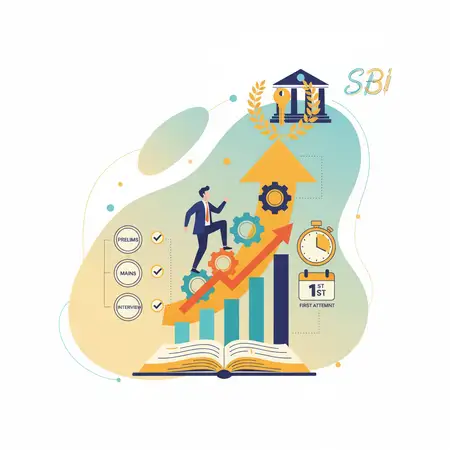
Understanding the SBI PO Exam: A Marathon, Not a Sprint
Before embarking on preparation, it's crucial to grasp the multi-stage nature of the SBI PO recruitment process. This rigorous assessment evaluates candidates on cognitive abilities, general awareness, and personality, ensuring only the most capable individuals join the ranks of India's largest public sector bank. Success demands not just knowledge, but strategic endurance across all phases.
The Three-Tier Selection Process
The SBI PO selection process is meticulously structured to evaluate a candidate's aptitude, knowledge, and personality. Each stage acts as a critical filter, progressively narrowing the applicant pool.
- Preliminary Examination (Prelims): This initial hurdle is designed to filter a large number of applicants. It's an objective test, qualifying candidates for the Main Examination by assessing fundamental problem-solving skills and speed.
- Sections: English Language, Quantitative Aptitude, Reasoning Ability.
- Total Marks: 100
- Duration: 1 hour (20 minutes per section)
- Key Focus: Speed and accuracy are paramount. Each section has a separate timing, demanding efficient time management and quick decision-making.

- Main Examination (Mains): This is the most crucial stage, significantly tougher than Prelims. It's a comprehensive assessment combining objective and descriptive tests, delving deeper into analytical and communication skills. Performance here largely determines your final selection.
- Objective Sections: Reasoning & Computer Aptitude, Data Analysis & Interpretation, General/ Economy/ Banking Awareness, English Language.
- Descriptive Test: English Language (Letter Writing & Essay).
- Total Objective Marks: 200
- Total Descriptive Marks: 50
- Duration: 3 hours (Objective) + 30 minutes (Descriptive)
- Key Focus: In-depth knowledge, advanced analytical skills, complex problem-solving abilities, current affairs, and effective written communication. This stage tests not just what you know, but how well you can apply and articulate it.
- Interview and Group Discussion (GD/Interview): The final stage assesses your personality, communication skills, banking aptitude, and general awareness. This round evaluates your suitability for a leadership role in the banking sector, focusing on soft skills and leadership potential.
- Marks: 50 (Interview) + 20 (Group Discussion)
- Key Focus: Confidence, clarity of thought, interpersonal skills, leadership qualities (for GD), and a genuine interest in the banking sector. Your ability to articulate ideas and handle pressure is key.
Important Note on Negative Marking: Both Prelims and Mains have a negative marking of 1/4th of the marks assigned to a question for incorrect answers. This underscores the importance of accuracy and strategic attempt-making. Avoid blind guessing, as it can significantly reduce your overall score and impact your chances of clearing sectional cut-offs.
First Attempt Strategy: Laying a Strong Foundation
Cracking the SBI PO exam in your initial attempt requires a strategic, disciplined, and consistent approach. Here's a detailed roadmap to guide your preparation:
- Understand the Syllabus Thoroughly: Don't just glance; delve deep into each topic. Obtain the official syllabus from previous year notifications or official SBI sources. Create a detailed checklist for every subject, ensuring no topic is left uncovered. A granular understanding of the syllabus helps you prioritize topics, allocate study time effectively, and avoid wasted effort on irrelevant areas. For instance, knowing the exact sub-topics under 'Reasoning' helps you focus on specific puzzle types.
- Build a Strong Conceptual Foundation: Before jumping to shortcuts, master the basics. For Quantitative Aptitude, revisit concepts like percentages, ratios, averages, time and work, profit and loss, HCF/LCM. For Reasoning, grasp the fundamentals of syllogism, seating arrangements, and inequalities. A solid foundation enables you to tackle complex problems by breaking them down into simpler components, making advanced questions manageable.
- Actionable Step: Use standard textbooks (e.g., RS Aggarwal for Quant and Reasoning) or trusted online courses/materials to build this foundation. For English, focus on grammar rules, vocabulary, and reading comprehension techniques by practicing from reliable sources like Wren & Martin for grammar.
- Develop Speed and Accuracy Concurrently: These two are the pillars of success. One without the other is insufficient; speed without accuracy leads to negative marks, and accuracy without speed means fewer attempts.
- Speed: Practice mental math, learn Vedic math techniques, and use approximation methods where applicable to solve problems faster. For Reasoning, develop efficient ways to decode puzzles and arrangements by identifying key information quickly. For English, improve reading speed to tackle comprehension passages within the time limit by daily reading practice.
- Accuracy: This comes from thorough conceptual understanding and careful practice. Don't rush into answering if you're unsure; negative marking can be detrimental. Focus on understanding the question and applying the correct concept precisely.
- Actionable Step: Once you've understood a concept, immediately solve a set of questions (20-30) related to it with a timer. This simultaneous practice of speed and accuracy helps you build efficiency from the start, identifying areas where you are slow or prone to errors.
- Master Data Interpretation (DI) and Data Analysis & Interpretation (DAI): These sections carry significant weightage in both Prelims and Mains, often being the deciding factor. They test your ability to quickly analyze and draw conclusions from numerical data, requiring both mathematical acumen and logical reasoning.
- Types: Be proficient in interpreting various formats such as bar graphs, line graphs, pie charts, tabular DI, caselets, missing DI, and radar graphs. Mains often feature more complex, multi-layered DIs.
- Skills Required: Strong calculation skills, a firm grasp of ratio and proportion, percentages, averages, and the ability to interpret complex data quickly and accurately are essential. Practice mental calculations and percentage approximations.
- Actionable Step: Dedicate a significant portion of your daily study time (at least 1-1.5 hours) to solving various types of DI sets. Start with easy sets and gradually move to moderate and difficult ones. Look for patterns, and avoid recalculating values that can be derived from previous steps. For example, if a question asks for percentage increase, quickly estimate using base values.
- Regular Mock Test Practice: Mock tests are your best friends. They simulate the actual exam environment, helping you manage time, identify weak areas, and build stamina. They are diagnostic tools for your preparation.
- Prelims Mocks: Start taking full-length Prelims mocks once you've completed about 50-60% of the syllabus. Aim for at least 2-3 mocks per week initially, increasing to 4-5 as the exam approaches.
- Mains Mocks: Once Prelims are done, shift focus to Mains mocks. These are longer and require more stamina and deeper analytical skills. Practice typing for the descriptive section during Mains mocks.
- Actionable Step: Do NOT just give the mock test; analyze it thoroughly. Review every question, whether correct or incorrect. Understand why you made a mistake (conceptual error, silly mistake, time management issue), identify areas where you spent too much time, and pinpoint topics you need to revise. Maintain an error log to track your progress and recurring mistakes, turning weaknesses into strengths.
- Learn Shortcut Methods Strategically: While conceptual understanding is primary, shortcuts can save precious seconds, especially in a time-bound exam. They are tools to enhance speed, not replace understanding.
- For Quant: Learn quick methods for squares, cubes, percentages to fractions, approximation techniques, and divisibility rules. These can significantly reduce calculation time, for example, knowing 1/7 = 14.28% helps in DI.
- For Reasoning: Develop strategies for Venn diagrams, syllogism rules (e.g., A+E=E), and specific approaches for various puzzle types to solve them efficiently, such as making a grid for floor-based puzzles.
- Actionable Step: Incorporate these shortcuts into your practice only after you're comfortable with the traditional methods. Over-reliance on shortcuts without understanding the underlying concept can backfire if the question pattern slightly changes, or if you forget the shortcut under pressure.
Section-Wise Preparation Guide
1. English Language
The English section tests your comprehension, grammar, and vocabulary. Consistent practice and exposure to the language are key.
- Reading Comprehension: This is often the largest component. Read widely (newspapers, magazines, online articles, especially editorials from The Hindu or Indian Express) daily to improve speed and understanding. Focus on identifying the main idea, author's tone, specific details, and inferential questions. Practice summarizing passages mentally.
- Grammar: Brush up on fundamental grammar rules (tenses, subject-verb agreement, parts of speech, prepositions, conjunctions). Practice error spotting, sentence correction, and phrase replacement questions extensively. A strong grasp of basic rules will help you identify subtle errors.
- Vocabulary: Build a robust vocabulary. Read newspapers (especially editorials), note down new words, look up their meanings and synonyms/antonyms, and try to use them in sentences. Flashcards, vocabulary apps (like Magoosh or WordUp), and creating your own word lists are effective methods for active recall and retention.
- Cloze Test & Para Jumbles: Practice extensively. For cloze tests, focus on context, grammatical fit, and appropriate word choice. For para jumbles, identify connecting sentences, introductory/concluding statements, and logical flow to arrange paragraphs correctly. Look for pronouns, conjunctions, and chronological order clues.
2. Quantitative Aptitude
This section demands strong numerical ability and problem-solving skills. Both speed and accuracy are crucial, especially for complex DI sets.
- Fundamentals: Master core topics like Percentages, Ratio & Proportion, Averages, Profit & Loss, Simple & Compound Interest, Time & Work, Time & Distance. These form the basis for many advanced problems and DI sets. For example, a strong understanding of percentages is vital for almost all DI questions.
- Number Series: Practice recognizing various patterns, including differences, squares, cubes, prime numbers, and combinations of operations (e.g., alternating series, multiplication/division patterns).
- Simplification/Approximation: Learn quick calculation techniques, BODMAS rule, squares, cubes, square roots, cube roots, and percentage-to-fraction conversions to solve these questions rapidly. For example, approximating 33.33% as 1/3 can save significant time.
- Quadratic Equations: Master solving quadratic equations quickly, often by factorization or using the quadratic formula. Practice comparing roots efficiently.
- Data Sufficiency: Understand how to determine if the given data in one or two statements is sufficient to answer a question, without necessarily solving it completely. This tests your conceptual clarity rather than just calculation.
- Advanced Topics (Mains): For the Mains exam, delve into Permutation & Combination, Probability, Mensuration (2D & 3D), Mixtures & Alligations. Understand their concepts and application-based problems. These topics require a deeper conceptual understanding and careful application of formulas.
3. Reasoning Ability
Reasoning tests your logical thinking and analytical skills. Puzzles and seating arrangements are high-weightage topics that require systematic problem-solving.
- Puzzles & Seating Arrangement: This is a high-scoring but time-consuming section. Practice various types (linear, circular, square, floor-based, box-based, scheduling, categorical). Learn to draw diagrams systematically, make cases, and eliminate possibilities efficiently. For instance, in a circular arrangement, always start with fixed positions or conditions.
- Syllogism: Master basic rules, practice "either/or" cases, and "possibility" cases. Use Venn diagrams or statement-based approaches consistently. Understand the difference between 'some', 'all', 'no', 'only a few'.
- Inequalities: Focus on both direct and coded inequalities. Learn to quickly identify relationships between elements by tracing paths between variables.
- Coding-Decoding: Understand different patterns, including letter shifting, number coding, and symbol coding. Practice identifying the logic quickly, whether it's alphabetical position, reverse order, or a combination.
- Blood Relations & Directions: Practice drawing family tree diagrams for blood relations and visualize directional movements for direction sense questions. Be careful with left/right turns.
- Input-Output: This is common in Mains. Understand the logic and transformation rules applied in each step to predict the output. Practice identifying patterns like shifting, arranging, or performing arithmetic operations.
- Data Sufficiency: Similar to Quant, determine if statements provide enough information to answer the question. This tests your ability to identify necessary conditions.
- Logical Reasoning (Mains): Critical reasoning, assumption, inference, strong/weak arguments, cause & effect. This requires analytical thinking and understanding the underlying logic of arguments, often without direct formulas.
- Actionable Step: Read the question carefully, identify the premise and conclusion, and look for logical flaws or implied meanings. Practice with a variety of question types to develop this skill, focusing on the reasoning process rather than just finding the answer.
4. General/Economy/Banking Awareness (Mains)
This dynamic section requires continuous effort to stay updated. It's crucial for both the objective test and the interview.
- Current Affairs: This is crucial. Read at least two reputable newspapers daily (e.g., The Hindu, The Indian Express, Livemint). Follow a good current affairs magazine/portal (e.g., AffairsCloud, Gradeup). Focus on national & international news, banking & economic news, government schemes, awards, appointments, sports, and important days. At least 6-8 months of current affairs are usually needed for the Mains exam.
- Static GK: Basic knowledge of Indian history, geography, polity, static banking terms, important organizations (e.g., RBI, SEBI, NABARD), and their headquarters. This provides a foundational context for current events.
- Banking Awareness: Understand banking terms (e.g., CRR, SLR, Repo Rate, Reverse Repo Rate, MSF), RBI functions, types of banks (PSBs, Private, Small Finance, Payments Banks), monetary policy, financial instruments, government initiatives related to banking (e.g., PMJDY, Mudra Yojana, Atal Pension Yojana), and recent mergers/acquisitions in the banking sector.
- Economic Awareness: Basic understanding of Indian economy, GDP, inflation, fiscal policy, budget, and economic surveys. This often overlaps with current affairs and banking awareness.
- Actionable Step: Make concise notes for current affairs, categorizing them by topic (e.g., National, International, Economy, Sports). Use flashcards for important dates and terms. Regularly review previous weeks'/months' current affairs to ensure retention, perhaps through weekly or monthly quizzes.
5. Computer Aptitude (Mains)
This section tests basic computer knowledge relevant to banking operations, focusing on practical understanding rather than deep technical expertise.
- Basics of Computers: Understand hardware components (CPU, RAM, ROM), software types (system, application), operating systems (Windows, Linux), and input/output devices.
- Networking: Familiarize yourself with concepts like LAN, WAN, internet, intranets, common network protocols (HTTP, FTP), and basic cybersecurity threats.
- MS Office: Know the basics of Word, Excel, and PowerPoint, including common functions, shortcuts, and their applications in an office environment. For example, common Excel formulas or PowerPoint presentation modes.
- Cyber Security: Understand concepts like viruses, malware, firewalls, phishing, ransomware, and basic security measures to protect data.
- Database Management System (DBMS): Grasp fundamental concepts like data, database, RDBMS, and SQL basics (e.g., what is a query, primary key).
- Actionable Step: No need for in-depth technical knowledge, but a good understanding of fundamental concepts and terminology is essential. Refer to basic computer knowledge books or online tutorials specifically designed for competitive exams. Practice with objective questions to reinforce learning.
6. Descriptive Test (Mains)
This section assesses your written communication skills in English, which are vital for a Probationary Officer's daily duties.
- Letter Writing: Practice formal and informal letter writing. Understand the correct format, salutations, closings, and appropriate language for various scenarios (e.g., complaint to a bank manager, inquiry about a loan, application for a job). Focus on clarity, conciseness, and politeness.
- Essay Writing: Practice writing essays on current affairs, banking, social issues, economic topics, and contemporary challenges. Focus on structure (introduction, body paragraphs with supporting arguments, conclusion), clarity, coherence, and grammatical correctness. Aim for a balanced perspective with logical flow.
- Actionable Step: Read editorials and well-written articles daily to improve your writing style, gather content, and develop a critical perspective. Practice typing essays and letters regularly to improve typing speed and accuracy under timed conditions. Get your essays reviewed by a mentor or peer to identify areas for improvement in content, structure, grammar, and vocabulary.
Common Mistakes to Avoid
Being aware of common pitfalls can help you navigate your preparation more effectively and ensure your first attempt is successful.
- Neglecting Any Section: All sections in both Prelims and Mains are important. Even if you're strong in one, don't ignore it, and definitely don't ignore your weaker sections. Remember, sectional cut-offs apply, meaning you must score above a minimum threshold in each section to qualify. A balanced approach is crucial.
- Spending Too Much Time on a Single Question: The clock is your biggest adversary. If a question feels overly complex or time-consuming, mark it and move on. Return to it only if you have time at the end. Getting stuck on one question can jeopardize your chances of attempting easier questions later, leading to missed opportunities.
- Skipping Newspaper Reading: This is non-negotiable for General Awareness, English Reading Comprehension, and Essay Writing. It also passively improves your overall general knowledge, vocabulary, and analytical skills. Skipping it means missing out on a crucial, multi-faceted preparation tool that keeps you informed and sharp.
- Not Reviewing Mock Test Performance: Just giving mocks is half the
SBI PO 2026 Exam: Crack It First Attempt
Explore more: SBI PO Strategy | Bank Exams | Banking Jobs
FAQs
What's the exam pattern?Three stages: Prelims, Mains, InterviewHow many attempts?General: 4, OBC: 7, SC/ST: UnlimitedRelated Resources
- SBI PO 2026 Syllabus
- SBI PO Previous Year Papers
- Latest Banking Jobs
- Current Affairs for Banking
Related Government Job Resources
Continue with active job hubs and related government job pages on TrueJobs.
Tools for this recruitment topic
Use only the tools relevant to the dates, eligibility or documents discussed above.
TrueJobs Editorial Team
TrueJobs editorial desk
This article is prepared from the sources referenced in the guide and reviewed for clarity, links and dated information. Read our editorial and corrections policy.
Continue This Topic
Follow the closest earlier and newer coverage so older archive posts keep real contextual crawl paths.
How Recruiters Actually Shortlist Candidates (Insider Secrets)
Unlock recruiter shortlisting secrets! Learn what makes candidates stand out and boost your job prospects with expert tips.
Gig Economy in India: Opportunities and Challenges
India's gig economy now includes 15M workers in flexible roles. Discover opportunities and challenges shaping this sector.
Read Next

How to Find Hidden Jobs That Are Never Posted Online

Best Job Portals in India Compared (Free vs Paid)

How Often Should You Apply for Jobs Daily?

How to Apply for Jobs Online Safely in India
Explore Topics
Perfect Your Resume
Use our AI-powered Resume Builder to create ATS-optimized resumes.
AI Resume Builder