
Explainer
Gig Economy India: 15M Workers & Future Trends — Explained
India's gig economy now includes 15M workers in flexible roles. Discover opportunities and challenges shaping this sector.

India's gig economy is rapidly expanding, now encompassing an estimated 15 million workers engaged in short-term contracts, freelance projects, and task-based jobs. This dynamic sector is transforming traditional employment, offering significant flexibility and diverse income opportunities, from delivery executives to specialized tech roles. However, its rapid growth also presents unique challenges, particularly regarding social security, income stability, and worker rights. A comprehensive understanding of both its immense potential and inherent difficulties is crucial for navigating this evolving work model in India, ensuring equitable growth and sustainable livelihoods for millions. As a pivotal component of the nation's future workforce, the gig economy demands careful consideration from all stakeholders – workers, platforms, businesses, and policymakers alike.
The Growth of Gig Work in India
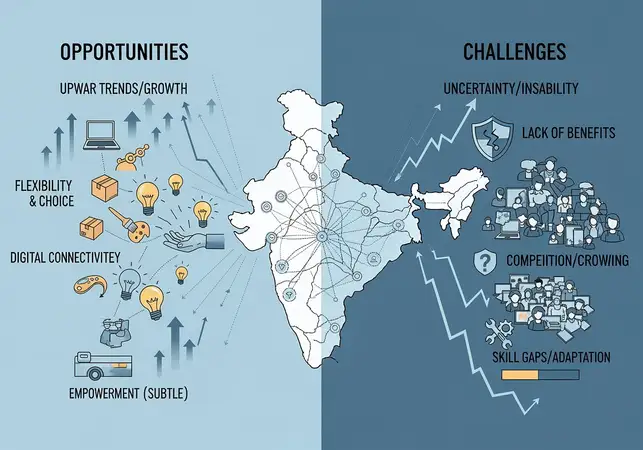
India's gig economy is experiencing explosive growth, projected to reach 23.5 million workers by 2030, a substantial increase from its current size. This expansion is not merely a statistical trend but a fundamental shift driven by technological advancements, demographic shifts, and evolving work preferences among the Indian populace. Platform companies like Swiggy, Zomato, Uber, Ola, and Urban Company have pioneered and expanded this model, creating millions of accessible, flexible gig jobs that cater to immediate consumer needs. Concurrently, specialized freelancing in high-skill domains such as IT, software development, graphic design, content creation, digital marketing, and consulting has also surged, attracting skilled professionals seeking autonomy, diverse project experiences, and global opportunities.
This dual-pronged growth highlights the versatility and pervasive nature of the gig economy across various socio-economic strata in India.
Key Drivers of Gig Economy Growth in India
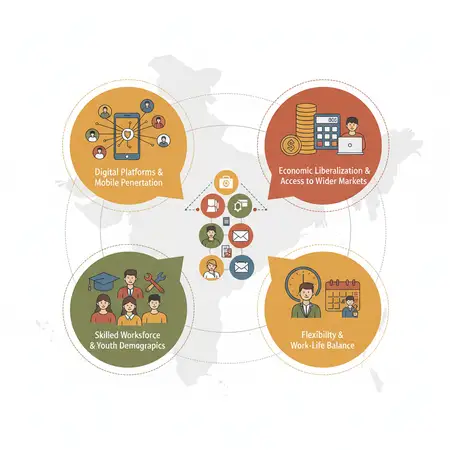
Several interconnected factors propel the gig economy's expansion across India, making it a significant force in the nation's employment landscape. Understanding these drivers is essential to grasp the sector's trajectory and impact.
- Technological Advancements and Digital Penetration: Firstly, widespread smartphone adoption and increasingly affordable internet connectivity have democratized access to digital platforms. This technological leap enables individuals from diverse socio-economic backgrounds, even in semi-urban and rural areas, to participate in the gig economy. Mobile applications serve as direct conduits between service providers and consumers, streamlining processes from job discovery to payment, and reducing traditional barriers to entry.
- India's Young Demographic and Evolving Work Preferences: Secondly, India's large and youthful population, a significant portion of whom are digital natives, finds the gig model particularly appealing. This demographic often seeks flexible work arrangements, supplementary income, or a low-barrier entry point into the job market. There's a growing desire for work-life balance, autonomy, and the ability to pursue multiple interests or income streams, which traditional employment often cannot provide.
- Urbanization and Consumer Demand: Urbanization further fuels demand for on-demand services across various sectors, from food delivery and ride-hailing to home services and professional consultations. The concentration of population in urban centers creates a robust market for instant services and provides a concentrated pool of potential gig workers, making platform operations more efficient and viable.
- Entrepreneurial Spirit and Independence: The inherent entrepreneurial spirit prevalent in India, coupled with a desire for independence from the rigid structures of traditional employment, also drives this trend. Many individuals are drawn to the idea of being their own boss, choosing their projects, and managing their time, even if it comes with increased responsibility and risk.
- Impact of the COVID-19 Pandemic: The COVID-19 pandemic significantly accelerated the shift towards remote work and highlighted the gig model's resilience and adaptability. As businesses scaled down and traditional jobs became scarce, many turned to gig work for survival. The pandemic normalized remote collaboration and digital service delivery, further embedding the gig economy into the mainstream for individuals and businesses alike.
- Economic Imperatives for Supplementary Income: For many, the gig economy serves as a crucial source of supplementary income to augment their primary earnings, or as a full-time livelihood in the face of underemployment or unemployment in the formal sector. The flexibility allows individuals to manage other responsibilities, such as education or family care, while earning.
- Cost-Effectiveness for Businesses: From a business perspective, engaging gig workers offers significant advantages, including reduced overheads, access to specialized skills on demand, and flexibility to scale operations up or down based on market fluctuations without the long-term commitments of full-time employment.
Diverse Landscape of Gig Opportunities
The Indian gig economy is incredibly diverse, extending far beyond common delivery and ride-sharing services. It encompasses a wide array of roles and sectors, catering to various skill sets, professional aspirations, and educational backgrounds. This diversity is a testament to its adaptability and potential to absorb a broad spectrum of the workforce.
- Platform-Based Services: This segment includes the highly visible roles in food delivery (e.g., Swiggy, Zomato), ride-hailing (e.g., Uber, Ola), home services (e.g., Urban Company, Housejoy), and logistics/e-commerce delivery. These roles often require minimal specialized skills, offering accessible entry-level income opportunities for a large segment of the population. They are characterized by task-based payments and flexible hours.
- IT and Tech Freelancing: This high-skill segment attracts highly qualified professionals in software development, web design, app development, data science, cybersecurity, cloud computing, and AI/ML. They find abundant opportunities on global and local freelancing platforms like Upwork, Fiverr, Toptal, and even through direct client engagements. These roles typically command higher pay and offer complex, challenging projects.
- Creative Arts and Content Creation: Graphic designers, video editors, photographers, writers, content strategists, social media managers, illustrators, animators, and translators thrive in the gig economy. They work on project-based assignments for diverse clients, ranging from startups to established brands, helping them with branding, marketing, and communication needs.
- Professional Services: This category includes consultants in management, finance, human resources, legal advisory, marketing strategy, and project management. These professionals leverage their expertise to provide specialized advice and solutions to businesses on a contractual or project basis, often offering more flexible and cost-effective alternatives to traditional consulting firms.
- Education and Tutoring: With the rise of online learning, gig opportunities for educators and tutors have expanded significantly. This includes subject matter experts, language instructors, test preparation coaches, and even vocational trainers who offer their services through online platforms or directly to students.
- Healthcare and Wellness: While nascent, the gig economy is also making inroads into healthcare, with opportunities for freelance nurses, physiotherapists, dieticians, and mental health counsellors offering remote consultations or home visits.
- Micro-tasking and Data Entry: These roles involve performing small, repetitive digital tasks, such as data annotation, transcription, image tagging, or content moderation, often for AI training or data processing purposes. Platforms like Amazon Mechanical Turk facilitate such micro-tasking.
- Skilled Trades and Artisans: Beyond digital platforms, traditional skilled trades like plumbing, electrical work, carpentry, and tailoring are also adopting gig-like models, where professionals offer their services on a per-job basis, often facilitated by local service aggregators or word-of-mouth.
Emerging Niches in the Gig Economy
As the gig economy matures, new and specialized niches are continually emerging, reflecting technological advancements and evolving market demands. These include roles in virtual assistance, podcast editing, specialized digital marketing (e.g., SEO auditing, influencer marketing), user experience (UX) design, and even sustainable consulting. The ability to quickly adapt to these new demands is a hallmark of a successful gig worker, and platforms are increasingly facilitating connections in these specialized areas.
Opportunities for Gig Workers in India
The burgeoning gig economy in India offers a multitude of opportunities for individuals seeking alternative employment models. These benefits extend beyond mere income generation, touching upon personal growth, skill development, and greater control over one's professional life.
Flexibility and Autonomy
One of the most compelling advantages of gig work is the unparalleled flexibility and autonomy it offers. Gig workers can largely set their own hours, choose the projects they wish to undertake, and decide where they want to work from. This level of control is particularly attractive to students, caregivers, individuals with disabilities, or those seeking to balance work with other personal commitments. It empowers workers to design a schedule that fits their lifestyle, rather than conforming to rigid 9-to-5 structures, leading to improved work-life balance and reduced stress.
Diverse Income Streams and Skill Development
The gig economy provides an excellent avenue for individuals to generate diverse income streams. Workers are not limited to a single employer or type of work, allowing them to take on multiple projects simultaneously or switch between different gigs based on demand and personal interest. This not only enhances earning potential but also fosters continuous skill development. By engaging in various projects, gig workers gain exposure to different industries, technologies, and client requirements, building a robust and versatile skill set that is highly valued in today's dynamic job market. It also allows for the practical application of new skills and the opportunity to build a strong professional portfolio.
Lower Entry Barriers and Accessibility
Compared to traditional employment, the gig economy often presents significantly lower entry barriers. Many platform-based roles, such as delivery or ride-sharing, require minimal formal qualifications or prior experience, making them accessible to a broad segment of the population, including those who may face challenges entering the formal job market. For skilled professionals, freelancing platforms provide direct access to clients without the need for extensive networking or traditional recruitment processes. This inclusivity helps in tapping into a wider talent pool and provides livelihoods to many who might otherwise be underemployed or unemployed.
Geographic Independence and Remote Work
For many skilled gig workers, geographical location is no longer a constraint. The ability to work remotely means that professionals in Tier 2 and Tier 3 cities, or even rural areas with internet access, can access opportunities that were previously exclusive to metropolitan centers. This decentralization of work helps in reducing urban migration pressures and promotes economic development across different regions of India. It also allows individuals to stay closer to their families and communities while pursuing rewarding careers.
Entrepreneurial Gateway
For many, gig work serves as a practical gateway to entrepreneurship. It allows individuals to test their skills, build a client base, and understand market dynamics with relatively low risk. Successful gig workers often evolve into small business owners, expanding their services, hiring others, and eventually establishing formal enterprises. This entrepreneurial pathway contributes to job creation and fosters a culture of innovation and self-reliance within the economy.
Challenges Faced by Gig Workers
Despite the numerous opportunities, the gig economy in India is fraught with significant challenges that disproportionately affect gig workers. These issues often stem from the informal nature of gig work and the lack of comprehensive regulatory frameworks, leading to precarious working conditions for many.
Income Instability and Uncertainty
One of the most pervasive challenges is income instability. Unlike salaried employees, gig workers do not have a guaranteed fixed income. Their earnings are directly tied to the availability of tasks, demand fluctuations, and their ability to secure projects. This can lead to unpredictable income streams, making financial planning, savings, and budgeting extremely difficult. Periods of low demand or intense competition can result in significant income dips, pushing workers into financial precarity.
Lack of Social Security Benefits
A critical drawback of gig work is the absence of traditional social security benefits. Gig workers are typically classified as independent contractors, not employees, which exempts them from benefits like Provident Fund (PF), Employee State Insurance (ESI), gratuity, paid sick leave, maternity leave, and employer-provided health insurance. This lack of a safety net leaves them vulnerable to financial hardship in case of illness, accidents, old age, or other life events, unlike their counterparts in the formal sector.
Worker Rights and Exploitation Concerns
The informal nature of gig work often translates into a lack of formal worker rights. Issues such as unfair terms and conditions, arbitrary account deactivation by platforms without proper grievance redressal, and opaque payment structures are common. Gig workers frequently face pressure to work long hours to meet targets or maximize earnings, leading to burnout. There's also a power imbalance between large platforms and individual workers, making it difficult for workers to negotiate better terms or seek recourse for unfair practices.
Skill Upgradation and Competition
The gig economy is highly dynamic and competitive. To remain relevant and secure work, gig workers must constantly upgrade their skills and adapt to new technologies and client demands. This requires continuous investment in learning, which can be a financial and time burden. The intense competition, especially in popular categories, can drive down prices and make it harder for new or less experienced workers to establish themselves.
Digital Divide and Access
While technology is a driver of the gig economy, it also presents a barrier. Individuals lacking adequate digital literacy, access to reliable smartphones, or stable internet connectivity are excluded from many gig opportunities. This digital divide exacerbates existing inequalities, particularly impacting those in remote areas or from lower socio-economic backgrounds who could otherwise benefit from gig work.
Taxation and Compliance
Navigating taxation and legal compliance can be complex for individual gig workers. Unlike salaried employees whose taxes are often deducted at source, gig workers are responsible for calculating and paying their own income tax, Goods and Services Tax (GST) if applicable, and maintaining proper financial records. The lack of clear guidelines and awareness can lead to non-compliance or undue financial burden.
Mental Health and Burnout
The constant pressure to find work, meet deadlines, maintain high ratings, and manage financial insecurity can take a significant toll on the mental health of gig workers. The isolation associated with remote work, the lack of a supportive team environment, and the blurred lines between work and personal life can lead to stress, anxiety, and burnout. The performance-driven nature of many platforms can create an environment of constant hustling, often at the expense of well-being.
The Role of Policy and Regulation
Recognizing both the immense potential and inherent
Read More on TrueJobs
- Top Remote Jobs in India: A Complete Guide
- How to Plan Your Career Path for Long-Term Success
- In-Demand Skills for the Future Workforce
- Latest Government Job Notifications
Frequently Asked Questions
What is the gig economy in India?
The gig economy in India involves around 15 million workers in short-term contracts, freelance work, and task-based jobs, offering flexibility across various sectors.
How big is the gig economy in India expected to grow?
India's gig workforce is projected to expand significantly, reaching an estimated 23.5 million workers by the year 2030.
What are the main opportunities in India's gig economy?
The primary opportunities include flexible work schedules, diverse income streams, and access to a wide range of jobs, from delivery services to specialized tech projects.
What challenges do gig workers in India face?
Key challenges for gig workers include a lack of social security benefits, income instability, and the need for stronger worker rights and protections.
Why is the gig economy important for India's future?
It is a pivotal component of the future workforce, driving economic activity and transforming traditional employment models, requiring attention from all stakeholders.
Related: Freelancing Growth | Gig Worker Rights | Social Security Programs
Gig Economy in India: Opportunities & Challenges
Related Resources
- Find Freelance & Contract Jobs
- Top Skill Development Courses
- Employee Rights and Labour Laws in India
Conclusion: Navigating India's Gig Economy Future
The gig economy is undeniably a cornerstone of India's evolving workforce, offering unprecedented flexibility and new avenues for income. While its growth unlocks immense potential, the challenges of income instability and lack of social security cannot be ignored. A balanced approach involving supportive policies, platform accountability, and worker upskilling is essential to foster an equitable and sustainable gig economy that empowers millions.
TrueJobs Editorial Team
TrueJobs editorial desk
This article is prepared from the sources referenced in the guide and reviewed for clarity, links and dated information. Read our editorial and corrections policy.
Continue This Topic
Follow the closest earlier and newer coverage so older archive posts keep real contextual crawl paths.
ATS-Friendly Resume: How to Beat Applicant Tracking Systems
Learn how to create an ATS-friendly resume that passes applicant tracking systems and gets you interviews.
Railway Recruitment 2026: 50,000+ Expected Vacancies, Department-Wise Full Update
Railway Recruitment 2026 is set to be a massive hiring drive with over 50,000 expected vacancies across NTPC, Group D, ALP, and JE. Get a complete breakdown of posts and eligibility.
Read Next

Skills That Will Be in Demand in the Next 5 Years
UPSC Civil Services Exam 2026: Prelims Result, Mains Admit Card, and Final Updates
UPSC Indian Forest Service 2026: Prelims Result, Mains Exam, Admit Card, Selection
UPSC NDA & NA II 2026: Notification, Application, Exam, and SSB Updates
Explore Topics
Perfect Your Resume
Use our AI-powered Resume Builder to create ATS-optimized resumes.
AI Resume Builder