
Career guide
Daily Job Applications: Quality Strategies for Success — Explained
Learn how many job applications per day optimize success. Quality trumps quantity in government job searches.

Embarking on a job search, especially for coveted government positions in India, can feel like navigating a vast ocean of opportunities and challenges. This comprehensive guide aims to demystify the process, moving beyond the common misconception that sheer volume of applications guarantees success. We will explore effective strategies for a quality-driven job search, helping you optimize your efforts and significantly increase your chances of securing your dream role.

The Flawed Logic of "More is Better"
The quest for a new job can be overwhelming, and it's easy to get caught up in a numbers game, where the focus is on applying to as many jobs as possible, regardless of their relevance or fit. This mentality often stems from a desire to maximize chances, believing that a higher volume of applications will inevitably lead to more interviews. However, the truth is, there is no single magic number that guarantees success. The reality is that prioritizing quality and consistency over sheer volume is a clear strategy that outperforms all others, leading to more meaningful interactions and a higher likelihood of securing a desirable position.
In the competitive landscape of government job applications, where thousands of candidates often vie for a single opening, a scattergun approach is rarely effective. Recruiters and hiring committees are looking for candidates who demonstrate a genuine interest and a clear understanding of the role and the organization's mission. A generic application, no matter how many times it's submitted, often fails to convey this crucial level of engagement.
Why High-Volume Applications Fail:
There are several reasons why applying to a large number of jobs daily can be counterproductive, ultimately hindering your job search rather than accelerating it. Some of the key reasons include:
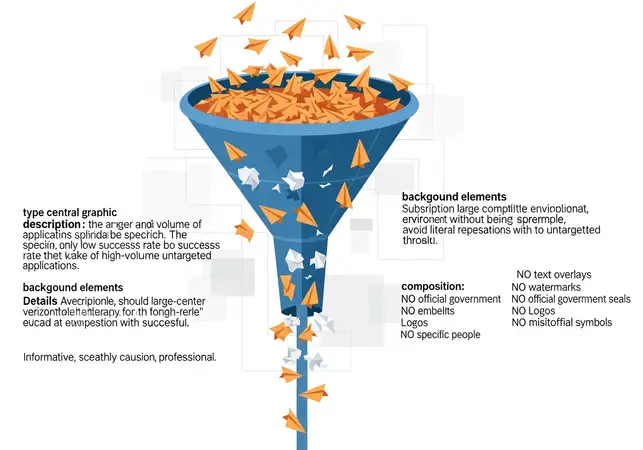
- ATS Rejection: When you're applying to multiple jobs, it's easy to use a generic resume and cover letter, but this approach often lacks the precise keywords that the Applicant Tracking System (ATS) looks for. ATS software scans applications for specific terms, phrases, and formatting. If your generic application doesn't match a significant percentage of the keywords from the job description, it will likely be filtered out before it even reaches a human recruiter, regardless of your actual qualifications. Many government organizations, especially larger ones, utilize sophisticated ATS to manage the high volume of applications they receive. Failing to optimize your application for these systems means your carefully crafted experience might never see the light of day. For more insights on navigating these systems, consider exploring resources on ATS optimization tips.
- Recruiter Fatigue: Hiring managers and recruiters review hundreds of applications for a single opening. They can spot a generic application instantly. When they see the same resume and cover letter being used for multiple job openings, or an application that clearly hasn't been tailored, it gives the impression that you're not genuinely interested in the specific role or company. This lack of personalized effort can lead to recruiter fatigue and a lower likelihood of being considered for an interview, as it signals a lack of attention to detail and genuine enthusiasm. Imagine a recruiter sifting through hundreds of applications; a personalized, well-researched application stands out like a beacon in a sea of sameness.
- Increased Errors: Rushing to apply to multiple jobs can lead to careless mistakes. These can range from minor typos and grammatical errors to more critical blunders such as incorrect contact information, attaching the wrong documents (e.g., a cover letter addressed to a different company), or even misinterpreting job requirements. Such errors immediately convey a lack of professionalism and attention to detail, which can instantly disqualify you from consideration, even if you are otherwise a strong candidate. In government roles, precision and adherence to guidelines are paramount, and errors in an application can be seen as an early indicator of a lack of these qualities.
- Burnout: Floods of rejections can be demoralizing, and when you're applying to a large number of jobs daily, you're more likely to experience rejection, often without any feedback. This constant stream of negative outcomes can quickly lead to emotional and mental burnout, decreasing your motivation, confidence, and overall effectiveness in your job search. It can turn what should be an exciting pursuit into a draining chore. The emotional toll of constant rejection can be significant, making it harder to maintain a positive outlook and perform well in interviews when opportunities do arise.
The Importance of Strategic Application
Instead of merely increasing the number of applications, a strategic approach involves careful selection of roles and meticulous preparation for each application. This means understanding the specific requirements of a government job, which often include unique eligibility criteria, specific educational qualifications, and sometimes even regional language proficiency. A strategic applicant invests time in understanding these nuances before applying, ensuring their efforts are directed towards roles where they genuinely have a strong chance.
Finding Your Sweet Spot
Instead of focusing on the number of jobs you apply to, it's essential to reframe the question to: "How many high-quality applications can I realistically complete each day?" This approach allows you to focus on the quality of your applications, rather than the quantity, ensuring each submission is a strong representation of your capabilities and interest. It shifts the mindset from a frantic race to a strategic campaign.
The answer for most people: 2-5 quality applications per day. This number allows you to take the time to thoroughly research the company, tailor your resume and cover letter, and ensure that your application is error-free. It strikes a balance between making consistent progress and maintaining the high standards necessary to stand out in a competitive job market.
For government jobs, this "sweet spot" is even more critical. The application processes can be more detailed, often requiring specific forms, attested documents, and adherence to strict deadlines. Rushing through these can lead to disqualification on technical grounds, irrespective of your qualifications. Therefore, dedicating sufficient time to each application is not just about making it stand out, but also about ensuring it meets all administrative requirements.
A High-Quality Application Includes:
A high-quality application is one that demonstrates that you've taken the time to understand the company and the job requirements, presenting yourself as an ideal fit for the specific role. Some of the key elements of a high-quality application include:
- Thoroughly reading the job description to understand the requirements and responsibilities of the job, paying close attention to both technical skills and soft skills mentioned. Look for keywords and phrases that are repeated, as these are likely crucial for the ATS and the hiring manager. For government jobs, this also means understanding the specific department's mandate and how the role contributes to it.
- Researching the company to learn about its mission, values, culture, recent projects, and any news. This allows you to speak genuinely about your interest and align your application with their organizational goals. Check their "About Us" page, LinkedIn profile, and recent press releases. For government entities, this involves understanding the ministry or department's objectives, recent policy initiatives, and public service goals. This research can be invaluable when crafting your cover letter or preparing for an interview.
- Tailoring your resume to match the keywords and requirements listed in the job description. This involves customizing your summary, experience bullet points, and skills section. Use action verbs and quantify your achievements whenever possible to demonstrate impact (e.g., "Increased efficiency by 15%" instead of "Responsible for efficiency"). For government jobs, highlight any experience with public service, policy implementation, administrative tasks, or specific software used in government offices.
- Writing a personalized cover letter that highlights your relevant skills and experiences specifically for *this* role and *this* company. Explain why you are a great fit, referencing specific aspects of the job description and your research on the company. Avoid generic salutations and demonstrate genuine enthusiasm. In the context of government jobs, articulate how your values align with public service and how your skills can contribute to the government's objectives.
- Double-checking for errors to ensure that your application is professional and polished. Proofread carefully for typos, grammatical mistakes, and formatting inconsistencies. Consider using online grammar checkers or asking a trusted friend to review your documents before submission. This step is non-negotiable for any professional application, but especially so for government roles where attention to detail is highly valued.
Leveraging Your Network for Quality Applications
While the focus is on individual application quality, your network can play a significant role in enhancing this. Informational interviews with individuals working in similar government roles or departments can provide invaluable insights into the daily responsibilities, required skills, and organizational culture. This firsthand information can help you tailor your application even more precisely, making it resonate better with hiring managers. Furthermore, a referral from an existing employee, while not always a guarantee, can sometimes give your application an initial boost, ensuring it receives a closer look.
Recommended Daily Job Search Schedule
To help you stay organized and focused, and to ensure you're dedicating your time effectively, here's a recommended daily job search schedule. This structure helps maintain momentum without leading to burnout.
- 9:00 AM - 10:00 AM: Sourcing and Selection
- Browse reputable job boards, such as TrueJobs.co.in, LinkedIn, Naukri, and company career pages. Utilize advanced filters to narrow down results by location, industry, experience level, and specific keywords. For government jobs, also regularly check official government recruitment portals like UPSC, SSC, state PSCs, and specific ministry websites.
- Identify 5-10 potential matches that genuinely align with your skills, experience, and career aspirations. Don't just look at the title; quickly scan the key responsibilities. Pay close attention to eligibility criteria for government jobs, including age limits, educational qualifications, and domicile requirements.
- Create a shortlist of 3-5 roles to apply for, based on a deeper assessment of your skills, experience, and interests. Prioritize those where you meet at least 70-80% of the requirements. For government jobs, ensure you meet 100% of the mandatory requirements, as these are often non-negotiable.
- 10:00 AM - 12:30 PM: Application Time
- Research each company thoroughly. Go beyond their "About Us" page; look into their recent projects, news, leadership team, and employee reviews (e.g., Glassdoor) to understand their culture and current challenges. For government departments, understand their recent policy announcements, public initiatives, and annual reports.
- Customize your resume and cover letter for each specific job. This isn't just about swapping out company names; it's about rephrasing bullet points to align with the job description's language and highlighting experiences most relevant to the role. For government applications, ensure your experience is framed in terms of public service, administrative efficiency, or policy support, where applicable.
- Submit 2-3 high-quality applications, taking the time to ensure that each application is error-free, tailored to the specific job, and includes all requested documents. Focus on precision over speed. Double-check all attachments and ensure they are in the specified format (e.g., PDF only).
- 12:30 PM - 1:00 PM: Networking
- Engage on LinkedIn by commenting thoughtfully on posts from industry leaders or target companies, sharing relevant articles, and connecting with people in your industry. Aim for quality interactions, not just mass connections. For government jobs, connect with individuals working in public administration, specific ministries, or related research institutions.
- Reach out to connections at target companies for informational interviews. Learn more about their experiences, gain insights into the company culture, and understand the day-to-day realities of roles you're interested in. This can be particularly useful for understanding the nuances of various government departments.
- 2:00 PM - 3:00 PM: Skill Development
- Take online courses (e.g., Coursera, Udemy, government-sponsored skill development programs) or watch tutorials to improve your skills and knowledge in areas relevant to your job search. For government jobs, this could include public administration, specific software (e.g., Tally, MS Office advanced features), data analysis, or communication skills. Consider certifications that are valued in the public sector.
- Work on portfolio projects or volunteer work to demonstrate your skills and experiences to potential employers, especially if you're transitioning careers or have limited professional experience. Volunteering with NGOs or local government initiatives can be a great way to gain relevant experience and demonstrate commitment to public service.
- 3:00 PM - 4:00 PM: Follow-Ups & Admin
- Update your job search tracker to keep track of the jobs you've applied for, the deadlines, contact persons, and the follow-up actions required. This spreadsheet is crucial for staying organized. Include columns for application status (e.g., applied, under review, interview scheduled, rejected) and notes on any communications.
- Send polite, concise follow-up emails to recruiters or hiring managers a week or two after applying (if appropriate and contact information is available) to express your continued interest in the job and inquire about the status of your application. For government jobs, direct follow-ups are less common due to the structured nature of recruitment, but it's important to keep an eye on official results and admit cards announcements.
- Prepare for upcoming interviews by researching the company in depth, practicing your responses to common interview questions (e.g., STAR method), and preparing any materials you may need, such as references or extra copies of your resume. For government interviews, be prepared to discuss current affairs, policy issues, and your understanding of public service ethics.
The Weekly Target
In addition to your daily job search schedule, it's essential to set a weekly target for the number of quality applications you want to submit. This provides a broader perspective and helps you gauge your progress over time.
- Aim for 10-20 quality applications per week, focusing on roles that genuinely match your skills, experience, and interests. This weekly goal allows for flexibility in your daily schedule while ensuring consistent effort. This target is designed to be ambitious yet achievable, preventing both complacency and burnout.
- Focus on quality over quantity, taking the time to research each company and tailor your application to the specific job requirements. Remember, one well-crafted application is often more effective than ten generic ones. This principle holds true across all sectors, but particularly in government recruitment where thoroughness is highly valued.
- Track everything in a spreadsheet or a dedicated job search tool. This includes the date applied, job title, company name, application status, interview dates, and any follow-up actions taken or needed. A comprehensive tracker is your best friend in managing your job search effectively. Regularly reviewing your tracker can help you identify patterns, understand what's working, and adjust your strategy accordingly.
Reviewing Your Weekly Progress
At the end of each week, take some time to review your progress. This isn't just about counting applications, but about assessing the quality of your efforts. Ask yourself:
- Were my applications truly tailored, or did I rush some?
- Did I spend enough time researching each role and organization?
- Did I engage in any networking activities?
- What feedback, if any, did I receive (even rejections can offer learning points)?
- What adjustments can I make to my strategy for the upcoming week?
This reflective practice is crucial for continuous improvement and maintaining a strategic edge in your job search.
Avoiding Burnout
Job searching can be a long and challenging process, often filled with uncertainty and setbacks. It's essential to take proactive steps to avoid burnout, which can severely impact your mental health and job search effectiveness. Here are some tips to help you stay motivated and focused:
- Take regular breaks to rest and recharge. Step away from your computer, go for a short walk, or engage in a non-work-related activity. Short, frequent breaks can significantly improve focus and reduce stress. Consider incorporating mindfulness exercises or short meditation sessions into your breaks.
- Set realistic daily goals to avoid feeling overwhelmed. Instead of aiming for an unrealistic number of applications, focus on completing your scheduled tasks for sourcing, applying, and networking. Celebrate the completion of these tasks, no matter how small.
- Celebrate small wins, such as completing a challenging application, receiving an email response, or having a successful informational interview. Acknowledging progress, no matter how small, helps maintain motivation. These small victories accumulate and build momentum.
- Maintain a work-life balance by scheduling time for activities you enjoy and that help you relax. This could be exercise, hobbies, spending time with loved ones, or pursuing personal interests. Your job search should not consume every waking moment. A balanced life outside of job hunting can provide perspective and renewed energy.
- Stay connected with supportive people, such as friends, family, or a career coach, to help you stay motivated and focused. Sharing your experiences and getting encouragement can make a big difference. Consider joining a job seeker support group, either online or in person, to share strategies and emotional support.
Some additional tips to help you stay organized and focused include:
- Using a job search tracker (digital spreadsheet or dedicated app) to keep track of the jobs you've applied for, the deadlines, contact details, and the follow-up actions. This prevents confusion and missed opportunities. Many free templates are available online that you can customize.
- Creating a routine and sticking to it, to help you stay motivated and focused. Treat your job search like a full-time job, but also ensure you schedule downtime. A consistent routine helps build discipline and reduces decision fatigue.
- Continuously updating your skills and knowledge to make yourself a more competitive candidate. The job market is dynamic, and staying current with industry trends and required competencies is crucial. Look for free or low-cost online courses, webinars, and certifications relevant to your target roles, especially those offered by government initiatives.
- Practicing self-care and taking care of your physical and mental health. Ensure you get adequate sleep, eat nutritious meals, and engage in physical activity. A healthy body and mind are essential for navigating the stresses of job hunting. Remember, your well-being is paramount.
By following these tips and staying focused on quality over quantity, you can increase your chances of success in your job search and find a role that matches your skills, experience, and interests. Remember, a strategic and well-managed job search is far more effective than a frantic one.
FAQ
What is the ideal number of jobs to apply for daily?
The ideal number of jobs to apply for daily is 2-5 quality applications. This number allows you to take the time to thoroughly research the company, tailor your resume and cover letter, and ensure that your application is error-free, significantly increasing your chances of getting noticed. For government jobs, where application processes can be more intricate, focusing on quality over quantity is even more critical to ensure all requirements are met.
How can I avoid burnout during my job search?
To avoid burnout during your job search, it's essential to take regular breaks, set realistic daily goals, and maintain a work-life balance. Additionally, staying connected with supportive people, continuously updating your skills and knowledge, and prioritizing self-care can help you stay motivated and focused throughout the process. Remember to celebrate small wins and acknowledge your progress.
What are some common mistakes to avoid during a job search?
Some common mistakes to avoid during a job search include using a generic resume and cover letter for all applications, rushing to apply to multiple jobs without proper customization, not taking the time to research the company, and failing to tailor your application to the specific job requirements. These errors often lead to immediate rejection by ATS or recruiters. For government jobs, also avoid missing deadlines or failing to attach all required documents.
How important is networking for government jobs?
While government jobs often emphasize merit-based application processes, networking remains highly valuable. It can provide you with insights into specific departments, upcoming opportunities, and the organizational culture. Connecting with current employees or officials can offer valuable advice, clarify job requirements, and sometimes even lead to referrals or recommendations, making your application more informed and targeted. It helps you understand the unwritten rules and cultural nuances of public service.
Should I apply for government jobs that I only partially meet the criteria for?
For government jobs, it is generally advisable to apply only if you meet all the mandatory eligibility criteria, including educational qualifications, age limits, and any specific experience requirements. Government recruitment processes are often very strict, and applications that do not meet all essential criteria are typically rejected outright. While you might apply for private sector jobs if you meet 70-80% of the requirements, for government roles, aim for 100% of the mandatory criteria to avoid wasting your time and effort. Always refer to the official notification for precise details.
Optimal Daily Job Applications: Quality Over Quantity
Related: Job Search Tips | Current Openings | Resume Help
TrueJobs Editorial Team
TrueJobs editorial desk
This article is prepared from the sources referenced in the guide and reviewed for clarity, links and dated information. Read our editorial and corrections policy.
Continue This Topic
Follow the closest earlier and newer coverage so older archive posts keep real contextual crawl paths.
Read Next

How to Find Hidden Jobs That Are Never Posted Online

RRB NTPC 2026 Exam: Complete Preparation Roadmap

SBI PO 2026 Exam: How to Crack It on Your First Attempt

SSC CGL 2026 Preparation Guide: Syllabus, Strategy, and Tips
Explore Topics
Perfect Your Resume
Use our AI-powered Resume Builder to create ATS-optimized resumes.
AI Resume Builder