
Career guide
Freelancing vs Full-Time Jobs: Pros and Cons 2026 — Explained
Compare freelancing vs full-time jobs in India. Understand income stability, benefits, work-life balance, and growth to choose the right path for you.
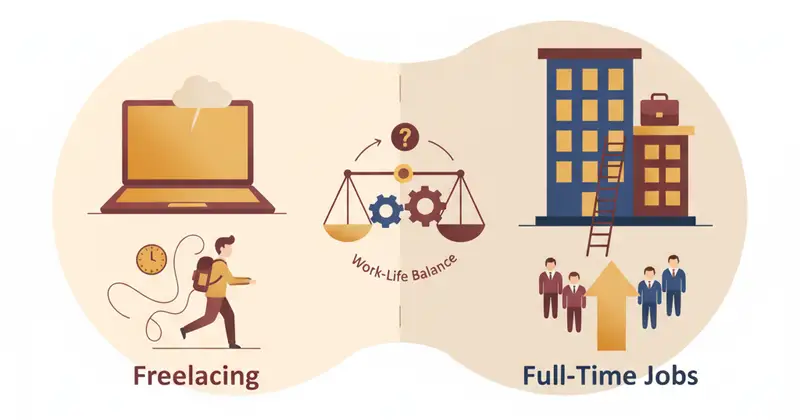
The world of work is undergoing a seismic shift, and India is at the forefront of this transformation. The traditional 9-to-5 full-time job, once the gold standard of employment, now shares the stage with the rapidly growing gig economy. This has brought the debate around freelancing vs full-time jobs into the mainstream, a critical dilemma facing professionals across India, from fresh graduates to seasoned experts. Understanding the nuances of each path is crucial for making an informed career decision that aligns with your personal and professional aspirations.
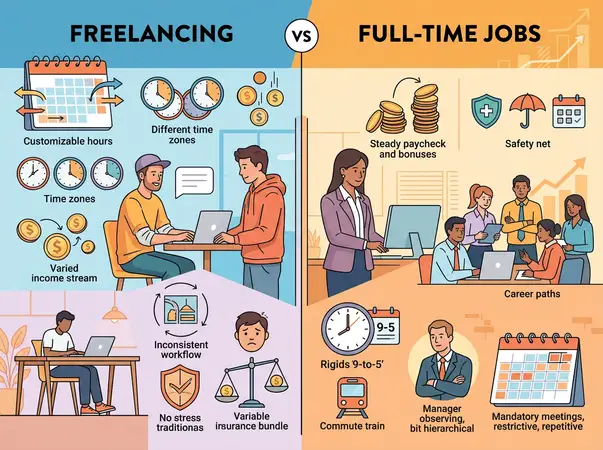
The rise of digital platforms, increased internet penetration, and a burgeoning young workforce have fueled the growth of the gig economy in India. Factors like the government's Digital India initiative, increased access to high-speed internet even in tier-2 and tier-3 cities, and a cultural shift towards greater autonomy have significantly contributed to this trend. Professionals across various sectors, including IT, content creation, design, marketing, consulting, education, and even healthcare, are increasingly exploring independent work. This comprehensive guide will delve deeper into the pros and cons of both employment models, providing practical advice and real-world considerations specific to the Indian context, helping you navigate this evolving landscape and make a choice that truly serves your career and life goals.
1. Income and Financial Stability
Financial stability is often the primary concern when choosing a career path. Both freelancing and full-time employment offer distinct financial landscapes, each with its own set of advantages and challenges, particularly within the Indian economic framework where family responsibilities and long-term security play a significant role.
Full-Time Jobs: Predictable and Steady
Full-time employment in India typically offers a more conventional and secure financial outlook, providing a strong foundation for long-term planning and often preferred by financial institutions due to its predictability.

- Steady Salary: A fixed income, usually credited monthly, forms the backbone of financial planning for most Indian households. This predictability allows for easier budgeting, loan applications (home loans, car loans, personal loans, education loans), and long-term investments like recurring deposits (RDs) or systematic investment plans (SIPs) in mutual funds. Banks and financial institutions often favour salaried individuals due to their consistent income proof and perceived lower risk, making it easier to secure credit at favourable rates. The monthly inflow provides a sense of security and reduces financial anxiety, offering a stable base for family commitments and future aspirations.
- Bonuses and Increments: Many companies, especially in the IT, finance, manufacturing, and service sectors, offer annual performance bonuses, festival bonuses (like Diwali bonus, Eid bonus), and regular salary increments based on performance reviews, market standards, and company profitability. These can significantly boost annual earnings, serve as a reward for dedication and hard work, and help combat inflation. Increments are typically tied to appraisal cycles, ensuring your income grows with your experience, contribution, and the company's success, providing a clear path for financial progression.
- Paid Leave: Entitlement to various paid leaves, such as sick leave, casual leave, and earned leave (privilege leave), ensures that unforeseen circumstances or planned vacations do not impact your income. This is a vital safety net for health issues, family emergencies, or simply taking a well-deserved break without financial worry. Many organisations also offer specific leaves like maternity/paternity leave (often mandated by law), bereavement leave, or sabbatical options for extended personal or professional development, providing crucial support during different life stages and fostering employee well-being.
- Employee Benefits: Beyond salary, full-time roles often come with a comprehensive package of perks that significantly reduce personal expenses. These can include transport allowances, food coupons or subsidised meals, mobile reimbursements, and sometimes even company-provided accommodation or housing allowances (HRA). Other benefits can include Leave Travel Allowance (LTA) for vacation expenses, professional development budgets for courses and certifications, access to employee assistance programs (EAPs) for mental health support, and even gym memberships or creche facilities, further enhancing your overall financial package and quality of life. Many of these benefits are also tax-efficient, increasing their real value.
Understanding Your Compensation Package
When evaluating a full-time offer, it's crucial to look beyond the basic salary and understand the entire Cost to Company (CTC) structure. CTC includes not just your take-home pay but also employer contributions to provident fund, gratuity provision, health insurance premiums, and other non-cash benefits. For instance, a CTC of ₹10 lakhs might translate to a take-home salary of ₹7-8 lakhs after deductions and non-cash components. Negotiate your salary based on industry benchmarks, your unique skill set, and your experience. Platforms like Glassdoor, AmbitionBox, and LinkedIn can provide insights into salary ranges for specific roles and companies in India, helping you make an informed decision and negotiate effectively, ensuring you understand the true value of your employment.
Tax Implications for Salaried Individuals
Salaried individuals in India benefit from a relatively straightforward tax regime. Income tax is typically deducted at source (TDS) by the employer, who then provides Form 16, simplifying the tax filing process. Employees can claim various deductions under Section 80C (for investments like EPF, PPF, life insurance, ELSS), Section 80D (for health insurance premiums), and HRA exemption for rent paid. Understanding these provisions allows salaried individuals to optimise their tax liabilities and increase their take-home pay through smart financial planning, often with guidance from their HR or finance department.
Freelancing: Variable and Limitless
Freelancing, while offering immense freedom, comes with a unique financial rhythm that requires careful management and a proactive approach to income generation, often demanding a higher degree of financial literacy and mental resilience.
- Irregular Income: Project-based work inherently leads to a "feast or famine" cycle. Some months might see high earnings from multiple projects, while others could be lean due to client delays, project cancellations, a lack of new assignments, or market downturns. This unpredictability makes budgeting, saving, and long-term financial planning more challenging, demanding a higher degree of financial discipline and a robust emergency fund. The psychological stress of not knowing your next paycheck can be significant, requiring strong self-management and a proactive approach to client acquisition.
- Unlimited Earning Potential: Unlike a fixed salary, there's no cap on how much a freelancer can earn. By working with high-paying international clients (often paid in foreign currency, which can be advantageous due to exchange rates and higher project budgets), taking on multiple projects simultaneously, or specialising in niche, in-demand skills (e.g., AI/ML development, blockchain, advanced data analytics, cybersecurity consulting), freelancers can often surpass the earnings of their full-time counterparts. Many Indian freelancers, especially in tech, content writing, and design, earn significantly from platforms like Upwork, Fiverr, Toptal, or by securing direct contracts with overseas clients, leveraging their skills in a global market.
- No Paid Leave: A crucial distinction, holidays, sick days, or personal time off for a freelancer mean a direct loss of income. This necessitates building a substantial financial buffer or an emergency fund specifically to cover periods of non-work, ensuring that personal time, illness, or family emergencies do not lead to financial stress. The pressure to work even when unwell or during holidays can be intense, highlighting the need for proactive financial planning and setting clear boundaries.
- Responsibility for Taxes and Expenses: Freelancers operate as independent businesses. They are solely responsible for calculating and paying their own income tax (including advance tax, usually paid quarterly), GST (if their turnover exceeds the threshold of ₹20 lakhs for services or ₹40 lakhs for goods), and managing all business-related expenses. These expenses can include software subscriptions, co-working space rentals, equipment purchases (laptop, camera, microphone, high-speed internet), professional development courses, marketing costs, and legal/accounting fees. Proper record-keeping is essential for compliance and claiming deductions, which can significantly reduce taxable income. Understanding tax laws and maintaining meticulous financial records is paramount for a successful freelance career in India.
Financial Planning for Freelancers
- Build an Emergency Fund: Aim for at least 6-12 months of living expenses to cushion against income fluctuations, unexpected events, and periods of no work. This is your primary financial safety net, providing peace of mind during lean periods.
- Diversify Your Client Base: Don't rely on just one or two clients. Having multiple income streams mitigates the risk of sudden income loss if a client project ends or a contract is terminated. Aim for a mix of retainer clients and project-based work to ensure a more consistent cash flow.
- Charge Appropriately: Research market rates thoroughly, considering your experience, skill level, the value you provide, and the client's budget. Don't undervalue your skills, especially when working with international clients. Websites like Glassdoor, local freelancer communities, and professional associations can provide rate guidance. Consider value-based pricing over hourly rates for higher earnings and to avoid trading time for money.
- Track All Expenses: Maintain accurate and detailed records of all income and business expenses. This is crucial for tax purposes and to understand your true profitability. Consider using accounting software (e.g., Zoho Books, Tally, QuickBooks) or hiring a chartered accountant (CA) to manage your finances professionally and ensure tax compliance (e.g., filing ITR-4 Sugam for presumptive taxation, if applicable).
- Set Aside for Taxes: Proactively set aside a percentage of your earnings (e.g., 20-30% depending on your income bracket and deductions) for income tax and GST (if applicable) to avoid last-minute financial strain. Pay advance tax quarterly to avoid penalties and ensure compliance with Indian tax regulations.
- Invest in Skill Development: Continuously upgrade your skills through courses, certifications, and workshops. This is a direct investment in your earning potential and helps you stay competitive in the fast-evolving market, justifying higher rates and attracting better clients.
Managing Cash Flow and Invoicing
Effective cash flow management is paramount for freelancers. This involves clearly defining payment terms (e.g., 50% upfront, 50% upon completion; Net 30 days), using professional invoicing software (e.g., InvoiceBerry, Wave, Zoho Invoice), and diligently following up on overdue payments. Establishing clear payment milestones and potentially charging late fees can help maintain a steady income stream and reduce financial stress. Building strong client relationships also helps in ensuring timely payments and repeat business, which are vital for a sustainable freelance career.
Verdict: Full-time offers security and peace of mind through predictable income, making long-term financial planning simpler and providing easier access to credit. Freelancing offers higher potential earnings and greater control, but demands exceptional financial discipline, strategic planning, and a higher risk tolerance to manage income variability and self-funded benefits. The choice often depends on an individual's appetite for risk and their financial planning capabilities, as well as their comfort with managing their own financial ecosystem.
2. Job Security and Benefits
Beyond income, the long-term security and comprehensive benefits associated with employment are significant considerations, providing a crucial safety net for individuals and their families, especially in a society where family support is often intertwined with individual financial stability.
Full-Time Jobs: A Comprehensive Safety Net
In India, full-time employees, especially in the organised sector, are typically protected by various labour laws and benefit schemes designed to provide economic and social security, offering a robust framework of support.
- Job Security with Labour Laws Protection: Indian labour laws, such as the Industrial Disputes Act, the Shops and Establishments Acts (state-specific), and the Industrial Employment (Standing Orders) Act, provide a degree of protection against arbitrary termination. These laws mandate notice periods, and in some cases, severance pay, ensuring employees are not left vulnerable. They also define fair termination practices and provide avenues for grievance redressal, ensuring due process. Unionised sectors often offer even stronger job security and collective bargaining power, further safeguarding employee interests and providing a stable career path.
- EPF Contributions for Retirement: The Employees' Provident Fund (EPF) is mandatory for most organised sector employees earning up to a certain salary threshold. Both the employee and employer contribute a fixed percentage (currently 12% each of basic salary + DA) to a retirement corpus. This is a significant, tax-efficient long-term saving instrument that grows with interest and provides a lump sum upon retirement, withdrawal, or resignation after a certain period. The Universal Account Number (UAN) simplifies tracking these contributions, and the Employees' Pension Scheme (EPS) provides a monthly pension after retirement, offering a crucial pillar of post-retirement financial security with tax-exempt (
Related: Career Guidance | Job Trends
FAQs
Which pays better?Depends on skills and industryIs freelancing stable?Less stable than full-time jobsFreelancing vs Full-Time Jobs: Pros & Cons
Related: Career Paths | Job Trends
Related Resources
- Latest Government Jobs
- Career Guidance for Graduates
- Work From Home Government Jobs
TrueJobs Editorial Team
TrueJobs editorial desk
This article is prepared from the sources referenced in the guide and reviewed for clarity, links and dated information. Read our editorial and corrections policy.
Continue This Topic
Follow the closest earlier and newer coverage so older archive posts keep real contextual crawl paths.
Best Resume Format for Experienced Professionals
Discover the ideal resume format for mid-career and senior professionals. Learn to showcase leadership, quantify achievements, and structure your resume for maximum impact.
Career Planning Guide for Students: Your Roadmap to Success
A comprehensive career planning guide for students. Learn self-assessment, goal setting, and strategic planning to build a successful professional future.
Read Next
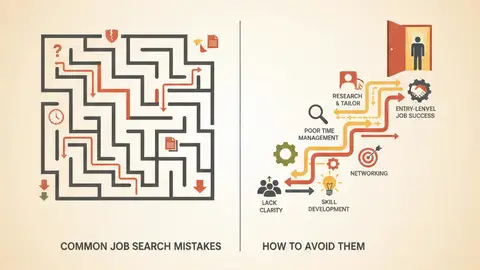
Common Job Search Mistakes Freshers Make (And How to Avoid Them)

Government vs Private Jobs: Which Is Better?

What Recruiters Look for in Online Job Applications

High-Paying Jobs in India Without a Degree
Explore Topics
Perfect Your Resume
Use our AI-powered Resume Builder to create ATS-optimized resumes.
AI Resume Builder