
Career guide
How to Upskill While Working Full-Time - Guide — Explained
Learn practical strategies to upskill while working full-time. Master time management, choose the right courses, and advance your career without burnout.

Juggling a full-time job while learning new skills is a common challenge for ambitious Indian professionals. This guide provides actionable strategies to help you upskill effectively without compromising your current role. Learn how to manage your time, choose the right courses, and accelerate your career growth.
How to Upskill While Doing a Full-Time Job
In today's competitive and rapidly evolving Indian job market, the idea that your education ends with a degree is a dangerous myth. The landscape of work is shifting dramatically, making continuous learning, or upskilling, an absolute necessity for career progression and even survival. Learning while you earn is not just a trend; it's a powerful strategy to accelerate your career trajectory, open new doors, and future-proof your professional journey in a dynamic economy. For professionals juggling the demands of a full-time role, upskilling can seem like an arduous task, but with the right approach and strategic planning, it's an achievable and highly rewarding endeavor that can significantly enhance your value to employers and your overall career satisfaction.

Key Drivers for Upskilling
- Technological Disruption: India leads in technological adoption. Automation, Artificial Intelligence (AI), Machine Learning (ML), and data analytics are fundamentally reshaping industries. While these technologies displace repetitive jobs, they simultaneously create new roles demanding advanced skill sets. A NASSCOM report, for instance, highlights surging demand for AI/ML specialists, cloud architects, and cybersecurity professionals in India's tech sector. This disruption isn't limited to IT; manufacturing is adopting Industry 4.0, finance is embracing FinTech, and even traditional sectors like agriculture are leveraging data science. Professionals who proactively learn these new technologies position themselves at the forefront of innovation, becoming indispensable assets in their organizations.
- The Shrinking Shelf-Life of Skills: Technical skills have a continuously decreasing half-life. What was cutting-edge five years ago, like a specific programming language version or legacy software, may be obsolete today. Proactive skill acquisition is essential to remain relevant and competitive. For example, a web developer mastering AngularJS might now need React or Vue.js to stay current. Similarly, a marketing professional who once relied solely on traditional advertising now needs expertise in digital marketing, SEO, content strategy, and social media analytics. The rapid pace of change means that foundational knowledge must be regularly updated and new tools and methodologies must be assimilated to maintain professional efficacy.
- Career Growth and Advancement: Indian employers increasingly prioritise candidates demonstrating initiative, adaptability, and a commitment to continuous learning. Upskilling is a clear signal of these qualities. Acquiring new, in-demand skills can pave the way for promotions, transitions into leadership roles, or even lateral moves into more challenging and rewarding positions within the same organization. For instance, an accountant who learns financial modeling and data visualization tools might transition into a financial analyst role, or a sales executive who masters CRM software and advanced negotiation techniques could become a sales manager. It's about building a versatile skill set that allows you to take on greater responsibilities and contribute more strategically to your company's objectives.
- Increased Earning Potential: It's a fundamental truth that specialized and in-demand skills command higher salaries. Research consistently shows a direct correlation between advanced skills and increased compensation. For example, a professional with certifications in cloud platforms like AWS or Azure, or expertise in advanced data analytics, can expect significantly higher remuneration compared to peers without these specialized skills. Upskilling is an investment in yourself that often yields substantial financial returns, improving your quality of life and financial security.
- Enhanced Job Security: In an era of economic uncertainties and rapid technological shifts, job security is a paramount concern for many. Possessing a diverse and updated skill set makes you more resilient to market fluctuations and technological obsolescence. Companies are more likely to retain and invest in employees who bring a broader range of capabilities to the table and can adapt to evolving business needs. Being a multi-skilled professional makes you less dispensable and more valuable, providing a strong buffer against potential layoffs or industry downturns.
- Personal Satisfaction and Adaptability: Beyond tangible career benefits, upskilling fosters personal growth, boosts confidence, and keeps your mind agile. Learning new things can be intrinsically rewarding, preventing stagnation and making your work more engaging. It also cultivates a mindset of adaptability, a critical soft skill in itself, enabling you to navigate change more effectively both professionally and personally. This continuous evolution contributes to a more fulfilling and dynamic professional life.
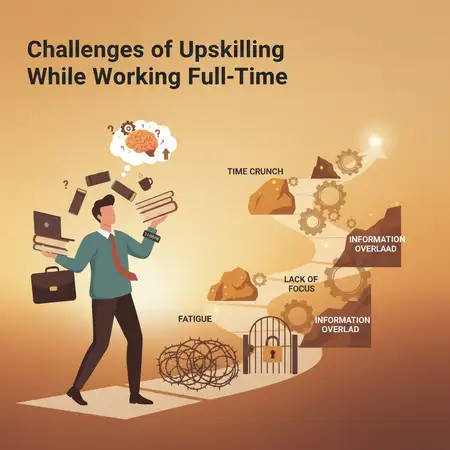
Challenges of Upskilling While Working Full-Time
While the benefits of upskilling are clear, integrating continuous learning into a busy full-time schedule presents its own set of hurdles. Recognizing these challenges is the first step towards overcoming them effectively.
- Time Management: This is arguably the biggest obstacle. After a demanding 8-9 hour workday, commuting, and managing personal responsibilities, finding dedicated time for study can feel impossible. Weekends often become a battle between rest and learning, leading to guilt or exhaustion.
- Energy Levels and Burnout: Mental fatigue after a full day of work can severely impact concentration and motivation for learning. Pushing oneself too hard without adequate rest can lead to burnout, making the learning process ineffective and unsustainable.
- Financial Constraints: Quality courses, certifications, and workshops can be expensive. While some employers offer support, many professionals bear the cost themselves, adding another layer of stress.
- Lack of Motivation and Discipline: Sustaining motivation over a long period, especially when immediate results aren't visible, can be tough. The absence of external deadlines or a structured academic environment can make it easy to procrastinate or give up.
- Information Overload and Choosing the Right Path: The sheer volume of available courses and learning resources can be overwhelming. Deciding which skills are most relevant and which learning path to pursue can be a challenge in itself, leading to analysis paralysis.
- Balancing Personal Life: Dedicating time to upskilling often means sacrificing time for family, friends, hobbies, and self-care, which can lead to feelings of guilt or resentment.
Strategies for Effective Upskilling
Overcoming these challenges requires a strategic and disciplined approach. Here are practical strategies to successfully upskill while managing a full-time job.
1. Identify Your Goals and Skills Gaps
Before diving into any course, take time to reflect on your career aspirations and current skill set.
- Self-Assessment: Honestly evaluate your strengths and weaknesses. What are you good at? What do you find challenging? What aspects of your job do you enjoy or want to excel in?
- Industry Research: Look at job descriptions for positions you aspire to. What skills are consistently listed? Read industry reports, follow thought leaders, and understand emerging trends in your field, especially within the Indian context. For example, if you're in finance, research how FinTech is changing banking in India.
- Company Needs: Understand your organization's strategic direction. What skills will be crucial for its future success? Aligning your upskilling with company goals can increase your chances of employer support and immediate application of new skills.
- Talk to Mentors/Seniors: Seek advice from experienced professionals in your field. They can offer valuable insights into essential skills and potential career paths.
2. Choose the Right Learning Path
Not all learning methods are created equal, especially when time is a constraint. Select options that fit your learning style, schedule, and budget.
- Online Courses and MOOCs: Platforms like Coursera, edX, Udemy, NPTEL (India-specific), and LinkedIn Learning offer flexible, self-paced courses. Many provide professional certificates or specializations from reputed universities. Look for courses with practical exercises and projects.
- Certifications: Industry-recognized certifications (e.g., PMP for project management, AWS/Azure for cloud, Google Analytics for marketing) validate your expertise and are highly valued by employers.
- Workshops and Bootcamps: For intensive, hands-on learning, short-term bootcamps or weekend workshops can be highly effective, though they require a significant time commitment upfront.
- Mentorship and Networking: Learning from experienced professionals through mentorship can provide practical insights and guidance that no course can offer. Networking events (online or offline) can also be great learning opportunities.
- On-the-Job Learning & Side Projects: The most effective way to learn is by doing. Volunteer for projects at work that require new skills, or start a personal side project. For example, if you're learning Python, try automating a small task at work or building a simple web application in your spare time.
- Reading and Self-Study: Books, industry blogs, research papers, and online tutorials are invaluable resources for continuous learning. Dedicate a specific time each day or week for reading.
3. Master Time Management and Discipline
Effective time management is the cornerstone of successful upskilling while working full-time.
- Create a Study Schedule: Block out specific, non-negotiable times in your calendar for learning, just like you would for a work meeting. Even 30-60 minutes daily can add up significantly over time.
- Leverage Micro-Learning: Break down your learning into small, manageable chunks. Use commutes, lunch breaks, or the 15 minutes before bed to watch a lecture, read an article, or review notes.
- Prioritize and Say No: Learn to prioritize your learning goals over less important activities. Sometimes, this means saying no to social engagements or non-essential tasks.
- Batch Similar Tasks: Group similar activities together (e.g., all email replies at once, all learning tasks at once) to minimize context switching and improve focus.
- Utilize Technology: Use productivity apps (e.g., Pomodoro timers, habit trackers) to stay organized and focused.
- Early Mornings or Late Evenings: Identify your most productive hours. For many, the quiet hours before work or late at night offer uninterrupted study time.
4. Maintain Motivation and Prevent Burnout
Sustaining the learning journey requires conscious effort to keep motivation high and avoid exhaustion.
- Set Realistic Goals: Don't aim to master a complex skill in a week. Set achievable weekly or monthly learning objectives.
- Track Progress and Celebrate Small Wins: Seeing how far you've come can be a huge motivator. Keep a log of your learning hours or completed modules. Reward yourself for reaching milestones.
- Find a Study Buddy or Community: Learning with others can provide accountability, support, and opportunities for discussion. Join online forums or local meetups related to your chosen skill.
- Prioritize Well-being: Adequate sleep, healthy eating, and regular exercise are non-negotiable. Burnout is a real threat; listen to your body and take breaks when needed.
- Connect Learning to Your Job: Actively look for ways to apply your new skills at work. This immediate relevance can boost motivation and demonstrate value.
- Communicate with Your Employer: If possible, discuss your upskilling efforts with your manager. They might offer support, project opportunities, or even adjust your workload temporarily.
5. Leverage Employer Support
Many forward-thinking Indian companies understand the value of employee development and offer resources to support upskilling.
- Training Budgets: Inquire if your company has a budget for external training, certifications, or online course subscriptions.
- Internal Programs: Many organizations offer in-house training programs, workshops, or access to internal learning platforms (e.g., corporate MOOC subscriptions).
- Mentorship Programs: Some companies facilitate internal mentorship, connecting you with senior colleagues who can guide your learning path.
- Flexible Work Arrangements: Discuss the possibility of flexible hours or compressed workweeks if it can help you dedicate time to learning without impacting productivity.
6. Apply What You Learn
Theoretical knowledge is only half the battle. Practical application solidifies learning and makes your new skills tangible.
- Side Projects: Work on personal projects that allow you to practice your new skills. This could be building a website, analyzing a public dataset, or creating a small application.
- Volunteer Work: Offer your newly acquired skills to non-profit organizations or community projects. This provides real-world experience and builds your portfolio.
- Internal Company Projects: Proactively seek opportunities within your current role to apply your new skills. This demonstrates initiative and directly benefits your employer.
- Teach Others: Explaining concepts to colleagues or friends can deepen your understanding and identify gaps in your knowledge.
Popular Upskilling Domains in India
Given India's dynamic economic landscape, certain skill domains are experiencing particularly high demand. Focusing on these areas can provide a significant competitive edge.
- Digital Marketing: With the rapid digitization of businesses, skills in SEO, SEM, social media marketing, content marketing, and analytics are crucial across industries.
- Data Science & Analytics: From business intelligence to predictive modeling, the ability to collect, analyze, and interpret data is invaluable. Tools like Python, R, SQL, and visualization tools like Tableau or Power BI are highly sought after.
- Cloud Computing: Expertise in platforms like Amazon Web Services (AWS), Microsoft Azure, and Google Cloud Platform (GCP) is essential for roles in cloud architecture, development, and administration.
- Cybersecurity: As digital threats proliferate, professionals skilled in network security, ethical hacking, incident response, and data privacy are in high demand.
- Artificial Intelligence & Machine Learning: Developing and deploying AI models, understanding deep learning frameworks, and working with natural language processing are skills that command top salaries.
- Project Management: As companies undertake complex initiatives, certified project managers (PMP, PRINCE2) who can effectively plan, execute, and monitor projects are always needed.
- Full-Stack Development: The ability to work on both front-end (user interface) and back-end (server, database) of web applications remains a core skill in the tech sector.
- Soft Skills: Beyond technical expertise, skills like communication, critical thinking, problem-solving, leadership, emotional intelligence, and adaptability are universally valued and can significantly impact career progression.
Measuring Your Upskilling Success
It's important to periodically assess the impact of your upskilling efforts to ensure they are yielding the desired results and to make adjustments as needed.
- Performance Reviews: Look for improved feedback in your annual or quarterly performance reviews, especially concerning new responsibilities or contributions.
- New Opportunities: Are you being offered more challenging projects, leadership roles, or opportunities to mentor others? This indicates increased trust and recognition of your enhanced capabilities.
- Salary Increase or Promotion: Tangible financial rewards are a clear indicator of increased value. Negotiate for a raise or promotion based on your new skill set and contributions.
- Personal Satisfaction and Confidence: Do you feel more confident in your role? Are you enjoying your work more? Does it feel less stressful to tackle complex problems? These subjective measures are equally important.
- Networking and Industry Recognition: Are you being sought out for advice, invited to speak at events, or recognized by peers in your industry? This signifies your growing expertise and reputation.
Upskilling while holding a full-time job is a marathon, not a sprint. It demands dedication, strategic planning, and resilience. However, the investment in continuous learning is arguably the most critical step you can take to safeguard and accelerate your career in India's dynamic job market. By embracing lifelong learning, you not only enhance your professional capabilities but also cultivate a mindset of growth and adaptability that will serve you well throughout your career journey.
Upskilling Strategies for Full-Time Workers
Explore more: Career Growth Tips | Skill Resources
Balancing work and learning requires strategy. Discover practical upskilling techniques for busy professionals.
Popular Upskilling Platforms in India
India offers a wealth of online and offline platforms for professional development. Government initiatives like SWAYAM and NPTEL provide free courses from top institutions. Private platforms like Coursera, UpGrad, and Simplilearn offer specialized certifications in high-demand fields like data science, digital marketing, and cybersecurity, often with flexible schedules for working professionals.
Balancing Work, Life, and Learning
Maintaining a healthy balance is crucial for sustainable upskilling. Communicate your learning goals with your family to secure their support. Schedule dedicated study time but also block out time for rest and relaxation to prevent burnout. Remember, consistent, small efforts are more effective than sporadic, intense cramming sessions.
FAQs
Why upskill?Stay competitiveTime management?Use lunch breaksRelated Resources
- Latest Government Jobs
- Top Digital Skills for Govt Jobs
- How to Build a Strong Resume
Put this advice into practice
Upskilling while working full-time is a challenging but immensely rewarding investment in your future. By implementing these strategies, you can systematically build new competencies, increase your value in the job market, and future-proof your career in India's dynamic economy. Start your upskilling journey today.
TrueJobs Editorial Team
TrueJobs editorial desk
This article is prepared from the sources referenced in the guide and reviewed for clarity, links and dated information. Read our editorial and corrections policy.
Continue This Topic
Follow the closest earlier and newer coverage so older archive posts keep real contextual crawl paths.
Best Resume Format for Experienced Professionals
Discover the ideal resume format for mid-career and senior professionals. Learn to showcase leadership, quantify achievements, and structure your resume for maximum impact.
Career Planning Guide for Students: Your Roadmap to Success
A comprehensive career planning guide for students. Learn self-assessment, goal setting, and strategic planning to build a successful professional future.
Read Next
Common Job Search Mistakes Freshers Make (And How to Avoid Them)

How to Switch Careers Successfully: A Complete Guide

What Recruiters Look for in Online Job Applications

Career Planning Guide for Students: Your Roadmap to Success
Explore Topics
Perfect Your Resume
Use our AI-powered Resume Builder to create ATS-optimized resumes.
AI Resume Builder