
Career guide
How to Make a Professional Resume in 2026 | Guide — Explained
Learn how to create a modern, ATS-optimized resume that wins interviews. Step-by-step guide covering format, sections, keywords, and tips for Indian job seekers.

Crafting a compelling resume is paramount in today's competitive job market, especially when aspiring for prestigious government positions in India. This comprehensive guide will walk you through the essential elements and modern strategies to create a professional resume in 2026 that not only stands out to human recruiters but also successfully navigates the increasingly sophisticated Applicant Tracking Systems (ATS).
Why Resume Writing Has Changed
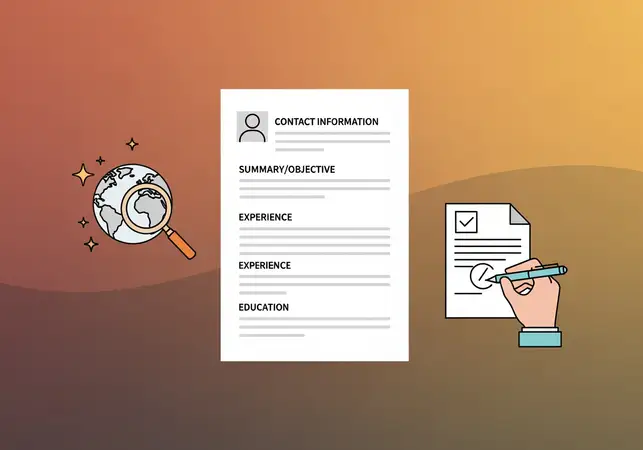
Your resume is the single most important document in your job search. It's not just a piece of paper; it's your personal marketing tool, your first handshake with a potential employer, and your ticket to landing an interview. In the highly competitive Indian job market, where thousands of applicants often vie for a single government position, a weak or poorly constructed resume can get you disqualified before you even have a chance to prove your worth in person. It's your opportunity to make a compelling case for why you are the best fit for the role.
Think of it as your professional autobiography, meticulously curated to highlight your most relevant skills and achievements, designed to capture attention and secure that crucial first interaction. A well-crafted resume doesn't just list your history; it strategically positions you as the ideal candidate, anticipating the recruiter's needs and addressing them proactively.
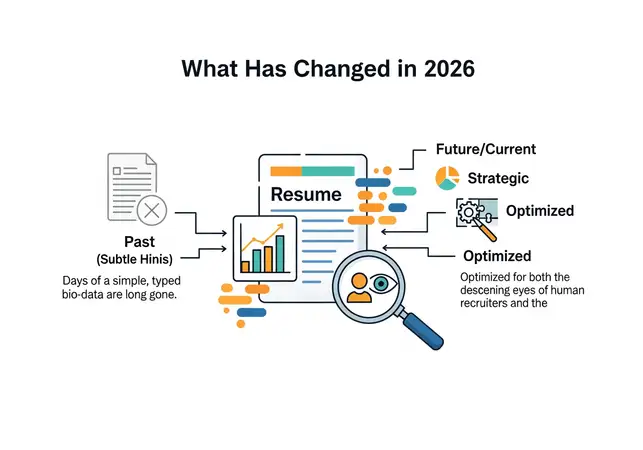
The days of a simple, typed bio-data, which merely listed personal details and academic qualifications, are long gone. Today's resumes must be strategic, data-driven, and meticulously optimized for both the discerning eyes of human recruiters and the sophisticated algorithms of modern software. This evolution demands a more thoughtful and targeted approach to resume creation, moving beyond a mere chronological listing to a persuasive document that actively sells your capabilities and potential. The shift reflects a broader change in recruitment philosophy, moving from passive information gathering to active candidate attraction and qualification.
What Has Changed in 2026?
The landscape of recruitment has undergone significant transformation, primarily driven by technology and the sheer volume of applications. Two major factors now dictate how modern resumes are screened and evaluated:
- Applicant Tracking Systems (ATS): Most large organizations, including many government departments and public sector undertakings, now extensively use Applicant Tracking Systems (ATS) software to manage the overwhelming volume of job applications they receive. This software acts as a digital gatekeeper, scanning your resume for specific keywords, phrases, and qualifications directly relevant to the job description. If your resume isn't strategically optimized for the ATS – meaning it doesn't contain the right keywords or uses non-standard formatting – it might never even be seen by a human recruiter, regardless of how qualified you are. The ATS parses your resume, extracts information, and often assigns a relevancy score, making it crucial to speak its language. These systems are designed to filter out unqualified candidates efficiently, but they can also inadvertently filter out qualified ones if the resume isn't formatted and keyword-rich in a way the ATS can understand. Understanding how ATS works is the first step to ensuring your resume makes it past this initial digital hurdle. Modern ATS can also analyze sentence structure and context, making natural language integration of keywords more important than simple keyword stuffing.
- The Recruiter's "Six-Second Scan": Even if your resume successfully passes the ATS hurdle, it then faces another critical test: the human recruiter's initial review. Studies show that recruiters spend an average of just six to ten seconds on their initial scan of a resume. During this brief window, they are quickly looking for key information to determine if you're a potential fit. Your resume must therefore be visually appealing, easy to navigate, and designed so that your most important achievements, skills, and qualifications are immediately visible and capture their attention. This means clear headings, concise bullet points, and a strong visual hierarchy are paramount. Recruiters are often sifting through hundreds of applications, so your resume needs to communicate your value proposition almost instantly. If they can't find what they're looking for quickly, they'll move on to the next candidate. This initial scan is less about reading every word and more about identifying key indicators of suitability, such as relevant job titles, companies, and quantifiable achievements.
The Evolving Role of AI in Recruitment
Beyond traditional ATS, the year 2026 sees an increasing integration of Artificial Intelligence (AI) and Machine Learning (ML) into recruitment processes. While ATS primarily focuses on keyword matching and parsing, AI-powered tools can analyze more complex patterns. They can assess not just what skills you list, but also the context in which you use them, the progression of your career, and even infer soft skills from your descriptions. Some advanced AI systems can even analyze language for tone and clarity. This means your resume needs to be not only keyword-rich but also well-written, coherent, and genuinely reflective of your capabilities.
The emphasis is shifting towards a holistic understanding of the candidate, making a well-rounded and authentic resume more important than ever.
The Shift to Skills-Based Hiring
Another significant change is the growing emphasis on skills-based hiring, particularly in the tech sector but increasingly across all industries, including government. Employers are looking beyond traditional degrees and job titles to identify candidates who possess the specific competencies required for a role. This means your resume should clearly articulate your skills, both technical (hard skills) and interpersonal (soft skills), and provide evidence of how you've applied them successfully. Certifications, project work, and demonstrable achievements that highlight specific skills are becoming more valuable. For government jobs, this could mean emphasizing specific policy analysis skills, public administration competencies, or proficiency in e-governance tools, rather than just listing a degree.
Understanding the Indian Government Job Context
For government jobs in India, the application process can be particularly rigorous and high-volume. While some departments might still rely on manual screening, an increasing number are adopting modern recruitment technologies, including ATS. Furthermore, the emphasis on specific qualifications, experience in public administration, and adherence to detailed eligibility criteria means your resume must be precise and directly address every requirement. Cultural nuances, such as the common practice of including a photograph or specific personal details, also need to be considered, often guided by the specific job advertisement. It's crucial to thoroughly read the official notification for each government job, as requirements for documents, format, and content can vary significantly.
Some government portals might have their own resume builders or specific templates that must be used, overriding general best practices.
The Importance of Tailoring for Government Jobs
Unlike private sector roles where innovation and profit margins are key, government jobs often prioritize public service, regulatory compliance, administrative efficiency, and ethical conduct. Your resume for a government position should subtly or overtly reflect these values. Highlight experiences that demonstrate your commitment to public welfare, your ability to navigate bureaucratic processes, and your understanding of governance principles. For instance, if you have volunteer experience with NGOs or community projects, emphasize the impact on citizens. If you've worked in a regulated industry, stress your adherence to compliance and ethical guidelines. Always refer to the specific job advertisement on portals like TrueJobs.co.in for exact requirements and keywords.
Essential Components of a Professional Resume
Crafting a professional resume requires a meticulous approach to each section. Every component serves a specific purpose, contributing to the overall impression and effectiveness of your application. Each section is an opportunity to showcase a different facet of your professional persona, building a comprehensive and compelling narrative for the recruiter.
1. The Header: Clean Contact Information
The header is the first thing a recruiter sees, so it must be clear, concise, and professional. It provides all the necessary information for a potential employer to contact you, setting the tone for the rest of your application. Ensure all information is accurate and up-to-date.
- Full Name: Use a large, bold font (e.g., 18-24pt) to make your name stand out. This is your personal brand, and it should be immediately identifiable. Ensure your name is consistent with your official documents and other professional profiles. It should be the most prominent element in your header.
- Phone Number: Provide your primary mobile number, ensuring it is active and you are reachable. Include your country code if applying for international roles, though for TrueJobs.co.in, an Indian number is sufficient. Make sure your voicemail is professional and clearly states your name. Avoid using a landline number unless it's your only reliable contact.
- Professional Email: This is crucial. Use an email address that reflects professionalism, ideally in the format
firstname.lastname@email.com
orinitial.lastname@email.com
. Avoid informal or outdated email addresses (e.g.,coolguy@email.com
orsweety_pie@email.com
), as they can create a negative first impression. A professional email address signals seriousness and attention to detail. Check this email regularly for responses. - Location: Specify your City and State (e.g., Bangalore, Karnataka). This helps recruiters understand your geographical preference and suitability for local roles without needing your full address, which is often unnecessary for initial screening and can raise privacy concerns. Only include your full address if explicitly requested by the job application, or if it's a specific requirement for government jobs in your local area.
- LinkedIn Profile URL: A customized LinkedIn URL (
linkedin.com/in/yourname
) demonstrates your professional online presence. Ensure your LinkedIn profile is up-to-date and consistent with your resume, as recruiters often check it for more detailed information, recommendations, and to verify your professional network. It serves as an extended portfolio of your professional journey. Make sure your profile picture is professional and your summary aligns with your resume. - Portfolio/GitHub Link (Optional): For creative roles (e.g., graphic design, content writing) or technical roles (e.g., software development, data science), including a link to your online portfolio or GitHub repository is highly beneficial. It allows recruiters to see tangible examples of your work and skills in action. Ensure the links are active and lead to relevant, well-presented projects. For roles requiring specific technical expertise, a GitHub link showcasing your code can be a significant advantage. Only include this if it directly adds value to your application.
What Not to Include in Your Header (Unless Specified)
For most modern resumes, especially those going through ATS, avoid including:
- Photograph: Unless explicitly requested by the job advertisement (which is sometimes the case for Indian government jobs), do not include a photo. It can lead to unconscious bias and is generally not ATS-friendly.
- Date of Birth, Marital Status, Religion, Gender: These are personal details that are irrelevant to your professional qualifications and can lead to discrimination. Only include them if the application form specifically asks for them as part of a mandatory government application process.
- Full Address: As mentioned, city and state are usually sufficient. A full address is rarely needed at the initial application stage.
2. The Professional Summary
Gone are the days of generic "Career Objectives" that focused on what you hoped to gain from a job. In 2026, you need a powerful Professional Summary – a concise 3-4 line paragraph that acts as an elevator pitch, highlighting your biggest selling points, key skills, and most impressive achievements right at the top of your resume. This section should be tailored to each job application, immediately telling the recruiter why you are a strong candidate and what unique value you bring to the role. It's your opportunity to make a compelling case for why they should continue reading.
Key Elements of a Strong Summary:
- Your Professional Identity: Start by defining who you are (e.g., "Results-driven Digital Marketing Manager," "Motivated Computer Science graduate," "Experienced Public Administrator"). This immediately frames your expertise and career stage.
- Key Skills & Experience: Briefly mention your most relevant skills and years of experience. These should be directly aligned with the job description to grab immediate attention. Use keywords from the job posting.
- Core Strengths & Achievements: Highlight 1-2 significant accomplishments or areas of expertise that align with the job description. Use quantifiable metrics if possible to demonstrate impact. This shows not just what you can do, but what you have achieved.
- Career Aspirations (aligned with role): Briefly state what you aim to achieve, ensuring it resonates with the company's goals for the position. This shows you've researched the role and are genuinely interested in contributing to their objectives, demonstrating alignment and motivation.
For Experienced Professionals:
"Results-driven Digital Marketing Manager with 8+ years of experience leading successful SEO and SEM campaigns for E-commerce brands. Proven ability to increase organic traffic by 150% and reduce CPC by 30% through data-driven strategies. Adept at cross-functional team leadership and leveraging analytics to drive measurable business growth. Seeking to apply advanced digital strategies to drive market penetration for a leading tech firm."
For Freshers:
"A motivated Computer Science graduate with strong proficiency in Python, Java, and Data Structures. Eager to apply problem-solving skills and a passion for backend development to contribute to a challenging Software Engineer role. Successfully completed an internship project involving scalable database design and API integration, demonstrating practical application of theoretical knowledge."
For Mid-Career Government Aspirants:
"Dedicated Administrative Officer with 10 years of experience in public sector operations, specializing in policy implementation and stakeholder management. Proven track record of streamlining departmental processes, resulting in a 20% improvement in service delivery efficiency. Seeking to leverage expertise in regulatory compliance and public administration to contribute to a dynamic government agency focused on citizen-centric services."
Crafting a Compelling Summary
To make your summary truly compelling, avoid generic phrases. Instead, use strong action verbs and specific keywords from the job description. For government jobs, emphasize public service, regulatory compliance, project management within a bureaucratic framework, or specific domain knowledge (e.g., rural development, urban planning, defense administration). This section is your chance to make a powerful first impression and convince the recruiter to read further. Remember, it's a summary of your value proposition, not a complete career history. Keep it concise and impactful.
3. Skills Section
This section is critical for ATS optimization. It should be a direct reflection of the keywords found in the job description. Recruiters and ATS alike scan this section to quickly ascertain your technical and soft skill competencies, making it a crucial component for both machine and human review. A well-organized skills section allows for quick assessment of your fit.
Organize into categories for clarity and ATS readability:
- Technical Skills: List specific programming languages (Python, Java, C++), software proficiencies (MS Office Suite, SAP, Tally ERP, AutoCAD, GIS), tools (Jira, Salesforce), operating systems, and databases. Be specific and include versions if relevant. For government jobs, this might include specific e-governance platforms (e.g., GeM, PFMS), data analysis tools (e.g., R, SQL, advanced Excel), or specialized software used in public administration (e.g., land record management systems, specific ministry applications). Group related skills for better readability (e.g., "Programming Languages: Python, Java, C++").
- Soft Skills: These are increasingly valued in all sectors. Include skills like Communication (written and verbal), Leadership, Problem-solving, Teamwork, Adaptability, Time Management, Critical Thinking, and Interpersonal Skills. While hard to quantify, these demonstrate your ability to collaborate and thrive in a professional environment, especially in government roles that often involve public interaction, team projects, and navigating complex administrative structures. Consider skills like integrity, public speaking, negotiation, and empathy which are particularly important for effective public service.
- Certifications: List any relevant professional certifications that validate your skills and expertise (e.g., AWS Certified Solutions Architect, Google Analytics Certification, PMP, ITIL, specific language proficiency tests). These show a commitment to continuous learning and professional development. For government roles, certifications in project management (PRINCE2), quality management (ISO), or specific technical domains (e.g., cybersecurity, data analytics from NIELIT or other recognized bodies) can be highly advantageous.
How to Identify Relevant Skills:
Carefully read the job description and highlight all the skills mentioned. If you possess those skills, include them in your resume. Use the exact terminology from the job description where appropriate to improve ATS matching. Don't just list skills; consider how you can demonstrate them in your work experience section. You can also use online tools to analyze job descriptions for frequently occurring keywords, helping you fine-tune your skills section. Prioritize skills that are explicitly mentioned or are highly relevant to the role's requirements.
Balancing Hard and Soft Skills
While technical skills (hard skills) are often explicitly required, soft skills are what differentiate a good candidate from a great one. For government roles, soft skills like integrity, public speaking, negotiation, and empathy are particularly important for effective public service. Ensure a balanced representation, showing you are both technically capable and a strong team player with excellent interpersonal abilities. Recruiters often look for a blend of both, as even the most technically proficient individual needs to collaborate effectively within a team and interact with stakeholders.
4. Work Experience
This is the heart of your resume, where you showcase your professional journey and accomplishments. It's not just a list of duties; it's a narrative of your impact. Focus on achievements rather than just responsibilities, demonstrating how you added value in previous roles. This section should tell a compelling story of your professional growth and contributions.
Use this format for each role:
Job Title
Company Name | Location | Dates (Start Date – End Date or Present)
- Achievement bullet using Action Verb + Task + Result: Each bullet point should start with a strong action verb (e.g., Led, Developed, Managed, Implemented, Optimized, Streamlined). Describe the task or project you undertook, and most importantly, quantify the positive result or impact of your actions. This structure helps recruiters quickly understand your contribution and its value. Aim for 3-5 impactful bullet points per role.
- Quantify with numbers wherever possible: Numbers add credibility and demonstrate tangible value. Instead of saying "Improved efficiency," say "Streamlined data entry process, reducing error rate by 15% and saving 10 hours per week." For government roles, quantification might involve the number of citizens served, the percentage reduction in processing time, the amount of budget managed, or the scale of projects implemented (e.g., "Managed a budget of ₹50 Lakh for rural development projects, ensuring 100% utilization and timely completion").
Strong Example:
"Led a team of 8 engineers to develop a mobile payment solution, processing ₹5 Crore in transactions within the first quarter post-launch, exceeding initial targets by 25%."
"Managed a portfolio of 50+ government projects, ensuring 95% on-time completion and adherence to a ₹2 Crore budget, resulting in enhanced public service delivery."
"Implemented new customer service protocols that improved customer satisfaction scores by 20% over six months, reducing complaint resolution time by 15%."
Weak Example:
"Was responsible for team management and product development." (This describes a duty, not an achievement or impact. It doesn't tell the recruiter what you actually *did* or *achieved*.)
"Handled customer queries." (Lacks impact and quantification. How many queries? What was the outcome? Did you improve the process?)
Handling Career Gaps or Multiple Roles:
If you have career gaps, address them honestly and concisely. Focus on what you did during that time (e.g., skill development, caregiving, travel with purpose, pursuing higher education, preparing for competitive exams). Frame these experiences positively, highlighting any transferable skills gained. For example, "Career Break (Jan 2022 - Dec 2023): Utilized time for upskilling in Data Science (Python, Machine Learning) and successfully completed a certification from IIT Madras." If you held multiple roles within the same company, list them chronologically under the company name, showing your progression and increased responsibilities. This demonstrates loyalty and growth within an organization.
STAR Method for Bullet Points:
Consider using the STAR method (Situation, Task, Action, Result) mentally when crafting your bullet points. While you don't write out the full STAR story, it helps you structure your achievements to be impactful and quantifiable. Think: What was the situation? What was your task? What action did you take? What was the measurable result of your action? This mental framework ensures each bullet point is comprehensive and demonstrates value.
Showcasing Progression and Impact
For government job aspirants, highlight experience in policy implementation, public relations, administrative duties, project coordination with various stakeholders, or any work that demonstrates an understanding of public service ethics and governance. Even if your previous experience is in the private sector, draw parallels to how your skills would benefit a government organization. For instance, a private sector project manager can highlight managing complex projects with diverse stakeholders, adhering to strict budgets, and ensuring compliance, all of which are highly relevant to government roles. Emphasize how your past roles have prepared you for the unique challenges and responsibilities of public service.
5. Education
The placement and detail of your education section depend on your career stage. For freshers, it's often more prominent, usually after the summary or skills section, while for experienced professionals, it might be a concise entry towards the end. Ensure accuracy of degrees, institutions, and dates.
For Freshers (prominent placement, usually after summary or skills):
- Degree, Major (e.g., Bachelor of Technology, Computer Science)
- Institution Name, Location (e.g., Indian Institute of Technology Bombay, Mumbai)
- Year of Graduation (or Expected Graduation Date)
- GPA/Percentage (if above 7.5 CGPA or 70%, otherwise consider omitting). In India, percentages are often preferred over GPA, so use the relevant metric.
- Relevant coursework or projects: List specific courses or academic projects that directly relate to the job you're applying for (e.g., "Relevant Coursework: Data Structures and Algorithms, Operating Systems, Database Management"). This is particularly important if you lack extensive work experience, as it showcases your foundational knowledge.
- Academic honors or scholarships (e.g., Dean's List, Merit Scholarship, Gold Medalist). These demonstrate academic excellence and dedication and can be a strong differentiator.
For Experienced Professionals (brief, usually towards the end of the resume):
- Degree, Institution, Year of Graduation (e.g., MBA, IIM Bangalore, 2015)
- You can omit GPA/percentage unless it's exceptionally high or specifically requested. The focus shifts to your professional achievements and work experience.
- If you have multiple degrees, list them in reverse chronological order (most recent first).
Highlighting Academic Achievements
For government jobs, especially entry-level positions, strong academic performance and relevant specializations can be a significant advantage. If you have a Master's degree or a Ph.D., list it before your Bachelor's degree. Mentioning research papers, theses, or dissertations can also be beneficial if relevant to the role, particularly for scientific, research-oriented, or policy-making government positions. If you participated in any academic competitions, hackathons, or presented at university conferences, these can also be included to demonstrate initiative and practical skills.
6. Additional Sections
These sections provide valuable context and can differentiate you from other candidates, especially if they align with the job requirements. They offer a holistic view of your capabilities and interests beyond formal work experience and education. Only include sections that genuinely add value and relevance to the specific job you're applying for.
- Certifications: List professional certifications that enhance your qualifications (e.g., AWS Certified Cloud Practitioner, Google Analytics Individual Qualification, PMP (Project Management Professional), ITIL Foundation, PRINCE2, NISM certifications for finance roles). For government roles, consider certifications in public policy, governance, specific software used by government bodies, or language proficiency tests like those for Hindi or regional languages. Include the issuing body and date of completion/validity if applicable.
- Projects: Particularly important for freshers, students, or those transitioning careers. Include academic projects, personal projects, open-source contributions, or freelance work. Briefly describe the project, your role, the technologies used, and the outcome. This section allows you to demonstrate practical application of your skills and initiative, showcasing problem-solving abilities and technical prowess. For example, "Developed a Python-based data visualization tool to analyze public health trends, utilized by 5 university researchers."
- Languages: In a multilingual country like India, language proficiency can be a significant asset, especially for roles involving public interaction. List all languages you know and your proficiency level (e.g., English - Fluent, Hindi - Native, Marathi - Conversational, Tamil - Basic). Mentioning your ability to read, write, and speak specific regional languages can be a strong advantage for local government positions, demonstrating cultural sensitivity and effective communication skills.
- Volunteer Work: Demonstrates character, initiative, leadership, and transferable skills. Briefly describe your role and contributions, especially if they align with soft skills required for the job, such as community engagement, problem-solving, or organizational skills. Volunteer work can highlight your commitment to public service, a highly valued trait in government jobs. For example, "Organized community outreach programs for underprivileged children, impacting 100+ families."
- Awards & Honors: Include academic distinctions, scholarships, professional awards, or recognition for outstanding performance. This highlights excellence and achievement, providing tangible evidence of your capabilities and dedication. Examples include "Employee of the Month," "Best Project Award," or "National Scholarship Holder."
- Publications/Presentations: For roles in research, academia, or specialized technical fields, listing relevant publications, research papers, or conference presentations can significantly boost your credibility. This is particularly relevant for scientific, technical, or policy-making roles within government. Include the title, journal/conference, and date.
Leveraging Optional Sections Strategically
When deciding whether to include an optional section, always ask yourself: "Does this add value to my application for *this specific job*?" If it directly supports the job requirements or showcases highly relevant transferable skills, include it. Otherwise, prioritize brevity and focus on the most impactful information. The goal is to present a concise yet comprehensive picture of your professional self, tailored to the target role.
ATS Optimization Tips
Mastering ATS optimization is non-negotiable for job seekers in 2026. Your resume needs to be machine-readable before it can be human-readable. Ignoring ATS optimization is akin to sending your resume into a black hole. Understanding how these systems work is crucial for ensuring your application even gets considered.
- Use Keywords: This is the most critical aspect. Carefully read the job description and identify key terms, skills, and qualifications. Mirror the language from the job description in your resume. For example, if the job description says "Data Analysis using Python," don't just write "Python skills"; use "Data Analysis (Python)." Integrate these keywords naturally throughout your professional summary, skills section, and work experience bullet points. Avoid keyword stuffing, which can make your resume sound unnatural and be flagged by more sophisticated ATS. The goal is natural integration, not just a list of keywords. Use both exact phrases and relevant synonyms.
- Simple Formatting: ATS software is designed to parse text, not interpret complex visual designs. Avoid elements that can confuse it, such as:
- Tables for layout (use columns instead if necessary, but generally avoid complex multi-column layouts).
- Graphics, charts, or images (other than a professional headshot if required, but generally avoid them).
- Text boxes or sidebars.
- Information placed in headers or footers (ATS often ignores these areas, so critical contact info should be in the main body).
- Unusual fonts or excessive use of bold/italics. Stick to standard, clean fonts like Arial, Calibri, or Times New Roman.
The goal is a clean, linear document that the ATS can easily read from top to bottom, extracting information accurately into its database fields. A simple, chronological format is usually the safest bet.
- Standard Sections: Use conventional and widely recognized section headings. Stick to headings like "Professional Summary," "Skills," "Work Experience," "Education," "Certifications," etc. Avoid creative or unique section titles (e.g., "My Journey," "Skillset Arsenal") as the ATS might not recognize them and could fail to parse the content within those sections. Standard headings ensure the ATS correctly categorizes your information, making it easier for recruiters to find what they need.
- File Format: Always check the job portal's preference. The most common and ATS-friendly formats are .docx (Microsoft Word document) and PDF.
- .docx: Often preferred by older ATS systems as it's easier for them to parse. It allows the ATS to directly read and extract text without complex conversion. If the job description explicitly asks for a Word document, always provide it.
- PDF: Generally maintains formatting better across different systems and is increasingly compatible with modern ATS. However, if the job description explicitly asks for .docx, provide that. If no preference is stated, PDF is usually a safe bet as it preserves your layout exactly as you intended, preventing any formatting shifts. Always test your PDF by copying and pasting text into a plain text editor to ensure it parses correctly.
- No Images: As mentioned, ATS cannot "read" images. Any text embedded within an image will be completely ignored. This includes logos, icons, or even text in a fancy header image. Keep your resume purely text-based for maximum ATS compatibility. If a headshot is required for Indian government jobs, ensure it is a separate file uploaded as requested, not embedded in the resume unless explicitly instructed. Visual elements can be a hindrance, not a help, in the initial screening phase.
Advanced Keyword Integration Strategies
Beyond simply listing keywords, consider the context. If the job description mentions "project management methodologies," ensure your experience section uses terms like "Agile," "Scrum," or "Waterfall" if applicable, and describes how you *applied* them. Use synonyms where appropriate, but prioritize the exact phrasing from the job description. For example, if the job asks for "customer relationship management," you might also use "client engagement" or "stakeholder communication" if relevant, but ensure "customer relationship management" is present. Tools like Jobscan or Resume Worded can help you analyze your resume's keyword match against a specific job description, providing a percentage score and suggesting improvements. Remember, the goal is to demonstrate competence, not just list words.
Common ATS Pitfalls to Avoid
Many qualified candidates are rejected by ATS due to common mistakes. Avoid:
- Using acronyms without full forms: If a government department uses an acronym (e.g., "MoD" for Ministry of Defence), ensure you also use the full form at least once (e.g., "Ministry of Defence (MoD)").
- Complex resume templates: Many visually appealing templates use tables, text boxes, or columns that confuse ATS. Stick to a simple, single-column layout.
- Irrelevant information: Including too much personal information or irrelevant experience can dilute your keyword density and make your resume appear unfocused to the ATS.
- Grammar and spelling errors: While ATS primarily scans for keywords, some advanced systems can flag resumes with excessive errors, indicating a lack of attention to detail.
Formatting Best Practices
Beyond ATS compatibility, good formatting ensures your resume is easy on the eyes for human recruiters, making their six-second scan more effective. A well-formatted resume reflects professionalism and attention to detail, signaling that you take your application seriously.
- Font: Choose professional, legible, and common fonts like Calibri, Arial, Georgia, or Times New Roman. These are widely available and render consistently across different systems. Avoid decorative or overly stylized fonts that are hard to read. Use a font size of 10-12pt for the main body text and 14-16pt for headings. Your name can be larger (18-24pt). Ensure sufficient contrast between text and background (typically black text on a white background). Consistency in font choice throughout the document is key.
- Margins: Maintain margins of 0.5 to 1 inch on all sides. This creates white space, which makes your resume look less cluttered and more professional, improving readability. Adequate white space prevents eye fatigue and makes the document appear organized, allowing the recruiter's eye to easily navigate the content. Cramming too much text into narrow margins makes it difficult to read.
- Length:
- 1 page: Ideal for freshers, recent graduates, or professionals with less than 5 years of experience. Be concise and highlight only the most relevant information. Every word must earn its place. A single page forces you to be selective and impactful.
- 2 pages: Acceptable for mid-career professionals with 5-10 years of solid, relevant experience. Ensure the second page adds significant value and isn't just filler. The most impactful information should still be on the first page, as recruiters might not always get to the second. Ensure there's a clear reason for the second page, such as extensive project details or a long list of relevant certifications.
- 3 pages: Only for very senior executives, academics, or researchers with extensive publications, patents, or a long, distinguished career history (15+ years). This is a rare exception, not a general rule. For most government jobs, even at senior levels, a two-page resume is usually sufficient.
- Bullet Points: Use bullet points extensively for work experience, projects, and achievements. They break up large blocks of text, making your resume scannable and allowing recruiters to quickly grasp your contributions. Aim for 3-5 strong bullet points per role, focusing on impact and results. Start each bullet point with a strong action verb.
- Consistency: Maintain consistent formatting throughout your resume. This includes font styles, sizes, spacing, bullet point styles, and date formats (e.g., "MM/YYYY - MM/YYYY" or "Month Year - Month Year"). Inconsistency can make your resume look unprofessional and suggest a lack of attention to detail, which can be a red flag for recruiters. A consistent layout makes your resume appear polished and well-organized.
Visual Hierarchy and Readability
A strong visual hierarchy guides the reader's eye to the most important information first. Use bolding for job titles and company names, and slightly larger font sizes for headings. Ensure there's adequate spacing between sections and bullet points. This creates a clear flow and makes your resume easy to skim, which is crucial during the recruiter's initial six-second scan. The most important information (your name, professional summary, and key achievements) should be immediately apparent.
Proofreading and Final Checks
Before submitting your resume, proofread it meticulously. Even a single typo or grammatical error can undermine your professionalism. Read it aloud, ask a friend or mentor to review it, and use online grammar checkers. Ensure all dates are correct, contact information is accurate, and all links are functional. Double-check that your resume is tailored to the specific job description and that all keywords are naturally integrated. A flawless resume demonstrates attention to detail, a highly valued trait in any profession, especially in government.
Resume Templates: To Use or Not to Use
While templates can save time, choose them wisely. Many visually appealing templates found online are not ATS-friendly due to their complex formatting (e.g., multiple columns, graphics, text boxes). If you use a template, opt for a simple, clean, and professional design that prioritizes readability and ATS compatibility. Alternatively, building your resume from scratch in a word processor gives you maximum control over formatting and ensures ATS friendliness. For specific government job applications, always check if they provide a mandatory template or format to be followed. Ignoring such instructions can lead to immediate disqualification. You can find general resume templates that are ATS-friendly on various career blogs.
The Role of a Cover Letter
While not strictly part of the resume, a well-crafted cover letter acts as a crucial companion document. It allows you to elaborate on specific experiences and skills relevant to the job, express your genuine interest in the role and the organization, and explain any career gaps or transitions. For government jobs, a cover letter is an excellent opportunity to articulate your commitment to public service and how your values align with the department's mission. Always tailor your cover letter to each specific application, addressing the hiring manager by name if possible, and referencing key points from the job description. It's your chance to tell a story that your resume can only hint at.
Continuous Improvement and Feedback
Your resume is a living document, not a static one. As you gain new skills, experience, and achievements, update it regularly. Seek feedback from career counselors, mentors, or peers. Participate in mock interviews and get their perspective on how your resume presents you. The job market is constantly evolving, and so should your resume. Regularly reviewing and refining your resume ensures it remains a powerful tool in your job search arsenal, ready for the next opportunity, whether it's a new government opening or a promotion within your current department. Staying updated on recruitment trends, perhaps through resources like career guidance blogs, can also provide valuable insights for continuous resume improvement.
Reader questions: Resume
What's new in 2026 resume writing?
ATS optimization and visual elements
Do keywords still matter?
Yes, but use them naturally
Should I include a photo?
No, unless specified
What about formatting styles?
Clean, professional templates work best
TrueJobs Editorial Team
TrueJobs editorial desk
This article is prepared from the sources referenced in the guide and reviewed for clarity, links and dated information. Read our editorial and corrections policy.
Continue This Topic
Follow the closest earlier and newer coverage so older archive posts keep real contextual crawl paths.
Best Resume Format for Freshers in India
Learn the optimal resume format for freshers in India. Get tips on structure, sections to include, and common mistakes to avoid for entry-level job applications.
Best Career Options After 12th in India
Discover top career choices after 12th in India. TrueJobs.co.in provides comprehensive guidance on emerging opportunities and pathways.
Read Next

Best Resume Format for Freshers in India

ATS-Friendly Resume: How to Beat Applicant Tracking Systems

How Long Should a Resume Be? (A Practical Guide for Indian Job Seekers)

How to Write a Cover Letter That Gets You Interviews
Explore Topics
Perfect Your Resume
Use our AI-powered Resume Builder to create ATS-optimized resumes.
AI Resume Builder