
Career guide
Best Resume Format for Freshers in India (2026) — Explained
Learn the optimal resume format for freshers in India. Get tips on structure, sections to include, and common mistakes to avoid for entry-level job applications.

Embarking on your career journey as a fresher can be both exciting and challenging, especially when it comes to crafting a compelling resume. This comprehensive guide from TrueJobs.co.in is designed to equip Indian freshers with the essential knowledge and practical strategies to create a resume that not only stands out but also effectively showcases their potential to prospective employers. You'll learn how to transform your academic achievements and extracurricular involvement into powerful indicators of your readiness for the professional world.

Why a Fresher's Resume Is Unique
For freshers stepping into the competitive Indian job market, your resume isn't just a document; it's your first professional handshake. It's the initial impression you make, a silent advocate speaking volumes about your potential and aspirations. Unlike experienced professionals who can lean on years of work history, a fresher's resume must strategically highlight your inherent potential, unwavering enthusiasm, strong drive, versatility, and the fresh perspective you bring to an entry-level role. Understanding the recruiter's perspective is absolutely critical here, as they are looking for indicators of future success rather than past achievements in a corporate setting. They want to see a glimpse of the professional you are poised to become.
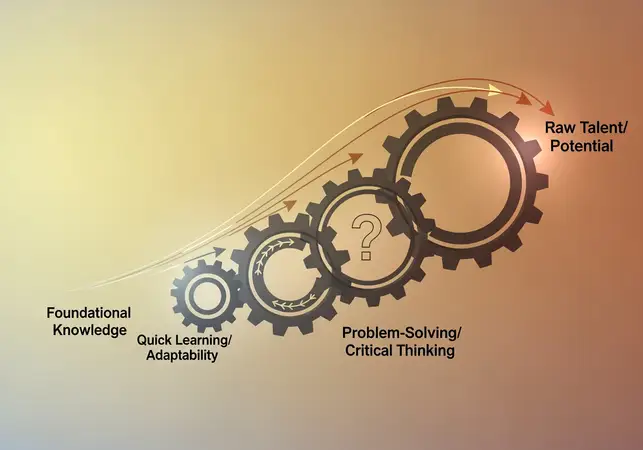
Recruiters evaluating a fresher's resume are essentially looking for raw talent, teachability, and a strong foundational understanding. They want to see evidence that you can quickly adapt to new environments, learn new skills efficiently, and contribute positively to their team's dynamics and objectives. This means every section of your resume must be meticulously curated to showcase these qualities effectively. It’s about painting a comprehensive picture of who you are as an individual, what you’ve diligently learned throughout your academic journey, and what you’re truly capable of achieving, even without a long list of previous employers. Your resume becomes a narrative of your readiness for the professional world.
The Fresher's Challenge: Proving Potential Over Experience
The primary challenge for freshers is undeniably the lack of traditional, paid work experience. This often leads to uncertainty and anxiety about what to include and how to present it in a compelling manner. However, this perceived challenge is also a significant opportunity. Recruiters understand implicitly that freshers won't have a decade of corporate experience. What they seek are robust proxies for experience: concrete indicators that you possess the foundational knowledge, the right professional attitude, and the essential soft skills required to not just survive, but thrive in a professional environment. Your resume needs to bridge this gap effectively by translating academic achievements, personal projects, and extracurricular involvement into valuable, transferable professional attributes.
It's about demonstrating your capacity to learn and apply.
Overcoming the "No Experience" Hurdle
Many freshers feel disheartened by job descriptions that ask for "X years of experience." However, it's crucial to remember that for entry-level roles, companies are often willing to invest in training promising candidates. Your job is to convince them you are that promising candidate. This involves:
- Reframing Your Accomplishments: Think about your academic projects, volunteer work, or part-time roles not just as student activities, but as opportunities where you developed professional skills. For example, organizing a college festival isn't just an event; it's project management, budget handling, and team coordination.
- Highlighting Transferable Skills: Even if you haven't managed a corporate team, leading a college club demonstrates leadership, communication, and organizational skills. These are highly valued in any professional setting.
- Demonstrating Initiative: Recruiters value candidates who take initiative to learn new skills, undertake personal projects, or seek out internships, even if unpaid. This shows proactiveness and a genuine interest in self-improvement and career development.
- Tailoring to the Job Description: Show how your unique background, even without direct experience, aligns with the specific requirements and values of the company. Use keywords from the job description to make these connections explicit.
Key Pillars of a Fresher's Resume
When you lack extensive work history, your resume must strategically emphasize other areas that demonstrate your potential and readiness for the workforce. These pillars are what recruiters will scrutinize to assess your fit for an entry-level position.
- Academic Performance: Your academic record is often the strongest and most direct indicator of your diligence, subject strength, and unwavering commitment to learning. High grades, a strong CGPA, or specific academic awards demonstrate your ability to grasp complex concepts, perform consistently under pressure, and dedicate yourself to achieving goals. For freshers, this section often takes precedence over work experience, serving as a powerful testament to your intellectual capabilities and strong work ethic. It clearly shows your capacity for structured learning, critical thinking, and sustained achievement within a formal educational framework. This is particularly true for government jobs where academic merit often plays a significant role in selection.
- Relevant Skills: This encompasses both technical (hard) skills and soft (transferable) skills. Technical skills like proficiency in specific software, programming languages, data analysis tools, or digital marketing platforms directly relate to specific job requirements and are often non-negotiable. These are typically acquired through coursework, online certifications, bootcamps, or personal projects. Soft skills such as communication, critical thinking, problem-solving, teamwork, adaptability, and leadership are crucial for effective workplace collaboration, professional growth, and navigating complex organizational dynamics. These are developed through a wide array of life experiences, including group projects, leadership roles in student organizations, volunteer work, and even part-time jobs. They demonstrate your ability to integrate into a professional environment and contribute beyond technical tasks.
- Internships & Projects: These are invaluable for freshers as they effectively bridge the crucial gap between theoretical knowledge acquired in academia and its practical application in real-world scenarios. Internships, even short-term, virtual, or unpaid ones, demonstrate your initiative to gain real-world exposure, understand workplace dynamics, and apply classroom learning in a practical setting. They show you've taken the first step into the professional world. Projects, whether academic, personal, or part of a hackathon or competition, prove your ability to apply concepts, design solutions, solve problems, and deliver tangible results. They are concrete evidence that you've taken the initiative to learn and apply concepts practically, which is highly valued by employers looking for proactive, results-oriented individuals.
- Extracurricular Involvement: Participation in clubs, societies, sports teams, cultural events, or volunteering reflects a well-rounded personality and a proactive, engaged individual. It showcases a team-oriented mindset, nascent leadership potential, strong time management abilities, and the capacity to balance multiple responsibilities effectively. These activities often develop crucial soft skills that are highly sought after by employers, such as negotiation, event management, public speaking, conflict resolution, and cross-cultural communication, all of which are highly transferable to a professional context. They provide a window into your personality and how you interact with the world outside of academics.
The Optimal Resume Format for Freshers (2026)
For the vast majority of Indian employers, a Reverse-Chronological Resume, with some strategic tweaks specifically tailored for freshers, remains the most effective and universally preferred template. This format lists your experiences (education, internships, projects) in reverse chronological order, meaning your most recent and relevant achievements are presented first. This allows recruiters to quickly scan your latest and most impactful contributions, which is crucial in a competitive market where resumes are often reviewed in mere seconds. It's a format that prioritizes recency and relevance, making it easy for busy recruiters to grasp your current capabilities.
Why Reverse-Chronological Works Best for Freshers
The reverse-chronological format is intuitive and familiar to recruiters across industries. It presents a clear, easy-to-follow timeline of your development and progression. For freshers, whose most significant and recent achievements are typically their latest academic qualifications and related projects, this format naturally puts your strongest assets front and center. It allows you to immediately highlight your most recent degree, your final year project, and any recent internships or certifications, which are often the most relevant indicators of your current skill set, knowledge base, and readiness for an entry-level role. This structure aligns perfectly with how recruiters process information, moving from the most current to the past.
Understanding the Indian Job Market Context
In India, traditional resume formats are generally preferred. While creative or functional resumes exist, the reverse-chronological format is the safest and most widely accepted. Recruiters in India often deal with a high volume of applications, making readability and quick information retrieval paramount. An ATS (Applicant Tracking System) is also widely used, and a standard, well-structured reverse-chronological resume is most compatible with these systems, ensuring your resume gets parsed correctly and doesn't get overlooked due to formatting issues. The emphasis is on clarity, professionalism, and easy access to key qualifications.
General Structure Overview
A well-structured resume guides the recruiter's eye through your qualifications logically and efficiently. For freshers, this typically means leading with your contact information, followed by a compelling career objective, then your strong educational background, a comprehensive list of relevant skills, and finally any practical experiences like internships or projects. This strategic flow ensures that your most significant assets as a fresher are immediately visible and easily digestible, making a strong and lasting first impression. Each section builds upon the last, creating a coherent narrative of your readiness for the professional world.
The strategic arrangement of these sections is key to capturing and maintaining recruiter attention. By placing education and skills high up, you immediately address the recruiter's primary concerns for an entry-level role: "Does this candidate have the foundational knowledge required for the role?" and "Do they possess the necessary skills to perform the job tasks?" Following this with practical experiences like internships and projects then provides concrete, verifiable evidence of how you've applied that knowledge and those skills in real-world (or simulated real-world) scenarios. This progression from potential to proven application is highly effective for freshers.
1. Header: Crisp and Professional
Your header is the first thing a recruiter sees, making first impressions matter immensely. This section should be impeccably clean, professional, and easy to scan, providing all necessary contact information without any clutter. It's not just contact details; it's your professional calling card, setting the tone for the rest of your resume.
- Full Name: This should be the most prominent element on your resume, serving as your document's headline. Use a slightly larger font size (e.g., 18-24pt) and bold it to make it stand out clearly at the very top of the page. Ensure it's your legal name or the name you consistently use professionally across all platforms (e.g., LinkedIn, email). Consistency builds professionalism.
- Mobile Number: Provide a primary point of contact where you are easily reachable. Double-check that the number is absolutely correct and that your voicemail is set up professionally, with a clear, concise greeting. Avoid casual, humorous, or musical voicemail messages, as they can detract from your professional image. Ensure your phone is charged and you are ready to answer calls from unknown numbers during your job search.
- Professional Email: This is non-negotiable for a professional job application. An email address with your name (e.g., firstname.lastname@email.com or initial.lastname@email.com) is always the best choice. Avoid casual, informal, or outdated IDs from your school days (e.g., 'cricketlover@email.com', 'sweetiepie@email.com', 'coolguyz@email.com'), as they can severely undermine your professional image and suggest a lack of seriousness or maturity. Create a new, professional email if necessary.
- Location: Include only your city and state (e.g., Bengaluru, Karnataka; Mumbai, Maharashtra). A full residential address is unnecessary, can be a privacy concern, and takes up valuable space. Recruiters primarily need to know your general location for logistical purposes, especially for local opportunities or to assess potential relocation needs. If you're open to relocation, you can add "Open to Relocation" next to your city.
- LinkedIn/Portfolio/GitHub: These links are particularly vital for freshers, especially in tech, design, and creative fields, but increasingly relevant for all professions. A well-maintained LinkedIn profile can provide a more comprehensive view of your skills, professional network, endorsements, and recommendations. A portfolio showcases your design work, writing samples, marketing campaigns, or other creative outputs, offering tangible proof of your abilities. A GitHub profile demonstrates your coding projects, contributions to open-source, and technical problem-solving skills, offering tangible proof of your technical abilities. Ensure all linked profiles are professional, up-to-date, active, and free of any inappropriate content. These links act as an invaluable extension of your resume, providing deeper insights into your capabilities and passion.
2. Career Objective or Summary
For freshers, a concise, targeted Career Objective is generally more appropriate and impactful than a summary. A summary is typically reserved for experienced professionals who can highlight years of achievements, leadership roles, and quantifiable career milestones. Your objective statement, on the other hand, should clearly articulate your immediate career aspirations and, crucially, how your skills and enthusiasm align with the specific job role and the company you're applying for. Ditch generic, overused phrases and make it specific, impactful, and forward-looking. It's your elevator pitch, designed to grab attention immediately and convince the recruiter that you understand the role and are genuinely interested.
Crafting an Impactful Career Objective
A strong career objective acts as a mini-cover letter, telling the recruiter at a glance what you want to achieve professionally and what unique value you bring to the table. It should be meticulously tailored for each application, demonstrating your genuine interest in the specific role and company, rather than appearing as a mass-sent generic statement. This personalization is key to standing out in a crowded applicant pool.
Tips for Crafting a Strong Objective:
- Be Specific: Mention the exact role you're applying for and the company name if possible. This immediately shows you've done your homework and aren't sending a generic application. It demonstrates genuine interest and attention to detail.
- Highlight Key Skills: Integrate 2-3 of your strongest, most relevant skills that directly match the job description. These should be skills you can genuinely back up with evidence elsewhere in your resume (e.g., in your projects or internships section).
- State Your Value Proposition: Briefly explain what you aim to achieve or contribute to the company. Focus on how you can benefit them, not just what you want for yourself. Frame your ambition in terms of organizational growth and success.
- Keep it Concise: Aim for 2-3 lines, maximum. Recruiters spend very little time on this section, so every word must count and convey maximum impact. Avoid jargon or overly flowery language.
- Use Action Verbs: Start your objective with strong action verbs like "Seeking," "Eager to," "Motivated to," "Aspiring to," etc., followed by your goal.
Example (Data Analysis): "Detail-oriented B.Sc graduate with strong analytical, statistical modeling, and Excel skills, eager to launch a career in data analysis by applying academic knowledge and a passion for results to contribute to [Company Name]'s data-driven initiatives and generate actionable insights."
Example (Software Development): "Enthusiastic Computer Science graduate with foundational knowledge in Java, Python, and object-oriented programming, seeking an entry-level Software Developer position at [Company Name] to contribute to innovative projects, develop robust solutions, and grow within a dynamic tech environment."
Example (Marketing): "Proactive BBA graduate with strong communication, digital marketing fundamentals (SEO, SMM), and creative problem-solving skills, aiming for a Marketing Associate role at [Company Name] to leverage analytical abilities and contribute to impactful brand campaigns and audience engagement strategies."
Example (Civil Engineering): "Motivated Civil Engineering graduate with a strong grasp of structural analysis, AutoCAD, and project management principles, seeking a Junior Engineer position at [Company Name] to apply theoretical knowledge to practical infrastructure projects, ensure design integrity, and contribute to sustainable development."
Example (Human Resources): "Passionate MBA (HR) fresher with strong interpersonal and organizational skills, seeking an entry-level HR Assistant role at [Company Name] to support talent acquisition, employee engagement, and contribute to a positive workplace culture."
When to Use a Career Summary (and Why Freshers Usually Don't)
A Career Summary is a brief paragraph (3-5 sentences) that highlights your most impressive achievements, skills, and years of experience. It's best suited for professionals with 5+ years of relevant experience who can showcase a track record of success, leadership, and quantifiable results. For a fresher, a summary often lacks the depth of experience to be truly impactful and can come across as generic or aspirational rather than accomplished. Stick to a well-crafted Career Objective to clearly state your goals and immediate value proposition.
3. Education: Your Prime Highlight
As a fresher, your educational background is often your strongest asset and should be prominently featured at the top of your resume, immediately after your objective. Put your latest qualification first, diligently following the reverse-chronological format. This section is where you demonstrate your foundational knowledge, intellectual capabilities, and commitment to structured learning. It's the bedrock of your professional potential.
- Course/Degree with specialization: Clearly state your full degree name (e.g., Bachelor of Technology in Computer Science, Bachelor of Commerce with Honours in Finance, Master of Business Administration). Be precise with your specialization, as this often indicates your area of expertise and interest. For example, "B.Tech in Electronics and Communication Engineering" or "B.A. (Hons) in Economics."
- University or College Name: Include the full, official name of your institution. If it's a well-known institution, you might not need to include the city, but it's generally good practice to include it for clarity (e.g., "Indian Institute of Technology Bombay, Mumbai" or "Delhi University, New Delhi").
- Year of Graduation: Specify your expected or actual year of graduation. If you are still pursuing your degree, clearly mention "Expected Graduation: [Month Year]". This provides recruiters with a timeline for your availability.
- CGPA/Percentage (if strong): Only include your academic scores if they are impressive (generally above 60% or 6.0 CGPA on a 10-point scale). If your grades are average or lower, it's often better to omit them and instead focus on other strengths like relevant projects, skills, and extracurricular achievements. High scores validate your academic diligence, intellectual capacity, and consistency.
- Relevant Subjects/Coursework: List 3-5 key subjects or areas of coursework that are directly relevant to the job role you're applying for. This shows the recruiter that your academic foundation aligns precisely with their requirements and that you have specialized knowledge in pertinent areas. For example, for a data science role, list subjects like 'Data Structures and Algorithms,' 'Database Management Systems,' 'Statistics,' 'Machine Learning,' and 'Predictive Analytics.' For a finance role, 'Financial Accounting,' 'Corporate Finance,' 'Investment Banking,' and 'Econometrics' would be appropriate. This helps the ATS identify keyword matches.
Showcasing Academic Prowess
Beyond just listing your degree, consider adding any academic achievements that genuinely set you apart and demonstrate your intellectual curiosity and drive. This could include:
- Scholarships or Awards: Mention any academic scholarships (e.g., Merit Scholarship, Dean's List, National Talent Search Examination (NTSE) Scholar), university-level awards, or competitive academic recognitions received. This highlights excellence, recognition from your institution, and often a competitive spirit.
- Academic Projects: While a dedicated section for projects exists, you can briefly mention a particularly outstanding final-year project or a significant research paper here if it's highly relevant to the job and you want to emphasize its academic origin and the high marks or recognition it received. For instance, "Final Year Project: Developed an AI-powered chatbot for student queries, awarded 'Best Project' in department with a score of 9.5/10."
- Relevant Coursework: Elaborate slightly on specific courses if they provided hands-on experience or specialized knowledge directly applicable to the job. For example, "Completed advanced coursework in 'Cloud Computing Architectures' involving practical implementation on AWS and Azure platforms, including deploying serverless functions."
- Thesis/Dissertation (if applicable): If you completed a thesis or dissertation, especially for a Master's degree, briefly mention its title and key findings if relevant to the job. This demonstrates advanced research, analytical capabilities, and the ability to conduct independent study.
- Publications/Presentations: If you've had any academic papers published in journals or presented at conferences, definitely include them. This is a strong indicator of research skills and contribution to your field.
Beyond Grades: Demonstrating Intellectual Curiosity
Recruiters look beyond just marks. They want to see genuine intellectual curiosity and a proactive approach to learning. This can be demonstrated by:
- Participation in Academic Clubs: Being part of a Robotics Club, Coding Society, or Finance Forum shows engagement beyond the classroom.
- Self-Study and Online Learning: Mentioning advanced topics you've explored independently or specialized online courses you've taken (even without formal certification) can highlight your drive.
- Mentorship/Tutoring: If you've tutored junior students or mentored peers, it showcases your deep understanding of subjects and ability to explain complex concepts.
4. Technical & Transferable Skills
This is a major focus for applying for jobs online, as most companies utilize Applicant Tracking Systems (ATS) to screen resumes before a human ever sees them. The ATS scans for keywords directly from the job description, making this section absolutely critical for getting past the initial screening. This section is where you explicitly tell the recruiter and the ATS what you can *do*, providing a clear inventory of your capabilities.
Leveraging Skills for ATS Optimization
To maximize your chances of getting past the ATS and catching a recruiter's eye, carefully read the job description for each role you apply to. Identify the specific skills, tools, and technologies mentioned, and then incorporate these relevant keywords naturally and accurately into your skills section. Categorize your skills for clarity, readability, and easy scanning. Think of this section as a quick reference guide for the recruiter to match your abilities with their explicit requirements.
- Technical Skills (Hard Skills): These are measurable abilities directly related to specific tasks, tools, software, or methodologies. List proficiency levels if appropriate (e.g., "Java (Intermediate)," "SQL (Advanced)," "Microsoft Excel (Proficient)," "Adobe Photoshop (Basic)"). Be honest and realistic about your proficiency; don't exaggerate. Examples include:
- Programming Languages: Java, Python, C++, JavaScript, R, Go, Swift, Kotlin, Ruby
- Software & Tools: MS Office Suite (Excel, Word, PowerPoint, Outlook, Access), AutoCAD, SAP, Adobe Creative Suite (Photoshop, Illustrator, InDesign, Premiere Pro), Tableau, Power BI, Salesforce, Jira, Trello, MATLAB, SolidWorks, SketchUp, Figma, VS Code, Git
- Databases: SQL, MySQL, PostgreSQL, MongoDB, Oracle, Firebase, Cassandra, Redis
- Web Technologies: HTML5, CSS3, React, Angular, Node.js, Django, Flask, PHP, WordPress, RESTful APIs, Bootstrap, jQuery, GraphQL
- Operating Systems: Windows, Linux (Ubuntu, CentOS, Fedora), macOS, Android, iOS
- Cloud Platforms: AWS (EC2, S3, Lambda, RDS, DynamoDB), Azure (VMs, Blob Storage, Functions), Google Cloud Platform (GCP - Compute Engine, Cloud Storage, BigQuery)
- Digital Marketing: SEO (Search Engine Optimization), SEM (Search Engine Marketing), Google Analytics, Google Ads, Social Media Marketing (Facebook Ads, Instagram Ads, LinkedIn Marketing), Content Marketing, Email Marketing (Mailchimp, HubSpot), CRM (Customer Relationship Management - Zoho CRM), A/B Testing
- Data Analysis & Machine Learning: Statistical Analysis, Data Visualization, Machine Learning (Scikit-learn, TensorFlow, PyTorch), Deep Learning, NLP (Natural Language Processing), Data Cleaning, Predictive Modeling, A/B Testing, Hypothesis Testing
- Cybersecurity: Network Security, Cryptography, Ethical Hacking, Penetration Testing, SIEM Tools, Firewall Management
- Soft Skills (Transferable Skills): These are personal attributes and interpersonal abilities that enable effective interaction with others and are valuable in any professional setting, regardless of the industry or role. Select those that you can genuinely evidence through your experiences (internships, projects, extracurriculars, volunteer work). Don't just list them; be prepared to discuss *how* you've demonstrated them in an interview using concrete examples. These skills are crucial for workplace success, team collaboration, and personal growth. Examples include:
- Communication (Written & Verbal, Presentation Skills, Active Listening, Public Speaking)
- Critical Thinking & Problem-Solving (Analytical Reasoning, Root Cause Analysis, Decision Making)
- Team Collaboration & Leadership (Mentorship, Delegation, Conflict Resolution, Cross-functional Teamwork)
- Adaptability & Flexibility (Thriving in dynamic environments, Learning Agility, Openness to Change)
- Time Management & Organization (Prioritization, Meeting Deadlines, Project Planning, Multitasking)
- Creativity & Innovation (Brainstorming, Design Thinking, Generating New Ideas)
- Attention to Detail & Accuracy (Quality Assurance, Meticulousness, Error Checking)
- Interpersonal Skills & Empathy (Networking, Relationship Building, Emotional Intelligence)
- Work Ethic & Initiative (Proactiveness, Self-motivation, Accountability, Resourcefulness)
- Conflict Resolution & Negotiation
- Customer Service & Client Management
When populating this section, refer back to the job description for each specific role. If the job lists "proficiency in Python" and "strong communication skills," ensure these are prominently featured in your respective skill categories. This direct alignment is what ATS and human recruiters are looking for to quickly assess your fit.
Developing and Validating Your Skills
For freshers, it's not enough to just list skills; you need to show how you acquired and applied them. This can be done through:
- Online Learning Platforms: Mention courses from Coursera, Udemy, edX, NPTEL, LinkedIn Learning.
- Personal Projects: Building a website, developing an app, analyzing a dataset – these are tangible proofs of skill application.
- Certifications: Industry-recognized certifications (e.g., Google Ads, AWS Cloud Practitioner, Microsoft Certified) add significant credibility.
- Workshops and Bootcamps: Participation in intensive skill-building programs.
5. Internships & Projects
This section is your prime opportunity to demonstrate the practical application of your knowledge and skills. Even unpaid experience, short-term internships, academic projects, or volunteer initiatives count significantly. Recruiters understand that freshers might not have extensive corporate experience, so these practical engagements become crucial evidence of your capabilities. Describe the organization, your specific role, the dates of your involvement, and most importantly, what you contributed or learned, always focusing on quantifiable achievements. This is where you prove you can move beyond theory and deliver tangible results.
Quantifying Your Impact
When describing your experiences, whether an internship or a project, mentally use the STAR method (Situation, Task, Action, Result) to structure your bullet points, and always focus on strong action verbs and quantifiable results. Numbers add immense credibility and impact, transforming vague statements into compelling evidence of your capabilities. Always ask yourself: "What was the outcome of my work? How can I measure that outcome? What specific tools or technologies did I use?"
- Internships:
- Company Name & Location: Clearly state the organization and its city.
- Your Role & Dates: Mention your title (e.g., "Software Development Intern," "Marketing Intern") and the start and end dates (Month Year – Month Year).
- Key Responsibilities & Achievements: Use action verbs to describe your duties and, crucially, the positive impact of your work.
- Example (Software Intern): "Developed a new feature for the mobile application using Java and Kotlin, resulting in a 15% increase in user engagement for that specific module."
- Example (Marketing Intern): "Assisted in managing social media campaigns across Instagram and Facebook, contributing to a 20% growth in follower count and a 10% increase in website traffic during the internship period."
- Example (Finance Intern): "Analyzed financial data using Excel to identify cost-saving opportunities, presenting findings that led to a projected 5% reduction in operational expenses."
- Tools & Technologies Used: List any specific software, programming languages, or platforms you utilized. This reinforces your technical skills.
- Academic Projects:
- Project Title: Give your project a clear, descriptive title.
- Your Role: If it was a group project, specify your individual contribution (e.g., "Lead Developer," "Data Analyst," "Research Contributor").
- Description & Technologies: Briefly explain the project's objective, your methodology, and the tools/technologies used.
- Example (Engineering Project): "Designed and prototyped a smart home automation system using Arduino and Python, integrating IoT sensors to monitor environmental conditions and control appliances remotely."
- Example (Management Project): "Conducted market research and competitive analysis for a new product launch, surveying 200 potential customers and providing actionable insights that shaped the product's marketing strategy."
- Example (Computer Science Project): "Built a machine learning model for sentiment analysis of customer reviews using Python (Scikit-learn, NLTK), achieving 85% accuracy in classifying positive/negative feedback."
- Key Outcomes/Results: Emphasize the impact, learning, or success metrics.
- Personal Projects: These are especially valuable for demonstrating initiative and passion.
- Treat them like academic projects, focusing on the problem solved, technologies used, and outcomes.
- Provide a link to your GitHub repository or live demo if applicable.
- Volunteer Work/Extracurricular Activities with Project Elements:
- If your volunteer work involved managing an event, leading a team, or developing a program, frame it as a project.
- Example: "Organized a community clean-up drive for [NGO Name], coordinating 50+ volunteers and collecting 300+ kg of waste, improving local sanitation and community engagement."
Remember, the goal is to show that you're not just a theoretical learner but someone who can apply knowledge to solve real-world problems and contribute meaningfully. This section is a powerful testament to your practical capabilities and initiative.
Additional Sections to Strengthen Your Fresher Resume
While the core sections are critical, freshers can significantly boost their resume's appeal by including additional sections that highlight unique strengths, specialized knowledge, and a proactive approach to learning. These sections provide a more holistic view of your profile and can differentiate you from other candidates.
6. Certifications & Online Courses
In today's rapidly evolving job market, continuous learning is highly valued. Certifications and online courses demonstrate your commitment to acquiring new skills, staying updated with industry trends, and taking initiative beyond formal education. This section is particularly impactful for freshers who want to bridge skill gaps or specialize in niche areas. For example, a certification in government exam preparation might be relevant for certain public sector roles.
- Relevant Certifications: List any industry-recognized certifications you've obtained. Include the name of the certification, the issuing authority, and the date of completion.
- Examples: "Google Analytics Certification (Google, 2023)," "AWS Certified Cloud Practitioner (Amazon Web Services, 2024)," "Microsoft Certified: Azure Fundamentals (Microsoft, 2023)," "Certified Financial Planner (FPSB India, 2024)."
- Online Courses/Specializations: Include significant online courses or specializations completed on platforms like Coursera, Udemy, edX, NPTEL, or LinkedIn Learning. Focus on courses that are directly relevant to the job you're applying for.
- Examples: "Data Science Specialization (Coursera - Johns Hopkins University, 2023)," "Digital Marketing Fundamentals (Udemy, 2024)," "Python for Everybody Specialization (Coursera - University of Michigan, 2023)," "NPTEL Course on Machine Learning (IIT Madras, 2023)."
- Key Takeaways/Skills Acquired: Briefly mention 1-2 key skills or concepts you mastered in the course, especially if they are not explicitly covered elsewhere. This adds context and demonstrates practical application.
7. Awards & Achievements
This section is dedicated to showcasing any significant recognitions, accolades, or achievements that highlight your excellence, competitive spirit, and ability to perform at a high level. These can be academic, extracurricular, or even personal achievements that demonstrate valuable transferable skills.
- Academic Awards: Dean's List, Merit Scholarships, Gold Medals, Best Student Awards, National/State-level academic competition wins.
- Example: "Awarded 'Academic Excellence Scholarship' for securing top 5% in B.Tech program (2022)."
- Extracurricular/Co-curricular Awards: Wins in inter-college competitions (debates, coding challenges, hackathons, business plan competitions), cultural events, sports.
- Example: "1st Prize, National Level Hackathon 'CodeSprint 2023' for developing an innovative waste management solution."
- Example: "Winner, Inter-College Debate Competition on 'Future of AI' (2023)."
- Leadership/Volunteer Recognition: Any awards or special recognition for leadership roles or significant contributions to community service.
- Example: "Recognized as 'Outstanding Volunteer' by XYZ NGO for leading successful fundraising campaigns (2022)."
Quantify achievements where possible (e.g., "Secured 1st place among 150 participants").
8. Languages
In a diverse country like India, proficiency in multiple languages can be a significant asset, especially for roles involving customer interaction, international business, or specific regional requirements. This section is straightforward but important.
- List Languages: List all languages you are proficient in.
- Indicate Proficiency Level: Use standard terms like:
- Native: Your mother tongue.
- Fluent: Can communicate effectively and effortlessly.
- Proficient: Can communicate well, with some effort.
- Conversational: Can hold basic conversations.
- Basic: Can understand and use very simple phrases.
- Example:
- English: Fluent (Read, Write, Speak)
- Hindi: Native
- Marathi: Conversational
9. Hobbies & Interests (Optional)
This section is entirely optional and should be included only if your hobbies genuinely add value to your professional profile or demonstrate desirable soft skills. Avoid generic interests like "reading" or "listening to music" unless you can elaborate on how they contribute to your professional development.
- When to Include:
- If a hobby demonstrates skills relevant to the job (e.g., "Photography" for a creative role, "Chess" for strategic thinking, "Team Sports" for teamwork).
- If it shows a well-rounded personality and good work-life balance.
- If it aligns with the company culture (e.g., a company that promotes fitness might appreciate "Marathon Running").
- What to Avoid:
- Anything controversial or potentially unprofessional.
- Too many generic interests that don't add value.
- Hobbies that might suggest you're easily distracted from work.
- Example: "Avid chess player (participated in university tournaments, enhancing strategic thinking and problem-solving skills)." or "Volunteer photographer for local NGOs, developing visual communication skills and community engagement."
Resume Dos and Don'ts for Freshers
Crafting an effective resume goes beyond just filling in sections; it involves strategic choices in presentation, content, and tone. For freshers, who are often judged on potential rather than past performance, these nuances are even more critical. Adhering to best practices while avoiding common pitfalls can significantly increase your chances of securing an interview.
The "Dos" for a Winning Fresher Resume
- Tailor Your Resume for Each Application: This is arguably the most important "do." Generic resumes rarely succeed. For every job you apply to, carefully read the job description and customize your resume to highlight the skills, experiences, and keywords most relevant to that specific role. This shows genuine interest and helps bypass ATS filters.
- Use Action Verbs: Start bullet points with strong action verbs (e.g., "Developed," "Managed," "Analyzed," "Implemented," "Coordinated," "Designed," "Led," "Optimized"). This makes your accomplishments sound more dynamic and impactful.
- Quantify Achievements: Whenever possible, use numbers, percentages, and data to illustrate the impact of your contributions. Instead of "Assisted with social media," say "Increased social media engagement by 20% over 3 months through targeted content creation."
- Keep it Concise: For freshers, a one-page resume is ideal. Recruiters spend only a few seconds scanning each resume. Every word should count. If you have extensive projects or multiple internships, a two-page resume might be acceptable, but ensure the most critical information is on the first page.
- Proofread Meticulously: Typos, grammatical errors, and formatting inconsistencies create a negative impression. Use spell-checkers, grammar tools, and ask a trusted friend or mentor to review your resume. Read it aloud to catch awkward phrasing.
- Maintain a Professional Font and Layout: Stick to clean, readable fonts like Arial, Calibri, or Times New Roman (size 10-12 for body, 14-16 for headings). Use consistent formatting, ample white space, and clear headings to enhance readability. Avoid overly decorative fonts or cluttered designs.
- Save as PDF: Always save and send your resume as a PDF file unless the job application specifically requests another format (e.g., Word document). PDF ensures your formatting remains consistent across different devices and operating systems.
- Highlight Transferable Skills: Even if you lack direct work experience, emphasize soft skills developed through academic projects, extracurricular activities, or volunteer work (e.g., leadership, teamwork, problem-solving, communication).
- Leverage Online Presence: Include links to your professional LinkedIn profile, GitHub, or online portfolio if they showcase relevant skills and projects. Ensure these profiles are polished and consistent with your resume.
- Be Honest: Never lie or exaggerate on your resume. Recruiters can easily verify information, and dishonesty can lead to immediate disqualification or even termination if discovered later.
The "Don'ts" to Avoid on Your Fresher Resume
- Don't Use a Generic Objective: Avoid vague statements like "Seeking a challenging position in a reputable organization." Instead, make your career objective specific to the role and company.
- Don't Include Irrelevant Information: Omit personal details like marital status, religion, caste, father's name, or photographs unless explicitly requested (which is rare for private sector jobs in India, though some government job applications might require a photo). These can lead to unconscious bias.
- Don't Use Buzzwords Without Context: Avoid simply listing buzzwords without demonstrating how you've applied them. For example, don't just say "innovative"; describe an innovative project you worked on.
- Don't Use Unprofessional Email IDs: As mentioned earlier, ditch casual email addresses. Create a professional one using your name.
- Don't Include Salary Expectations: Unless specifically asked in the application form, never include salary expectations on your resume. This discussion is best reserved for later stages of the interview process.
- Don't Use Jargon Excessively: While industry-specific terms are fine, avoid overly technical jargon that a non-specialist recruiter might not understand. Balance it with clear, concise language.
- Don't Make it Too Colorful or Graphic: While some design roles might allow for creative resumes, for most entry-level positions, a clean, professional, and minimalist design is preferred. Excessive colors, fancy fonts, or complex graphics can distract from the content and may not parse well with ATS.
- Don't Include References "Available Upon Request": This phrase is outdated and takes up valuable space. Recruiters assume you will provide references if requested.
- Don't Forget to Update: Ensure your resume is always up-to-date with your latest achievements, skills, and contact information.
- Don't Rely Solely on Templates: While templates can be a starting point, customize them heavily. A resume that looks identical to hundreds of others won't stand out.
Formatting and Design Tips for Freshers
Beyond the content, the visual presentation of your resume plays a crucial role in how it's perceived. A well-formatted, clean, and professional design makes your resume easy to read, navigate, and leaves a positive impression. For freshers, where every detail counts, meticulous attention to formatting can be a significant differentiator.
Clean and Professional Layout
Your resume should be easy on the eyes and allow a recruiter to quickly find key information. Think clarity and efficiency.
- Margins: Use standard margins of 0.75 to 1 inch on all sides. This provides enough white space, preventing the resume from looking cramped.
- Font Choice: Stick to professional, sans-serif fonts for readability, especially on screens. Popular choices include:
- Calibri: Modern, clean, and widely used.
- Arial: Classic, straightforward, and highly readable.
- Lato: A friendly yet professional option.
- Roboto: Another excellent choice for digital readability.
- Consistent Formatting: Ensure consistency in font sizes, bolding, italics, and bullet points across all sections. Inconsistency looks sloppy and unprofessional.
- White Space: Don't be afraid of white space. It makes your resume less overwhelming and easier to scan. Use it effectively between sections, around headings, and within bullet points.
- Single Page Rule: For freshers, a one-page resume is almost always preferred. It demonstrates your ability to be concise and prioritize information. Only extend to two pages if you genuinely have a substantial amount of highly relevant content (e.g., multiple internships, extensive projects, significant publications) that cannot be condensed without losing impact.
Effective Use of Headings and Bullet Points
Headings and bullet points are your best friends for organizing information and making it digestible.
- Clear Headings: Use clear, bold headings for each section (e.g., "EDUCATION," "SKILLS," "INTERNSHIPS," "PROJECTS"). This helps recruiters quickly navigate your
Best Resume Format for Freshers in India 2026
FAQs
What's the best format?Chronological/functionalInclude projects?Yes, relevant ones
TrueJobs Editorial Team
TrueJobs editorial desk
This article is prepared from the sources referenced in the guide and reviewed for clarity, links and dated information. Read our editorial and corrections policy.
Continue This Topic
Follow the closest earlier and newer coverage so older archive posts keep real contextual crawl paths.
Common Job Search Mistakes Freshers Make (And How to Avoid Them)
Avoid the top mistakes freshers make in their job search. Learn how to present yourself professionally and land your first job faster.
Best Resume Format for Experienced Professionals
Discover the ideal resume format for mid-career and senior professionals. Learn to showcase leadership, quantify achievements, and structure your resume for maximum impact.
Read Next

How to Write a Job Application Email That Gets Responses

How to Make a Professional Resume in 2026

How to Write a Powerful Resume Summary

ATS-Friendly Resume: How to Beat Applicant Tracking Systems
Explore Topics
Perfect Your Resume
Use our AI-powered Resume Builder to create ATS-optimized resumes.
AI Resume Builder