
Career guide
How to Find a Job Faster in India — Explained
Accelerate your job search with this comprehensive guide. Learn proven strategies to find employment faster in India's competitive market.

Finding a job in India's competitive market can feel monumental. With millions of graduates entering the workforce annually, standing out requires more than just qualifications – it demands a strategic and well-executed job search. The key to accelerating your job search isn't about applying for more positions; it's about applying smarter and making every application count. This comprehensive guide from TrueJobs will equip you with practical, actionable steps to navigate the Indian job landscape efficiently and effectively, helping you secure your dream role faster.
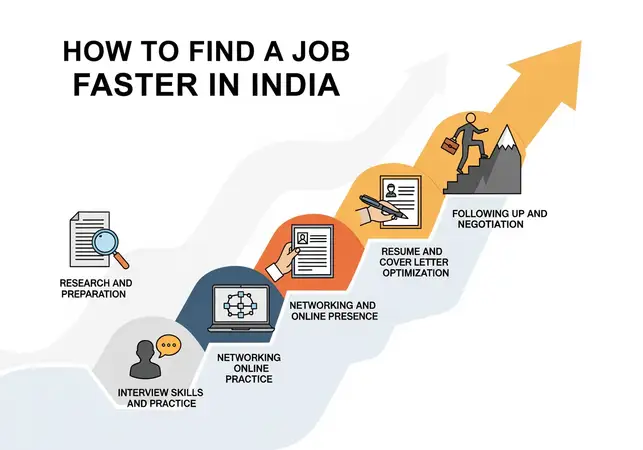
Step 1: Build a Powerful Foundation
Before you even start applying, having a robust personal brand is crucial. Your resume, cover letter, and online profiles are your primary marketing tools, representing your skills, experience, and potential to prospective employers. In a market flooded with applications, a strong foundation ensures your profile doesn't just get seen, but truly resonates with recruiters.
Crafting a Resume That Gets Noticed
Recruiters spend a mere 6-7 seconds scanning a resume in India. In this brief window, your resume must capture attention and convey your value. Furthermore, many companies use Applicant Tracking Systems (ATS) to filter resumes based on keywords and formatting before a human ever sees them. Making those few seconds count and ensuring ATS compatibility can be the difference between an interview call and being overlooked.
Choose the Right Format
- Chronological: This is the most common and generally preferred format, especially by ATS. It's best for individuals with a steady career progression in a single industry. It highlights your work history in reverse chronological order, making it easy for recruiters to track your professional journey and growth.
- Functional: Ideal for freshers with limited work experience, career changers, or those with employment gaps. It emphasizes skills and abilities over job history, grouping your competencies by category. While useful for showcasing transferable skills, be aware that some recruiters and ATS may find it less straightforward for experienced roles.
- Combination: Blends the best of both worlds, featuring a strong skills section at the top, followed by a chronological work history. This can be highly effective for mid-career professionals looking to highlight specific expertise relevant to a career shift, or for those with diverse experiences who want to emphasize particular skill sets upfront before detailing their work history.

Essential Sections for an Indian Context
- Contact Information: Ensure it's accurate and includes your full name, a professional email ID (avoiding informal or outdated addresses), mobile number (with India's country code +91 if applicable for international applications), and a clean, professional LinkedIn profile URL. Make sure this information is easily visible at the top.
- Professional Summary/Objective: This is your elevator pitch.
- For experienced professionals, a 3-4 line summary highlighting your key achievements, core skills, and career aspirations works best. Focus on quantifiable impact and what you bring to the table. Example for an experienced professional: "Results-driven Marketing Manager with 7+ years of experience in digital strategy and brand management. Proven track record of increasing market share by 15% and optimizing campaign ROI by 20% through data-driven approaches. Seeking to leverage expertise in a dynamic leadership role."
- Freshers can use an objective statement outlining their career goals and eagerness to contribute. Example for a fresher: "Highly motivated Mechanical Engineering graduate with a strong grasp of CAD/CAM software and a passion for automotive design, seeking an entry-level position to apply technical skills and contribute to innovative projects."
- Skills (Technical and Soft): Create a dedicated section for both, tailored to the job description.
- Technical Skills: List programming languages (e.g., Python, Java), software proficiency (e.g., Salesforce, SAP, AutoCAD, MS Office Suite, Tally, Tableau), specific tools, cloud platforms (e.g., AWS, Azure), and industry-specific expertise (e.g., data analytics, digital marketing tools, project management software).
- Soft Skills: Include critical thinking, problem-solving, communication (written and verbal), teamwork, adaptability, leadership, time management, and emotional intelligence. These are increasingly valued in the Indian workplace for fostering collaboration and innovation. Tailor these to the job description, providing examples of how you've demonstrated them.
- Work Experience with Quantified Achievements: Don't just list responsibilities; quantify your achievements using numbers, percentages, and metrics. This demonstrates concrete impact. Use strong action verbs to start each bullet point.
- Instead of "Managed social media accounts," write "Grew Instagram engagement by 25% and increased lead generation by 15% through strategic content planning."
- Instead of "Handled customer queries," write "Resolved an average of 30 customer inquiries daily with a 95% satisfaction rate, reducing complaint escalation by 10%."
- Instead of "Assisted in project management," write "Coordinated a team of 5 junior developers, ensuring 3 key project milestones were delivered 10% ahead of schedule."
- Education: List your degrees, institutions, graduation dates, and relevant academic achievements (e.g., GPA/percentage, awards, major projects, thesis topics). For freshers, including specific coursework relevant to the job can be highly beneficial, especially if you lack extensive work experience.
- Projects & Certifications: This is particularly important in India, where practical skills and continuous learning are highly valued. Include academic projects, internships, volunteer work, online courses (e.g., NPTEL, Coursera, Udemy, edX), and technical certifications (e.g., AWS Certified Solutions Architect, PMP, Google Digital Marketing, Data Science certifications). For creative or tech roles, consider linking to an online portfolio.
The Power of Customization, Not Just Keywords
Never use a one-size-fits-all resume. Tailor each resume and cover letter for every application. This isn't just about keyword matching for ATS; it's about demonstrating genuine interest, a clear understanding of the role, and how your unique skills align with the company's specific needs. A generic application often signals a lack of effort and interest.
How to Customize Effectively
- Analyze the Job Description (JD): Break down the JD into required skills, experience, and responsibilities. Identify the most critical keywords, phrases, and core competencies. Create a "master resume" with all your experiences, and then selectively pull and rephrase bullet points for each application.
- Mirror Language: Use similar terminology and phrasing found in the JD. This not only helps your resume pass through ATS filters but also shows the hiring manager that you understand their specific requirements and speak their professional language.
- Highlight Relevant Experience: Emphasize duties and achievements that directly relate to the job's requirements. If a JD asks for "client management," ensure your resume highlights instances where you successfully managed client relationships, even if your previous title was different.
- Quantify, Quantify, Quantify: Always try to add numbers. Did you manage a team of 5? Did you reduce costs by 10%? Did you handle 20 client queries daily? Quantifiable achievements provide concrete evidence of your impact and make your claims more credible.
- Craft a Tailored Cover Letter: A personalized cover letter can significantly boost your application, allowing you to elaborate on points not fully covered in your resume. Address it to the hiring manager by name if possible. Briefly explain why you're a good fit, highlighting 2-3 key skills or experiences directly relevant to the role and company, and express your enthusiasm for their specific mission or projects.
Step 2: Master Multiple Job Portals and Your Digital Footprint
In today's digital age, your online presence is your virtual resume. Optimizing it is not just about applying; it's about attracting recruiters and showcasing your professional brand 24/7. A strong digital footprint ensures you're discoverable and presentable to potential employers.
Essential Platforms for Indian Job Seekers
Leverage a mix of general and specialized platforms to maximize your reach. Each platform serves a slightly different purpose:
- Naukri.com: A behemoth in the Indian job market, offering a vast array of jobs across all sectors and experience levels. Essential for volume and broad reach, particularly for entry-level to mid-career roles.
- LinkedIn: Indispensable for professional networking, direct applications, and thought leadership. Recruiters actively scout candidates here, making it crucial for building connections and showcasing your expertise.
- Indeed: An aggregator that pulls job listings from various sources, offering a wide selection and ease of application. It's excellent for discovering opportunities you might miss elsewhere.
- TrueJobs: Our portal provides AI-matched opportunities, helping you cut through the noise and find roles that genuinely align with your profile, saving you time and effort.
- MonsterIndia, TimesJobs, Shine.com: Other popular generalist job boards that offer a broad range of opportunities across industries.
- Specialized Job Portals: Don't forget industry-specific platforms (e.g., Instahyre, CutShort for tech and startups; e-hire for IT; various forums for specific niches like design, finance, or healthcare). These often host high-quality, targeted roles.
Optimization Tips for Job Portals
Simply having a profile isn't enough; it needs to be optimized to stand out.
- Complete 100% of Your Profile: Incomplete profiles are often filtered out by ATS or deprioritized in recruiter searches. Fill in every section, including summary, skills, experience, education, and portfolio (if applicable). A complete profile signals thoroughness and professionalism.
- Use a Professional Photo: Especially on LinkedIn, a clear, professional headshot significantly increases profile views and credibility. It creates a positive first impression and helps recruiters put a face to a name.
- Set Job Alerts for Immediate Notifications: Configure alerts for your target roles, industries, locations, and even specific companies. This ensures you're among the first to apply, which can be a huge advantage in competitive markets. Refine alerts to be specific to avoid overwhelming notifications.
- Update Regularly to Stay Visible: Job portals often prioritize active users in search results. Log in, update your status, add new skills, revise your summary, or even just browse periodically. This keeps your profile fresh and increases its visibility in recruiter searches.
- Keyword Optimization: Just like your resume, ensure your online profiles are rich in relevant keywords that recruiters are likely to search for. Analyze job descriptions for your target roles and integrate those keywords naturally into your summary, headline, and experience sections.
Beyond Job Boards: Company Career Pages and Niche Platforms
While job boards are essential, don't limit your search. Many companies, especially larger ones, prefer direct applications through their own career portals. These applications often get prioritized and can be less competitive than those through general job boards.
- Direct Applications: Regularly check the "Careers" or "Jobs" section of companies you're interested in. This shows initiative and often gives you access to roles not advertised elsewhere.
- Niche Platforms: For specific industries or roles, niche platforms can be invaluable. For instance, startups often use platforms like AngelList or specific tech communities. Creative professionals might use Behance or Dribbble to showcase portfolios. Identify the platforms relevant to your field.
- Professional Associations: Many industry bodies (e.g., NASSCOM for IT, CII for manufacturing, ICAI for Chartered Accountants) have job boards or career sections exclusively for their members or industry professionals.
Step 3: Leverage Networking, The Unspoken Advantage
Networking accounts for a significant percentage of hires, with many sources suggesting that over 70% of jobs are filled through referrals or connections. For an Indian context, 'jugaad' (innovative fixes) often translates into utilizing your network effectively and strategically. Building genuine connections can open doors that direct applications might not.
Build Your Network Proactively
Networking isn't just about asking for jobs; it's about building relationships, sharing knowledge, and offering value.
- Connect with College Alumni: Your college's alumni network is a goldmine. Many institutions have active alumni groups on LinkedIn or dedicated platforms. Reach out, share your ambitions, and ask for insights into their career paths, industry trends, or potential introductions. Frame your outreach as seeking advice, not a job.
- Attend Industry Events, Webinars, and Workshops: Post-COVID, many industry events have gone virtual, making them more accessible. These are excellent opportunities to meet professionals in your field, learn about trends, and make valuable contacts. Look for events organized by industry associations (e.g., NASSCOM for IT, CII for manufacturing, FICCI for various sectors). Prepare a concise "elevator pitch" about yourself.
- Join Professional Groups on LinkedIn and Other Forums: Actively participate in discussions, share your expertise, and connect with other members. This establishes your presence and knowledge within your industry. Contribute value before asking for help.
- Engage with Content in Your Field: Comment on articles, share insightful posts, and build a reputation as an informed professional on platforms like LinkedIn. This can attract recruiters, potential mentors, and collaborators who notice your expertise.
- Informational Interviews: Reach out to professionals in roles or companies you aspire to and request a brief chat (15-20 minutes) to learn about their career path, daily responsibilities, company culture, and industry insights. This is not about asking for a job directly but gathering information, building rapport, and expanding your professional circle.
Ask for Referrals, The Indian Way
Referrals are highly effective in the Indian job market, often fast-tracking your application past initial screening stages.
- Understand the Referral Advantage: Many Indian companies offer bonuses to employees who refer successful candidates, making employees incentivized to help. Referred candidates often have a significantly higher chance of getting an interview and being hired.
- Reach Out to Connections at Target Companies: Once you've identified a specific role at a company you're interested in, check your LinkedIn network for connections working there. Prioritize warm connections (people you know well) but don't hesitate to politely reach out to second-degree connections.
- Be Specific About What You're Looking For: When asking for a referral, clearly state the job title and provide the direct link to the job posting you're applying for. Provide your tailored resume and a brief, compelling summary (1-2 sentences) of why you're a good fit for that specific role. Make it as easy as possible for your contact to refer you.
- Maintain Professionalism and Gratitude: Always thank your contacts, regardless of the outcome. A strong network is built on mutual respect and genuine connections. Follow up with your referrer to let them know the outcome of your application.
Cultivating Your Professional Brand Online
Your online presence extends beyond just job portals. It's about how you present yourself across various digital touchpoints.
- LinkedIn Profile Optimization: Ensure your LinkedIn profile is a dynamic, living resume. Craft a compelling headline and summary, detail your experience with quantifiable achievements, gather recommendations from colleagues and managers, and showcase relevant skills and endorsements.
- Personal Website/Portfolio: For creative fields (design, writing, photography) or tech roles (developers, data scientists), a personal website or online portfolio is essential. It provides a dedicated space to showcase your best work, projects, and case studies, offering a richer context than a resume alone.
- Responsible Social Media Presence: Be mindful of your public social media profiles. While not directly job-related, recruiters often conduct quick online searches. Ensure your public persona is professional and aligns with the image you want to project.
Step 4: Prepare Meticulously for Interviews
The interview is your chance to shine and convince the hiring manager you're the right fit. Cultural nuances in Indian interviews often include questions about family background, long-term commitment, and adaptability, alongside standard behavioral and technical assessments. Preparation is key to confidently navigating these conversations.
Research the Company Thoroughly
Demonstrating in-depth knowledge of the company shows genuine interest and initiative.
- Products, Services, Competitors: Understand their business model, what they offer, their target market, and who their main competitors are. How do they differentiate themselves?
- Recent News and Achievements: Look for press releases, annual reports, major projects, or awards they've received. Mentioning these during the interview shows you've done your homework and are invested in their success.
- Company Culture and Values: Dive into their "About Us" page, social media, and employee reviews (e.g., Glassdoor, AmbitionBox) to understand their work environment, mission, and core values. This helps you assess cultural fit and tailor your responses.
- The Interviewer: If you know who will be interviewing you, research their background on LinkedIn. This can help you find common ground, understand their professional interests, or subtly tailor your answers to their expertise.
Practice Common Questions and Techniques
Anticipate questions and prepare structured answers to present yourself effectively.
- "Tell me about yourself": Prepare a concise, compelling 2-minute pitch that summarizes your professional background, key skills, and career aspirations, linking them directly to the job you're interviewing for. Structure it as Past (brief career overview), Present (what you're doing now/key skills), Future (what you're looking for and how it aligns with the role).
- "Why this company?": This is your chance to show your research and genuine enthusiasm. Connect your personal values and career goals with the company's mission, products, culture, or recent achievements. Avoid generic answers.
- "What are your strengths and weaknesses?": For strengths, provide specific examples of how you've applied them successfully. For weaknesses, state a genuine area for improvement and explain the concrete steps you're taking to address it. Avoid clichés like "I'm a perfectionist"; instead, choose a weakness that can be framed as an opportunity for growth (e.g., "I'm working on delegating more effectively by trusting my team members with greater autonomy").
- Behavioral Questions (STAR Method): Questions like "Tell me about a time you faced a challenge" require the STAR method for structured, impactful answers:
- Situation: Describe the context or background of the event.
- Task: Explain your responsibility or goal in that situation.
- Action: Detail the specific steps you took to address it.
- Result: Quantify the positive outcome of your actions and what you learned.
- Technical Questions: For technical roles, be ready to discuss your projects, problem-solving approaches, and specific technical skills. Be prepared to whiteboard solutions or explain complex concepts clearly. If you don't know an answer, explain your thought process and how you would approach finding the solution.
- Asking Questions: Always have 2-3 thoughtful questions for the interviewer. This demonstrates engagement, critical thinking, and clarifies information for you. Examples: "What are the biggest challenges facing this team in the next 6 months?", "What opportunities are there for professional development in this role?", "How would you describe the team's working style and culture?".
- Dress Code and Demeanor: In India, business formal or business casual is generally preferred, even for virtual interviews. Ensure you're neatly groomed. Maintain good eye contact, confident body language, and a positive, enthusiastic attitude.
Mastering Different Interview Formats
Interviews come in various forms, and understanding each can help you prepare effectively.
- Telephonic/Video Interviews: Ensure a quiet, professional background, good lighting, stable internet connection, and test your audio/video beforehand. Practice looking into the camera to simulate eye contact.
- Panel Interviews: Address all interviewers, making eye contact with each, but primarily focus on the person who asked the question. Be prepared for a faster pace and potentially diverse questions.
- Case Study/Technical Rounds: These assess your problem-solving skills. Focus on articulating your thought process, assumptions, and proposed solutions clearly. Don't be afraid to ask clarifying questions.
- HR Rounds: Often focus on cultural fit, salary expectations, and long-term career goals. Be honest about salary expectations, but also flexible. Research typical salary ranges for your role and experience level in India.
Step 5: Follow Up Professionally and Systematically
The follow-up process is crucial for leaving a lasting positive impression, reiterating your interest, and keeping your application top-of-mind. It demonstrates professionalism and attention to detail.
- Send Thank-You Emails Within 24 Hours: A personalized thank-you note to each interviewer reiterating your interest and briefly mentioning a key point from your conversation shows professionalism, enthusiasm
Related: Top Resume Tips | Interview Prep Guide
FAQs
How long do recruiters spend?6-7 secondsWhat's most important?Strong personal brandRelated Resources
- ATS-Friendly Resume Templates
- Common Interview Questions and Answers
- Latest Sarkari Naukri (Government Jobs)
TrueJobs Editorial Team
TrueJobs editorial desk
This article is prepared from the sources referenced in the guide and reviewed for clarity, links and dated information. Read our editorial and corrections policy.
Continue This Topic
Follow the closest earlier and newer coverage so older archive posts keep real contextual crawl paths.
Read Next
How to Find Hidden Jobs That Are Never Posted Online

RRB NTPC 2026 Exam: Complete Preparation Roadmap

SBI PO 2026 Exam: How to Crack It on Your First Attempt

SSC CGL 2026 Preparation Guide: Syllabus, Strategy, and Tips
Explore Topics
Perfect Your Resume
Use our AI-powered Resume Builder to create ATS-optimized resumes.
AI Resume Builder