
Career guide
GD Tips: Stand Out in Campus Placements — Explained
Expert tips on how to stand out in group discussions during campus placements with strategies and common topics.

Group discussions (GDs) are a critical part of campus placement processes in India, serving as a gateway to many coveted opportunities. Companies strategically employ GDs to assess a range of soft skills that are paramount in today's dynamic professional landscape, including communication abilities, nascent leadership qualities, problem-solving aptitude, and, crucially, the capacity to work effectively within a team. For Indian college students vying for their first corporate roles, mastering the art of the GD is not just an advantage, it's a necessity. It's an opportunity to showcase your analytical prowess, articulate your thoughts coherently, and demonstrate your potential as a collaborative and contributing member of a professional team, all under the watchful eyes of potential employers.
In the highly competitive Indian job market, a strong performance in a GD can differentiate you from hundreds of other candidates, opening doors to prestigious companies and challenging roles. It simulates a real-world business meeting, allowing evaluators to observe how you interact under pressure, handle diverse opinions, and contribute to a collective outcome, which are essential traits for any successful professional.

Understanding GD Evaluation Criteria, A Deeper Dive
To truly excel in a GD, you must first understand what the evaluators are looking for. Panelists, typically HR professionals or senior managers, meticulously observe each candidate, assessing them across several key dimensions. They are not just looking for the loudest voice, but for a balanced individual who can contribute meaningfully, listen actively, and foster a productive discussion. Understanding these criteria allows you to tailor your preparation and participation for maximum impact. The GD is a holistic assessment, meaning evaluators consider your overall presence and contribution, not just isolated points. They are looking for potential, not perfection, but that potential must be clearly demonstrated through your engagement and interaction.
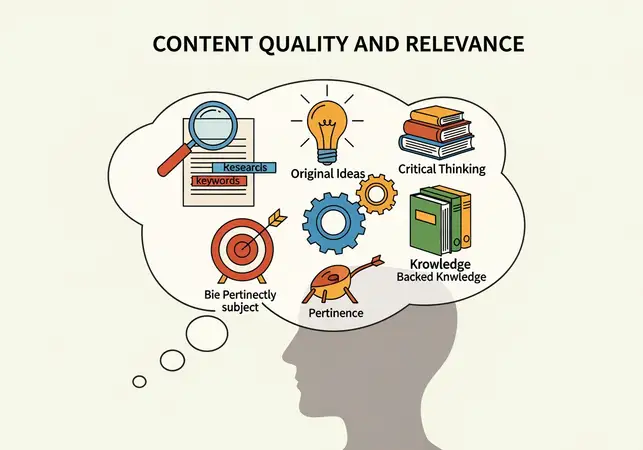
Content Quality and Relevance
The substance of your contribution is paramount. Evaluators want to see that you can think critically and offer valuable insights. Your ideas should be well-informed, logical, and directly pertinent to the topic at hand, demonstrating your intellectual capacity and preparedness.
- Depth of Knowledge: Do you possess a solid understanding of the topic? Can you bring in relevant facts, figures, and examples? This demonstrates your intellectual curiosity and preparation. It's about going beyond surface-level observations and offering well-researched perspectives. For instance, when discussing economic policies, citing specific government initiatives like 'Make in India' or 'PLI schemes' with their objectives and challenges adds significant weight. Demonstrating an understanding of the historical context or future implications of a topic further showcases depth.
- Originality of Ideas: While general knowledge is good, can you offer a unique perspective or a fresh angle to the discussion? Evaluators appreciate candidates who can think outside the box and introduce new dimensions, rather than simply reiterating what others have said. This showcases your innovative thinking. For example, if everyone is discussing the economic impact of a policy, you might introduce its social or ethical dimensions, thereby broadening the scope of the discussion.
- Logical Reasoning: Are your arguments well-structured and supported? Can you connect your points logically? A coherent thought process, where one idea flows naturally into the next, makes your contribution easy to follow and more persuasive. Avoid jumping between unrelated points or making unsubstantiated claims. Ensure your premises lead logically to your conclusions. For example, if you argue for a policy, clearly articulate the problem it addresses, the mechanism of the solution, and the expected outcomes.
- Problem-Solving Approach: Do you contribute towards finding solutions or just stating problems? Companies hire individuals to solve challenges. Demonstrating a solution-oriented mindset, even in a simulated discussion, is a strong indicator of your potential value. Offer practical, implementable suggestions rather than just critiques. Instead of merely pointing out the flaws in a system, propose actionable steps for improvement, drawing on real-world examples if possible.
Communication Skills, Beyond Just Speaking
Effective communication is a cornerstone of professional success. In a GD, it's not just about what you say, but how you say it, and how well you engage with others' ideas. It encompasses both verbal and non-verbal cues, reflecting your ability to articulate, listen, and interact professionally.
- Clarity and Conciseness: Can you articulate your thoughts clearly and without rambling? Get straight to the point. Long, convoluted sentences or excessive jargon can obscure your message. Aim for precision and brevity to ensure your ideas are understood and impactful. Practice summarizing complex ideas into a few key sentences.
- Verbal Fluency: Are you comfortable expressing yourself in English, which is often the medium for GDs in India? Fluency doesn't mean speaking without an accent, but rather expressing yourself smoothly, with appropriate pauses and intonation, allowing your ideas to flow naturally. It involves using correct grammar, a varied vocabulary, and maintaining a steady pace without excessive 'ums' or 'ahs'.
- Active Listening: This is as important as speaking. Do you genuinely listen to others, understand their points, and respond thoughtfully? Active listening involves paying attention, asking clarifying questions, and building upon or respectfully challenging previous points. It shows respect for others and your ability to engage in a true dialogue. Nodding, making eye contact, and even briefly paraphrasing someone's point before adding your own are indicators of active listening.
- Appropriate Tone and Volume: Is your voice clear, audible, and assertive without being aggressive? A moderate, confident tone is ideal. Avoid shouting or whispering. Your voice should convey conviction without being overbearing, and be loud enough for everyone, including the evaluators, to hear clearly. Varying your intonation can also help emphasize key points and keep listeners engaged.
- Language Usage: Grammatically correct sentences and a good vocabulary demonstrate professional communication. Avoid jargon unless it's universally understood within the context. Using precise and appropriate language enhances your credibility and ensures your message is conveyed accurately. A rich vocabulary, used judiciously, can make your arguments more nuanced and persuasive.
The Art of Persuasion and Influence
Beyond just speaking, evaluators look for your ability to influence the group's direction and perspective. This isn't about dominating but about presenting your ideas in a compelling manner that encourages others to consider or adopt them.
- Constructive Argumentation: Can you present a strong argument without being confrontational? This involves backing your claims with evidence, anticipating counter-arguments, and addressing them logically.
- Building Consensus: Do you actively work towards finding common ground or synthesizing different viewpoints to move the discussion forward? This demonstrates your ability to unite diverse opinions towards a shared understanding or conclusion.
- Strategic Intervention: Knowing when to speak and when to listen is crucial. A well-timed, insightful intervention can redirect a straying discussion or introduce a critical new perspective, showcasing your strategic thinking.
Body Language and Demeanour, Your Non-Verbal Cues
Your non-verbal communication speaks volumes about your confidence, engagement, and professionalism, often before you even utter a word. These cues can reinforce your verbal message or, if incongruent, undermine it.
- Eye Contact: Maintain appropriate eye contact with all participants, not just the person you're speaking to or the evaluators. This shows engagement, confidence, and respect for everyone in the group. It creates a sense of connection and indicates you are actively involved in the discussion. A good practice is to sweep your gaze across the group, making brief, meaningful eye contact with different individuals.
- Gestures: Use natural, controlled gestures to emphasize points. Avoid fidgeting, pointing aggressively, or excessive hand movements. Gestures should complement your verbal message, adding emphasis without distracting from it. Keep them subtle and purposeful, ensuring they don't become a barrier or distraction.
- Posture: Sit upright and confidently, reflecting attentiveness and professionalism. A slumped or overly relaxed posture can convey disinterest or lack of confidence. A straight but relaxed posture projects alertness and self-assurance. Avoid leaning back too far or crossing your arms defensively, which can signal disengagement.
- Facial Expressions: A pleasant and engaged expression can make you seem more approachable and receptive. Avoid looking bored, aggressive, or dismissive. Your facial expressions should mirror your active participation and interest in the discussion, conveying openness to others' ideas and a positive attitude. A slight smile can also make you appear more approachable.
Managing Nervousness Through Body Language
Nervousness is natural, but your body language can help you manage it and project confidence.
- Deep Breathing: Before the GD starts, take a few deep breaths to calm your nerves. This can help regulate your heart rate and make you appear more composed.
- Controlled Movements: If you tend to fidget, try to consciously keep your hands on the table or in your lap. Channel nervous energy into purposeful gestures when speaking.
- Power Pose: While not overtly noticeable in a seated GD, adopting a confident posture (straight back, shoulders back) can internally boost your confidence and project it externally.
Leadership and Initiative, Guiding the Discussion
While a GD is a group activity, evaluators look for individuals who can subtly influence the discussion, demonstrating nascent leadership qualities without dominating the conversation. This involves contributing to the structure and direction of the discussion.
- Initiation: While not mandatory, starting the GD with a strong, relevant point can be a significant advantage, setting a positive tone and direction. A well-structured opening can frame the discussion effectively and showcase your confidence and preparedness. A good initiator not only introduces the topic but also outlines key areas for discussion, providing a roadmap for the group.
- Direction Setting: Can you subtly steer the discussion back on track if it deviates, or introduce a new dimension when needed? This demonstrates your ability to manage a conversation, ensuring it remains productive and focused on the topic at hand. Phrases like, "We seem to be moving away from the core issue; let's bring it back to..." or "Perhaps we should now consider the long-term implications..." can be effective.
- Consensus Building: Do you attempt to synthesize differing opinions and move towards a shared understanding or conclusion? A leader helps bridge gaps between viewpoints, identifying common ground and guiding the group towards a collective outcome. This involves summarizing points of agreement and disagreement, and proposing ways to reconcile conflicting ideas.
- Enabling Others: A true leader encourages participation. Do you invite quieter members to speak or acknowledge their contributions? This shows empathy, inclusiveness, and an understanding that diverse perspectives enrich the discussion. It also demonstrates your ability to foster a collaborative environment, ensuring all voices are heard and valued.
Balancing Leadership with Participation
True leadership in a GD is about facilitating, not dominating. Evaluators are wary of candidates who monopolize the discussion.
- Listen More Than You Speak: While contributing is important, a leader also knows when to step back and allow others to speak. This shows maturity and respect.
- Share the Spotlight: Actively encourage others to contribute, especially those who might be struggling to get a word in. This demonstrates inclusive leadership.
- Focus on the Group's Goal: Your primary aim should be to help the group achieve a productive discussion, not to showcase your individual brilliance at the expense of others.
Teamwork and Group Dynamics, Collaborative Spirit
A GD is fundamentally a team exercise. Evaluators assess how well you function within a group, especially in a competitive setting. Your ability to collaborate, respect diverse views, and manage conflict constructively is paramount.
- Collaboration: Are you able to work with others to achieve a collective goal, which in a GD is a productive discussion? This involves sharing ideas, building on others' points, and collectively exploring the topic rather than just pushing your own agenda. It's about synergy, where the group's output is greater than the sum of individual contributions.
- Respect for Others' Views: Can you disagree respectfully, without being confrontational or dismissive? It's crucial to challenge ideas, not individuals. Acknowledging others' perspectives, even when you differ, shows maturity and professionalism. Use phrases like, "I understand your point, [participant's name], however, I hold a slightly different view..."
- Dealing with Conflict: How do you handle situations where there are strong opposing views? Do you try to mediate or escalate? Demonstrating the ability to calmly address disagreements, suggest compromises, or reframe arguments constructively is highly valued. Avoid personal attacks or emotional responses. Focus on the facts and the objective of the discussion.
- Time Management: Are you aware of the time limits and help ensure the discussion progresses without getting bogged down? This shows an understanding of practical constraints and a commitment to achieving the group's objective within the given timeframe. Periodically, you might suggest, "Given our limited time, perhaps we should move on to discussing solutions now."
The Role of Empathy in Group Dynamics
Empathy in a GD means understanding and acknowledging the perspectives of others, even if you don't agree with them. This fosters a more inclusive and productive environment.
- Acknowledge Feelings: While not a therapy session, recognizing the passion behind someone's argument can help you respond more effectively and respectfully.
- Seek Understanding: Instead of immediately refuting a point, try to understand the underlying reasons or experiences that led to that perspective. This can lead to more nuanced discussions.
- Bridge Divides: Empathetic participants are often good at finding common ground between seemingly opposing viewpoints, helping the group move towards consensus.
Strategies to Stand Out, Practical Steps for Success
To truly distinguish yourself from the crowd in a GD, you need a combination of preparation, strategic participation, and self-awareness. It's about being proactive, thoughtful, and impactful. Success in a GD is not accidental; it's the result of diligent preparation and intelligent execution.
Pre-GD Preparation
Success in a GD often begins long before you enter the discussion room. Thorough preparation builds confidence and provides you with the necessary ammunition to contribute meaningfully and effectively.
- Stay Updated with Current Affairs: As mentioned, this is crucial. Read leading Indian newspapers like The Hindu, The Indian Express, Business Standard, or Mint. Follow credible news channels and online portals such as Livemint, The Economic Times, or reputable international news sources like BBC and Reuters for broader context. Focus on national policies (e.g., NEP, Make in India, Production Linked Incentive schemes), economic trends (GDP growth, inflation, sectoral performance, fiscal deficit), technological advancements (AI, IoT, blockchain, quantum computing), social issues (gender equality, public health, education reforms, rural development), environmental concerns (climate change, renewable energy targets, plastic waste management), and international relations (India's role in global forums like G20, BRICS, Quad). Understand the 'why' and 'how' behind these events, not just the 'what'. Pay attention to editorial sections for diverse perspectives.
- Practice Speaking Aloud: Don't just read, articulate your thoughts. Practice explaining complex topics concisely to friends or family. Record yourself and listen back to identify areas for improvement in clarity, fluency, and tone. This helps in overcoming nervousness and improving spontaneous articulation. Try to explain a topic as if you're teaching it to someone, forcing you to structure your thoughts logically and use clear language. Engage in debates or discussions with peers on current topics.
- Hone Your English Communication: If English isn't your first language, dedicate time to improving your vocabulary and grammatical accuracy. Engage in debates, join English speaking clubs, or use language learning apps like Duolingo or Grammarly. Read English novels, watch English news, and actively try to incorporate new words into your daily conversations. Focus on building a rich, professional vocabulary. Pay attention to sentence structure, common idioms, and appropriate usage of prepositions. Consider practicing with a language tutor if possible.
- Understand Common GD Formats: Some GDs are case studies (where you analyze a business problem and propose solutions), others are abstract (e.g., "Blue vs. Green"), and many are topical (current affairs). Knowing the format can help you structure your approach. For case studies, practice analytical thinking, identifying core problems, brainstorming solutions, and evaluating their feasibility. For abstract topics, focus on creative interpretation, drawing parallels, and logical justification of your perspective. For topical discussions, focus on multi-faceted analysis (economic, social, political, ethical angles).
- Mock GDs: Participate in mock GDs with peers or career counselors. Ask for constructive feedback on your content, communication, and body language. This is invaluable for identifying weaknesses and refining your strategy in a low-stakes environment. Pay attention to feedback on how you initiate, intervene, and conclude. Practice with different group sizes and dynamics to simulate various scenarios. Record these sessions for self-analysis.
Building a Knowledge Repository
Systematize your learning to ensure you have readily accessible information during a GD.
- Topic-wise Notes: For each major current affairs topic, create concise notes outlining key facts, different viewpoints (pros/cons), relevant statistics, and potential solutions.
- Mind Maps: Use mind maps to connect related ideas and topics, helping you see the bigger picture and draw interdisciplinary connections during a discussion.
- Vocabulary List: Maintain a list of professional vocabulary and phrases relevant to GDs, practicing their usage in context.
During the GD, Strategic Participation
Once the GD begins, your ability to engage strategically and respectfully will determine your impact. It's about making every contribution count and demonstrating your value to the group.
- Initiate with Purpose: If you have a well-thought-out, insightful opening statement, go for it. A good start defines the direction and showcases your confidence. For example, "Good morning everyone. I believe the topic, 'Is remote work sustainable for India's IT sector?', brings to the forefront the dual challenges of infrastructure and employee engagement. I'd like to begin by highlighting the significant cost savings for companies and the increased flexibility for employees, which are undeniable benefits that have reshaped our work culture." Ensure your opening is concise, relevant, and sets a clear agenda for discussion, perhaps by outlining 2-3 key aspects the group should explore.
- Substantiate with Data and Examples: General statements won't cut it. Back your claims with relevant statistics, reports, real-world Indian examples, or even specific company practices. For instance, instead of "AI is important," say, "AI is rapidly transforming sectors like healthcare, with startups in Bangalore developing AI-powered diagnostic tools, as reported by NASSCOM, leading to earlier disease detection and personalized treatment plans." This adds credibility and weight to your arguments. Always strive to provide evidence or a logical basis for your assertions.
- Listen Actively and Build on Others' Points: Don't just wait for your turn to speak. Listen intently. When you speak, acknowledge previous points, "Building on [participant's name]'s point about rural connectivity, we also need to consider the cultural shift required for remote work, especially in regions where traditional office structures are deeply ingrained. This transition requires significant investment in digital literacy and change management." This shows respect, analytical thinking, and your ability to integrate diverse perspectives, moving the discussion forward rather than just presenting isolated ideas.
- Be a Facilitator, Not Just a Participant:
- Clarify: If a point is unclear, politely ask for clarification. "Could you elaborate on the 'trickle-down effect' you mentioned, [participant's name]? I'd like to understand its specific application in the current economic context." This helps the entire group understand better and shows your engagement.
- Summarize Progress: "So far, we've discussed the pros of digital education, such as accessibility and personalized learning. Now, let's explore the challenges, particularly for underserved communities, focusing on infrastructure gaps and teacher training." This helps keep the discussion structured and on track, especially if it starts to meander.
- Bring in Quieter Members: "Excuse me, [participant's name], you haven't had a chance to share your views yet. What are your thoughts on this aspect, especially concerning the social impact of this policy?" This demonstrates inclusive leadership and ensures all voices are heard, enriching the discussion.
- De-escalate Conflict: If the discussion becomes heated, "I understand both sides have strong arguments regarding the economic impact. Perhaps we can explore a middle ground or look at this from another perspective, considering the long-term societal benefits versus short-term economic costs?" This helps maintain a professional and productive environment, focusing on issues rather than personalities.
- Maintain Professionalism: Avoid interrupting impolitely, raising your voice, or using aggressive language. Disagree with ideas, not individuals. Your demeanor should always be respectful, even when you hold strong opposing views. Personal attacks or condescending remarks are immediate red flags for evaluators. Remember, you are being assessed on your ability to work collaboratively.
- Summarize if Possible: If the GD concludes without a designated summarizer, and you get the chance, volunteer to summarize. This showcases your ability to synthesize information, identify key takeaways, and lead to a conclusion. "To conclude, our discussion on 'Startup Ecosystem in Tier-2 Cities' has covered the immense potential for innovation, the challenges in securing adequate funding and mentorship, and the critical need for government support and robust incubation centers. We largely agree that while promising, focused efforts are needed for sustainable and equitable growth across these emerging hubs." A good summary is balanced, comprehensive, and highlights the consensus or key divergent points, offering a clear wrap-up.
Handling Interruptions and Reclaiming Your Turn
In a dynamic GD, interruptions can happen. Knowing how to handle them gracefully is key.
- Polite Persistence: If interrupted, don't stop completely. Maintain eye contact and politely say, "Please allow me to finish my point," or "Just one moment, I'm almost done."
- Reclaiming Your Point: Once the interruption subsides, briefly reiterate your last thought to regain your flow. "As I was saying, the primary challenge is..."
- Strategic Pause: Sometimes, a brief, confident pause can signal that you're not finished and encourage others to wait.
The Art of the Follow-Up Point
Adding a follow-up point demonstrates deeper thinking and engagement.
- Elaboration: After making an initial point, if there's a pause, you can elaborate further with an example or a deeper explanation. "To elaborate on that, consider the recent case of..."
- Connecting to Broader Themes: Link your point to the overall theme or objective of the GD. "This point directly ties into our discussion about the long-term sustainability of the model."
- Proposing Next Steps: If the discussion is getting stuck, propose a next step or a new angle to explore. "Given these challenges, perhaps we should now brainstorm potential solutions."
Common GD Topics in 2026, Anticipate and Prepare
The landscape of GD topics evolves, reflecting current global and national concerns. Staying abreast of these trends is non-negotiable, as it directly impacts your ability to contribute meaningfully. Companies often choose topics that are relevant to their industry, the economy, or pressing societal issues, allowing them to gauge your awareness and critical thinking.
Technology and Innovation
Technology is a constant and rapid transformer, making these topics highly relevant for discussions about the future of work and society. India's burgeoning tech sector and digital transformation initiatives make these topics particularly pertinent.
- AI and Automation: Ethical considerations, job displacement vs. creation, AI in specific sectors (e.g., healthcare diagnostics, financial fraud detection, personalized education in India). Discuss the societal implications, regulatory challenges, and India's potential as an AI hub, including government initiatives like the National Strategy for Artificial Intelligence.
- Web3 and Metaverse: Their potential impact on business, communication, and daily life in India. Explore the concepts of decentralization, NFTs, virtual economies, and the infrastructure required for mass adoption in an Indian context, considering digital literacy and internet penetration.
- Cybersecurity in India: Growing threats, data privacy concerns, and government initiatives (e.g., CERT-In, Data Protection Bill). Discuss the balance between national security and individual privacy, and the role of education in preventing cybercrime. Consider the implications for critical infrastructure and financial systems.
- Impact of 5G Technology: Its role in digital transformation, smart cities, and rural connectivity. Analyze how 5G can revolutionize industries like manufacturing, healthcare, and education, and the challenges of its widespread implementation in India, including spectrum allocation and infrastructure development.
- Quantum Computing's Potential: Discuss its disruptive capabilities across industries, India's research and development efforts, and the ethical considerations surrounding this emerging technology.
- Space Economy in India: The role of private players, ISRO's advancements, and India's potential to become a global leader in space technology and commercial space ventures.
Economy and Business
Economic trends and business models are at the heart of corporate discussions, making these topics frequent choices for GDs, especially given India's dynamic economic landscape.
- Remote Work Culture: Long-term sustainability, impact on productivity, employee well-being, and corporate infrastructure. Discuss the pros and cons for both employers and employees, and its implications for urban planning and real estate in India, particularly for Tier 1 vs. Tier 2 cities.
- Startup Ecosystem in India: Funding challenges, valuation bubbles, government support (e.g., Startup India, various incubation schemes), and the rise of unicorns. Analyze the factors contributing to its growth and the hurdles faced by new ventures, particularly in non-metro cities and deep-tech sectors.
- Gig Economy and Future of Work: Worker rights, social security, and flexibility vs. stability. Discuss the regulatory framework needed for gig workers, the benefits for companies, and the challenges for individuals relying on gig work, considering the unique socio-economic context of India.
- Inflation and Economic Growth in India: Government policies, RBI's role, and consumer impact. Explore the causes of inflation, its effects on different segments of society, and the strategies employed by the government and central bank to manage it, including monetary and fiscal policies.
- India's Position in Global Supply Chains: Opportunities and challenges. Discuss initiatives like 'Atmanirbhar Bharat', the impact of geopolitical shifts, and India's potential to become a manufacturing hub, attracting foreign direct investment.
- Impact of Global Economic Slowdown on India: How external factors affect India's growth trajectory, export markets, and investment climate. Discuss resilience strategies and policy responses.
- Ease of Doing Business Reforms: Analyze the impact of government reforms on attracting
Group Discussion Tips for Campus Placements
Related: Communication Skills | Resume Tips
FAQs
Why are GDs important?Assess soft skillsRelated Resources
- Resume Writing Tips for Freshers
- Common Interview Questions
- Latest Sarkari Naukri
TrueJobs Editorial Team
TrueJobs editorial desk
This article is prepared from the sources referenced in the guide and reviewed for clarity, links and dated information. Read our editorial and corrections policy.
Continue This Topic
Follow the closest earlier and newer coverage so older archive posts keep real contextual crawl paths.
How Recruiters Actually Shortlist Candidates (Insider Secrets)
Unlock recruiter shortlisting secrets! Learn what makes candidates stand out and boost your job prospects with expert tips.
Gig Economy in India: Opportunities and Challenges
India's gig economy now includes 15M workers in flexible roles. Discover opportunities and challenges shaping this sector.
Read Next

Interview Preparation Checklist (Complete Guide)

Common HR Interview Questions and Best Answers

How to Answer "Tell Me About Yourself" in Interviews

How to Prepare for Walk-In Interviews
Explore Topics
Perfect Your Resume
Use our AI-powered Resume Builder to create ATS-optimized resumes.
AI Resume Builder