
Career guide
Latest How to Prepare for Walk-In Interviews — Explained
Master walk-in interviews with our complete preparation guide. Learn what to research, documents to carry, and tips to stand out from the crowd.
Navigating the dynamic landscape of the Indian job market requires a strategic approach, especially when it comes to walk-in interviews. This comprehensive guide is designed to transform your approach to these on-the-spot opportunities, equipping you with the knowledge, tools, and confidence to stand out from the crowd and secure your desired government or private sector position.
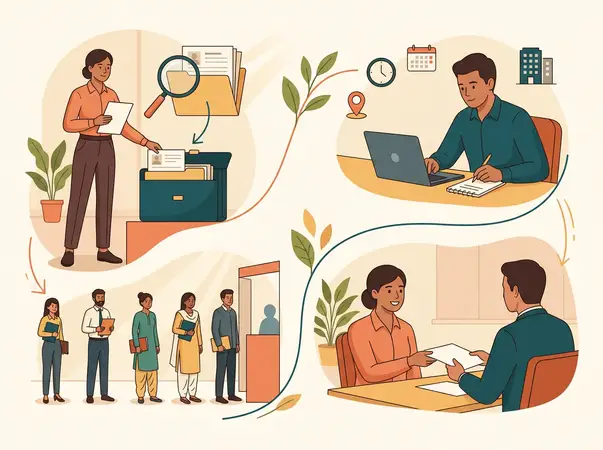
How to Prepare for Walk-In Interviews
Walk-in interviews can be a nerve-wracking experience. Unlike a scheduled interview where you have days or even weeks to prepare, a walk-in often presents an immediate, on-the-spot opportunity. The pressure of performing well without extensive prior knowledge can be daunting, but with the right approach, it becomes a significant advantage. This comprehensive guide from TrueJobs will equip you with the strategies and insights needed to confidently tackle walk-in interviews and significantly boost your chances of success in the competitive Indian job market.
Understanding the Walk-In Interview Landscape in India
A walk-in interview, also known as an open interview or direct interview, is a recruitment method where job seekers are invited to a specific location on a particular date and time without a prior appointment. Companies announce these events, often through newspaper advertisements, online job portals like TrueJobs, or company websites, inviting candidates to simply "walk in" with their documents. These events are designed to streamline the initial screening process, allowing employers to meet a large volume of candidates efficiently.
Why Companies Use Walk-In Interviews
In India, walk-in interviews are a prevalent hiring strategy, especially in certain sectors. Here's why companies opt for this approach:

- Speed and Efficiency for Volume Hiring: When a company needs to fill a large number of similar roles quickly, such as in BPOs, retail, hospitality, or entry-level IT positions, walk-ins are incredibly efficient. They allow recruiters to screen hundreds of candidates in a single day, significantly shortening the hiring cycle and ensuring business continuity. This is particularly common in fast-growing industries or during peak seasons. For instance, during festive seasons, retail chains often conduct walk-ins to quickly staff up their sales teams. Similarly, new BPO centers frequently rely on walk-ins to build their workforce rapidly.
- Assessing Seriousness and Motivation: The effort a candidate makes to physically travel to a walk-in interview, often waiting for hours, demonstrates a tangible level of commitment and motivation. This is a valuable indicator for employers, especially for roles requiring high dedication, resilience, and a proactive attitude. It shows a candidate's willingness to go the extra mile, which is highly valued in many Indian workplaces. This commitment is often seen as a predictor of an employee's loyalty and perseverance in the role.
- Immediate Evaluation of Soft Skills: Unlike a resume, a walk-in interview allows recruiters to immediately assess a candidate's professionalism, communication skills, confidence, and overall demeanor. These 'soft skills' such as active listening, problem-solving, adaptability, and teamwork are often as crucial as technical abilities, particularly in customer-facing roles, sales, or team-oriented environments. For roles like customer support executive or sales representative, these interpersonal skills are paramount and can be best judged in a face-to-face interaction.
- Cost-Effectiveness: For many companies, especially Small and Medium Enterprises (SMEs), organizing walk-ins can be more cost-effective than a lengthy, multi-stage scheduled interview process involving numerous individual appointments, extensive background checks at early stages, and administrative overhead. It reduces the time and resources spent on initial screening. This is particularly true for companies operating on tighter budgets or those that need to fill positions quickly without extensive recruitment infrastructure.
- Tapping into the Local Talent Pool: Walk-ins are excellent for recruiting from the immediate geographical area, which can reduce attrition rates due to long commutes and foster a sense of community within the workforce. For candidates, it offers opportunities close to home, reducing travel burden and improving work-life balance. This local focus can also help companies build a workforce that understands the regional culture and customer base, which is a significant advantage in many service-oriented industries.
- Filling Urgent Vacancies: When there's an immediate need to fill a position due to unexpected departures, project demands, or sudden expansion, walk-ins provide a rapid solution. They enable companies to quickly onboard talent and minimize operational disruptions. For example, if a large project suddenly gets approved, companies might conduct walk-ins to quickly hire project-specific staff.
According to a recent TrueJobs survey, nearly 30% of entry-level and junior-level positions in sectors like BPO, retail, and manufacturing in India are still filled through walk-in interviews, highlighting their continued relevance.
Challenges of Walk-In Interviews for Candidates
While walk-ins offer unique opportunities, they also present specific challenges for job seekers. These include intense competition due to the large number of applicants, the pressure of on-the-spot performance, and often limited prior information about the specific role. Candidates might also face long waiting times, which can be mentally taxing. Understanding these challenges is the first step towards overcoming them through meticulous preparation.
- High Competition: Due to the open nature of walk-ins, a large number of candidates often show up, leading to fierce competition for a limited number of positions. This means you need to stand out quickly.
- Limited Information: Unlike scheduled interviews where you might receive a detailed job description beforehand, walk-ins often provide only a general idea of the roles available. This makes targeted preparation more challenging.
- On-the-Spot Pressure: The expectation to perform well without extensive prior notice can be stressful. You need to be able to think on your feet and articulate your thoughts clearly under pressure.
- Long Waiting Times: It's common to wait for several hours, sometimes even half a day, before your turn. This requires patience, stamina, and the ability to maintain focus and enthusiasm.
- Multiple Interviewers/Rounds: You might go through several screening rounds with different interviewers on the same day, each requiring consistent performance and energy.
- Travel and Logistics: Depending on the location, reaching the venue can be a challenge, especially in large Indian cities with heavy traffic. Planning your commute is crucial.
Phase 1: Meticulous Pre-Interview Preparation
The notion that walk-in interviews require no preparation is a common misconception and a surefire way to miss out on opportunities. While the scheduling is spontaneous, your preparation doesn't have to be. Strategic groundwork can significantly differentiate you from other candidates.
1. In-Depth Company Research
Do not make the mistake of showing up without knowing anything substantial about the company. This is a critical error that can instantly disqualify you. Recruiters expect candidates to demonstrate genuine interest, and informed questions or comments are a clear indicator of this.
What to Research Thoroughly:
- The Company's Business, Products, and Services: Understand what the company does, what it sells, and who its customers are. If it's a service company, know their key offerings (e.g., IT consulting, financial advisory). If it's a product company, be familiar with their flagship products and their market position (e.g., consumer electronics, FMCG). For instance, if you're interviewing with a telecom company, know their latest plans, network coverage, and competitors. If it's a bank, understand their various account types, loan products, and digital banking initiatives.
- Mission, Vision, and Values: Companies often highlight these on their 'About Us' page. Aligning your aspirations and work ethic with their values can be a strong selling point. For example, if a company values innovation, you can highlight your problem-solving skills and adaptability. If they emphasize customer-centricity, share an experience where you went above and beyond for a customer.
- Recent News and Achievements: Look for press releases, news articles, or their social media feeds. Has the company launched a new product? Won an award? Expanded into a new market? Mentioning these shows genuine interest and that you've done your homework. For example, "I read about your recent expansion into Tier-2 cities, and I'm excited about the growth opportunities that presents."
- The Specific Role/Department (if known): While you might not know the exact job description for a walk-in, try to infer the types of roles they typically hire for. For example, if it's a BPO, prepare for customer service or technical support roles. If it's a retail chain, think about sales associate or store management roles. Tailor your skills and experience to these potential roles. If the advertisement mentions "multiple openings," consider preparing for a few common roles within that industry.
- Competitors: Knowing who their main competitors are can help you understand their market position, unique selling propositions, and challenges, allowing you to frame your contributions more effectively. This demonstrates a broader understanding of the industry. For example, you might say, "I noticed your company has a strong focus on digital innovation, which sets you apart from competitor X who still relies heavily on traditional methods."
Leveraging Online Resources for Research
- Company website: Always start here. Pay special attention to "About Us," "Careers," "News," "Investor Relations," and "Products/Services" sections. These sections often provide the most accurate and up-to-date information directly from the source.
- LinkedIn company page: Provides insights into company culture, employee profiles, and recent activities. You can also look at the profiles of current employees to understand typical career paths and required skill sets.
- News articles: A quick Google search for "Company Name + News" can reveal recent developments, challenges, or successes. Set up Google Alerts for the company name to stay updated.
- TrueJobs company profiles and reviews: Offers valuable insights from current and former employees, including information on work culture, interview processes, and salary expectations. Websites like TrueJobs, Glassdoor, and AmbitionBox can give you a realistic picture of what it's like to work there and what to expect during the interview.
- Social Media: Check their official Facebook, Twitter, and Instagram pages for recent campaigns, community involvement, and brand messaging. This can give you a sense of their public image and values.
2. Craft Your Compelling Elevator Pitch
This is almost always the first question, often disguised as "Tell me about yourself" or "Walk me through your resume." Your answer should be a concise, confident, 60-90 second summary that highlights your relevant skills, experience, and career aspirations, directly linking them to the company and the potential role. It's your opportunity to make a strong first impression and set the tone for the rest of the interview.
Key Elements of an Effective Elevator Pitch:
- Who you are: Your current role/academic background. Start with your name and your most recent or relevant educational/professional status.
- What you do/your key skills: Highlight 2-3 most relevant skills that align with the type of roles offered. These should be skills that the company would find valuable.
- Your experience/achievements: Briefly mention a significant accomplishment or responsibility that showcases your capabilities. Quantify achievements whenever possible (e.g., "increased sales by 15%," "managed a team of 5").
- Why you are here: Express your enthusiasm for this specific company and this type of role, connecting your goals with their mission. This is where your company research becomes invaluable.
Example for a BPO walk-in:
"Good morning, my name is [Your Name]. I recently graduated with a degree in Commerce and have a strong passion for customer service. During my internship at [Previous Company/College Project], I honed my communication and problem-solving skills, consistently receiving positive feedback for my ability to resolve customer queries efficiently. I'm highly organized, a quick learner, and eager to apply my skills in a dynamic environment like [Company Name], which I admire for its excellent customer satisfaction ratings. I believe my dedication to service makes me a great fit for your team."
Example for an Entry-Level IT Support walk-in:
"Hello, my name is [Your Name]. I'm a recent Computer Science graduate with a strong foundation in network troubleshooting and software installation. During my academic projects, I successfully resolved various technical issues for peers and developed a keen interest in IT support. I'm proficient in [mention a specific skill like 'Windows OS' or 'basic networking'] and a quick learner, always eager to master new technologies. I'm particularly drawn to [Company Name]'s innovative approach in [mention a specific area if known, e.g., 'cloud solutions'] and am confident my technical aptitude and problem-solving abilities would be valuable to your IT team."
3. Anticipate Common Questions and Practice Responses
While walk-ins can be unpredictable, some questions are universal. Preparing for these will build your confidence and ensure you provide articulate, well-thought-out answers. Beyond just memorizing, understand the intent behind each question.
Start formulating answers for:
- Tell me about yourself.
- Why do you want this job/work for our company?
- What are your strengths and weaknesses?
- Where do you see yourself in 5 years?
- Why should we hire you?
- What are your salary expectations?
- Do you have any questions for us?
Practice your answers aloud, ideally in front of a mirror or with a friend, to ensure they sound natural, confident, and concise. Pay attention to your tone and pacing. Consider recording yourself to identify areas for improvement. This practice will help you deliver your answers smoothly, even under pressure, and avoid sounding rehearsed or hesitant. Remember, the goal is to sound natural and confident, not robotic.
4. Prepare for Aptitude Tests and Group Discussions
Many walk-in interviews, especially for entry-level or high-volume positions, include an initial screening round that might involve an aptitude test or a group discussion (GD).
- Aptitude Tests: These typically assess your quantitative ability, logical reasoning, verbal ability, and sometimes basic technical knowledge relevant to the role. Practice common types of questions found in competitive exams like those for Sarkari Naukri. Websites and books dedicated to aptitude test preparation can be very helpful.
- Group Discussions (GDs): In a GD, candidates are given a topic (current affairs, abstract, or case study) and asked to discuss it as a group. Recruiters observe your communication skills, leadership potential, teamwork, analytical thinking, and ability to articulate your views respectfully.
- Tips for GDs: Try to initiate the discussion (but don't dominate), contribute meaningfully, listen actively to others, summarize key points, and maintain a positive and collaborative demeanor. Avoid interrupting, being aggressive, or staying silent.
Phase 2: Essential Documents and Professional Presentation
Your documents are your professional identity. Ensure they are impeccably organized and easily accessible. A well-prepared set of documents reflects your attention to detail and professionalism.
1. Documents to Carry (Organized in a Professional Folder)
Always create a checklist before leaving to ensure you haven't forgotten anything crucial.
- Multiple Copies of Your Updated Resume (5-10 copies): Tailor your resume as much as possible to the types of roles the company typically hires for. Use good quality paper for printing. Having multiple copies is essential as you might interact with several interviewers or be asked to submit it at different stages. Ensure your resume is free of typos and grammatical errors. Consider having a basic and a slightly more detailed version if you anticipate different types of roles.
- Original and Photocopies of Educational Certificates: Mark sheets, degree certificates (10th, 12th, Graduation, Post-Graduation). Keep originals in a safe place and provide clear, legible photocopies. Some companies might ask to verify originals on the spot. Arrange them chronologically, with the most recent at the top.
- Government-Issued ID Proof: Aadhar Card, PAN Card, Passport, or Driver's License. Carry both original and photocopies. This is mandatory for verification and often for entry into company premises. Ensure the photocopies are clear and legible.
- Passport-Size Photographs: 2-4 recent photographs. These are often required for application forms or internal records. Ensure they are professional, taken against a plain background, and reflect your current appearance.
- Experience Letters and Relieving Letters: If you are an experienced professional, carry these from all previous employers. Also, carry your latest 3-6 months' salary slips to substantiate your previous compensation. These documents are crucial for verifying your work history and salary expectations.
- Portfolio or Work Samples (if applicable): For roles in design, content writing, IT development, or creative fields, a physical or digital portfolio (on a pen drive or easily accessible cloud link) is crucial. Ensure digital files are easily viewable and well-organized. If carrying a physical portfolio, ensure it's neat and professional.
- Pen and a Small Notebook: To take notes during the interview or jot down key information like interviewer names, next steps, or company details. This shows attentiveness. Make sure your pen works and you have a spare.
- Reference Letters (Optional but Recommended): If you have strong professional references, a sealed letter of recommendation from a former manager or professor can be a bonus, especially for entry-level roles. Ensure your references are aware you might be sharing their contact information or letters.
- Any Relevant Certifications: If you have completed any professional certifications (e.g., PMP, AWS, Digital Marketing), carry copies of these certificates. They add significant value to your profile.
Digital Readiness: Beyond Physical Documents
In today's digital age, ensure your online professional presence is also ready. Have your LinkedIn profile updated and optimized. If you have an online portfolio or a personal website, ensure the link is easily accessible and presentable, perhaps even printed on a business card or your resume. Be prepared to share these links if asked. Ensure your email address is professional and your social media profiles don't contain anything that could be viewed negatively by a potential employer.
2. Dress for Success: The Indian Context
First impressions are paramount. Dress formally and professionally, reflecting respect for the opportunity and the interviewer. Your attire speaks volumes before you even utter a word.
- For Men: A neatly ironed, light-colored formal shirt (tucked in), dark formal trousers, a matching belt, polished formal shoes, and a conservative tie (optional but recommended for corporate roles). Ensure your hair is well-groomed, and facial hair is neatly trimmed. Avoid flashy accessories or strong perfumes. A subtle watch is acceptable.
- For Women: A formal saree, a well-fitted salwar-kameez, or western formals (a formal blouse with a blazer and trousers/skirt). Opt for subtle makeup, minimal and elegant jewelry, and neatly tied or styled hair. Avoid overly bright colors, plunging necklines, or distracting patterns. Ensure your attire allows for comfortable movement and sitting.
- General: Ensure your clothes are clean, wrinkle-free, and well-fitting. Personal hygiene is non-negotiable, so ensure you smell fresh and have clean nails. A subtle deodorant is fine, but avoid overpowering fragrances. Your shoes should be clean and polished.
Remember, the goal is to present a polished, professional image that doesn't distract from your qualifications. When in doubt, err on the side of being more formal.
3. The Power of a Professional Folder/Bag
Invest in a good quality, professional folder or briefcase to carry your documents. Avoid carrying loose papers or stuffing them into a backpack. A structured bag conveys organization, seriousness, and professionalism, instantly creating a positive visual impression. This also helps keep your documents safe and wrinkle-free, which is crucial when you might be handling them multiple times throughout the day.
Phase 3: Navigating the Walk-In Venue
The moment you step onto the company premises, your interview has effectively begun. Every interaction, from the security guard to fellow candidates, is an opportunity to make a positive impression.
1. Arrive Early, Not Just on Time
Aim to arrive 30-45 minutes before the stated start time. This buffer is crucial for several reasons:
- Locate the venue: Avoid last-minute stress of finding the exact office or floor. Traffic in Indian cities can be unpredictable, so factor in extra travel time. Use navigation apps but also be prepared for local directions.
- Freshen up: Use the washroom, check your appearance one last time. Ensure your hair is in place, and your clothes are still neat.
- Observe the environment: Get a feel for the company culture, observe employee interactions, and the general atmosphere. This can give you valuable insights and help you tailor your responses.
- Mentally prepare: Review your notes, calm your nerves, and mentally rehearse your elevator pitch. Take a few deep breaths to center yourself.
Being late for a walk-in is almost an immediate disqualifier, as it indicates a lack of punctuality, seriousness, and respect for the interviewer's time. It also adds unnecessary stress, which can negatively impact your performance.
2. Be Polite and Professional to Everyone
From the security guard at the gate to the receptionist, the administrative staff, and fellow candidates, treat everyone with courtesy and respect. You never know who might be observing you or whose opinion might matter in the hiring process. A positive attitude, even while waiting, reflects well on your personality and shows your ability to interact professionally in various situations. Remember, the hiring process is often a team effort, and your behavior towards support staff can be noted and reported.
3. Use Waiting Time Wisely
Walk-ins often involve significant waiting periods. Instead of getting anxious or distracted by your phone:
- Observe: Notice how employees interact, the office environment, and the general atmosphere. This can give you insights into the company culture and whether it aligns with your expectations. Pay attention to how people dress, how they communicate, and the overall energy of the place.
- Review: Quickly go over your resume, company facts, and prepared answers. This helps reinforce key information and boosts confidence. You can also mentally rehearse answers to potential questions.
- Stay calm: Practice deep breathing exercises or mindfulness techniques to manage any pre-interview jitters. Listen to calming music if it helps, but ensure your phone is on silent when your turn approaches.
- Network (cautiously): If appropriate, engage in polite conversation with other candidates. You might learn something new about the process or the company, or even make a valuable professional connection. However, avoid discussing your qualifications or trying to outdo others; focus on friendly, professional interaction.
- Avoid Distractions: Refrain from excessive phone usage, playing games, or engaging in loud conversations. Your focus should be on the opportunity at hand.
4. Maintain Confident Body Language
When your turn comes, your non-verbal cues are just as important as your words.
- Stand tall, make appropriate eye contact, and offer a firm, confident handshake (if appropriate and culturally acceptable). In India, a respectful namaste or a polite nod might be more appropriate in some contexts, especially with senior interviewers. Observe the interviewer's lead.
- Smile genuinely to convey warmth and approachability. A warm smile can instantly put both you and the interviewer at ease.
- Listen attentively to instructions and questions. Nod occasionally to show engagement. This demonstrates that you are actively processing what is being said.
- Avoid fidgeting (e.g., tapping feet, playing with hair) or slouching, as these can signal nervousness or disinterest. Maintain an open posture, leaning slightly forward to show engagement.
- Speak clearly and concisely, maintaining a moderate pace. Avoid mumbling or rushing your answers. Articulate your words well, especially if English is not your first language, to ensure clarity.
Phase 4: Acing the Interview Itself
This is your moment to shine. Be prepared to answer questions confidently and intelligently, demonstrating your skills, experience, and enthusiasm.
Common Walk-In Interview Questions (with Indian Context Tips)
- Tell me about yourself.
- Tip: This is your elevator pitch. Keep it professional, concise, and relevant. Focus on your education, key skills, relevant experience, and career goals, linking them to the role and company. Avoid personal details unless specifically asked. Structure it as present (who you are now), past (relevant experience/education), and future (why you're interested in this role/company). In the Indian context, it's common to start with your name, educational background, and then move to professional experience.
- Why do you want this job/work for our company?
- Tip: This is where your company research pays off. Mention specific aspects of the company (e.g., "I'm impressed by your recent expansion into ["X" market]," or "Your commitment to customer satisfaction truly resonates with me"). Connect your skills and aspirations to their needs, showing genuine interest beyond just needing 'any' job. Avoid generic answers like "I need a job" or "I heard it's a good company." Show that you've done your homework and are genuinely excited about their specific work or culture.
- What are your strengths and weaknesses?
- Strengths: Choose 2-3 strengths directly relevant to the job (e.g., "strong communication," "problem-solving," "team player," "quick learner," "adaptability"). Provide a brief, specific example for each strength to make it credible. For instance, "My strength is problem-solving; during my college project, I identified a critical bug in our code and developed a solution that improved efficiency by 20%."
- Weaknesses: Choose a genuine but minor weakness that you are actively working to improve (e.g., "I sometimes over-analyze situations, but I'm learning to trust my instincts more and make quicker decisions," or "I used to struggle with delegation, but I've been taking courses to improve my leadership skills and trust my team more"). Never say you have no weaknesses, as it can appear disingenuous. Frame it as an area for growth and demonstrate self-awareness.
- Where do you see yourself in 5 years?
- Tip: Show ambition and a desire for growth within the company. Align your goals with potential career paths at the organization. For instance, "I aim to become a subject matter expert in [relevant area] and contribute significantly to the company's growth, potentially taking on more leadership responsibilities as I gain experience." Avoid mentioning starting your own business or working for a competitor, as this signals a lack of long-term commitment. Focus on learning, contributing, and advancing within their structure.
- Why should we hire you?
- Tip: This is your final sales pitch. Reiterate your unique value proposition. Summarize your key skills, experience, and enthusiasm for the role and company. Emphasize how you can solve their problems or contribute to their success. "I believe my blend of [Skill 1], [Skill 2], and my dedication to [Company's core value] makes me an ideal candidate who can quickly integrate and start contributing to your team's objectives. I am a fast learner and committed to delivering results." Connect your abilities directly to their needs.
- What are your salary expectations?
- Tip: Research typical salary ranges for similar roles in your city/region using TrueJobs salary guides or other platforms like Glassdoor or LinkedIn. State a realistic range rather than a fixed figure. You can also say, "I am open to discussing compensation based on the responsibilities and the company's standard for this role, but I expect a package commensurate with my skills and experience, aligning with industry standards." Avoid being the first to name a number if possible, or provide a flexible range. For freshers, it's often best to state that you are open to the company's standard compensation for entry-level roles.
- Do you have any questions for us?
- Tip: Always have 2-3 thoughtful questions prepared. This shows engagement and genuine interest. Avoid asking questions whose answers are easily found on the company website or about salary/benefits at this stage. Good questions could be: "What does a typical day look like for someone in this role?", "What are the biggest challenges facing this department right now?", "What opportunities are there for professional development and growth?", or "How would you describe the team culture here?"
Handling Behavioral Questions with the STAR Method
Many interviewers, even in walk-ins, will ask behavioral questions (e.g., "Tell me about a time you faced a challenge," or "Describe a situation where you had to work in a team"). The STAR method is an excellent framework for structuring your answers:
- S - Situation: Briefly describe the situation or context. Where were you? What was the background?
- T - Task: Explain the task you had to complete or the goal you were working towards. What was your responsibility?
- A - Action: Detail the specific actions you took to address the situation or complete the task. Focus on "I" statements to highlight your individual contribution.
- R - Result: Describe the outcome of your actions. What was the positive result? Quantify it if possible. What did you learn?
Example Behavioral Question: "Tell me about a time you had to deal with a difficult customer."
- Situation: "During my internship at a retail store, a customer came in very upset because the product they purchased online was damaged upon delivery."
- Task: "My task was to calm the customer down, understand their issue, and find a satisfactory resolution while adhering to company policy."
- Action: "I first listened patiently to their concerns without interruption, empathizing with their frustration. I then politely explained our return policy for damaged items and offered two solutions: a full refund or an immediate exchange for a new product, along with a small discount on their next purchase as an apology for the inconvenience."
- Result: "The customer appreciated my understanding and prompt action. They chose the exchange option and left the store satisfied, even complimenting my service to my manager. This experience reinforced the importance of active listening and offering clear solutions in customer service."
Key Interview Etiquette for Walk-Ins
- Active Listening: Pay close attention to the interviewer's questions. If you're unsure, politely ask for clarification.
- Honesty and Integrity: Always be truthful about your skills and experience. Exaggerating or fabricating information can lead to serious consequences later.
- Enthusiasm: Show genuine interest in the role and the company. Your energy can be contagious.
- Professional Language: Use formal language. Avoid slang, jargon, or overly casual expressions.
- Positive Attitude: Even if you're tired from waiting, maintain a positive and energetic demeanor.
- Follow-up: If possible, ask for the interviewer's business card. A polite thank-you email after the interview can leave a lasting positive impression.
Phase 5: Post-Interview Actions and Follow-Up
Your efforts shouldn't end when you leave the interview room. Strategic post-interview actions can reinforce your candidacy and demonstrate your professionalism.
1. Send a Thank-You Note/Email
While not always feasible in a high-volume walk-in scenario, if you managed to get the interviewer's name and email address, sending a concise thank-you email within 24 hours is highly recommended. It reiterates your interest and professionalism.
What to include in the thank-you note:
- Express gratitude for their time.
- Reiterate your interest in the position.
- Briefly mention something specific discussed during the interview to remind them of your conversation and demonstrate your attentiveness.
- Reiterate how your skills align with the role.
- Thank them again and express anticipation for their response.
Example:
Subject: Thank You - [Your Name] - [Position Applied For]
Dear [Interviewer's Name],
Thank you for taking the time to speak with me today regarding the [Position Name] opportunity at [Company Name]. I truly enjoyed learning more about the role and the team's focus on [mention a specific point discussed, e.g., 'customer success initiatives'].
Our conversation further solidified my interest in this position, and I am confident that my skills in [mention 1-2 key skills] would allow me to contribute effectively to your team. I am particularly excited about the prospect of [mention something specific about the role or company that excites you].
Thank you again for your time and consideration. I look forward to hearing from you soon.
Sincerely,
[Your Name]
[Your Phone Number]
[Your Email Address]
2. Reflect and Learn
After each interview, take some time to reflect on your performance. This is a crucial step for continuous improvement, especially if you plan to attend more walk-ins or other interviews.
- What went well? Identify your strong answers, confident moments, and effective communication.
- What could have been better? Pinpoint questions you struggled with, areas where your answers were weak, or moments of nervousness.
- What did you learn about the company or role? Did anything surprise you? Does it still align with your career goals?
- Update your preparation: Based on your reflection, refine your elevator pitch, strengthen answers to challenging questions, and update your company research strategy for future opportunities.
3. Be Patient and Persistent
The hiring process, especially for walk-ins, can sometimes take time. Avoid calling or emailing excessively. If the interviewer provided a timeline for follow-up, adhere to it. If you don't hear back within the specified period, a single polite follow-up email or call (if a contact number was provided) is acceptable. However, understand that many walk-ins involve a large volume of candidates, and not every applicant will receive individual feedback.
If this walk-in doesn't result in an offer, don't get discouraged. Use it as a learning experience and continue applying for other opportunities, including those listed on TrueJobs.co.in. Persistence is key in the job search.
Walk-In Interview Preparation GuideReader questions: Interview
What documents are needed?
Resume, ID proof, certificates
TrueJobs Editorial Team
TrueJobs editorial desk
This article is prepared from the sources referenced in the guide and reviewed for clarity, links and dated information. Read our editorial and corrections policy.
Continue This Topic
Follow the closest earlier and newer coverage so older archive posts keep real contextual crawl paths.
Read Next

How to Answer "Tell Me About Yourself" in Interviews

Interview Preparation Checklist (Complete Guide)

Video Interview Tips: How to Ace Virtual Job Interviews

Common HR Interview Questions and Best Answers
Explore Topics
Perfect Your Resume
Use our AI-powered Resume Builder to create ATS-optimized resumes.
AI Resume Builder