
Career guide
Interview Preparation Checklist - Complete Guide 2026 — Explained
Master your next interview with this complete checklist covering company research, question prep, STAR method, logistics, and follow-up strategies for Indian job seekers.

Category: Interview
Tags: interview preparation, interview tips, job interview, STAR method, HR questions, career advice, job search
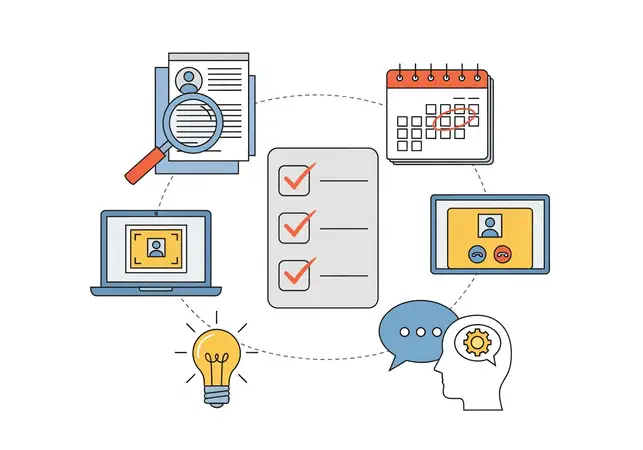
Why Interview Preparation Matters
Landing an interview in the competitive Indian job market, especially for coveted government positions, is a significant achievement. With thousands, sometimes lakhs, of applicants vying for a limited number of roles, merely securing an interview call signifies that your resume and initial application stood out. However, this is only half the battle. The interview itself is your single greatest opportunity to move beyond paper qualifications and prove, in person, that you are not just a suitable candidate, but the best candidate for the job.
Failing to prepare adequately is one of the most common reasons even highly qualified candidates get rejected. Many believe their qualifications alone will speak for them, but an interview is a dynamic interaction where much more than just academic records or work experience is assessed. Recruiters and hiring managers are looking for more than just correct answers to their questions; they are meticulously assessing a range of critical attributes.
They are evaluating your confidence, which stems from thorough preparation and a clear understanding of your own abilities and the role's requirements. Your communication skills are under scrutiny – how clearly and concisely you articulate your thoughts, whether you listen actively, and how you engage in a professional dialogue. Beyond these, they are keen to gauge your genuine interest in their organization and the specific role, your problem-solving abilities, your ability to work under pressure, and perhaps most importantly for government roles, your commitment to public service and ethical conduct. A well-prepared candidate conveys professionalism, dedication, and a clear understanding of what they bring to the table, significantly increasing their chances of success.

The High Stakes of Government Job Interviews
Government jobs in India are highly sought after due to their stability, attractive benefits, opportunities for public service, and often, a respectable social standing. This immense demand translates into fierce competition. For every vacancy, there could be hundreds or even thousands of applicants. Consequently, the interview process for government positions is often rigorous, multi-layered, and designed to filter candidates based on not just technical competence but also their aptitude for public administration, integrity, and alignment with governmental values.
In such a high-stakes environment, preparation isn't just an advantage; it's a necessity. It’s the difference between merely participating in the interview and making a memorable, positive impact. It empowers you to articulate your skills, experiences, and aspirations clearly, demonstrate your enthusiasm, and confidently address any challenges or questions that come your way. This comprehensive checklist aims to guide you through every stage of interview preparation, ensuring you are thoroughly equipped to excel.
Phase 1: Pre-Interview Preparation – Laying the Foundation for Success
The groundwork you lay before the actual interview day is paramount. This phase involves meticulous research, introspection, and strategic planning. Think of it as building a strong foundation upon which your interview performance will rest.
Deep Dive into the Organization and Role
Before you even begin to think about what you'll say, you need to understand who you're talking to and what they're looking for. This involves comprehensive research into both the government department or ministry and the specific job role.
Researching the Government Department/Ministry
Understanding the organization is crucial. It allows you to tailor your answers, ask insightful questions, and demonstrate genuine interest. For government jobs, this research takes on a particular significance due to the public service ethos.
- Official Website & Publications: Explore the "About Us" section, mission statement, vision, values, annual reports, press releases, and recent policy documents. Understand the department's mandate, its key functions, and its role within the broader governmental structure. Look for details on their achievements, ongoing projects, and future plans.
- Recent Initiatives & Policies: Stay updated on any new schemes, projects, or policy changes the department has undertaken. This shows you are current and engaged with their work. For instance, if applying to a rural development ministry, be aware of recent rural upliftment schemes like the Mahatma Gandhi National Rural Employment Guarantee Act (MGNREGA) or Swachh Bharat Abhiyan's rural component.
- Organizational Structure & Hierarchy: Get a sense of how the department is structured. While you won't memorize an organogram, understanding the basic reporting lines can help you grasp the context of your potential role and how different divisions collaborate.
- Challenges & Achievements: Look for information on the department's recent successes and the challenges it is currently facing. Framing your answers around how you can contribute to their goals or help overcome challenges will be highly impactful. For example, if a department is struggling with digital transformation, highlight your IT skills.
- Public Service Ethos: Government entities operate with a distinct public service mandate. Understand what this means for the department – is it focused on social welfare, infrastructure, defence, education, etc.? Your answers should reflect an understanding and commitment to this ethos, demonstrating your alignment with their mission to serve the citizens of India.
Meticulous Role Analysis: Deconstructing the Job Description (JD)
The job description is your most valuable resource. It's not just a list of tasks; it's a blueprint of the ideal candidate.
- Keyword Identification: Highlight key skills, responsibilities, and qualifications mentioned repeatedly. These are the competencies the hiring committee values most. Integrate these keywords naturally into your answers to show you understand the requirements.
- Required Skills (Technical & Soft): Create a list of all technical skills (e.g., specific software, legal knowledge, data analysis, project management tools) and soft skills (e.g., communication, leadership, problem-solving, teamwork, integrity, adaptability) explicitly stated or implied. Map your own experience against each of these, preparing examples for each.
- Responsibilities & Duties: Envision yourself performing each duty. Can you provide specific examples from your past experience that demonstrate your ability to handle these responsibilities? For example, if "managing public grievances" is a duty, recall a time you successfully resolved a conflict or handled a difficult customer/citizen interaction with empathy and efficiency.
- Reporting Structure: Understand who the role reports to and who, if anyone, reports to this role. This gives you insight into the level of responsibility, the team dynamics, and potential career progression within the department.
Self-Assessment: Knowing Your Story and Aligning with the Role
Once you understand the organization and the role, it's time to look inward. How do your unique skills, experiences, and aspirations align with what they need?
Mapping Your Skills and Experience to the Role
Don't just list your qualifications; demonstrate their relevance. Create a mental or written matrix:
- List the key requirements from the JD.
- For each requirement, identify a specific skill or experience you possess.
- Prepare a concise example for each, ready to be articulated using the STAR method (Situation, Task, Action, Result).
For instance, if the JD requires "strong analytical skills," recall a project where you analyzed complex data to derive actionable insights, perhaps leading to an improvement in efficiency or a better policy recommendation. If it requires "administrative efficiency," think of a time you streamlined a process, managed resources effectively, or introduced a new system that saved time or money.
Crafting Your Professional Narrative
You need a compelling story that connects your past to their future. This narrative should be consistent and persuasive.
- "Tell Me About Yourself": Prepare a concise, 60-90 second elevator pitch that highlights your relevant experience, key skills, and career aspirations, always linking back to why you are a good fit for this specific government role. Start with your current role, briefly mention relevant past experiences, and conclude with your interest in the position and how your skills align with their needs.
- Strengths: Identify 3-5 genuine strengths that are relevant to the job and the public service environment. For each strength, have a specific example ready to illustrate it. For a government job, strengths like integrity, attention to detail, public speaking, policy understanding, problem-solving, adaptability, and commitment to public welfare are highly valued.
- Weaknesses: Choose one or two genuine weaknesses that are not critical to the job and demonstrate how you are actively working to improve them. Avoid clichés like "I'm a perfectionist" or "I work too hard." Instead, focus on areas for development, such as "I sometimes over-focus on details, so I've been practicing delegating more effectively and trusting my team members more, which has improved overall project turnaround time."
- Career Goals: Articulate your short-term and long-term career goals. Ensure they align with the growth opportunities within the government sector and the department. Show that you are looking for a stable, impactful career where you can contribute to national development, not just a stepping stone to a private sector job. Emphasize continuous learning and contribution.
- Why This Government Job?: This is critical. Beyond stability, what motivates you to serve the public? What specific aspects of this department's work appeal to you? Connect your personal values to the public service ethos. Perhaps you are passionate about rural development, environmental protection, or ensuring justice. Articulate how this role allows you to make a tangible difference.
Anticipating Interview Questions & Preparing Answers
The vast majority of interview questions fall into predictable categories. Preparing for them significantly boosts confidence and ensures coherent responses.
Common HR and Behavioral Questions
These questions assess your personality, work style, and how you handle various situations. They often start with phrases like "Tell me about a time when..." or "How do you handle...".
- "Why do you want to work for this specific department/ministry/government service?" This is your opportunity to demonstrate your research and genuine interest. Connect your skills and aspirations with the department's mission and recent initiatives. Emphasize your commitment to public service and how you envision contributing to their goals.
- "Tell me about a time you faced a significant challenge
Related Resources
- How to Write a Resume for Government Jobs
- Sarkari Exam Pattern Guide
- Latest Current Affairs for Govt Jobs
Phase 2: The Day Before & Interview Day
Final preparations are crucial. This phase covers logistics, mindset, and last-minute checks to ensure you arrive confident and ready.
Logistics and Materials Checklist
Confirm the interview time and location. Prepare hard copies of your resume, certificates, and a notepad. Plan your outfit and travel route in advance.
Mental Preparation and Mindset
Get adequate rest. Practice relaxation techniques like deep breathing. Visualize a successful interview to build confidence and reduce anxiety.
Phase 3: Post-Interview Strategy
Your actions after the interview are just as important. This phase outlines the essential follow-up steps to leave a lasting positive impression.
The Art of the Follow-Up
Send a personalized thank-you email within 24 hours. Reiterate your interest in the role and briefly mention a key discussion point from the interview.
Self-Evaluation and Learning
Reflect on your performance. Note questions that were challenging and areas for improvement to better prepare for future opportunities.
Reader questions: Resume
Why is interview preparation important?
Helps prove you're the best candidate
What gets assessed beyond qualifications?
Communication and problem-solving skills
How to handle STAR method questions?
Use Situation-Task-Action-Result structure
What's the ideal interview preparation timeline?
Start 2 weeks before interview
How to research company culture?
Check company website and reviews
TrueJobs Editorial Team
TrueJobs editorial desk
This article is prepared from the sources referenced in the guide and reviewed for clarity, links and dated information. Read our editorial and corrections policy.
Continue This Topic
Follow the closest earlier and newer coverage so older archive posts keep real contextual crawl paths.
Best Resume Format for Freshers in India
Learn the optimal resume format for freshers in India. Get tips on structure, sections to include, and common mistakes to avoid for entry-level job applications.
Best Career Options After 12th in India
Discover top career choices after 12th in India. TrueJobs.co.in provides comprehensive guidance on emerging opportunities and pathways.
Read Next

How to Answer "Tell Me About Yourself" in Interviews

How to Negotiate Your Salary in India: A Practical Guide

How to Prepare for Walk-In Interviews

Video Interview Tips: How to Ace Virtual Job Interviews
Explore Topics
Perfect Your Resume
Use our AI-powered Resume Builder to create ATS-optimized resumes.
AI Resume Builder