
Career guide
Saksham Anganwadi & Poshan 2.0: Features, Roles & Exam — Explained
A deep dive into the Saksham Anganwadi & Poshan 2.0 schemes. Understand their features, objectives, and the career paths for Anganwadi Workers and Helpers.

In India, the well-being of its youngest citizens and mothers is paramount to national development. Recognizing this, the government has consistently launched initiatives aimed at improving health, nutrition, and early childhood care. Among the most significant of these are the Saksham Anganwadi and Poshan 2.0 schemes. These integrated programs are not just about providing services; they represent a holistic approach to tackling malnutrition and fostering an environment conducive to healthy growth and development. For many aspiring candidates, these initiatives also open doors to meaningful career opportunities, particularly for roles like Anganwadi Workers (AWW) and Anganwadi Helpers (AWH). Understanding the core features of these schemes, their objectives, and the associated recruitment processes is crucial for both beneficiaries and job seekers.
This article delves deep into Saksham Anganwadi and Poshan 2.0, exploring their key characteristics, the synergy between them, the roles involved, and essential facts for those considering a career in this vital sector.
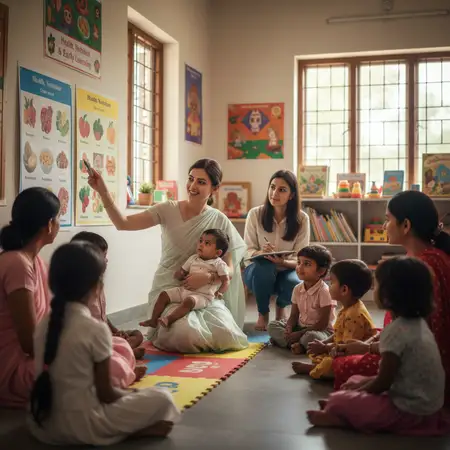
What is Saksham Anganwadi and Poshan 2.0? A Unified Vision
Saksham Anganwadi and Poshan 2.0 are not standalone programs but rather an umbrella scheme that consolidates and strengthens various government interventions focused on nutrition, child development, and women's empowerment. Launched by the Ministry of Women and Child Development (MWCD), Government of India, this integrated program aims to address the critical challenges of malnutrition in children, adolescent girls, pregnant women, and lactating mothers, while simultaneously upgrading the infrastructure and service delivery mechanisms of Anganwadi Centres (AWCs) across the nation.
Saksham Anganwadi: Empowering the Grassroots Hubs
The term 'Saksham' means capable or empowered. Saksham Anganwadi refers to the revamped and technologically upgraded Anganwadi Centres. These are envisioned as modern, efficient, and child-friendly hubs that can effectively deliver a range of services. The focus here is on strengthening the physical and technological infrastructure, ensuring better service delivery, and enhancing the capacity of Anganwadi functionaries.
Poshan 2.0: The National Nutrition Mission Reimagined
Poshan 2.0 is the rebranded and intensified version of the Poshan Abhiyaan (National Nutrition Mission). It signifies a strategic shift towards a more comprehensive and lifecycle approach to nutrition. Poshan 2.0 integrates the Supplementary Nutrition Programme (SNP) under the Integrated Child Development Services (ICDS), the Poshan Abhiyaan, and the Scheme for Adolescent Girls. Its primary goal is to address the challenges of malnutrition in a mission-mode, ensuring that every child, adolescent girl, pregnant woman, and lactating mother receives adequate nutrition and care.

Together, Saksham Anganwadi and Poshan 2.0 represent a powerful synergy: Saksham Anganwadi provides the robust, modern platform, while Poshan 2.0 drives the core nutritional and developmental interventions through that platform.
Key Features and Objectives of Saksham Anganwadi
Saksham Anganwadi is designed to transform traditional Anganwadi Centres into vibrant, efficient, and community-centric hubs. Its key features and objectives include:
- Upgraded Infrastructure: Modernization of Anganwadi buildings with better facilities, including safe drinking water, clean toilets, and child-friendly spaces. The aim is to create a welcoming and stimulating environment for children.
- Technological Integration (Smart Anganwadis): Introduction of technology for improved monitoring, data collection, and service delivery. This includes providing smartphones/tablets to Anganwadi Workers for real-time data entry, tracking beneficiaries, and accessing educational content.
- Enhanced Service Delivery: Streamlining the delivery of various services such as early childhood care and education (ECCE), supplementary nutrition, health check-ups, immunization, and referral services.
- Capacity Building: Regular training and skill enhancement programs for Anganwadi Workers and Helpers to equip them with the latest knowledge and best practices in child development, nutrition, and community engagement.
- Community Engagement: Strengthening the role of AWCs as community hubs, encouraging greater participation from local communities, Panchayati Raj Institutions (PRIs), and self-help groups (SHGs) in the planning and implementation of services.
- Focus on ECCE: Emphasizing quality early childhood care and education to ensure school readiness for children aged 3-6 years, integrating play-based learning and age-appropriate activities.
- Convergence: Promoting better coordination and convergence with other government departments and schemes, such as Health and Family Welfare, Education, and Rural Development, to ensure a holistic approach to child and maternal welfare.
Key Features and Objectives of Poshan 2.0
Poshan 2.0 is the government's flagship program to combat malnutrition across the lifecycle. It builds upon the successes and lessons learned from the previous Poshan Abhiyaan. Its core features and objectives are:
- Integrated Nutrition Support: Consolidating the Supplementary Nutrition Programme (SNP) under ICDS, Poshan Abhiyaan, and the Scheme for Adolescent Girls into a single, comprehensive nutrition program.
- Lifecycle Approach to Nutrition: Addressing nutritional needs from conception through childhood, adolescence, and adulthood, with a special focus on the first 1000 days of a child's life (from conception to two years of age).
- Strategic Interventions: Focusing on key interventions such as dietary diversity, food fortification, promotion of traditional food systems, and improving maternal and child feeding practices.
- Jan Andolan (People's Movement): Transforming nutrition into a people's movement, encouraging community participation, behavioral change communication (BCC), and social and behavioral change communication (SBCC) to promote healthy eating habits and lifestyles.
- Convergence and Collaboration: Strengthening inter-ministerial convergence and collaboration with various stakeholders, including health, education, sanitation, and rural development departments, to ensure a multi-sectoral approach to nutrition.
- Technology for Monitoring and Tracking: Utilizing technology, including the Poshan Tracker application, for real-time monitoring of nutritional status, service delivery, and tracking beneficiaries to ensure targeted interventions.
- Research and Innovation: Promoting research, evidence-based policy making, and innovative solutions to address specific nutritional challenges.
- Focus on Vulnerable Groups: Special emphasis on addressing malnutrition among tribal communities, children with severe acute malnutrition (SAM), and other vulnerable populations.
The Synergy: How Saksham Anganwadi and Poshan 2.0 Work Together
The success of India's fight against malnutrition and for holistic child development hinges on the seamless integration of infrastructure and service delivery. This is precisely where the synergy between Saksham Anganwadi and Poshan 2.0 becomes critical. They are two sides of the same coin, each enhancing the effectiveness of the other.
- Saksham Anganwadi as the Platform: Saksham Anganwadi provides the modernized, well-equipped, and technologically advanced physical and operational infrastructure. These upgraded Anganwadi Centres become the ideal hubs for delivering the comprehensive services envisioned by Poshan 2.0. A clean, safe, and stimulating environment (courtesy of Saksham Anganwadi) is essential for effective early childhood education and health check-ups.
- Poshan 2.0 as the Content and Driver: Poshan 2.0 brings the core programs and interventions related to nutrition, health, and early learning. It defines what services are to be delivered (e.g., supplementary nutrition, growth monitoring, health check-ups, nutrition education) and how they should be delivered (e.g., through community mobilization, use of technology for tracking).
- Enhanced Data Management: The technological upgrades under Saksham Anganwadi (like smartphones for AWWs) directly support the data-driven approach of Poshan 2.0. Real-time data on growth monitoring, service delivery, and beneficiary tracking, collected at the Anganwadi level, is crucial for effective planning, monitoring, and targeted interventions under Poshan 2.0.
- Improved Training and Capacity: The capacity building initiatives under Saksham Anganwadi ensure that Anganwadi Workers and Helpers are well-trained to implement the diverse programs of Poshan 2.0 effectively. This includes training on nutrition counseling, early childhood education methodologies, and the use of technology.
- Community Mobilization: Both schemes emphasize community participation. Saksham Anganwadi makes the Anganwadi Centre a more attractive and functional community hub, while Poshan 2.0 leverages this improved space for community-led nutrition drives, awareness campaigns (Jan Andolan), and mothers' meetings.
In essence, Saksham Anganwadi creates the 'smart' and 'capable' Anganwadi Centre, while Poshan 2.0 fills these centres with life-changing nutritional and developmental programs. Their combined efforts aim to build a healthier, stronger, and more resilient India from the grassroots up.
Roles and Responsibilities in Anganwadi Centres (AWW & AWH)
The backbone of the Anganwadi system are the dedicated Anganwadi Workers (AWW) and Anganwadi Helpers (AWH). These are community-level frontline workers who play a pivotal role in the implementation of both Saksham Anganwadi and Poshan 2.0. Understanding their roles is crucial for anyone aspiring to join this sector.
Anganwadi Worker (AWW)
The Anganwadi Worker is typically a local woman from the community, selected for her ability to communicate and mobilize. She is the primary service provider at the AWC. Her responsibilities are extensive and multifaceted:
- Early Childhood Care and Education (ECCE): Organizing and conducting pre-school activities for children aged 3-6 years, using play-based learning methods.
- Supplementary Nutrition Programme (SNP): Distributing supplementary nutrition to children (6 months to 6 years), pregnant women, and lactating mothers, and ensuring its proper utilization.
- Health and Nutrition Education: Imparting health and nutrition education to women, particularly on infant and young child feeding practices, maternal care, and hygiene.
- Growth Monitoring: Regularly weighing children, plotting their growth on growth charts, identifying malnourished children, and referring them for appropriate care.
- Health Check-ups and Immunization: Facilitating health check-ups for beneficiaries and assisting health functionaries in immunization drives.
- Referral Services: Identifying children with disabilities or severe health issues and referring them to appropriate health facilities.
- Home Visits: Conducting home visits to counsel mothers on child care, nutrition, and hygiene.
- Data Collection and Reporting: Maintaining records, registers, and using the Poshan Tracker app for real-time data entry, monitoring, and reporting on various services.
- Community Mobilization: Organizing community meetings (e.g., Village Health, Sanitation and Nutrition Days - VHSNDs, Mothers' Meetings) to discuss health and nutrition issues and encourage participation.
- Coordination: Liaising with ANMs (Auxiliary Nurse Midwives), Asha workers, and other local government functionaries.
Anganwadi Helper (AWH)
The Anganwadi Helper assists the AWW in the daily functioning of the AWC. Her role is equally vital in ensuring the smooth operation of the centre:
- Assisting in ECCE: Helping the AWW in conducting pre-school activities and managing children.
- Meal Preparation and Distribution: Assisting in the preparation and serving of supplementary nutrition to beneficiaries.
- Maintenance of Cleanliness: Ensuring the cleanliness and hygiene of the Anganwadi Centre premises.
- Fetching Water and Fuel: Arranging for drinking water and fuel for cooking.
- Child Care: Helping in looking after the children, especially during meal times and activities.
- Community Support: Assisting the AWW in community mobilization, home visits, and carrying out other tasks as assigned.
Both AWWs and AWHs are crucial cogs in the machinery of Saksham Anganwadi and Poshan 2.0, directly impacting the lives of millions at the grassroots level.
Recruitment Process for Anganwadi Workers and Helpers: Exam Facts
Recruitment for Anganwadi Workers (AWW) and Anganwadi Helpers (AWH) is a state-specific and often district-specific process, managed by the respective State/UT Women and Child Development Departments. While there isn't a single, uniform national exam pattern, certain general guidelines and eligibility criteria are common. Aspiring candidates should always refer to the official notifications released by their respective state or district authorities.
General Eligibility Criteria
- Gender: Only female candidates are eligible to apply for AWW and AWH posts.
- Age Limit: Typically, the age limit ranges from 18 to 35 years, with relaxations for reserved categories as per state government rules.
- Educational Qualification:
- For Anganwadi Worker (AWW): Usually, candidates must have passed 10th or 12th standard from a recognized board. Some states might require a minimum of 10th pass, while others prefer 12th pass.
- For Anganwadi Helper (AWH): Generally, candidates should have passed 5th or 8th standard from a recognized board.
- Residency: Candidates must be a resident of the village/Gram Panchayat where the Anganwadi Centre is located. This is a crucial criterion to ensure community ownership and local connect.
Recruitment Process Overview
The recruitment process typically involves the following stages:
- Notification Release: The District Programme Officer (DPO) or Child Development Project Officer (CDPO) releases an official notification for vacant posts in specific Anganwadi Centres. These notifications are published on state government websites, district portals, and sometimes in local newspapers.
- Application Submission: Eligible candidates are required to submit their applications, often offline, to the concerned CDPO office or online through a designated portal.
- Scrutiny of Applications: Applications are scrutinized to check for eligibility criteria, including age, educational qualification, and residency.
- Merit List Preparation: In most states, selection is primarily based on a merit list prepared using marks obtained in the qualifying educational examination (e.g., 10th/12th standard). Higher percentage often translates to a better chance of selection.
- Interview/Document Verification: Some states may conduct an interview round to assess the candidate's communication skills, local knowledge, and suitability for the role. This is followed by document verification for shortlisted candidates.
- Final Selection List: A final selection list is published, and selected candidates are then appointed.
Exam-Related Facts (Where Applicable)
While many states rely on merit-based selection, some states or specific recruitment drives might include a written examination. If an exam is conducted, here are some typical facts:
- Exam Pattern: The exam is usually objective type (Multiple Choice Questions - MCQs).
- Syllabus: The syllabus generally covers topics relevant to the role and general knowledge:
- General Knowledge: Basic Indian history, geography, civics, current affairs (national and state-specific), general science.
- Basic Arithmetic: Simple calculations, percentages, ratios, averages.
- Reasoning Ability: Logical reasoning, pattern recognition.
- Child Development and Nutrition: Basic concepts of child health, growth, common childhood diseases, nutrition for mothers and children, government nutrition schemes (e.g., Poshan Abhiyaan, ICDS).
- Women's Health and Empowerment: Basic knowledge of women's health issues, government schemes for women.
- Local Language Proficiency: Questions to assess proficiency in the local language of the state/district.
- Government Schemes: Awareness about various welfare schemes related to women, children, health, and rural development.
- Marking Scheme: Typically, there is no negative marking, but this can vary.
- Exam Medium: Usually conducted in the local language and/or English.
Important Note for Aspirants: Always check the official recruitment notification for your specific district/state for accurate and up-to-date information regarding eligibility, application process, selection criteria, and exam details (if any). Do not rely on unofficial sources. /sarkari-result /admit-card /exam-preparation
Exam Preparation: Syllabus, Exam Pattern, and Tips
For states or districts that conduct a written examination for Anganwadi Worker or Helper recruitment, a structured preparation strategy is key. Even for merit-based selections, having a strong understanding of the program's objectives and the role's responsibilities can be beneficial during potential interview rounds.
Typical Syllabus Components (if an exam is held)
- General Awareness & Current Affairs:
- Knowledge of India and its neighbouring countries.
- History, Geography, Economy, Polity of India (basic level).
- Current events of national and international importance, especially those related to social welfare, health, and women & child development.
- State-specific general knowledge.
- Basic Arithmetic/Numerical Ability:
Frequently Asked Questions (FAQs)
Related Resources
- Latest Government Jobs
- MWCD Recruitment
- 12th Pass Govt Jobs
Put this advice into practice
The Saksham Anganwadi and Poshan 2.0 initiatives are crucial for India's future. For job seekers, roles like Anganwadi Worker offer a chance to contribute to nation-building at the grassroots level. By understanding the scheme's features and recruitment process, you can prepare for a rewarding career in this vital public service sector. Stay updated on the latest notifications to seize your opportunity.
Reader questions: Career
What is the main goal of Saksham Anganwadi and Poshan 2.0?
The main goal is to tackle malnutrition in children, adolescent girls, pregnant women, and lactating mothers through an integrated nutrition support program.
Who is eligible to become an Anganwadi Worker (AWW)?
Eligibility typically includes being a local woman aged 18-35 with a minimum educational qualification, often 10th or 12th pass, though specifics vary by state.
What is the difference between Saksham Anganwadi and Poshan 2.0?
Saksham Anganwadi focuses on upgrading Anganwadi centres, while Poshan 2.0 is the broader nutrition mission that consolidates various schemes to improve service delivery and outcomes.
TrueJobs Editorial Team
TrueJobs editorial desk
This article is prepared from the sources referenced in the guide and reviewed for clarity, links and dated information. Read our editorial and corrections policy.
Continue This Topic
Follow the closest earlier and newer coverage so older archive posts keep real contextual crawl paths.
PM-JANMAN Explained: Full Form, Target Groups & Key Features
A comprehensive guide to the Pradhan Mantri Janjati Adivasi Nyaya Maha Abhiyan (PM-JANMAN). Learn about the scheme's full form, its focus on Particularly Vulnerable Tribal Groups (PVTGs), key features, and implementation.
Poshan Tracker Explained: How It Works and Why It's in News
A deep dive into the Poshan Tracker app, the digital backbone of India's National Nutrition Mission. Understand its features, benefits, and role in monitoring child and maternal health.
Read Next

PM-JANMAN Explained: Full Form, Target Groups & Key Features

Poshan Tracker Explained: How It Works and Why It's in News

PM Vishwakarma Yojana 2026: Empowering Artisans, Shaping India's Future

eSanjeevani 2026: Revolutionizing Telemedicine in India & Key Facts
Explore Topics
Perfect Your Resume
Use our AI-powered Resume Builder to create ATS-optimized resumes.
AI Resume Builder