
Career guide
What is Poshan Tracker? How It Works & Its Impact — Explained
A deep dive into the Poshan Tracker app, the digital backbone of India's National Nutrition Mission. Understand its features, benefits, and role in monitoring child and maternal health.

In a nation as vast and diverse as India, ensuring proper nutrition for every citizen, especially vulnerable groups like children, pregnant women, and lactating mothers, is a monumental task. The government's ambitious Poshan Abhiyaan (National Nutrition Mission) launched in 2018, aimed to address this challenge head-on. A critical digital tool at the heart of this mission is the Poshan Tracker application. This innovative mobile-based platform has revolutionized the way nutritional services are delivered and monitored across the country. From real-time data collection to empowering frontline workers, the Poshan Tracker has emerged as a cornerstone in India's fight against malnutrition. But what exactly is this app, how does it function, and why has it been consistently making headlines?
Let's delve deep into understanding this pivotal digital initiative.
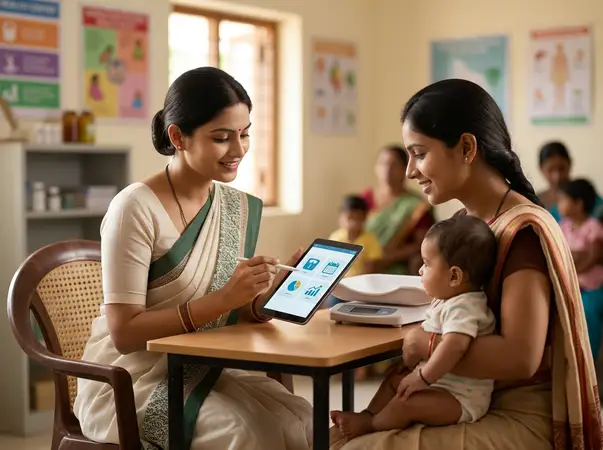
What is the Poshan Tracker Application?
The Poshan Tracker is a robust, mobile-based application developed under the aegis of the Ministry of Women and Child Development (MWCD), Government of India. Its primary objective is to facilitate the end-to-end management and real-time monitoring of the Poshan Abhiyaan, particularly focusing on the services delivered through Anganwadi Centres (AWCs) across the country. Essentially, it serves as a digital backbone for tracking the nutritional status of beneficiaries, recording service delivery, and enabling data-driven decision-making at various administrative levels.
Launched to enhance the efficiency and transparency of the nutrition program, the Poshan Tracker replaces traditional paper-based registers and manual reporting systems. This digital transformation aims to reduce errors, streamline data flow, and provide immediate insights into the nutritional landscape of different regions. It acts as a comprehensive repository of information related to beneficiaries, Anganwadi Workers (AWWs), and the services provided, ensuring that no child or mother is left behind in the journey towards a healthier India.
The application is designed to be user-friendly, primarily for Anganwadi Workers and Supervisors, who are the frontline warriors in the fight against malnutrition. It consolidates data from millions of beneficiaries, offering a unified platform for monitoring growth, identifying malnourished children, tracking supplementary nutrition, immunization, and other health services. By bringing technology to the grassroots level, the Poshan Tracker is transforming how India addresses its nutritional challenges, moving towards a more accountable and effective system.

Key Features and Functionalities of Poshan Tracker
The Poshan Tracker is packed with features designed to make nutrition management efficient and transparent. Its functionalities cater to various stakeholders, from frontline workers to policymakers. Understanding these features is crucial to grasping the app's comprehensive impact.
1. Beneficiary Management and Registration
- Comprehensive Database: The app allows for the registration and management of all eligible beneficiaries, including pregnant women, lactating mothers, children (0-6 years), and adolescent girls. Each beneficiary receives a unique ID.
- Demographic Details: It captures essential demographic information, ensuring accurate record-keeping and enabling targeted interventions.
- Aadhaar Seeding: Integration with Aadhaar helps in deduplication and ensures that services reach the intended beneficiaries, enhancing transparency and reducing leakages.
2. Growth Monitoring and Tracking
- Weight and Height Recording: AWWs can regularly record the weight and height of children, plotting these measurements on growth charts within the app.
- Malnutrition Identification: The app automatically flags children who are underweight, stunted, or wasted, based on WHO growth standards, allowing for early identification and intervention.
- Growth Trends: It provides a visual representation of growth trends over time, helping to monitor the effectiveness of nutritional interventions.
3. Service Delivery Monitoring
- Supplementary Nutrition Programme (SNP): AWWs can record the distribution of Take-Home Ration (THR) and Hot Cooked Meals (HCM) to beneficiaries, ensuring accountability in food distribution.
- Immunization and Health Check-ups: The app tracks immunization schedules and records details of health check-ups for children and mothers.
- Home Visits: It facilitates the planning and recording of home visits by AWWs, ensuring consistent engagement with beneficiaries.
- Counselling Sessions: Details of nutrition and health counselling provided to mothers and families can also be logged.
4. Anganwadi Centre (AWC) Management
- Daily Attendance: AWWs can mark their own attendance and the attendance of children at the AWC.
- Infrastructure Details: The app can store information about the AWC's infrastructure, facilities, and resources.
- Event Management: It helps in planning and recording community-based events and activities conducted at the AWC.
5. Real-time Data Analytics and Dashboards
- Instant Reporting: Data entered by AWWs is aggregated in real-time, providing up-to-date information on the nutritional status and service delivery across various levels (AWC, block, district, state, national).
- Interactive Dashboards: Policymakers and administrators have access to interactive dashboards that display key performance indicators (KPIs) related to malnutrition, service coverage, and program implementation.
- Early Warning Systems: The real-time data helps in identifying areas with high malnutrition prevalence or service delivery gaps, enabling prompt corrective actions.
6. Training and Capacity Building
The app often includes modules for training and disseminating information to AWWs, ensuring they are well-equipped to use the technology and understand program guidelines. This continuous learning aspect is crucial for effective implementation.
By integrating these functionalities, the Poshan Tracker provides a holistic digital solution for managing India's vast nutrition program, making it more responsive, efficient, and impactful. /government-jobs for more information on government initiatives.
Who Benefits from Poshan Tracker?
The Poshan Tracker's design ensures that its benefits cascade across multiple layers of society and administration, making it a truly inclusive digital intervention. Its impact is felt by frontline workers, beneficiaries, and policymakers alike.
1. Anganwadi Workers (AWWs) and Supervisors
- Simplified Workload: By digitizing record-keeping, the app significantly reduces the burden of maintaining numerous paper registers, freeing up AWWs' time for direct beneficiary interaction.
- Enhanced Efficiency: It streamlines data entry, growth monitoring, and service delivery tracking, leading to more efficient program implementation.
- Better Planning: Supervisors can monitor the performance of multiple AWCs, identify gaps, and provide targeted support to AWWs.
- Empowerment: Equipping AWWs with digital tools enhances their professional capabilities and recognition.
2. Beneficiaries (Pregnant Women, Lactating Mothers, Children, Adolescent Girls)
- Improved Service Delivery: Real-time monitoring ensures consistent and timely delivery of supplementary nutrition, health check-ups, and immunization.
- Early Identification of Malnutrition: The app's growth monitoring features help in early detection of nutritional deficiencies in children, leading to prompt interventions.
- Targeted Support: By accurately identifying vulnerable individuals, the program can provide more focused and personalized care.
- Accountability: With digital records, beneficiaries can be assured of receiving their entitlements, reducing instances of pilferage or missed services.
3. Government and Policymakers
- Data-Driven Decision Making: Access to real-time, aggregated data enables policymakers to understand the nutritional landscape, identify hotspots of malnutrition, and formulate evidence-based policies.
- Enhanced Transparency and Accountability: The digital platform reduces manual errors and provides a clear audit trail, improving the overall transparency of the Poshan Abhiyaan.
- Efficient Resource Allocation: By knowing where resources are most needed, the government can allocate funds and supplies more effectively, maximizing impact.
- Monitoring Progress: The app provides a robust mechanism to track the progress of the Poshan Abhiyaan against its targets, allowing for timely course correction.
4. Researchers and Public Health Professionals
- Rich Data Source: The vast amount of data collected through Poshan Tracker offers invaluable insights for research into nutrition, public health, and program effectiveness.
- Trend Analysis: Researchers can analyze long-term trends in nutritional indicators, helping to understand the root causes of malnutrition and evaluate intervention strategies.
In essence, Poshan Tracker is not just an app; it's an ecosystem designed to create a healthier, more nourished future for India by empowering those at the grassroots and informing those at the helm of policy. /sarkari-result for updates on government initiatives and their outcomes.
Why is Poshan Tracker in the News?
The Poshan Tracker has consistently remained in the news cycle for several compelling reasons, reflecting its dynamic role in India's public health landscape. Its prominence stems from its ambitious goals, its widespread implementation, and the continuous efforts to refine and expand its capabilities.
1. Digital Transformation of Nutrition Programs
One of the primary reasons for its media attention is its pioneering role in digitizing a massive public health program. The shift from paper-based records to a real-time digital platform is a significant technological leap for India's social welfare schemes. This digital push aligns with the broader 'Digital India' vision, making it a subject of interest for tech and governance enthusiasts.
2. Focus on Data Accuracy and Real-time Monitoring
The government frequently highlights the Poshan Tracker's ability to provide accurate, real-time data on malnutrition and service delivery. This capability is crucial for identifying critical areas and ensuring prompt intervention. Reports and dashboards generated from the app's data are often cited in official statements and parliamentary discussions, underscoring its importance in policy formulation and program evaluation.
3. Connection to Poshan Maah (Nutrition Month) and Poshan Abhiyaan
Every year, September is observed as Poshan Maah, a month-long celebration dedicated to raising awareness about nutrition. During this period, the Poshan Tracker often takes center stage, with government officials emphasizing its role in achieving the Poshan Abhiyaan's goals. New features, milestones achieved, and success stories related to the app are frequently showcased, drawing media attention.
4. Addressing Malnutrition Challenges
India continues to grapple with varying levels of malnutrition, and the Poshan Tracker is seen as a key weapon in this fight. Whenever discussions around child health, maternal nutrition, or public health strategies arise, the app's potential to identify and address malnutrition effectively becomes a talking point. Its ability to pinpoint vulnerable populations and track interventions makes it a newsworthy tool in the ongoing battle against hunger and poor nutrition.
5. Challenges and Solutions in Implementation
Like any large-scale technological rollout, the Poshan Tracker has faced its share of challenges, which also contribute to its media presence. Issues such as internet connectivity in remote areas, digital literacy among Anganwadi Workers, availability of smartphones, and data quality concerns have been reported. The government's efforts to overcome these hurdles – through training programs, provision of devices, and technical improvements – are also frequently covered, showcasing the dynamic nature of its implementation.
6. Impact on Policy and Resource Allocation
The data from Poshan Tracker is increasingly used to inform policy decisions and guide resource allocation. When new schemes are announced or existing ones are modified based on the insights from the app, it naturally garners media attention. It signifies a shift towards more evidence-based governance in the social sector.
7. Empowering Frontline Workers
Stories about Anganwadi Workers successfully using the app to manage their daily tasks and improve service delivery often feature in local and national news, highlighting the human element of this digital initiative and the empowerment it brings to grassroots workers.
In essence, the Poshan Tracker remains newsworthy because it represents a significant, ongoing national effort to leverage technology for social good, constantly evolving to meet the complex nutritional needs of India's population. /admit-card and other government initiatives often rely on robust data systems like Poshan Tracker.
The Pivotal Role of Anganwadi Workers
At the very heart of the Poshan Tracker's success and the entire Poshan Abhiyaan lies the tireless dedication and crucial efforts of Anganwadi Workers (AWWs). These frontline health and nutrition providers are not just users of the app; they are its primary implementers, data gatherers, and the direct link to the beneficiaries. Their role is nothing short of pivotal.
1. Data Collection and Entry
AWWs are responsible for the meticulous collection and entry of a vast amount of data into the Poshan Tracker. This includes registering new beneficiaries, recording their demographic details, updating growth measurements (weight and height) of children, logging details of supplementary nutrition distribution, tracking immunization schedules, and documenting home visits and counselling sessions. The accuracy and timeliness of this data are paramount for the app's effectiveness.
2. Direct Beneficiary Interaction
Beyond data entry, AWWs are the primary point of contact for pregnant women, lactating mothers, and children. They use the insights gained from the Poshan Tracker to identify malnourished children, provide targeted nutritional counselling, refer beneficiaries to health services, and ensure consistent engagement to promote healthy practices. The app facilitates their outreach efforts by providing a structured framework for interaction.
3. Bridging the Digital Divide
Many AWWs, especially in rural and remote areas, may have had limited exposure to digital technology. The introduction of the Poshan Tracker has necessitated comprehensive training and support to help them adapt to this new digital tool. Their willingness and ability to learn and adopt the technology are critical in bridging the digital divide and bringing the benefits of technology to the grassroots.
4. Ensuring Service Delivery
The app helps AWWs manage their daily tasks more efficiently, ensuring that services like supplementary nutrition, health check-ups, and home visits are delivered consistently and on time. It acts as a reminder and a record-keeping tool, reducing the chances of missed services.
5. Identifying and Referring at-Risk Cases
One of the most significant contributions of AWWs, empowered by the Poshan Tracker, is the early identification of children suffering from severe acute malnutrition (SAM) or moderate acute malnutrition (MAM). The app's automated flagging system helps them quickly identify these cases, enabling timely referrals to health facilities for specialized care, potentially saving lives.
Challenges Faced by AWWs
Despite their critical role, AWWs often face challenges in using the Poshan Tracker:
- Digital Literacy: While training is provided, some AWWs may still struggle with smartphone usage and app navigation.
- Device Availability and Maintenance: Ensuring every AWW has a functional smartphone or tablet, along with reliable charging facilities, can be a logistical challenge.
- Internet Connectivity: In remote areas, patchy or non-existent internet connectivity can hinder real-time data synchronization.
- Workload Management: Integrating the app into their existing, already demanding workload requires careful management and support.
Recognizing these challenges, the government and implementing agencies are continuously working on providing better training, technical support, and infrastructure to empower AWWs further. Their dedication is the bedrock upon which the entire Poshan Abhiyaan stands, making the Poshan Tracker an effective tool for national nutrition improvement. /exam-preparation resources often highlight the importance of such frontline roles in government.
Impact and Future Outlook of Poshan Tracker
The Poshan Tracker has already demonstrated a significant impact on India's nutrition landscape, and its future outlook appears even more promising, with potential for deeper integration and broader influence.
Current Impact:
- Improved Data Quality and Transparency: The most immediate impact has been the dramatic improvement in the quality, accuracy, and timeliness of nutrition-related data. This shift from manual, often delayed, reporting to real-time digital insights has brought unprecedented transparency to the program.
- Enhanced Monitoring and Accountability: With dashboards available at various administrative levels, authorities can now monitor the program's progress and the performance of AWCs and AWWs with greater precision. This fosters accountability and allows for quicker identification of underperforming areas or specific challenges.
- Targeted Interventions: The ability to identify malnourished children and vulnerable mothers in real-time enables more targeted and effective interventions. Resources can be directed precisely where they are most needed, optimizing the program's impact.
- Empowerment of Frontline Workers: Equipping Anganwadi Workers with smartphones and a user-friendly app has not only streamlined their work but also empowered them with digital skills, enhancing their professional standing and efficiency.
- Evidence-Based Policy Making: The rich dataset generated by the Poshan Tracker provides a robust evidence base for policymakers to review, refine, and formulate new nutrition policies and strategies, moving away from anecdotal observations to data-driven decisions.
Future Outlook:
- Deeper Integration with Health Systems: In the future, the Poshan Tracker could see deeper integration with other national health programs and platforms, such as the Ayushman Bharat Digital Mission. This could create a more comprehensive health record for individuals, linking nutritional status with overall health outcomes.
- Predictive Analytics: With continuous data collection, the app could evolve to incorporate predictive analytics, identifying regions or demographics at higher risk of malnutrition before it becomes severe, allowing for proactive rather than reactive interventions.
- Enhanced AI and Machine Learning: Future iterations might leverage AI and machine learning for more sophisticated data analysis, personalized nutrition recommendations, and even automated alerts for critical cases.
- Community Engagement Features: The app could potentially include more features for direct community engagement, allowing beneficiaries to provide feedback or access educational content on nutrition and child care.
- Scalability and Replication: The success of Poshan Tracker could serve as a model for digitizing other social welfare programs, demonstrating India's capability to implement large-scale digital solutions for public good.
- Addressing Data Privacy and Security: As the system evolves, continued focus on robust data
Frequently Asked Questions (FAQs) about Poshan Tracker
What is the main purpose of the Poshan Tracker app?
Its main purpose is to digitally monitor nutritional services for children, pregnant women, and lactating mothers under India's Poshan Abhiyaan mission, replacing manual record-keeping.
Who developed the Poshan Tracker?
The Poshan Tracker was developed under the Ministry of Women and Child Development (MWCD), Government of India, as a key component of the National Nutrition Mission.
How does the Poshan Tracker help Anganwadi Workers (AWWs)?
It simplifies their work by replacing paper registers, automating reporting, tracking beneficiary growth, and helping AWWs manage service delivery more efficiently through a mobile app.
Related Resources
- Anganwadi Worker Jobs
- Key Government Schemes
- MWCD Recruitment
Conclusion: A Digital Leap for a Healthier India
The Poshan Tracker is more than just an application; it's a transformative tool in India's public health strategy. By digitizing data collection and enabling real-time monitoring, it empowers frontline workers and provides policymakers with the insights needed to combat malnutrition effectively. Its role in creating a transparent, accountable, and data-driven nutritional ecosystem is undeniable, paving the way for a healthier future for India's children and mothers.
Reader questions: Poshan Tracker Explained
What is the main purpose of the Poshan Tracker app?
Its main purpose is to digitally monitor nutritional services for children, pregnant women, and lactating mothers under India's Poshan Abhiyaan mission, replacing manual record-keeping.
Who developed the Poshan Tracker?
The Poshan Tracker was developed under the Ministry of Women and Child Development (MWCD), Government of India, as a key component of the National Nutrition Mission.
How does the Poshan Tracker help Anganwadi Workers (AWWs)?
It simplifies their work by replacing paper registers, automating reporting, tracking beneficiary growth, and helping AWWs manage service delivery more efficiently through a mobile app.
TrueJobs Editorial Team
TrueJobs editorial desk
This article is prepared from the sources referenced in the guide and reviewed for clarity, links and dated information. Read our editorial and corrections policy.
Continue This Topic
Follow the closest earlier and newer coverage so older archive posts keep real contextual crawl paths.
Saksham Anganwadi & Poshan 2.0: Features, Roles & Exam Insights
A deep dive into the Saksham Anganwadi & Poshan 2.0 schemes. Understand their features, objectives, and the career paths for Anganwadi Workers and Helpers.
eSanjeevani 2026: Revolutionizing Telemedicine in India & Key Facts
Discover eSanjeevani, India's pioneering national telemedicine platform. This article covers its journey, achievements, the ambitious Vision 2026, and the growing career opportunities in the digital health sector.
Read Next

Saksham Anganwadi & Poshan 2.0: Features, Roles & Exam Insights

eSanjeevani 2026: Revolutionizing Telemedicine in India & Key Facts

PM-JANMAN Explained: Full Form, Target Groups & Key Features

ABHA ID Explained: Your Digital Health Key for Competitive Exams
Explore Topics
Perfect Your Resume
Use our AI-powered Resume Builder to create ATS-optimized resumes.
AI Resume Builder