
Career guide
ABHA ID Explained: Your Digital Health Key — Explained
The Ayushman Bharat Health Account (ABHA) ID is becoming a crucial digital identity. For government job aspirants, it may soon be essential. This guide explains what ABHA is, its relevance for competitive exams, and how to create one.
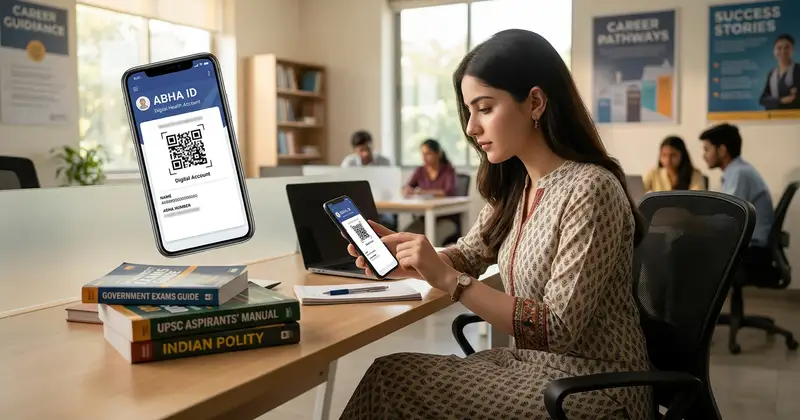
In today's rapidly digitizing India, government services are increasingly moving online, aiming for greater efficiency, transparency, and accessibility. A significant initiative in this direction is the Ayushman Bharat Digital Mission (ABDM), which introduces the Ayushman Bharat Health Account (ABHA) ID. While primarily designed to streamline healthcare services, the ABHA ID is steadily gaining traction as a crucial digital identity, and its importance is now extending into various other sectors, including the competitive examination landscape. For aspirants eyeing government jobs, understanding and obtaining an ABHA ID might soon become as essential as having an Aadhaar card or PAN.
This comprehensive guide from TrueJobs.co.in will demystify the ABHA ID, explain its relevance for competitive exams, and walk you through the process of creating and managing it effectively.

What is ABHA ID? Understanding the Basics of Ayushman Bharat Health Account
The ABHA ID, or Ayushman Bharat Health Account ID, is a unique 14-digit identification number that serves as your digital health identity within the Ayushman Bharat Digital Mission (ABDM) ecosystem. Launched by the Government of India, the ABDM aims to develop the backbone necessary to support the integrated digital health infrastructure of the country. Think of ABHA ID as your personal health locker, enabling you to link and access your health records digitally across various healthcare providers.
Here's a breakdown of what ABHA ID entails:
- Unique Identification: Each ABHA ID is unique to an individual, ensuring that your health records are accurately linked to you and only you.
- Digital Health Records: It facilitates the creation of a digital health record, allowing you to store and access your medical history, prescriptions, lab reports, discharge summaries, and more, all in one place.
- Seamless Access: With your consent, healthcare providers (hospitals, clinics, labs, pharmacies) can access your relevant health records, leading to more informed diagnoses, better treatment plans, and reduced duplication of tests.
- Portability: Your health records are no longer confined to a single hospital or doctor. They can be accessed from anywhere, anytime, making healthcare more portable and patient-centric.
- Consent-Based Sharing: Your privacy is paramount. Health data linked to your ABHA ID is shared only with your explicit consent, which you can grant or revoke at any time.

The ABHA ID is a foundational component of India's digital health revolution, aiming to build a comprehensive, secure, and interoperable digital health ecosystem for all citizens.
Why is ABHA ID Relevant for Competitive Exams? The Growing Importance
While the primary objective of ABHA ID is health management, its utility is rapidly expanding, and it's becoming increasingly relevant for candidates appearing in competitive examinations, especially those for government jobs. Here’s why ABHA ID is gaining importance in the competitive exam landscape:
- Digital Identity Verification: Government recruitment bodies are increasingly adopting digital methods for identity verification. Just as Aadhaar has become a standard, ABHA ID, being a unique government-issued digital identity, could be integrated into future verification processes during application, examination, or interview stages.
- Medical Fitness and Health-Related Posts: Many government jobs, particularly in sectors like defence, police, railways, and certain administrative services, require stringent medical fitness examinations. In the future, ABHA ID could potentially be used to securely share medical reports and fitness certificates directly with recruiting agencies, simplifying the verification process and reducing paperwork. This could be particularly useful for ensuring the authenticity and integrity of medical documents.
- Streamlined Application Processes: As part of a broader digital India initiative, recruitment portals might integrate ABHA ID for pre-filling health-related information or for linking health certificates, making the application process smoother and less prone to errors. This could be especially true for posts requiring specific health criteria or medical history.
- Future Digital Initiatives: The government's vision for a digitally integrated India means that various services, including recruitment, will likely converge on common digital identifiers. ABHA ID could become a key component in a unified digital profile for citizens, which could then be utilized across different government services, including job applications and post-recruitment verifications.
- Proof of Residence/Identity (Indirectly): While not its primary function, the process of creating an ABHA ID often involves Aadhaar verification, which in itself is a strong proof of identity and residence. Having an ABHA ID further solidifies one's digital identity within the government's ecosystem.
While it may not be a mandatory requirement for all exams *today*, the trend clearly indicates that digital identities like ABHA ID will play a more central role in future government processes. Being prepared by having your ABHA ID ready can save you time and hassle down the line. Keep an eye on official notifications for specific exam requirements /sarkari-result.
How to Create Your ABHA ID: A Step-by-Step Guide
Creating your ABHA ID is a straightforward process that can be done online. You typically need either your Aadhaar card or your Driving License. Here’s a detailed guide:
Method 1: Using Aadhaar Card (Recommended)
- Visit the Official ABHA Website: Go to the official Ayushman Bharat Digital Mission (ABDM) website or the ABHA portal. You can usually find this by searching "ABHA ID registration" or "Ayushman Bharat Digital Mission".
- Click on 'Create ABHA Number': Look for an option like "Create ABHA Number" or "Create ABHA ID".
- Choose Aadhaar: Select the option to create your ABHA ID using your Aadhaar card.
- Enter Aadhaar Number: Carefully enter your 12-digit Aadhaar number in the designated field.
- Consent and OTP: Read the terms and conditions, provide your consent, and click 'Submit' or 'Generate OTP'. An OTP (One-Time Password) will be sent to the mobile number linked with your Aadhaar.
- Verify OTP: Enter the OTP received on your mobile number to verify your identity.
- Enter Mobile Number (if not linked to Aadhaar): If your mobile number is not linked with Aadhaar, you might be asked to enter a preferred mobile number for ABHA ID communication.
- Create ABHA Address: You will then be prompted to create an ABHA Address (e.g., yourname@abha). This is a unique, user-friendly identifier that can be used instead of your 14-digit ABHA number for easier access and sharing.
- Fill in Details (if required): Some basic details like your name, date of birth, gender, and address might be pre-filled from your Aadhaar data. Verify these and fill in any missing information.
- Review and Submit: Review all the entered information. Once confirmed, click 'Submit' or 'Create ABHA Number'.
- Download ABHA Card: Your ABHA ID will be generated, and you will have the option to download your ABHA card, which contains your unique 14-digit number and ABHA address.
Method 2: Using Driving License
If you don't have an Aadhaar card or prefer not to use it, you can create your ABHA ID using your Driving License. The steps are similar, but instead of Aadhaar, you will provide your Driving License details for verification.
- Follow steps 1 & 2 from Method 1.
- Choose Driving License: Select the option to create your ABHA ID using your Driving License.
- Enter Driving License Details: Provide your Driving License number and other requested details.
- OTP Verification: An OTP will be sent to the mobile number linked with your Driving License or a number you provide.
- Complete Profile: Fill in your personal details, create your ABHA Address, and complete the registration.
Important Tips for Creation:
- Ensure your mobile number is updated with your Aadhaar for smooth OTP verification.
- Keep your Aadhaar card or Driving License handy.
- Choose an ABHA Address that is easy to remember.
- Download and keep a digital or physical copy of your ABHA card safe.
Managing Your ABHA ID: Linking Records and Ensuring Data Security
Creating your ABHA ID is just the first step. To fully leverage its benefits, especially for future needs like competitive exams, it's crucial to understand how to manage it, link your health records, and ensure the security of your data.
Linking Health Records:
The core utility of ABHA ID lies in its ability to link your health records digitally. Here's how it generally works:
- Consent Manager: The ABDM ecosystem includes a 'Consent Manager' (Health Information Exchange & Consent Manager - HIE-CM). This platform allows you to manage who can access your health records and for how long.
- Healthcare Providers: When you visit a hospital, clinic, or diagnostic lab that is part of the ABDM network, you can provide your ABHA ID. With your explicit consent, they can then link your current visit's records (prescriptions, test results, discharge summaries) to your ABHA account.
- Accessing Records: You can access your linked health records through various ABDM-enabled applications (like the ABHA app or other personal health record apps).
- Sharing Records: If a competitive exam or a future employer requires specific medical information, you can use your ABHA ID to securely share relevant documents with them through the consent manager, granting access for a limited period. This ensures that only necessary information is shared and your privacy is maintained.
Ensuring Data Security and Privacy:
The government has implemented robust measures to ensure the security and privacy of data within the ABDM framework:
- Consent-Based Access: Your health data is never shared without your explicit consent. You have full control over who sees your data and for what purpose.
- Encryption: All data transmitted and stored within the ABDM ecosystem is encrypted, protecting it from unauthorized access.
- Anonymization: For research and public health purposes, data can be anonymized, meaning individual identities are removed, ensuring privacy while still allowing for valuable insights.
- Audit Trails: Every access to your health records is logged, creating an audit trail that can be reviewed, ensuring accountability.
- Regular Security Audits: The system undergoes regular security audits to identify and address potential vulnerabilities.
What if you forget your ABHA Address or Number?
Don't worry if you forget your ABHA Address or the 14-digit number. You can easily retrieve it:
- Visit the official ABHA portal.
- Look for options like "Retrieve ABHA Number" or "Forgot ABHA Address".
- You will typically be asked to enter your registered mobile number and/or Aadhaar number for verification, followed by an OTP.
- Once verified, your ABHA details will be displayed, and you can update your profile or download your card again.
Regularly checking your ABHA account and ensuring your contact details are up-to-date is a good practice.
Benefits of Having an ABHA ID Beyond Competitive Exams
While our focus is on competitive exams, it's important to understand that the ABHA ID offers a plethora of benefits that extend far beyond just job applications, significantly improving your overall healthcare experience:
- Comprehensive Health Records: All your health records, from various doctors and hospitals, can be linked to your ABHA ID, creating a single, comprehensive digital health history. This eliminates the need to carry physical files and remember past diagnoses.
- Informed Medical Decisions: With access to your complete medical history, doctors can make more informed decisions, leading to better and more personalized treatment plans. This is especially beneficial in emergencies or when consulting new specialists.
- Reduced Duplication of Tests: By providing doctors with access to previous lab results and diagnostic reports, ABHA ID can help avoid unnecessary repeat tests, saving you time, money, and discomfort.
- Seamless Healthcare Access: Whether you're moving to a new city or visiting a different healthcare provider, your health records are easily accessible with your consent, ensuring continuity of care.
- Telemedicine and Online Consultations: ABHA ID facilitates smoother telemedicine consultations. Doctors can securely access your records during virtual visits, enhancing the quality of online medical advice.
- Faster Insurance Claims: In the future, ABHA ID could streamline health insurance claims by providing quick and verified access to necessary medical documents, potentially reducing processing times.
- Personal Health Management: The ABHA app and other integrated personal health record (PHR) applications allow you to actively manage your health. You can track your health parameters, set reminders for medications, and monitor your progress.
- Family Health Management: While each individual has their own ABHA ID, the system can potentially allow for easier management of family health records (with proper consent mechanisms), especially for dependents.
- Empowerment: ABHA ID puts you, the patient, at the center of your healthcare journey, giving you control over your health data and empowering you to make better health choices.
In essence, ABHA ID is a foundational step towards a more efficient, patient-centric, and digitally-enabled healthcare system in India, offering benefits that will touch almost every aspect of your health management.
Potential Challenges and Solutions for ABHA ID Users
While the ABHA ID offers significant advantages, like any large-scale digital initiative, it comes with potential challenges. Being aware of these and their solutions can help you navigate the system effectively.
1. Digital Literacy and Access:
- Challenge: A significant portion of India's population, especially in rural areas, may lack digital literacy or access to smartphones and reliable internet connectivity, making it difficult to create and manage their ABHA ID.
- Solution: The government is establishing ABHA counters at healthcare facilities, common service centers (CSCs), and public hospitals where individuals can get assistance in creating their ABHA ID. Awareness campaigns and simplified user interfaces are also crucial.
2. Privacy and Data Security Concerns:
- Challenge: Despite robust security measures, individuals may have concerns about the privacy of their sensitive health data being stored digitally and the potential for misuse.
- Solution: Continuous communication and education about the strict consent-based access mechanism, encryption protocols, and legal frameworks protecting health data are essential. Users need to be assured that they have complete control over their data sharing. Regular audits and transparent reporting of security measures can build trust.
3. Interoperability and Integration Issues:
- Challenge: Integrating various healthcare providers, from large hospitals to small clinics and pharmacies, into the ABDM ecosystem can be complex, leading to initial challenges in linking all health records.
- Solution: The ABDM framework is designed to be interoperable. Continuous efforts are being made to onboard more healthcare providers and develop standardized APIs (Application Programming Interfaces) to ensure seamless data exchange. Healthcare providers are being incentivized to adopt the system.
4. Technical Glitches and User Support:
- Challenge: Users might encounter technical issues during registration, linking records, or accessing information, requiring effective support mechanisms.
- Solution: A dedicated helpline, comprehensive FAQs on the official website, and support desks at healthcare facilities are vital. Regular system maintenance and updates are also necessary to minimize glitches.
5. Misinformation and Fraud:
- Challenge: As with any major government initiative, there's a risk of misinformation or fraudulent schemes attempting to exploit users.
- Solution: Users should always rely on official government websites and trusted sources for information. They should be wary of unsolicited calls or messages asking for ABHA ID details or OTPs. Official channels will never ask for sensitive information over unofficial communication.
By addressing these challenges proactively, the ABHA ID system can truly realize its potential and become a cornerstone of India's digital health infrastructure, benefiting competitive exam aspirants and all citizens alike.
The Future of Digital Health and ABHA ID in India
The Ayushman Bharat Digital Mission (ABDM) and the ABHA ID are not just standalone initiatives; they represent a foundational shift towards a digitally empowered healthcare ecosystem in India. The future vision is ambitious and transformative:
- Universal Health Coverage & Access: ABHA ID will play a crucial role in extending universal health coverage by making healthcare services more accessible and efficient, especially in remote areas through telemedicine and digital record access.
- Data-Driven Public Health: Aggregated and anonymized health data from the ABHA ecosystem will provide invaluable insights for public health planning, disease surveillance, and policy-making, enabling a more proactive approach to national health challenges.
- Integration with Other Government Services: Expect to see greater integration of ABHA ID with other government services. Just as Aadhaar is linked to various schemes, ABHA ID could become a key identifier for health-related benefits, certifications, and even aspects of education and employment (as discussed for competitive exams).
- Innovation in Healthcare: The digital infrastructure provided by ABDM will foster innovation in healthcare technology. Startups and established companies will be able to develop new applications and services that leverage the ABHA ID and its linked health data (with consent), leading to personalized health solutions.
- Empowered Citizens: At its core, the ABHA ID aims to empower citizens by giving them control over their health data. This empowerment will lead to greater health literacy and active participation in managing one's well-being.
- Standardization of Health Records: The mission will drive the standardization of health record formats across the country, making it easier for different systems to communicate and exchange information seamlessly.
For competitive exam aspirants, this future means that digital readiness, including having an ABHA ID, will likely become an integral part of their application and verification journey for government jobs. Staying updated with these digital transformations is key to navigating the evolving landscape of public service.
Related Resources- Required Documents for Government Job Applications
- Aadhaar Card Guide for Job Seekers
- Latest Government Job Notifications
Reader questions: Government Jobs
Is ABHA ID mandatory for all government job applications?
Currently, it is not mandatory for most exams, but it is increasingly recommended. Some specific health sector or other government job notifications may require it. Always check the official notification for the specific exam you are applying for.
How is ABHA ID different from Aadhaar?
Aadhaar is a general proof of identity, whereas ABHA ID is a unique health identifier. It is specifically designed to link and manage your health records digitally across different healthcare providers, which Aadhaar does not do.
Can I create an ABHA ID without an Aadhaar card?
Yes, you can create an ABHA ID using other government-issued photo IDs like your Driving License. The process is available on the official National Health Authority (NHA) portal.
Is my health data safe with an ABHA ID?
Yes. The Ayushman Bharat Digital Mission (ABDM) framework has robust security and privacy measures. Your health records can only be accessed by healthcare providers with your explicit consent for each interaction.
What happens if I forget my ABHA number?
You can easily retrieve your 14-digit ABHA number through the official ABHA website by authenticating yourself using your registered mobile number or Aadhaar number.
TrueJobs Editorial Team
TrueJobs editorial desk
This article is prepared from the sources referenced in the guide and reviewed for clarity, links and dated information. Read our editorial and corrections policy.
Continue This Topic
Follow the closest earlier and newer coverage so older archive posts keep real contextual crawl paths.
eSanjeevani 2026: Revolutionizing Telemedicine in India & Key Facts
Discover eSanjeevani, India's pioneering national telemedicine platform. This article covers its journey, achievements, the ambitious Vision 2026, and the growing career opportunities in the digital health sector.
Ayushman Bharat Digital Mission 2026: Key Components & Impact
Discover India's Ayushman Bharat Digital Mission (ABDM), a landmark initiative creating a seamless digital healthcare ecosystem. This guide details the mission's key components, its vision for 2026, and its profound impact on citizens, healthcare providers, and the nation's health infrastructure.
Read Next

eSanjeevani 2026: Revolutionizing Telemedicine in India & Key Facts

Ayushman Bharat Digital Mission 2026: Key Components & Impact

Poshan Tracker Explained: How It Works and Why It's in News

CoWIN vs U-WIN: Differences, Purpose & Exam Relevance
Explore Topics
Perfect Your Resume
Use our AI-powered Resume Builder to create ATS-optimized resumes.
AI Resume Builder