
Exam update
Karnataka Board Revaluation Result 2026: Check KSEAB — Explained
The Karnataka School Examination and Assessment Board (KSEAB) is expected to announce the SSLC and 2nd PUC Revaluation results for 2026 in June 2026. For thousands of students who find a discrepancy between their expected marks and the results declared in May, the revaluation and scrutiny process is the only formal mechanism for correction. This process is…

The Karnataka School Examination and Assessment Board (KSEAB) is expected to announce the SSLC and 2nd PUC Revaluation results for 2026 in June 2026. For thousands of students who find a discrepancy between their expected marks and the results declared in May, the revaluation and scrutiny process is the only formal mechanism for correction. This process is time-sensitive, often requiring students to apply within 7 to 10 days of the main result declaration. If you are planning to challenge your marks to improve your percentage for college admissions or competitive exam eligibility, understanding the technical difference between scrutiny and revaluation is mandatory.
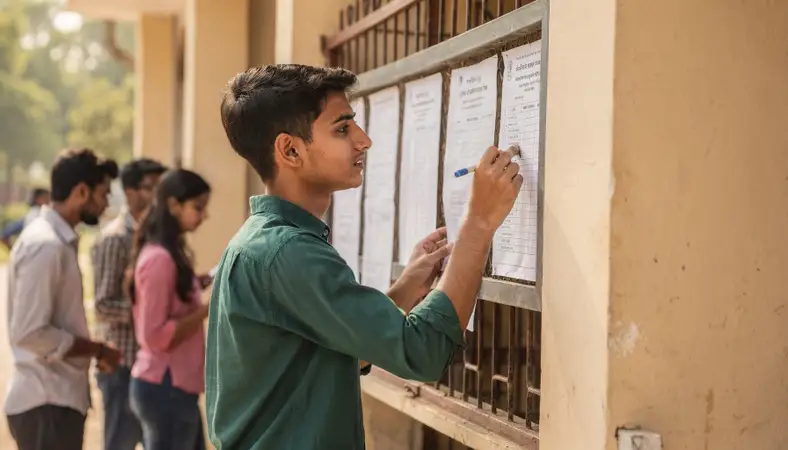
Karnataka Board Revaluation 2026: Quick Overview
| Feature | Details for SSLC (Class 10) | Details for 2nd PUC (Class 12) |
|---|---|---|
| Official Website | kseab.karnataka.gov.in | karresults.nic.in |
| Main Result Date | Expected May 2026 | Expected April/May 2026 |
| Revaluation Result Date | June 2026 (Tentative) | June 2026 (Tentative) |
| Primary Requirement | Must apply for Scanned Copy first | Must apply for Scanned Copy first |
| Mode of Application | Online only | Online only |
What is the difference between Scrutiny and Revaluation?
Most students confuse 'Scrutiny' (also known as Retotalling) with 'Revaluation'. In the Karnataka Board system, these are distinct stages with different fee structures and outcomes. Scrutiny involves a basic check where an examiner ensures that every answer has been marked and the marks have been correctly carried forward to the main marksheet. No fresh evaluation of answers takes place during scrutiny.
Revaluation is a much more rigorous process. Here, your answer script is evaluated again by a different examiner. This is particularly useful for descriptive subjects like English, History, or Business Studies where subjective marking can vary. However, under KSEAB rules, you cannot apply for revaluation directly. You must first apply for a scanned copy of your answer sheet, review it yourself or with a teacher, and then decide if a formal revaluation is necessary.
| Process Type | What happens? | Who should choose this? |
|---|---|---|
| Scrutiny (Retotalling) | Checking for calculation errors or unmarked answers. | Students who suspect a simple counting mistake. |
| Revaluation | Full re-assessment of the answer script by a new examiner. | Students confident that their answers deserve higher marks. |
| Scanned Copy | A digital PDF of your evaluated answer script is provided. | Mandatory first step for Revaluation. |
How to apply for Karnataka Board Scanned Copies 2026?
The first step in the post-result correction process is obtaining the scanned copy of your answer script. You can apply for this through the KSEAB official portal. Follow these exact steps to ensure your application is processed without errors:
- Visit the official website at kseab.karnataka.gov.in.
- Locate the 'Online Applications' section on the homepage.
- Click on the link for 'Application for Scanned Copy of SSLC/2nd PUC Answer Scripts 2026'.
- Enter your Registration Number and select the subjects you wish to review.
- Pay the required fee through the integrated payment gateway (Net Banking/UPI/Credit Card).
- Download the acknowledgment receipt and keep it safe for future reference.
Once the application period ends, the board uploads the scanned copies. You will need your application number to download the PDF. Review this copy carefully. If you find that a correct answer was awarded zero marks or if there is a significant total error, you should proceed to the revaluation stage.
Fee Structure for Revaluation and Scrutiny 2026
The Karnataka Board sets specific fees for each stage of the process. Note that these fees are per subject and are generally non-refundable, regardless of whether your marks increase or decrease. Based on the previous academic cycle, the expected fees for 2026 are as follows:
| Category | SSLC (Class 10) Fee | 2nd PUC (Class 12) Fee |
|---|---|---|
| Scanned Copy | ₹405 per subject | ₹530 per subject |
| Revaluation | ₹610 per subject | ₹1,670 per subject |
| Retotalling/Scrutiny | ₹150 per subject | No separate fee (included in Revaluation) |
Students from SC/ST categories may be eligible for fee concessions in the SSLC segment, but they must provide valid caste certificates during the online application process. Always verify the final fee on the official notification as the board reserves the right to adjust these figures annually.
How to check Karnataka Board Revaluation Result 2026?
The Karnataka Board Revaluation Result 2026 is usually released 15 to 20 days after the revaluation application window closes. Unlike the main results, these are often updated in a searchable database where you can see your 'Before Revaluation' and 'After Revaluation' marks. Follow these steps to check your status:
- Go to karresults.nic.in or the KSEAB main portal.
- Click on 'SSLC/2nd PUC Revaluation & Retotalling Results June 2026'.
- Enter your 11-digit Registration Number.
- Select your date of birth as per the hall ticket.
- The screen will display your revised marks. If there is no change, the status will show 'No Change' or 'NC'.
If your marks increase by even one mark, the board will issue a new marksheet. You must surrender your old marksheet to your respective school or college to receive the updated version. This is a critical step for /sarkari-result seekers who need accurate documentation for verification.
What happens if your marks decrease after Revaluation?
One of the most important rules of the KSEAB revaluation process is that the 'Result of Revaluation' is final. If your marks decrease during the revaluation process, the lower marks will be considered your final score. This is why it is highly recommended to consult with a subject matter expert or your school teacher after receiving the scanned copy.
Statistically, marks decrease in less than 2% of revaluation cases, but the risk exists. Most students see an increase of 3 to 7 marks, which can significantly impact their overall percentage and ranking in entrance exams like KCET. If the difference in marks after revaluation is less than 6% of the maximum marks of the paper, some boards previously did not update the marksheet, but KSEAB generally updates even a 1-mark difference now.
Impact of Revaluation on Higher Education Admissions
For 2nd PUC students, the revaluation result is vital for professional course admissions. Since the Karnataka Common Entrance Test (KCET) rankings consider 50% of the board marks (in Physics, Chemistry, and Math/Biology), a 5-mark increase in each subject can jump your rank by thousands. If your revaluation result is delayed beyond the first round of counseling, you must inform the Karnataka Examinations Authority (KEA) immediately.
Similarly, for SSLC students, these marks determine the stream (Science, Commerce, or Arts) they can opt for in Pre-University Colleges. If you are aiming for top-tier colleges in Bengaluru or Mangaluru, every percentage point counts. Ensure you keep a digital copy of your revaluation application to show admission officers if your original marksheet is still being processed during the admission window.
Important Guidelines for KSEAB Revaluation 2026
- Deadline Adherence: The board does not accept offline applications or late submissions under any circumstances.
- Subject Selection: You can apply for revaluation in all subjects, provided you have obtained scanned copies for all of them.
- Refund Policy: If there is a marking error where an answer was left uncorrected and the marks increase significantly (usually 10% or more), some boards offer a partial fee refund, though KSEAB's current policy generally treats the fee as processing charges.
- Original Marksheet: Do not lose your original marksheet while waiting for the revaluation result. You will need it for the exchange process.
Frequently Asked Questions
Can I apply for revaluation without applying for a scanned copy?
No. According to KSEAB regulations, applying for a scanned copy of the answer script is a mandatory prerequisite for revaluation. This ensures that students only challenge marks after reviewing their performance and identifying specific errors.
How long does it take to get the scanned copy?
Typically, the board uploads the scanned copies within 10 to 15 days after the application deadline. You will receive an SMS alert on your registered mobile number once the PDF is available for download on the portal.
What if I fail in the revaluation result?
If your revaluation result does not result in a passing grade, you must appear for the SSLC or 2nd PUC Exam 2 (Supplementary Exams). The application for Exam 2 usually runs parallel to the revaluation process, so do not wait for revaluation results to apply for supplementary exams if you have failed.
Is the revaluation fee refundable?
No, the fee paid for scanned copies and revaluation is non-refundable. It is used to cover the administrative costs of hiring examiners and managing the digital portal.
Will my KCET rank be updated after the revaluation result?
Yes, if your 2nd PUC marks change, you must submit the revised marksheet to the KEA. They will then recalculate your rank based on the updated data, which will be reflected in the subsequent rounds of seat allotment.
The Karnataka Board Revaluation Result 2026 is a second chance for students to ensure their hard work is accurately reflected in their scores. If you believe your performance warrants better marks, follow the timelines strictly and keep checking the official KSEAB portal for updates. For more guidance on /exam-preparation and state board updates, stay tuned to TrueJobs.co.in.
Related Resources
How to follow this exam update
Navigating the Karnataka Board revaluation and scrutiny process for 2026 is crucial for students seeking mark corrections. Understanding the distinct stages, application procedures, and fee structures ensures a smooth experience. Always refer to official KSEAB notifications for the most accurate and up-to-date information regarding results and deadlines.
Related Government Job Resources
Continue with active job hubs and related government job pages on TrueJobs.
Tools for this recruitment topic
Use only the tools relevant to the dates, eligibility or documents discussed above.
TrueJobs Editorial Team
TrueJobs editorial desk
This article is prepared from the sources referenced in the guide and reviewed for clarity, links and dated information. Read our editorial and corrections policy.
Continue This Topic
Follow the closest earlier and newer coverage so older archive posts keep real contextual crawl paths.
Karnataka Board Passing Marks & Grace Marks Policy 2026
Karnataka School Examination and Assessment Board (KSEAB) requires students to secure a minimum of 35% aggregate marks to clear the SSLC and 2nd PUC examinations in 2026. This guide details the exact passing criteria and the updated grace marks policy.
Karnataka Board Improvement Exam Form 2026: How to Apply
Learn how to apply for the Karnataka Board Improvement Exam 2026 (Exam 2 & 3) for SSLC and 2nd PUC. Get details on the new three-exam system, best of marks policy, and online application process.
Read Next

Karnataka Board Passing Marks & Grace Marks Policy 2026

Karnataka Board Improvement Exam Form 2026: How to Apply

Karnataka Board Topper List 2026: SSLC and 2nd PUC Results Analysis

Karnataka Board Compartment Result 2026: SSLC & 2nd PUC Dates
Explore Topics
Perfect Your Resume
Use our AI-powered Resume Builder to create ATS-optimized resumes.
AI Resume Builder