
Recruitment guide
Latest Karnataka Board Improvement Exam Form 2026: How — Explained
Learn how to apply for the Karnataka Board Improvement Exam 2026 (Exam 2 & 3) for SSLC and 2nd PUC. Get details on the new three-exam system, best of marks policy, and online application process.

The Karnataka School Examination and Assessment Board (KSEAB) has revolutionized the state’s education system by replacing the traditional supplementary exams with a new three-exam system. For students appearing in 2026, this means you have three distinct opportunities—Exam 1, Exam 2, and Exam 3—to improve your scores in SSLC (Class 10) and 2nd PUC (Class 12). If you are unsatisfied with your initial results or failed to clear certain subjects, the Karnataka Board Improvement Exam Form 2026 is your gateway to a better academic record without losing an academic year.
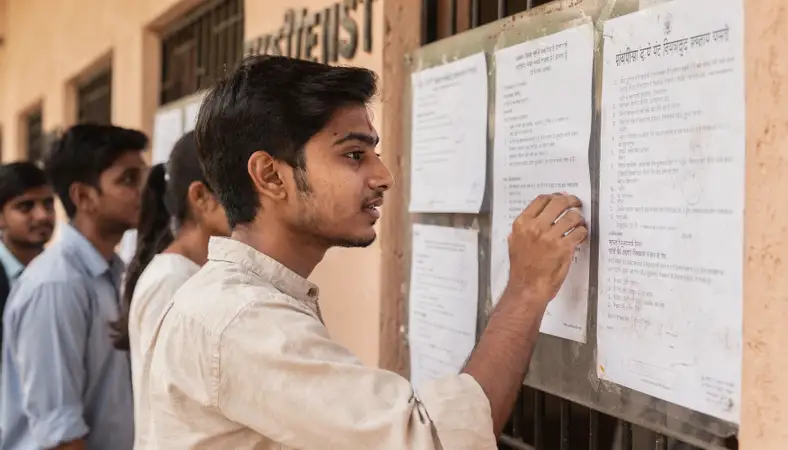
एक नज़र में: Karnataka Board Improvement Exam 2026 Overview
| Feature | Details |
|---|---|
| Board Name | Karnataka School Examination and Assessment Board (KSEAB) |
| Exam Category | Exam 2 and Exam 3 (Improvement/Supplementary) |
| Classes Covered | SSLC (10th) and 2nd PUC (12th) |
| Registration Mode | Online (through Schools/Colleges) |
| Official Website | kseab.karnataka.gov.in |
| Application Start | Expected April 2026 (Post Exam 1 Results) |
What is the Karnataka Board Exam 1, 2, and 3 System?
The KSEAB introduced a major policy shift to reduce student stress and improve the Gross Enrolment Ratio in higher education. Under this system, the board conducts three sets of exams annually. Exam 1 is the main annual examination held in March. Exam 2 and Exam 3 are conducted subsequently for students who want to improve their marks or those who were unable to pass in the previous attempts.
The most significant advantage of this system is the "Best of Marks" policy. If a student chooses to write an improvement exam in Exam 2, the board will compare the marks obtained in Exam 1 and Exam 2 for that specific subject. The higher score of the two will be reflected in the final marks card. This eliminates the risk of losing marks if the second attempt does not go as planned.

Students can choose to appear for all subjects or select specific subjects where they feel they can perform better. This flexibility is particularly beneficial for students aiming for competitive entrance exams like KCET, where board marks hold 50% weightage for engineering rankings in Karnataka.
Who is eligible for Karnataka Board Improvement Exam 2026?
Eligibility criteria for the improvement exams are broad to ensure maximum student participation. For the 2026 academic cycle, the following categories of students can apply for the improvement forms:
- Regular Students: Those who appeared for Exam 1 in March 2026 and passed but want to increase their percentage in one or more subjects.
- Unsuccessful Candidates: Students who were unable to secure the minimum passing marks (35%) in any subject during Exam 1.
- Private Candidates: Students registered as private candidates who appeared for Exam 1 and wish to improve their scores.
- Repeaters: Students from previous academic years (2025 or earlier) who have already registered but wish to attempt the 2026 improvement cycles.
- NSR (New Scheme Repeaters): Students falling under the updated syllabus scheme who need to clear backlogs.
It is crucial to note that students can only apply for subjects they were originally registered for in Exam 1. You cannot change your stream (e.g., from Science to Commerce) or add new subjects during the improvement exam registration phase.
Karnataka Board Improvement Exam 2026 Important Dates
The timeline for Exam 2 and Exam 3 follows a strict schedule immediately after the declaration of the main results. While official dates are released via circulars on the KSEAB portal, the following table provides the projected schedule based on the 2026 academic calendar.
| Event | 2nd PUC (Expected) | SSLC (Expected) |
|---|---|---|
| Exam 1 Result Declaration | April 2nd Week, 2026 | May 1st Week, 2026 |
| Exam 2 Registration Starts | April 3rd Week, 2026 | May 2nd Week, 2026 |
| Last Date to Pay Fee (No Fine) | May 1st Week, 2026 | May 4th Week, 2026 |
| Exam 2 Commencement | May 4th Week, 2026 | June 2nd Week, 2026 |
| Exam 3 Registration Starts | June 3rd Week, 2026 | July 1st Week, 2026 |
How to Apply for Karnataka Board Improvement Exam 2026?
The application process for the Karnataka Board Improvement Exam is primarily handled through an online portal managed by the respective schools and colleges. Students cannot directly fill the form on the public website; they must coordinate with their institutions.
- Visit your School/College: Once the KSEAB releases the notification for Exam 2 or Exam 3, contact the principal's office or the administrative department of your institution.
- Submit Application Details: Provide your Exam 1 Registration Number and specify the subjects you wish to appear for in the improvement cycle.
- Verification: The school authorities will log into the KSEAB school portal (for SSLC) or the PU College portal (for 2nd PUC) to enter your details. Verify that your subject codes and personal information are correct in the draft entry.
- Payment of Fees: Pay the prescribed examination fee to the school office. The school will then make a consolidated payment to the board through the generated challan.
- Acknowledgement: Collect the fee payment receipt or a copy of the submitted application form from the school for future reference.
- Hall Ticket Collection: Admit cards for the improvement exams are usually issued 7-10 days before the exam date. These must be collected from the school and will contain your new exam center details.
Private candidates must visit the designated Government Pre-University Colleges (for PUC) or the Block Education Office (BEO) for SSLC to submit their improvement forms manually or through the nodal center portal.
Application Fee Structure for Karnataka Board Improvement Exam
The fee structure varies depending on the number of subjects a student chooses to attempt. The KSEAB updates these fees annually. For 2026, the following fee estimates apply for regular students.
| Number of Subjects | SSLC Fee (Approx.) | 2nd PUC Fee (Approx.) |
|---|---|---|
| One Subject | ₹307 | ₹175 |
| Two Subjects | ₹497 | ₹350 |
| Three or More Subjects | ₹620 | ₹600 |
| Marks Card Fee | Included | ₹50 (Additional) |
SC/ST and Category-I students are often eligible for fee concessions, typically only paying the marks card and processing fees. However, this concession usually applies only to the first attempt at improvement. Always verify the exact amount with the official KSEAB
Related Government Job Resources
Continue with active job hubs and related government job pages on TrueJobs.
Tools for this recruitment topic
Use only the tools relevant to the dates, eligibility or documents discussed above.
TrueJobs Editorial Team
TrueJobs editorial desk
This article is prepared from the sources referenced in the guide and reviewed for clarity, links and dated information. Read our editorial and corrections policy.
Continue This Topic
Follow the closest earlier and newer coverage so older archive posts keep real contextual crawl paths.
Karnataka Board Revaluation Result 2026: Scrutiny Process and Dates
Looking for the Karnataka Board Revaluation Result 20
Karnataka Board Compartment Result 2026: SSLC & 2nd PUC Dates
KSEAB is expected to announce the Karnataka SSLC (Class 10) and 2nd PUC (Class 12) Exam 2 (Compartment) results in June 2026. Check official website karresults.nic.in for updates.
Read Next

Karnataka Board Revaluation Result 2026: Scrutiny Process and Dates

Karnataka Board Compartment Result 2026: SSLC & 2nd PUC Dates

Karnataka Board Passing Marks & Grace Marks Policy 2026

Karnataka Board Class 12 Result 2026: Date, Link, and How to Check
Explore Topics
Perfect Your Resume
Use our AI-powered Resume Builder to create ATS-optimized resumes.
AI Resume Builder