
Recruitment guide
Karnataka Board 2026: Passing Marks & Grace Policy — Explained
Karnataka School Examination and Assessment Board (KSEAB) requires students to secure a minimum of 35% aggregate marks to clear the SSLC and 2nd PUC examinations in 2026. This guide details the exact passing criteria and the updated grace marks policy.

Karnataka School Examination and Assessment Board (KSEAB) requires students to secure a minimum of 35% aggregate marks to clear the SSLC and 2nd PUC examinations in 2026. Understanding the specific breakdown of theory, practical, and internal assessment marks is critical for students aiming for government jobs or higher education in Karnataka. This guide details the exact passing criteria and the updated grace marks policy for the 2026 academic cycle.
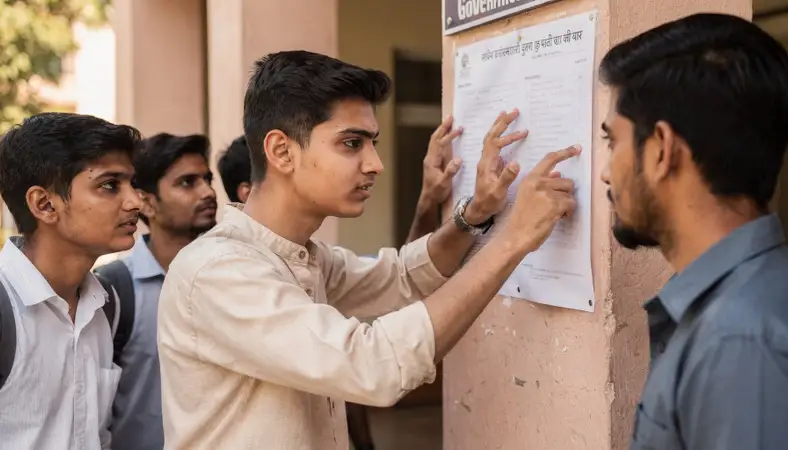
Karnataka Board Exams 2026: Quick Overview
The following table summarizes the essential passing requirements for Karnataka SSLC (Class 10) and 2nd PUC (Class 12) students for the 2026 session.
| Exam Category | Minimum Passing Percentage | Theory Passing Marks | Internal/Practical Passing Marks | Total Marks Required |
|---|---|---|---|---|
| SSLC (Core Subjects) | 35% | 28 out of 80 | No specific minimum (Total 35) | 35 out of 100 |
| SSLC (1st Language) | 35% | 35 out of 100 | No specific minimum (Total 44) | 44 out of 125 |
| 2nd PUC (Non-Practical) | 35% | 28 out of 80 | No specific minimum (Total 35) | 35 out of 100 |
| 2nd PUC (Practical) | 35% | 24 out of 70 | 11 out of 30 | 35 out of 100 |
What are the Karnataka SSLC Passing Marks for 2026?
For SSLC students, the examination structure is divided into six subjects: three languages and three core subjects (Mathematics, Science, and Social Science). The KSEAB mandates a 35% score in each subject to qualify for the marks card. However, the calculation differs between the first language and other subjects.

The first language paper is conducted for 125 marks (100 theory + 25 internal assessment). You must secure at least 35 marks in the theory component. The overall passing score, including internal marks, must reach 44. For the second language, third language, and core subjects, the paper is for 100 marks (80 theory + 20 internal). You need a minimum of 28 marks in the theory exam. If you score 28 in theory and 7 in internals, you reach the 35-mark passing threshold.
Students should focus on the internal assessment marks conducted by schools, as these 20 marks act as a safety net. If you score full marks in internals, you only need 15 marks in the theory paper for core subjects to pass, provided you meet the minimum theory requirement of 28 marks set by the board for specific years. Note that KSEAB often fluctuates the "minimum theory" rule, but the 35% aggregate remains constant.
Karnataka 2nd PUC Passing Marks 2026: Subject-wise Breakdown
The 2nd PUC passing criteria are more nuanced due to the distinction between practical and non-practical subjects. In 2026, the board continues the 80+20 pattern for non-practical subjects like Commerce and Arts, while Science subjects follow the 70+30 pattern.
Science Stream (Practical Subjects): For Physics, Chemistry, Biology, and Computer Science, the theory paper is for 70 marks and the practical is for 30 marks. To pass, you must secure 24 marks in theory and 11 marks in practicals separately. Failing in either component results in an overall 'Fail' for that subject, even if your total exceeds 35.
Commerce and Arts (Non-Practical Subjects): Subjects like Economics, Accountancy, Business Studies, History, and Political Science carry 80 marks for theory and 20 marks for internal assessment. The passing mark for the theory section is 28. There is no separate passing minimum for the 20-mark internal assessment, but your combined score must be at least 35.
Language papers in 2nd PUC also follow the 80+20 format. Whether it is English, Kannada, Hindi, or Sanskrit, the target remains 28 marks in the 80-mark theory paper. Achieving high marks in PUC is vital because 50% of your board marks are considered for KCET rankings, which determine entry into engineering and professional courses in Karnataka.
How does the Karnataka Board Grace Marks Policy 2026 work?
The Karnataka Board provides grace marks to help students who fall narrowly short of the passing criteria. This policy is designed to prevent a year's loss for students who have performed well in most subjects but struggled in one or two. For the 2026 exams, the grace marks policy is expected to follow these specific rules:
- PUC Grace Marks: The board can award up to 5% of the total marks as grace marks. For a 600-mark total, this amounts to 30 marks. These marks are distributed only if the student passes all other subjects and the grace marks help them clear the remaining failed subjects.
- SSLC Grace Marks: Typically, grace marks are limited to 5% of the maximum marks of a subject. If a student is failing in a maximum of two subjects, the board can add marks to reach the 35% threshold.
- Condonation: This is a discretionary power where the board chairperson can authorize additional marks in exceptional cases, usually limited to 1-2 marks.
- Eligibility: Grace marks are only applicable to students who have appeared for all subjects in the main examination. They are not usually applied to students attempting to improve their scores.
It is important to understand that grace marks are a one-time relief. If you require more than the stipulated 5% to pass, the board will not grant them, and you will be required to appear for the Exam 2 or Exam 3 (Supplementary) cycle.
The New "Exam 1, 2, and 3" System Explained
Karnataka has moved away from the traditional "Supplementary Exam" model to a more student-friendly "Three Exam System." This change is highly beneficial for students appearing in 2026. Under this system, KSEAB conducts three separate board exams in a single academic year.
- Exam 1: The main annual examination held in March/April.
- Exam 2: Held in May/June for students who failed Exam 1 or those who want to improve their marks.
- Exam 3: Held in July for students who still have backlogs or wish to further improve their scores.
The most significant advantage of this system is the "Best of Three" rule. If a student appears for a subject in Exam 1 and scores 40, then takes Exam 2 to improve and scores 60, the board will consider 60 as the final mark
Karnataka Board Passing Marks 2026: FAQs
- What is the overall passing percentage for Karnataka Board exams? Students must secure a minimum of 35% aggregate marks in each subject to pass both SSLC and 2nd PUC exams.
- Are there separate passing criteria for theory and practicals? Yes, for practical subjects, you must pass both components separately (e.g., 24/70 in theory and 11/30 in practicals for 2nd PUC).
- What is the grace marks policy for KSEAB exams? The board may award grace marks in specific circumstances to help students reach the minimum passing threshold in a subject.
- Is the passing criteria the same for all SSLC subjects? No, the first language (125 marks) requires 44 marks overall, while other subjects (100 marks) require 35 marks.
Related Resources
Checks to complete before you apply
Understanding the Karnataka Board's detailed passing marks and grace marks policy is crucial for 2026 exam preparation. Carefully review the subject-specific requirements for both theory and practical components. Staying informed on these official KSEAB guidelines will help you plan your studies effectively and achieve success.
Related Government Job Resources
Continue with active job hubs and related government job pages on TrueJobs.
Tools for this recruitment topic
Use only the tools relevant to the dates, eligibility or documents discussed above.
TrueJobs Editorial Team
TrueJobs editorial desk
This article is prepared from the sources referenced in the guide and reviewed for clarity, links and dated information. Read our editorial and corrections policy.
Continue This Topic
Follow the closest earlier and newer coverage so older archive posts keep real contextual crawl paths.
Karnataka Board Topper List 2026: SSLC and 2nd PUC Results Analysis
Official details and links for "Karnataka Board Topper List 2026: SSLC and 2nd PUC Results Analysis" in one place.
Karnataka Board Revaluation Result 2026: Scrutiny Process and Dates
Looking for the Karnataka Board Revaluation Result 20
Read Next

Karnataka Board Topper List 2026: SSLC and 2nd PUC Results Analysis

Karnataka Board Revaluation Result 2026: Scrutiny Process and Dates

Tamil Nadu Board Class 10 Result 2026: Date, Link, and Career Guide

Karnataka Board Improvement Exam Form 2026: How to Apply
Explore Topics
Perfect Your Resume
Use our AI-powered Resume Builder to create ATS-optimized resumes.
AI Resume Builder