
Career guide
PSU Jobs 2026: BHEL, ONGC, IOCL Salary & Selection — Explained
Discover top PSU jobs for 2026 in Maharatna companies like BHEL, ONGC, and IOCL. This guide covers salary, selection process, and application tips for your career.

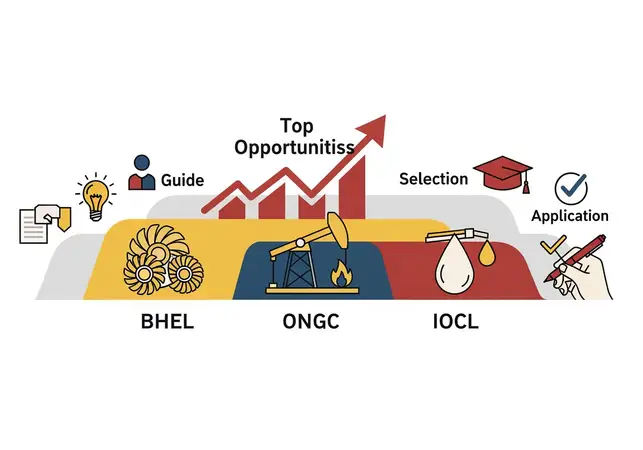
Welcome to TrueJobs.co.in, your trusted source for navigating the dynamic landscape of government job opportunities in India. This comprehensive guide delves into the prestigious world of Public Sector Undertakings (PSUs), offering a detailed roadmap for aspiring professionals aiming to secure a fulfilling career in these vital organizations, with a special focus on BHEL, ONGC, and IOCL.
Introduction
Public Sector Undertakings (PSUs) are vital economic pillars in India, driving national progress across critical sectors like energy, infrastructure, and manufacturing. They offer aspiring professionals a unique blend of stability, attractive compensation, and the satisfaction of contributing directly to national development, making them highly sought-after career destinations.
As India targets ambitious industrial growth, the demand for skilled professionals in PSUs continues to surge. This TrueJobs.co.in guide illuminates the path to securing top PSU jobs, focusing on three 'Maharatna' companies: Bharat Heavy Electricals Limited (BHEL), Oil and Natural Gas Corporation (ONGC), and Indian Oil Corporation Limited (IOCL). We will explore their appeal, salary structures, selection processes, and provide actionable advice for a successful career in these prestigious organizations.
What are PSUs and Why Work for Them?
Public Sector Undertakings (PSUs) are government-majority-owned corporations (over 51% share capital) in India. They operate across critical sectors like energy, manufacturing, finance, and infrastructure, driving economic growth, ensuring energy security, providing essential services, and fostering social welfare through employment and regional development.
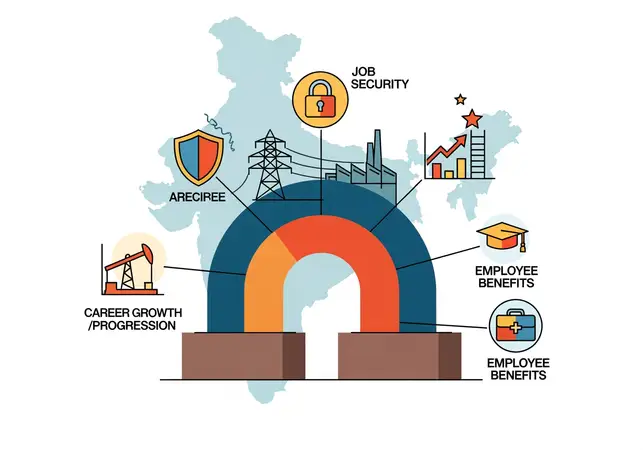
Working for a PSU offers numerous advantages that attract a vast pool of talent. Beyond competitive salaries and comprehensive benefits, PSUs provide unparalleled job security, a structured career progression path, and opportunities for professional development through training and exposure to large-scale projects. Employees often enjoy a better work-life balance compared to some private sector counterparts, along with the prestige and social recognition associated with government service. Furthermore, the chance to contribute to national development and work on projects of strategic importance adds a unique sense of purpose to a PSU career.
Types of PSUs: Maharatna, Navratna, and Miniratna
The Indian government categorizes PSUs based on financial performance, operational scale, and strategic importance, granting them varying degrees of autonomy:
- Maharatna: These are the largest and most strategically important PSUs, demonstrating significant global presence and financial turnover. They have greater financial and operational autonomy, enabling them to make swift decisions and compete effectively on an international scale. Examples include BHEL, ONGC, and IOCL, which are the focus of this article.
- Navratna: These PSUs are also significant players, with a strong track record of profitability and operational efficiency. They enjoy considerable autonomy in investment decisions and strategic alliances, allowing them to innovate and expand.
- Miniratna: Divided into two categories (Category-I and Category-II), these PSUs are smaller in scale but consistently profitable. They have specific delegated powers to incur capital expenditure without government approval, fostering their growth and operational independence.
The categorization reflects the government's trust in their management and their capacity to contribute to the national economy, making Maharatna PSUs particularly desirable for job seekers due to their scale, impact, and comprehensive employee benefits.
Spotlight on Top Maharatna PSUs: BHEL, ONGC, and IOCL
These three Maharatna companies represent the pinnacle of PSU careers, offering diverse opportunities across engineering, technology, management, and scientific disciplines. Understanding their core operations and recruitment needs is crucial for aspiring candidates.
Bharat Heavy Electricals Limited (BHEL)
BHEL is India's largest engineering and manufacturing enterprise in the energy and infrastructure sectors. It plays a crucial role in power generation, transmission, and industrial applications. BHEL's operations span across a wide range of products and services, including thermal, hydro, nuclear, and solar power plants, industrial systems, and transportation equipment.
- Key Sectors: Power generation (thermal, hydro, nuclear, solar), transmission, industrial systems, transportation, renewable energy.
- Typical Roles: Engineers (Mechanical, Electrical, Electronics, Civil, Metallurgy, Production), Scientists, Technicians, Management Trainees, HR, Finance professionals.
- Career Growth: BHEL offers a structured career path with ample opportunities for professional development through internal training programs, exposure to cutting-edge technology, and participation in large-scale national and international projects.
Oil and Natural Gas Corporation (ONGC)
ONGC is India's largest crude oil and natural gas company, contributing significantly to the nation's energy security. It is involved in exploration, development, and production of crude oil and natural gas, both onshore and offshore. ONGC is a pioneer in the Indian oil and gas sector, with extensive operations across the country and a growing international presence.
- Key Sectors: Oil and gas exploration, drilling, production, refining, petrochemicals.
- Typical Roles: Graduate Trainees (Engineering disciplines like Petroleum, Mechanical, Electrical, Civil, Electronics, Chemical), Geologists, Geophysicists, Chemists, Finance & HR Executives, Medical Officers.
- Career Growth: ONGC provides a dynamic work environment with opportunities to work on advanced technologies in challenging geological settings. Employees benefit from specialized training, international assignments, and a clear progression ladder in technical and managerial roles.
Indian Oil Corporation Limited (IOCL)
IOCL is India's largest commercial oil company and a leading energy player. It is involved in the entire hydrocarbon value chain, from refining and pipeline transportation to marketing of petroleum products, petrochemicals, and natural gas. IOCL's vast network of refineries, pipelines, and marketing infrastructure makes it a critical component of India's energy landscape.
- Key Sectors: Oil refining, pipeline transportation, marketing of petroleum products, petrochemicals, natural gas, renewable energy.
- Typical Roles: Engineers (Chemical, Mechanical, Electrical, Civil, Instrumentation), Research Officers, Management Trainees, Accounts Officers, HR Officers, Marketing Officers.
- Career Growth: IOCL offers diverse career paths across its various business segments. Employees gain exposure to large-scale industrial operations, advanced refining technologies, and extensive marketing networks. The company emphasizes continuous learning and leadership development.
Salary, Perks, and Benefits in Top PSUs
One of the primary attractions of PSU jobs is the comprehensive remuneration package, which includes not just a competitive salary but also a wide array of perks and benefits that ensure financial security and a high quality of life for employees and their families.
Compensation Structure
While specific figures can vary based on the pay commission recommendations, company policies, and the level of the position, PSU salaries are generally robust and structured. Entry-level positions for engineers and management trainees (often at the E1 or E2 grade) typically start with a basic pay scale that is significantly augmented by various allowances.
- Basic Pay: The foundational component of the salary.
- Dearness Allowance (DA): Adjusted periodically to offset inflation, ensuring the purchasing power of the salary remains stable.
- House Rent Allowance (HRA): Provided to employees who do not opt for company accommodation, varying based on the city classification.
- Perks & Allowances: This can include performance-related pay, medical benefits, travel allowances, leave travel concession (LTC), children's education allowance, and more.
- Provident Fund (PF) & Gratuity: Significant long-term savings and retirement benefits.
- Superannuation Benefits: Pension schemes and other post-retirement financial security measures.
The total Cost to Company (CTC) for entry-level professionals in Maharatna PSUs can be very attractive, often comparable to or exceeding packages offered by many private sector companies, especially when considering the stability and benefits.
Additional Perks and Benefits
- Job Security: High degree of job stability, making PSUs a preferred choice for long-term career planning.
- Medical Facilities: Comprehensive medical coverage for employees and their dependents, often including access to company-owned hospitals or empanelled medical facilities.
- Accommodation: Depending on availability and location, company housing may be provided, especially in project sites or remote areas.
- Subsidized Facilities: Access to subsidized canteens, transportation, and recreational facilities.
- Training and Development: Regular training programs, workshops, and opportunities for higher education or specialized certifications, often sponsored by the company.
- Work-Life Balance: Generally, PSUs offer a more predictable work schedule and better work-life balance compared to some high-pressure private sector roles.
- Social Security: Robust pension schemes, gratuity, and other social security benefits ensuring financial stability post-retirement.
Selection Process and Application Guide for 2026
The selection process for top PSUs is rigorous and highly competitive, designed to identify the best talent. While specific details can vary by company and recruitment cycle, a general framework applies.
Common Recruitment Channels
- GATE Score (Graduate Aptitude Test in Engineering): This is the most prevalent method for recruiting engineers and some science graduates. Candidates must appear for the GATE exam in their respective disciplines and achieve a qualifying score. PSUs then release separate recruitment notifications inviting applications from eligible GATE qualifiers. The GATE score is often the primary shortlisting criterion, followed by subsequent stages.
- Direct Recruitment Exams: Some PSUs conduct their own written examinations for specific positions, especially for non-engineering roles (e.g., HR, Finance, Law, Medical Officers) or for positions where GATE is not applicable. These exams typically assess general aptitude, subject-specific knowledge, and English language proficiency.
- University/Campus Recruitment: For certain entry-level positions, PSUs may visit premier engineering colleges and management institutes for campus placements.
- Experienced Professionals: For mid-career and senior-level positions, recruitment is often done through direct applications, interviews, and sometimes specialized assessments, focusing on relevant work experience and leadership qualities.
Typical Selection Stages (Post-GATE or Direct Exam)
Once candidates are shortlisted based on their GATE scores or direct exam performance, they typically proceed through the following stages:
- Group Discussion (GD): Assesses communication skills, leadership qualities, teamwork, and ability to articulate thoughts on a given topic.
- Personal Interview (PI): A crucial stage to evaluate technical knowledge, behavioral competencies, problem-solving abilities, motivation, and overall personality fit for the organization.
- Document Verification: Verification of educational qualifications, age, caste certificates (if applicable), and other relevant documents.
- Medical Examination: A mandatory health check-up to ensure candidates meet the physical fitness standards required for the job.
The final merit list is usually prepared based on a weighted average of GATE score (or written exam score), GD performance, and PI performance. Some PSUs may give higher weightage to the GATE score, while others might balance it more with interview performance.
Eligibility Criteria (General Guidelines)
While specific criteria are detailed in official notifications, general eligibility requirements include:
- Educational Qualification: A full-time Bachelor's degree in Engineering/Technology (B.E./B.Tech) in the relevant discipline for engineering roles, or a Master's degree for specific science/management roles. A minimum percentage of marks (e.g., 60% or 65%) is usually required.
- Age Limit: Typically, the upper age limit for fresh graduates is around 26-30 years, with relaxations for reserved categories (SC/ST/OBC/PwBD) as per government norms.
- Nationality: Indian citizenship is a prerequisite.
- GATE Score: For engineering roles, a valid GATE score from the specified year (e.g., GATE 2025 for 2026 recruitment) is essential.
Candidates are strongly advised to refer to the official recruitment notifications released by each PSU on their respective websites and on government job portals like TrueJobs.co.in for precise and up-to-date eligibility criteria, application deadlines, and examination patterns.
Application Guide and Tips for Success
- Stay Informed: Regularly check the official websites of BHEL, ONGC, IOCL, and government job portals for recruitment notifications. Subscribe to job alerts from TrueJobs.co.in to receive timely updates.
- Prepare for GATE: If you are an engineering graduate, a strong GATE score is your golden ticket. Start preparing well in advance, focusing on core concepts and practicing previous year's papers.
- Understand the Exam Pattern: For direct recruitment exams, familiarize yourself with the syllabus, marking scheme, and types of questions asked.
- Enhance Soft Skills: Group discussions and personal interviews require strong communication, analytical, and interpersonal skills. Practice mock GDs and PIs.
- Technical Knowledge: Be thorough with your engineering or subject-specific fundamentals. Interviewers will test your conceptual clarity.
- Current Affairs & General Knowledge: Stay updated on national and international news, especially related to the energy, manufacturing, and infrastructure sectors. Knowledge about the specific PSU you are applying to (its operations, recent projects, vision) is highly beneficial.
- Tailor Your Application: When filling out application forms, ensure all details are accurate. Highlight relevant projects, internships, and achievements.
- Document Readiness: Keep all necessary educational certificates, caste certificates, identity proofs, and photographs ready in the prescribed format.
- Physical Fitness: Maintain good health as a medical examination is a mandatory part of the selection process.
Preparing for a PSU Career: Long-Term Strategy
Securing a PSU job is not just about clearing an exam; it's about building a fulfilling career. A long-term strategy involves continuous learning, skill enhancement, and understanding the organizational culture.
Continuous Learning and Skill Development
PSUs invest heavily in their employees' development. Embrace these opportunities:
- Technical Upgradation: Stay abreast of the latest technologies and advancements in your field. BHEL, ONGC, and IOCL operate at the forefront of their respective industries, requiring employees to continuously update their technical skills.
- Managerial Skills: As you progress, leadership and managerial skills become crucial. Participate in management development programs and take on leadership roles in projects.
- Cross-Functional Exposure: Seek opportunities to work in different departments or on diverse projects to gain a broader understanding of the company's operations.
- Certifications: Pursue relevant professional certifications that can enhance your expertise and career prospects within the organization.
Understanding PSU Culture
PSU work culture is often characterized by:
- Structured Environment: Clear hierarchies, defined processes, and adherence to rules and regulations.
- Emphasis on Stability: A focus on long-term employment and career progression within the organization.
- Social Responsibility: A strong sense of contributing to national goals and community development.
- Teamwork: Large-scale projects often require extensive collaboration across various departments and disciplines.
Adapting to and thriving in this environment requires patience, a commitment to public service, and a willingness to work within established frameworks while also contributing to innovation and efficiency.
FAQ
What is the difference between Maharatna, Navratna, and Miniratna PSUs?
These are classifications based on the financial performance, operational scale, and strategic importance of PSUs. Maharatna are the largest and most autonomous, followed by Navratna, and then Miniratna (Category-I and Category-II), which have lesser autonomy but are consistently profitable. The classification determines their financial and operational powers.
Is a GATE score mandatory for all PSU jobs?
No, a GATE score is primarily mandatory for engineering and some science-related entry-level positions in many top PSUs like BHEL, ONGC, and IOCL. For non-engineering roles (e.g., HR, Finance, Law, Medical) or for experienced positions, PSUs often conduct their own recruitment exams or direct interviews. Always check the specific job notification for exact requirements.
What kind of career growth can I expect in a Maharatna PSU?
Maharatna PSUs offer structured and predictable career growth paths. Employees can expect regular promotions based on performance, experience, and internal assessments. There are ample opportunities for professional development, specialized training, and exposure to large-scale projects, leading to both technical and managerial advancement up to senior executive levels. The stability and comprehensive benefits also contribute to a fulfilling long-term career.
Put this advice into practice
A career in a Maharatna PSU like BHEL, ONGC, or IOCL offers a unique blend of professional challenge, financial stability, and the profound satisfaction of contributing to India's growth story. These organizations are not just employers; they are nation-builders, and joining them means becoming a part of this vital mission.
By understanding their operations, preparing diligently for the rigorous selection processes, and committing to continuous learning, aspiring professionals can successfully navigate the path to a rewarding career in these prestigious public sector undertakings. TrueJobs.co.in encourages all eligible candidates to explore these opportunities and embark on a journey that promises both personal and national impact. For the latest updates on PSU recruitments and other government job opportunities, keep visiting TrueJobs.co.in.
Top PSU Jobs India 2026: BHEL/ONGC/IOCL Guide
TrueJobs Editorial Team
TrueJobs editorial desk
This article is prepared from the sources referenced in the guide and reviewed for clarity, links and dated information. Read our editorial and corrections policy.
Continue This Topic
Follow the closest earlier and newer coverage so older archive posts keep real contextual crawl paths.
Apprenticeship Jobs in India 2026: Stipend, Top Companies & NAPS Guide
भारत में 2026 तक अप्रेंटिसशिप नौकरियों का भविष्य जानें। स्टाइपेंड, शीर्ष कंपनियां और NAPS लाभों के बारे में विस्तृत जानकारी प्राप्त करें।
IBPS Clerk 2026: Eligibility, Syllabus, Salary & Full Prep Guide
Aspiring for a bank job? Our comprehensive guide to the IBPS Clerk 2026 exam covers everything from eligibility and syllabus to salary and a winning preparation strategy.
Read Next

Apprenticeship Jobs in India 2026: Stipend, Top Companies & NAPS Guide

IBPS Clerk 2026: Eligibility, Syllabus, Salary & Full Prep Guide

DRDO, ISRO & Defence Research Jobs 2026: Your Guide to Eligibility, Salary & Entry

SSC GD Constable 2026: Physical Test, Syllabus & 60-Day Prep Strategy
Explore Topics
Perfect Your Resume
Use our AI-powered Resume Builder to create ATS-optimized resumes.
AI Resume Builder