
Career guide
IBPS Clerk 2026: Eligibility, Syllabus, Salary & Prep — Explained
Aspiring for a bank job? Our comprehensive guide to the IBPS Clerk 2026 exam covers everything from eligibility and syllabus to salary and a winning preparation strategy.

Are you aspiring to build a career in the banking sector and secure a stable government job? The IBPS Clerk examination is one of the most sought-after opportunities for graduates across India. Conducted by the Institute of Banking Personnel Selection (IBPS), this exam recruits eligible candidates for the post of Clerk in various public sector banks. As we look ahead to IBPS Clerk 2026, it's crucial to start your preparation early and understand every aspect of the examination. This comprehensive guide from TrueJobs.co.in will walk you through the eligibility criteria, detailed syllabus, exam pattern, attractive salary structure, and provide you with a complete preparation strategy to help you ace the IBPS Clerk 2026 exam.
A career as an IBPS Clerk offers not just financial stability but also a respectable position in society and ample opportunities for professional growth within the dynamic banking industry. With millions of aspirants competing annually, a well-structured and disciplined approach is essential to stand out and secure a coveted position in India's robust public sector banking system.
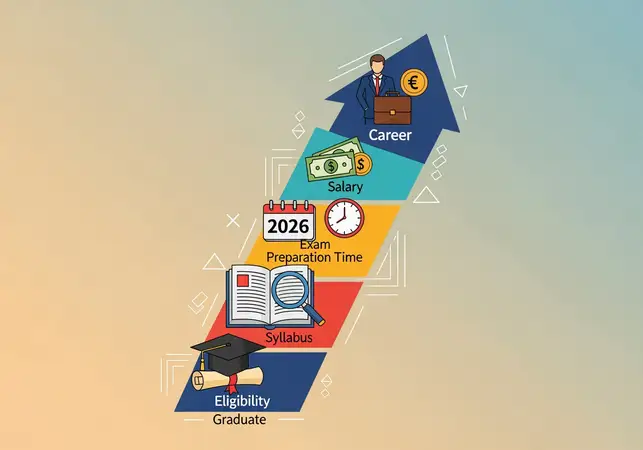
IBPS Clerk 2026: An Overview
The IBPS Clerk exam is a national-level competitive examination held annually to recruit candidates for clerical cadre posts in various public sector banks across India. These banks play a crucial role in the Indian economy, providing essential financial services across urban and rural areas, acting as pillars of financial inclusion and stability. Participating banks include major institutions like Bank of Baroda, Canara Bank, Indian Bank, Punjab National Bank, Union Bank of India, Central Bank of India, and many more, offering a wide geographical choice to candidates. The role of a Clerk in these banks involves direct customer interaction, handling cash transactions, managing accounts, and various back-office operations, making it a foundational position in the banking hierarchy.
Clerks are often the first point of contact for customers, playing a vital role in customer service, transaction processing, and ensuring smooth daily operations of the branch.
The selection process typically involves two stages: a Preliminary Examination and a Main Examination. Both are online computer-based tests. Candidates who qualify both stages are provisionally allotted to one of the participating banks based on their merit, preferences, and the vacancies available in their chosen state/UT. This provisional allotment is a significant step towards securing a permanent government job. While specific dates and vacancies for IBPS Clerk 2026 are yet to be announced, the examination generally follows a predictable annual cycle, with notifications typically released between June and August, and exams conducted in August/September (Prelims) and October/November (Mains). This consistent schedule makes it possible for aspirants to begin their preparation well in advance and plan their study schedule effectively.
Staying updated with official announcements on the IBPS website and reliable job portals like TrueJobs.co.in is highly recommended to ensure you don't miss any crucial deadlines or information.
IBPS Clerk 2026 Eligibility Criteria
To be eligible for the IBPS Clerk 2026 examination, candidates must fulfill certain criteria related to nationality, age, and educational qualification. These criteria are designed to ensure that candidates possess the necessary legal standing, maturity, and academic background to perform the duties of a bank clerk responsibly and efficiently. It's important to note that these criteria are based on previous year notifications, and candidates should always refer to the official IBPS Clerk 2026 notification once it is released for any potential updates or changes. Any discrepancy between your profile and the stated criteria can lead to disqualification at later stages of the recruitment process.

1. Nationality/Citizenship
A candidate must be either:
- A Citizen of India
- A Subject of Nepal
- A Subject of Bhutan
- A Tibetan Refugee who came over to India before 1st January 1962 with the intention of permanently settling in India
- A person of Indian origin who has migrated from Pakistan, Burma, Sri Lanka, East African countries of Kenya, Uganda, the United Republic of Tanzania (formerly Tanganyika and Zanzibar), Zambia, Malawi, Zaire, Ethiopia and Vietnam with the intention of permanently settling in India.
Note: Candidates belonging to categories other than Indian citizens must have a certificate of eligibility issued by the Government of India. This ensures that all candidates meet the legal requirements for employment in public sector institutions in India, which are governed by specific national policies regarding citizenship and residency. This certificate is a mandatory document for such candidates.
2. Age Limit (as on a specified date, usually 1st July of the exam year)
The age limit is a crucial factor for eligibility. The specified date for age calculation is typically mentioned in the official notification, and candidates' age will be calculated strictly based on this date. Candidates must fall within this age bracket to be considered eligible.
- Minimum Age: 20 years
- Maximum Age: 28 years
This means a candidate must have been born not earlier than a certain date (e.g., 2nd July 1998 for a 2026 exam) and not later than a certain date (e.g., 1st July 2006 for a 2026 exam), inclusive of both dates. Specific dates will be provided in the official notification. It is advisable for candidates to calculate their exact age on the specified cut-off date to avoid any last-minute surprises during application.
Age Relaxation: Category-wise age relaxation is provided as per government norms, reflecting the government's commitment to inclusive employment and providing opportunities to various sections of society. These relaxations are crucial for candidates from reserved categories or specific circumstances to compete fairly.
| Category | Age Relaxation |
|---|---|
| Scheduled Caste/Scheduled Tribe | 5 years |
| Other Backward Classes (Non-Creamy Layer) | 3 years |
| Persons With Benchmark Disabilities | 10 years |
| Ex-Servicemen/Disabled Ex-Servicemen | Actual period of service rendered in the defence forces + 3 years (8 years for Disabled Ex-Servicemen belonging to SC/ST) subject to a maximum age limit of 50 years |
| Widows/Divorced Women/Women Judicially Separated and who are not Remarried | Up to age of 35 years for General/EWS, 38 years for OBC and 40 years for SC/ST candidates |
3. Educational Qualification
The candidate must have completed their graduation from a recognized university or an equivalent qualification recognized by the Central Government. The degree must have been obtained on or before the specified date mentioned in the official notification. This ensures that candidates have the necessary academic background to handle the responsibilities of a bank clerk. It is important for candidates to verify the recognition status of their university or institution from the University Grants Commission (UGC) or the relevant statutory body.
Additionally, candidates must possess a certificate in Computer Courses and Programming language. This requirement underscores the importance of computer literacy and proficiency in the banking sector, where digital transactions and online services are increasingly becoming the norm. Candidates can obtain this certificate through various recognized institutions or online courses that offer computer training.
IBPS Clerk 2026 Syllabus
The IBPS Clerk syllabus is divided into two main phases: Preliminary and Main Examination. Each phase has a specific set of subjects and topics that candidates must prepare for. Understanding the syllabus in detail is crucial for effective preparation. Here is a comprehensive breakdown of the IBPS Clerk 2026 syllabus:
Preliminary Examination Syllabus
The Preliminary Examination is designed to test the basic knowledge and skills of the candidates. It consists of three main sections:
1. English Language
This section evaluates the candidate's proficiency in the English language. Topics include:
- Reading Comprehension
- Cloze Test
- Para Jumbles
- Error Spotting
- Fill in the Blanks
- Sentence Improvement
- Phrase Replacement
- Synonyms and Antonyms
- Idioms and Phrases
2. Numerical Ability
This section tests the candidate's ability to handle numbers and perform basic mathematical operations. Topics include:
- Simplification
- Number Series
- Data Interpretation
- Quadratic Equations
- Approximation
- Percentage
- Profit and Loss
- Simple and Compound Interest
- Time and Work
- Time, Speed, and Distance
- Mensuration
- Average
3. Reasoning Ability
This section evaluates the candidate's logical and analytical skills. Topics include:
- Puzzles
- Seating Arrangement
- Syllogism
- Coding-Decoding
- Blood Relations
- Directions and Distances
- Order and Ranking
- Alphanumeric Series
- Input-Output
Main Examination Syllabus
The Main Examination is more comprehensive and covers a wider range of topics. It consists of four main sections:
1. General/Financial Awareness
This section tests the candidate's knowledge of current events, banking and financial awareness, and general knowledge. Topics include:
- Current Affairs (National and International)
- Banking Awareness
- Financial Awareness
- Static GK (Geography, History, Political Science, etc.)
- Awards and Honors
- Books and Authors
- Sports
- Important Days and Events
2. General English
This section is similar to the English Language section in the Preliminary Examination but with a higher level of difficulty. Topics include:
- Reading Comprehension
- Cloze Test
- Para Jumbles
- Error Spotting
- Fill in the Blanks
- Sentence Improvement
- Phrase Replacement
- Synonyms and Antonyms
- Idioms and Phrases
- Vocabulary
3. Reasoning Ability and Computer Aptitude
This section combines reasoning ability with computer knowledge. Topics include:
- Puzzles
- Seating Arrangement
- Syllogism
- Coding-Decoding
- Blood Relations
- Directions and Distances
- Order and Ranking
- Alphanumeric Series
- Input-Output
- Computer Fundamentals
- History of Computers
- Basics of Hardware and Software
- Internet
- Computer Abbreviations
- Microsoft Office
- Computer Terminologies
4. Quantitative Aptitude
This section is similar to the Numerical Ability section in the Preliminary Examination but with a higher level of difficulty. Topics include:
- Simplification
- Number Series
- Data Interpretation
- Quadratic Equations
- Approximation
- Percentage
- Profit and Loss
- Simple and Compound Interest
- Time and Work
- Time, Speed, and Distance
- Mensuration
- Average
- Permutation and Combination
- Probability
- Data Sufficiency
IBPS Clerk 2026 Exam Pattern
Understanding the exam pattern is crucial for effective preparation. The IBPS Clerk 2026 exam pattern consists of two phases: Preliminary Examination and Main Examination. Each phase has a specific structure and marking scheme. Here is a detailed breakdown of the IBPS Clerk 2026 exam pattern:
Preliminary Examination Pattern
The Preliminary Examination is the first stage of the IBPS Clerk selection process. It is an online computer-based test consisting of three sections. The total duration of the exam is 1 hour (60 minutes), and the exam is conducted in both English and Hindi (except for the English Language section). Here is the detailed pattern:
| Section | Number of Questions | Maximum Marks | Duration |
|---|---|---|---|
| English Language | 30 | 30 | 20 minutes |
| Numerical Ability | 35 | 35 | 20 minutes |
| Reasoning Ability | 35 | 35 | 20 minutes |
Each question carries 1 mark, and there is a penalty for wrong answers. For every incorrect answer, 0.25 marks will be deducted from the total score. Candidates must secure minimum qualifying marks in each section to be eligible for the Main Examination.
Main Examination Pattern
The Main Examination is the second and final stage of the IBPS Clerk selection process. It is also an online computer-based test consisting of four sections. The total duration of the exam is 160 minutes (2 hours and 40 minutes). Here is the detailed pattern:
| Section | Number of Questions | Maximum Marks | Duration |
|---|---|---|---|
| General/Financial Awareness | 50 | 50 | 35 minutes |
| General English | 40 | 40 | 35 minutes |
| Reasoning Ability and Computer Aptitude | 50 | 60 | 45 minutes |
| Quantitative Aptitude | 50 | 50 | 45 minutes |
Each question carries 1 mark, and there is a penalty for wrong answers. For every incorrect answer, 0.25 marks will be deducted from the total score. Candidates must secure minimum qualifying marks in each section and an overall cut-off to be considered for provisional allotment.
IBPS Clerk 2026 Salary Structure
The IBPS Clerk position offers an attractive salary structure that includes basic pay, allowances, and other benefits. The salary is revised periodically as per government norms. Here is a detailed breakdown of the IBPS Clerk 2026 salary structure:
Basic Pay: The basic pay for an IBPS Clerk is Rs. 19,900/- per month. This is the starting salary, and it increases with promotions and increments.
Allowances: In addition to the basic pay, IBPS Clerks are entitled to various allowances, including:
- Dearness Allowance (DA)
- House Rent Allowance (HRA)
- Medical Allowance
- Travelling Allowance (TA)
These allowances are calculated based on the basic pay and vary depending on the place of posting (metro, urban, rural areas).
Gross Salary: The gross salary of an IBPS Clerk, including basic pay and allowances, typically ranges from Rs. 28,000/- to Rs. 30,000/- per month. This can vary based on the location and other factors.
In-Hand Salary: After deducting professional tax and other deductions, the in-hand salary of an IBPS Clerk is approximately Rs. 23,000/- to Rs. 25,000/- per month. This is the amount that the employee receives in their bank account.
Job Profile and Responsibilities: The role of an IBPS Clerk involves a variety of responsibilities, including:
- Handling customer queries and complaints
- Processing account-related transactions
- Issuing demand drafts, cash receipts, and cheque books
- Maintaining ledgers and balance sheets
- Assisting in recovery of loans and advances
- Performing back-office operations
IBPS Clerks play a crucial role in ensuring the smooth functioning of the bank's daily operations. They are often the first point of contact for customers, making customer service skills essential for this role.
Full Preparation Guide for IBPS Clerk 2026
Preparing for the IBPS Clerk 2026 exam requires a well-structured and disciplined approach. Here is a comprehensive preparation guide to help you ace the exam:
1. Understand the Syllabus and Exam Pattern
The first step in your preparation is to thoroughly understand the syllabus and exam pattern. This will help you identify the topics you need to focus on and allocate your study time effectively. Make a list of all the topics and subtopics from the syllabus and create a study plan accordingly.
2. Create a Study Plan
A well-structured study plan is essential for effective preparation. Divide your study time into daily, weekly, and monthly goals. Allocate more time to topics you find difficult and less time to topics you are comfortable with. Set specific targets for each day and stick to your plan.
Here is a sample study plan for IBPS Clerk 2026:
- Daily Goals: Study for at least 6-8 hours every day. Focus on one section (e.g., English Language, Numerical Ability, Reasoning Ability) each day.
- Weekly Goals: Complete at least one mock test every week. Review your performance and identify areas of improvement.
- Monthly Goals: Cover the entire syllabus at least once every month. Revise the topics you have already studied.
3. Gather Study Material
Gather all the necessary study material, including textbooks, reference books, previous year question papers, and online resources. Some recommended books for IBPS Clerk preparation are:
- "Objective English for Competitive Examinations" by Hari Mohan Prasad
- "Quantitative Aptitude for Competitive Examinations" by R.S. Aggarwal
- "A Modern Approach to Verbal & Non-Verbal Reasoning" by R.S. Aggarwal
- "Banking Awareness" by Arihant Experts
In addition to books, utilize online resources such as mock tests, video lectures, and study notes available on various educational websites and apps.
4. Practice Regularly
Regular practice is crucial for success in the IBPS Clerk exam. Solve as many practice questions and mock tests as possible. This will help you improve your speed, accuracy, and time management skills. Analyze your performance in each mock test and identify your strengths and weaknesses.
Here are some tips for effective practice:
- Set a timer while solving practice questions to simulate exam conditions.
- Review your answers after completing a practice set to understand your mistakes.
- Focus on improving your weak areas by practicing more questions in those topics.
- Take full-length mock tests regularly to assess your overall preparation.
5. Stay Updated with Current Affairs
The General/Financial Awareness section in the Main Examination requires you to stay updated with current events, banking and financial news, and general knowledge. Make it a habit to read newspapers, watch news channels, and follow reliable news websites regularly. Some recommended sources for current affairs are:
- The Hindu
- The Indian Express
- Business Standard
- Economic Times
- PIB (Press Information Bureau)
Additionally, you can use apps and websites that provide daily current affairs updates and quizzes.
6. Revise Regularly
Regular revision is essential to retain the information you have learned. Set aside time each week to revise the topics you have studied. Create short notes and flashcards for quick revision. Revising regularly will help you stay confident and prepared for the exam.
7. Manage Your Time Effectively
Time management is crucial during the exam. Practice solving questions within the stipulated time to improve your speed and accuracy. Learn to prioritize questions based on their difficulty level and your comfort with the topic. Avoid spending too much time on a single question.
8. Stay Healthy and Positive
Preparing for a competitive exam can be stressful. It is important to take care of your physical and mental health during this time. Eat healthy, exercise regularly, and get enough sleep. Stay positive and motivated throughout your preparation journey. Remember that consistency and perseverance are key to success.
9. Seek Help When Needed
If you find certain topics difficult to understand, don't hesitate to seek help from teachers, mentors, or online forums. Joining a coaching institute or study group can also be beneficial. Discussing concepts with others can provide new perspectives and help you understand difficult topics better.
Put this advice into practice
Securing a position as an IBPS Clerk is a significant achievement that offers a stable and rewarding career in the banking sector. With the right preparation strategy, dedication, and hard work, you can ace the IBPS Clerk 2026 exam and embark on a successful career journey. Remember to stay updated with the official notifications, follow a structured study plan, practice regularly, and take care of your health and well-being. Good luck!
IBPS Clerk 2026: Complete Guide
Related: Banking Sector Jobs | IBPS Exams | Exam Prep Tips
FAQs
What's IBPS Clerk eligibility?Graduation requiredSalary range?Rs.19,900-47,920Related Resources
- Latest Banking Jobs
- SBI PO Exam Guide
- Current Affairs for Govt Exams
TrueJobs Editorial Team
TrueJobs editorial desk
This article is prepared from the sources referenced in the guide and reviewed for clarity, links and dated information. Read our editorial and corrections policy.
Continue This Topic
Follow the closest earlier and newer coverage so older archive posts keep real contextual crawl paths.
Top PSU Jobs in India 2026: BHEL, ONGC, IOCL Salary, Selection & Application Guide
Discover top PSU jobs for 2026 in Maharatna companies like BHEL, ONGC, and IOCL. This guide covers salary, selection process, and application tips for your career.
SSC GD Constable 2026: Physical Test, Syllabus & 60-Day Prep Strategy
Aspiring to join CAPFs? This TrueJobs.co.in guide offers a 60-day prep strategy for SSC GD Constable 2026, covering physical tests and syllabus.
Read Next

Top PSU Jobs in India 2026: BHEL, ONGC, IOCL Salary, Selection & Application Guide

SSC GD Constable 2026: Physical Test, Syllabus & 60-Day Prep Strategy

Apprenticeship Jobs in India 2026: Stipend, Top Companies & NAPS Guide

Bihar Board 12th Result 2026: ऑफिशियल लिंक, स्ट्रीम-वाइज परिणाम और रीचेकिंग गाइड
Explore Topics
Perfect Your Resume
Use our AI-powered Resume Builder to create ATS-optimized resumes.
AI Resume Builder