
Career guide
Top 10 Highest Paying Jobs India 2026 — Explained
Discover the top 10 highest paying jobs in India for 2026 with salary ranges across technology, finance, and healthcare.

India's dynamic job market in 2026 presents lucrative opportunities, especially in technology, finance, and healthcare, driven by rapid digital transformation, a robust startup ecosystem, and sustained economic growth. The demand for highly skilled professionals who can navigate complex challenges and innovate solutions is soaring across various sectors. This evolving landscape makes it crucial for individuals to understand the top-paying roles for effective career planning, strategic skill investment, and achieving long-term financial stability. TrueJobs.co.in offers this comprehensive guide, outlining India's most rewarding professional paths, detailing the roles, essential skills required, typical salary ranges, and potential career trajectories.
The resilient Indian economy, coupled with a vibrant startup culture and the presence of global corporations, increasingly values specialized expertise, strong leadership capabilities, advanced problem-solving skills, and a spirit of innovation. Emerging technologies like Artificial Intelligence (AI), Cloud Computing, and Data Analytics are not just reshaping industries but also creating new avenues for significant financial rewards for those who master them.

Technology Sector
The technology sector remains an undisputed leader in India's high-paying job market, continually fueled by relentless innovation, widespread digital adoption across all industries, and an ever-increasing global demand for tech talent. Businesses across every domain are increasingly leveraging advanced technologies to achieve streamlined operations, deliver enhanced customer experiences, and gain a critical competitive advantage. This pervasive reliance on technology ensures that roles within this sector command premium salaries and offer robust career growth opportunities. India's robust IT services industry, growing product development capabilities, and vibrant startup ecosystem continuously drive the demand for top tech professionals who can build, manage, and innovate.
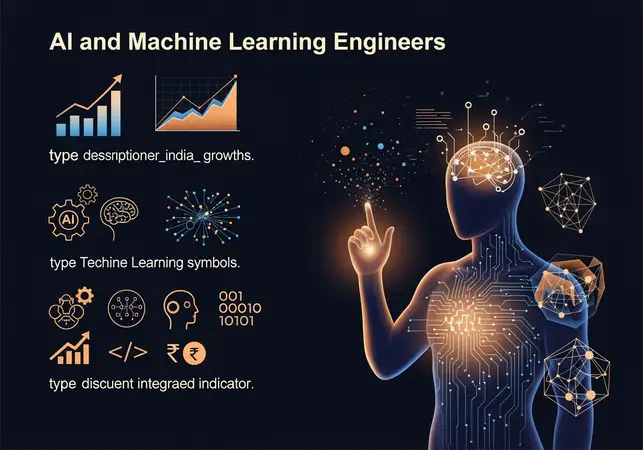
AI and Machine Learning Engineers
AI and Machine Learning Engineers are at the absolute forefront of technological innovation, commanding highly attractive compensation packages in India, typically ranging from 15-50 LPA (Lakhs Per Annum), with senior specialists earning even more. These pioneering professionals design, develop, and deploy sophisticated AI models and machine learning algorithms that enable systems to learn from vast datasets, make accurate predictions, and automate complex tasks. Their impactful work spans a diverse range of applications, including sophisticated recommendation engines, advanced natural language processing (NLP) systems, predictive analytics for business intelligence, and even the development of autonomous systems. The high demand for these professionals stems directly from AI/ML's transformative impact across virtually all industries, such as finance, healthcare, e-commerce, manufacturing, and logistics.
- Key Responsibilities: Developing and implementing cutting-edge machine learning algorithms, building and training robust AI models, and deploying these AI solutions into production environments. This comprehensive process includes meticulous data preprocessing, innovative feature engineering, carefully selecting and fine-tuning various machine learning models (e.g., neural networks, decision trees, support vector machines), rigorously evaluating their performance, and continuous optimization for efficiency and accuracy. They are also responsible for monitoring deployed models, ensuring their ethical use, and seamlessly integrating them into existing IT systems, often following MLOps (Machine Learning Operations) practices for managing the entire lifecycle from initial experimentation to ongoing maintenance and scaling.
- Why High-Paying: The acute scarcity of highly skilled professionals in this specialized domain, combined with the immense business value derived from AI-driven solutions, makes this an exceptionally lucrative field. Companies are willing to pay top dollar for talent that can unlock significant operational efficiencies, create innovative new products and services, and drive substantial revenue growth. AI/ML capabilities enable businesses to automate repetitive tasks, personalize customer experiences at scale, optimize complex supply chains, predict dynamic market trends, and detect fraud, all of which directly impact a company's bottom line and competitive edge in the global market.
- Essential Skills: Strong programming proficiency in Python or R is foundational, coupled with a deep understanding of popular ML frameworks such as TensorFlow, PyTorch, and Scikit-learn. Expertise in data modeling, advanced statistical analysis, linear algebra, and calculus is also critical. Knowledge of major cloud platforms (AWS, Azure, GCP) for scalable deployment and model management is highly valued. Proficiency in data manipulation libraries (Pandas, NumPy), data visualization tools (Matplotlib, Seaborn), and various ML algorithms (supervised, unsupervised, reinforcement learning) is crucial. Familiarity with deep learning architectures (Convolutional Neural Networks (CNNs), Recurrent Neural Networks (RNNs), Transformers) is increasingly important for advanced applications. Beyond technical skills, strong problem-solving abilities, critical thinking, and effective communication are highly sought after.
- Educational Background: A Bachelor's or Master's degree in Computer Science, Artificial Intelligence, Data Science, Statistics, Mathematics, or a related quantitative field is typically required. For research-intensive roles or advanced AI development, PhDs are often preferred. Many aspiring professionals enhance their qualifications through specialized certifications from leading institutions, intensive bootcamps, or comprehensive online courses. A strong portfolio showcasing personal projects, open-source contributions, or relevant internships significantly boosts career prospects and demonstrates practical application of knowledge.
- Career Progression: Entry-level roles often start as Junior AI Engineer or ML Engineer. Progression leads to Senior AI Engineer, then Lead AI Engineer/Scientist, followed by AI Architect, and eventually Head of AI/ML or Chief AI Officer. Responsibilities grow to include solving highly complex technical challenges, designing robust architectural solutions, leading and mentoring teams, and making strategic decisions that shape the organization's AI initiatives.
Cloud Architects and DevOps Engineers
Cloud Architects and DevOps Engineers are critical enablers of modern digital infrastructure and software delivery, consistently earning competitive salaries ranging from 20-40 LPA, with highly experienced professionals reaching higher figures. Cloud Architects are responsible for designing and overseeing an organization's entire cloud computing strategy, ensuring optimal scalability, robust security, and cost-efficiency across various cloud platforms like Amazon Web Services (AWS), Microsoft Azure, and Google Cloud Platform (GCP). DevOps Engineers, on the other hand, bridge the gap between software development and IT operations, automating the entire software development lifecycle from continuous code integration and rigorous testing to seamless deployment and ongoing infrastructure management. Their roles are absolutely pivotal for achieving rapid, reliable, and secure software delivery in today's fast-paced digital environment.
- Key Responsibilities: For Cloud Architects: This involves designing resilient and scalable cloud infrastructure, selecting the most appropriate cloud services for specific business needs, ensuring stringent security and compliance standards are met, and continuously optimizing cloud costs. Their work includes creating detailed architectural blueprints, evaluating various vendor solutions, orchestrating the migration of existing infrastructure to the cloud, and implementing robust disaster recovery and business continuity plans. For DevOps Engineers: Key responsibilities include implementing and maintaining efficient CI/CD (Continuous Integration/Continuous Delivery) pipelines, managing infrastructure as code (IaC), proactively monitoring system performance and health, and automating repetitive operational tasks. They set up automated testing frameworks, deployment strategies, and monitoring tools, manage container orchestration platforms (like Kubernetes), and foster seamless collaboration between development and operations teams.
- Why High-Paying: The widespread shift to cloud-native architectures and the pervasive adoption of DevOps practices are no longer optional but essential for achieving business agility, resilience, and faster time-to-market. Professionals who can effectively manage, optimize, and innovate within these complex environments are in extremely high demand. Cloud Architects enable organizations to leverage the immense scalability and cost-efficiency of cloud resources, while DevOps Engineers significantly reduce development cycles, improve software quality, and enhance overall operational stability. Their specialized expertise directly translates into reduced operational costs, accelerated innovation, and improved customer satisfaction, making them indispensable assets.
- Essential Skills: Deep proficiency in one or more major cloud platforms (AWS, Azure, GCP) is non-negotiable. Expertise in containerization technologies (Docker, Kubernetes), experience with CI/CD tools (Jenkins, GitLab CI, Azure DevOps), strong scripting abilities (Python, Shell, Go), and mastery of infrastructure as code (Terraform, Ansible, CloudFormation) are vital. A strong understanding of networking principles, robust security practices (firewalls, IAM, security groups), and effective monitoring tools (Prometheus, Grafana, ELK Stack) is also crucial. Experience with configuration management tools (Chef, Puppet) and version control systems (Git) is fundamental. Industry certifications such as AWS Certified Solutions Architect, Azure DevOps Engineer Expert, or Google Cloud Professional Cloud Architect are highly beneficial and often expected.
- Educational Background: A Bachelor's degree in Computer Science, Information Technology, or a related engineering field is typically required. While formal education is important, practical experience and industry certifications often carry significant weight. Many professionals pursue specialized master's degrees or advanced diplomas in cloud computing or DevOps. Demonstrating practical experience through personal projects, active contributions to open-source initiatives, or internships focused on cloud infrastructure and automation is highly valued by employers.
- Career Progression: A common path starts as a DevOps Engineer, progressing to Senior DevOps Engineer, then Lead DevOps Engineer, or directly into a Cloud Architect role. Further advancement can lead to Principal Cloud Architect, Head of Cloud Operations, Director of Infrastructure, or even Chief Technology Officer (CTO) roles, reflecting the strategic importance of cloud and DevOps.
Full Stack Developers with 5+ Years Experience
Experienced Full Stack Developers, particularly those with 5+ years of hands-on experience, command impressive salaries between 18-35 LPA. These highly versatile professionals possess comprehensive expertise in both the front-end (user interface, user experience, and client-side logic) and the back-end (server-side logic, database management, and API development) of web applications. Their unique ability to handle nearly an entire project lifecycle, from initial conceptualization and design to development, testing, and final deployment, makes them invaluable assets for a wide range of organizations, particularly for dynamic startups and product-based companies seeking efficient, comprehensive, and cohesive development solutions.
- Key Responsibilities: Designing intuitive user interactions, developing robust back-end APIs and services, efficiently managing databases, ensuring seamless cross-platform compatibility, and actively collaborating with design and product teams throughout the development process. Experienced full stack developers often take on significant architectural responsibilities, making critical decisions about technology stacks, overall system design, and ensuring scalability for future growth. They are deeply involved in code reviews, mentoring junior developers, optimizing application performance for speed and efficiency, and implementing stringent security best practices, requiring a holistic understanding of the entire software ecosystem and its interdependencies.
- Why High-Paying: Their comprehensive skill set significantly reduces the need for multiple specialized developers, leading to faster development cycles, improved communication, and more cohesive product delivery. Experienced full stack developers can effectively mentor junior team members, take on crucial leadership roles within projects, and provide invaluable technical guidance. Their ability to troubleshoot complex issues across the entire stack, understand the intricate interplay between different components, and deliver end-to-end solutions makes them exceptionally efficient and highly valuable, especially in agile environments and for organizations looking for lean yet powerful development teams.
- Essential Skills: Strong proficiency in popular front-end frameworks (React, Angular, Vue.js), expertise in back-end languages (Node.js with Express, Python with Django/Flask, Java with Spring Boot, Go), robust database management skills (SQL databases like PostgreSQL, MySQL; NoSQL databases like MongoDB, Cassandra), strong API development capabilities (RESTful APIs, GraphQL), and mastery of version control systems (Git). Knowledge of cloud deployment strategies (AWS, Azure, GCP), containerization technologies (Docker), and CI/CD pipelines is increasingly expected. A deep understanding of responsive design principles, web security best practices, and performance optimization techniques is crucial for building high-quality applications.
- Educational Background: A Bachelor's degree in Computer Science, Information Technology, or a related engineering field is generally preferred. However, a strong portfolio demonstrating practical experience and a proven track record of successful projects are often considered more critical than formal education alone. Many highly successful full stack developers are self-taught or complete intensive coding bootcamps, proving their skills through open-source contributions, personal projects, and freelance work. Continuous learning and staying updated with rapidly evolving web technologies are absolutely essential for long-term career success in this field.
- Career Progression: The typical path moves from Junior Developer to Mid-level Developer, then Senior Full Stack Developer, which can further lead to roles like Tech Lead, Software Architect, or Engineering Manager. Some may transition into Product Management roles, leveraging their deep technical understanding and holistic view of product development.
Data Scientists and Data Analysts
Data Scientists and Data Analysts are pivotal in today's data-driven world, commanding salaries typically ranging from 12-30 LPA, with senior roles often exceeding this. Data Scientists focus on developing advanced analytical models and algorithms to extract insights, predict trends, and inform strategic decisions, while Data Analysts specialize in collecting, processing, and performing statistical analyses
Related Resources
- Latest Technology Job Listings
- Government Job Salary Guide
- How to Prepare for Sarkari Naukri
Finance Sector
The finance sector in India continues to offer some of the most lucrative career paths, driven by economic expansion, regulatory changes, and the growth of fintech. Roles in banking, investment, and risk management are highly valued.
Healthcare Sector
India's healthcare industry is rapidly expanding, creating high demand for specialized medical professionals. Technological advancements and increased health awareness are driving salaries upward for skilled roles.
Put this advice into practice
Choosing a high-paying career requires strategic skill development and planning. The roles highlighted offer significant financial rewards and long-term growth potential in India's evolving 2026 job market. Stay updated with TrueJobs.co.in for more career insights and opportunities.
Reader questions: Career
Which sectors offer highest salaries?
Technology, finance, and healthcare
What skills are most valued?
Specialized expertise and innovation
Why is tech sector leading?
Digital adoption and global demand
What drives high salaries?
Economic growth and digital transformation
How to prepare for these roles?
Invest in skill development
TrueJobs Editorial Team
TrueJobs editorial desk
This article is prepared from the sources referenced in the guide and reviewed for clarity, links and dated information. Read our editorial and corrections policy.
Continue This Topic
Follow the closest earlier and newer coverage so older archive posts keep real contextual crawl paths.
ATS-Friendly Resume: How to Beat Applicant Tracking Systems
Learn how to create an ATS-friendly resume that passes applicant tracking systems and gets you interviews.
Railway Recruitment 2026: 50,000+ Expected Vacancies, Department-Wise Full Update
Railway Recruitment 2026 is set to be a massive hiring drive with over 50,000 expected vacancies across NTPC, Group D, ALP, and JE. Get a complete breakdown of posts and eligibility.
Read Next

Skills That Will Be in Demand in the Next 5 Years
UPSC Civil Services Exam 2026: Prelims Result, Mains Admit Card, and Final Updates
UPSC Indian Forest Service 2026: Prelims Result, Mains Exam, Admit Card, Selection
UPSC NDA & NA II 2026: Notification, Application, Exam, and SSB Updates
Explore Topics
Perfect Your Resume
Use our AI-powered Resume Builder to create ATS-optimized resumes.
AI Resume Builder