
Recruitment guide
Hijab, Turban Photo Guidelines for Govt Jobs 2026 — Explained
Learn what photographs with hijab, turban, or religious attire are accepted for government job applications in 2026. Follow guidelines for hassle-free submission.

In the realm of government job applications in India, photographs play a crucial role in identification and verification processes. However, candidates who wear religious attire such as hijabs, turbans, or other faith-based coverings often wonder about the acceptability of their photographs. With evolving guidelines and increasing awareness about religious freedom, understanding what is usually accepted in 2026 for government job applications is essential for aspirants.
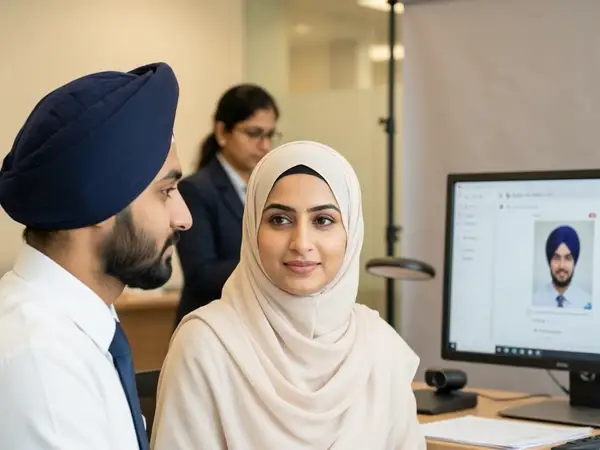
Understanding the Importance of Photographs in Government Job Applications
Photographs submitted with government job applications serve multiple purposes. They help officials verify the candidate’s identity during examinations, interviews, and document verification stages. Additionally, photographs ensure transparency and prevent impersonation. Given the sensitive nature of these images, many government bodies have strict guidelines about photo specifications, including size, background color, and attire.
Religious attire, however, introduces an important dimension to these guidelines, as it intersects with constitutional rights and cultural practices. Candidates must balance the need to comply with application requirements and respect their religious beliefs.
Common Religious Attires in India and Their Significance
India’s rich cultural and religious diversity means that many candidates may wear specific religious garments in their photographs. The most common religious attires include:

- Hijab: A headscarf worn by many Muslim women as a symbol of modesty and faith.
- Turban: A head covering worn mainly by Sikh men (and some women), representing honor, spirituality, and identity.
- Other Attires: This category includes items like the Christian nun’s veil, Jewish kippah or yarmulke, Hindu tilak marks, and others.
Each attire has unique religious and cultural significance, which governments and recruitment bodies must consider while setting photo guidelines.
What Do Government Guidelines Say About Photographs with Religious Attire?
Most Indian government recruitment boards and institutions have evolved their policies to accommodate religious attire in application photographs. The key points generally accepted include:
- Face Visibility: The face should be clearly visible from the bottom of the chin to the top of the forehead and from ear to ear.
- No Obstruction: Religious head coverings should not obscure facial features or hinder identification.
- Neutral Background: A plain, light-colored background is usually required, regardless of attire.
- Photo Size and Quality: Standard passport-size photos (usually 3.5 cm x 4.5 cm) with good resolution are mandatory.
For example, the Union Public Service Commission (UPSC), Staff Selection Commission (SSC), and various state public service commissions explicitly allow religious head coverings as long as the face is visible and unobstructed.
However, some confusion persists due to inconsistent application or lack of clear instructions in certain notifications.
Photograph Guidelines for Hijab in Government Job Applications
For candidates who wear the hijab, the following points typically apply:
- The hijab is permitted as part of religious attire, provided the entire face is visible.
- The photograph should show the forehead, eyes, nose, cheeks, and chin clearly.
- The hijab must not cast shadows or cover any part of the face that is essential for identification.
- Applicants should avoid wearing sunglasses or any other accessories that can obscure the face.
- The background should remain plain and light-colored, commonly white or off-white.
In recent years, many government bodies have reiterated that wearing a hijab in the photograph is acceptable, respecting religious freedom while maintaining identification standards.
Photograph Guidelines for Turban in Government Job Applications
Sikh candidates who wear turbans should note the following:
- Turbans are accepted as religious headgear, and candidates are allowed to wear them in their photographs.
- The turban must not cover the face; all facial features must be visible clearly.
- Side profiles are generally not accepted; the photo must be a frontal view showing the full face.
- Glasses may be worn, but they should not cause glare or cover the eyes.
- The background should be plain and neutral.
Many recruitment boards explicitly mention the acceptance of turbans, acknowledging their religious importance and ensuring non-discrimination.
Other Religious Attires and Their Acceptance
Other religious attires, such as the Christian nun’s veil or Jewish kippah, are generally treated similarly:
- The attire is permitted if it does not obstruct the face or identification features.
- The photo must be a clear, frontal portrait with a neutral background.
- Any additional accessories that may obscure the face are discouraged.
In cases where religious attire is uncommon or not explicitly mentioned, candidates are advised to check the specific recruitment notification or contact the recruitment authority for clarification.
Practical Tips for Taking an Acceptable Photograph with Religious Attire
To avoid rejection of your application photograph, follow these actionable tips:
- Use a Professional Photographer: Choose a studio familiar with government photo requirements and religious attire.
- Ensure Proper Lighting: Avoid shadows on the face or head covering.
- Maintain Neutral Expression: A natural, closed-mouth expression with eyes open and looking straight at the camera is preferred.
- Check Background: Use a plain white or light-colored background without patterns or objects.
- Remove Non-Religious Accessories: Avoid sunglasses, heavy makeup, or jewelry that may distract from the face.
- Follow Size and Format Guidelines: Upload or submit photos in the specified dimensions and file formats (usually JPEG or PNG).
- Verify Before Submission: Review the photo for clarity, face visibility, and adherence to guidelines.
Common Reasons for Photograph Rejection in Government Job Applications
Understanding why photographs are rejected can help you avoid mistakes. Common reasons include:
- Face partially covered or obscured by headgear or veil.
- Poor lighting causing shadows or glare.
- Non-neutral background or presence of objects in the frame.
- Incorrect photo size or poor resolution.
- Side profile or tilted head instead of frontal view.
- Wearing sunglasses or accessories that cover eyes.
- Using outdated or old photographs not taken recently.
Ensuring that your photo meets all criteria will save time and prevent disqualification during document verification.
Legal Protections and Religious Freedom in Photographs for Government Jobs
India’s Constitution guarantees freedom of religion under Article 25, allowing individuals to practice and manifest their faith freely. This principle extends to wearing religious attire in official documents and photographs.
Several court rulings have reinforced the right to wear religious head coverings in educational institutions and workplaces, including government sectors. Recruitment boards must balance identification requirements with respect for religious rights, leading to more inclusive photo guidelines.
If a candidate faces unfair rejection due to religious attire in their photograph, they may seek legal recourse or approach human rights commissions for redressal.
How to Handle Photograph Issues During Government Job Application Process
If your photograph is rejected or you face confusion regarding religious attire, consider the following steps:
- Review Official Guidelines: Revisit the recruitment notification or official website for detailed photo instructions.
- Contact Recruitment Authority: Reach out via helpline or email for clarifications about religious attire acceptance.
- Resubmit Corrected Photograph: If allowed, upload or submit a new photograph adhering to guidelines.
- Keep Documentation: Save copies of all communications and photographs for future reference.
- Seek Legal Advice: In case of discrimination, consult legal experts or human rights organizations.
Being proactive and informed helps avoid last-minute issues and ensures smooth application processing.
Checks to complete before you apply
Photographs with hijabs, turbans, or other religious attire are generally accepted in Indian government job applications, provided the face is clearly visible and all other photo guidelines are met. The evolving framework respects religious freedom while maintaining the integrity of identification processes. Candidates should carefully follow instructions, use professional photography services, and verify their photos before submission to avoid rejection. Staying informed about specific recruitment board policies and seeking clarification when needed can ensure a hassle-free application experience.
For more updates on government job application procedures and guidelines, check out our resources on /sarkari-result and /admit-card.
Frequently Asked Questions
Q1: Can I wear a hijab or turban in my government job application photograph?
A1: Yes, wearing a hijab or turban is allowed as long as your full face is visible and the photo meets other official requirements.
Q2: What should I do if my photograph with religious attire is rejected?
A2: Review the guidelines, contact the recruitment authority for clarification, and if possible, resubmit a compliant photograph. Legal advice may be sought if discrimination is suspected.
Q3: Are there any restrictions on the background color for photographs with religious attire?
A3: Most recruitment boards require a plain, light-colored background, typically white or off-white, regardless of religious attire.
Q4: Can I wear glasses along with my turban or hijab in the photograph?
A4: Yes, glasses are generally allowed, but they should not cause glare or cover your eyes.
Q5: Is there any difference in photograph guidelines for different government recruitment boards?
A5: While the core guidelines are similar, some boards may have specific instructions. Always refer to the official recruitment notification for precise details.
Related Resources
Related Government Job Resources
Continue with active job hubs and related government job pages on TrueJobs.
Tools for this recruitment topic
Use only the tools relevant to the dates, eligibility or documents discussed above.
TrueJobs Editorial Team
TrueJobs editorial desk
This article is prepared from the sources referenced in the guide and reviewed for clarity, links and dated information. Read our editorial and corrections policy.
Continue This Topic
Follow the closest earlier and newer coverage so older archive posts keep real contextual crawl paths.
Ears Visible or Not in Exam Photo 2026: Which Portals Actually Care?
Confused about whether ears should be visible in your 2026 exam photo? Learn which government job portals require this and how to meet photo guidelines.
Photograph with Beard or Moustache Change 2026: Can Major Look Changes Cause Verification Issues?
Wondering if growing or shaving a beard affects government job photo verification in 2026? Discover how major look changes impact identity checks and what to do.
Read Next
Ears Visible or Not in Exam Photo 2026: Which Portals Actually Care?

Photograph with Beard or Moustache Change 2026: Can Major Look Changes Cause Verification Issues?

Shadow on Passport Photo 2026: How Much Is Too Much for Upload Acceptance

Photograph with Spectacles 2026: Exams That Allow It and When It Causes Trouble
Explore Topics
Perfect Your Resume
Use our AI-powered Resume Builder to create ATS-optimized resumes.
AI Resume Builder