
Recruitment guide
OBC-NCL Certificate Validity 2026: Rules for Govt Jobs — Explained
Planning to apply for government jobs in 2026 under the OBC-NCL category? Understand the crucial validity rules and common mistakes to ensure your application is successful.

Securing a government job is a dream for millions in India, and reservation policies play a crucial role in ensuring equitable opportunities. For candidates belonging to the Other Backward Classes (OBC), the OBC-NCL (Non-Creamy Layer) certificate is the single most important document to claim these reservation benefits. However, a huge amount of confusion surrounds its validity, format, and application, leading to countless candidates losing their rightful opportunities. As you prepare for government job exams in 2026, understanding these rules isn't just helpful—it's essential. This comprehensive guide from TrueJobs.co.in will break down everything you need to know about the OBC-NCL certificate validity for 2026, the correct procedures, and the common mistakes you must avoid.
What is an OBC-NCL Certificate? Understanding the Basics
Before diving into the validity rules, let's clarify the fundamental concepts. The term 'OBC' is often used loosely, but for reservation purposes, it has a very specific meaning.
OBC: Other Backward Classes
Other Backward Classes (OBC) is a collective term used by the Government of India to classify castes that are educationally and socially disadvantaged. The government maintains lists of these castes, and only individuals belonging to a caste on this list are considered OBC.
The 'Creamy Layer' vs. 'Non-Creamy Layer' Divide
Within the OBC category, there is a critical sub-division based on socio-economic status. This is where the terms 'Creamy Layer' and 'Non-Creamy Layer' (NCL) come into play.
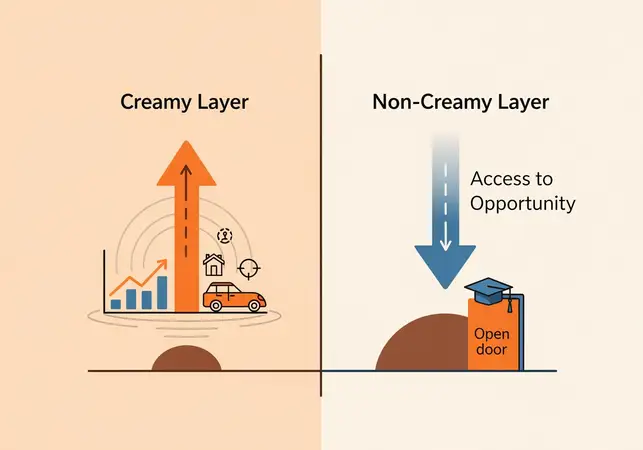
- OBC-Creamy Layer: These are the members of the OBC community who are considered socially and economically advanced. Their parents' gross annual income exceeds a certain threshold set by the government (currently ₹8 lakh per annum). Candidates in the Creamy Layer are not eligible for reservation benefits in government jobs and educational institutions. They can apply under the General/Unreserved (UR) category.
- OBC-Non-Creamy Layer (NCL): These are the members of the OBC community whose parents' gross annual income is below the prescribed threshold. These are the candidates who are eligible to claim the 27% reservation in central government jobs and admissions.
Therefore, simply belonging to an OBC caste is not enough. To avail reservation, you must belong to the OBC-Non-Creamy Layer and possess a valid certificate proving this status.
The Crucial Rule: OBC-NCL Certificate Validity for Central Government Jobs 2026
This is the most critical and often misunderstood part. The validity of an OBC-NCL certificate for central government jobs (like those conducted by UPSC, SSC, Railways, Banking sector, etc.) is tied to the Financial Year.
A financial year in India runs from 1st April to 31st March of the next year.
The standard rule followed by most central government recruiting agencies is:
- The OBC-NCL certificate is generally considered valid for one year from the date of issue.
- However, for a specific recruitment, the certificate must have been issued within a particular timeframe, usually mentioned in the official job notification. Typically, this means the certificate must be issued on or after the 1st of April of the financial year in which the recruitment's closing date for applications falls.
Understanding the Validity for Jobs in 2026
Let's apply this to the year 2026. The financial year will be FY 2026-27 (1st April 2026 to 31st March 2027).
If you are applying for a government job in 2026, say an SSC CGL or Railway NTPC exam, your OBC-NCL certificate must be issued on or after 1st April 2026. A certificate issued on 31st March 2026 or before will be considered old and invalid for recruitments happening in that financial year.
The Income Consideration Period: Another Layer of Complexity
Here's another point of confusion. While your certificate for 2026-27 is issued based on your current status, the 'Non-Creamy Layer' status itself is determined by your parents' income from the three consecutive financial years preceding the year of application.
Let's illustrate this with a table for better clarity:
| Recruitment Year (Application Period) | Financial Year of Application | Required Certificate Issue Date | Financial Years of Income Considered for NCL Status |
|---|---|---|---|
| 2026 | 2026-2027 (1st Apr 2026 - 31st Mar 2027) | On or after 1st April 2026 | 2025-26, 2024-25, 2023-24 |
Key Takeaway: For any job application you fill out between April 1, 2026, and March 31, 2027, you will need an OBC-NCL certificate that is dated April 1, 2026, or later. This certificate will be issued after verifying that your parents' annual income was below the creamy layer threshold in each of the financial years 2023-24, 2024-25, and 2025-26.
State vs. Central OBC-NCL Certificate: A Common Point of Confusion
Many candidates face rejection during document verification because they submit a state-level OBC certificate for a central government job. It is vital to understand the difference.
Two Separate Lists
The Government of India and various State Governments maintain their own, separate lists of Other Backward Classes.
- Central OBC List: This list is maintained by the National Commission for Backward Classes (NCBC) on behalf of the Government of India. Reservation in central government jobs (UPSC, SSC, IBPS, Railways, PSUs like NTPC, ONGC) is only for castes mentioned in this Central List.
- State OBC List: Each state has its own list of OBCs for reservation in state government jobs (State PSCs, Police Constable, etc.) and state-run educational institutions.
A particular caste might be on the State List but not the Central List, or vice-versa. Therefore, before applying for a central government job, you must first verify that your caste is included in the Central List of OBCs. You can check this on the official NCBC website.
Different Certificate Formats
The format for the certificate is also different. For central government jobs, you must submit the OBC-NCL certificate in the format prescribed by the Government of India, Department of Personnel and Training (DoPT). This format is usually provided as an annexure in the official job notification. When you apply for your certificate, you must specifically request the one for 'appointment to posts under the Government of India'.
How to Apply for a New or Renewed OBC-NCL Certificate for 2026
Being proactive is key. Don't wait for a /latest-jobs notification to pop up. Start the process of getting your certificate for the financial year 2026-27 as soon as April 2026 begins.
Step-by-Step Application Process
- Check Eligibility: First, confirm your caste is in the Central OBC list. Second, ensure your parents' gross annual income (excluding salary and agricultural income) for the preceding three financial years is below the ₹8 lakh threshold (note: this limit can be revised, always check the latest rules).
- Gather Required Documents: While the exact list can vary by state, here are the commonly required documents:
- Application form (filled and signed)
- Identity Proof (Aadhaar Card, Voter ID, etc.)
- Address Proof (Aadhaar Card, Electricity Bill, Ration Card)
- Caste certificate of the applicant or father/paternal relative, issued by a competent authority.
- Income and Asset Certificate for the last three financial years, issued by the Tehsildar/equivalent authority. This is the most important document for NCL status.
- Affidavit/Self-declaration in the prescribed format stating you belong to the OBC-NCL category.
- Land records/Khasra details.
- Passport-sized photographs.
- School leaving certificate or other documents showing caste.
- Choose the Application Method (Online/Offline):
- Online: Many states now have their own e-District or citizen service portals where you can apply online. This is often faster and allows for easy tracking. You'll need to register, fill out the form, upload scanned documents, and pay a nominal fee.
- Offline: You can visit the office of the competent authority, which is usually the District Magistrate (DM), Additional District Magistrate (ADM), Sub-Divisional Magistrate (SDM), or Tehsildar. Obtain the form, fill it out, attach the required documents, and submit it.
- Follow-Up and Collection: The process can take anywhere from 15 to 45 days. Keep the application receipt safe and follow up if there are delays. Once approved, you can collect the physical certificate or download it from the portal.
Common Mistakes to Avoid with Your OBC-NCL Certificate
Thousands of candidates have their candidature cancelled at the final stage due to simple, avoidable errors. Learn from them to protect your future.
Mistake 1: Using an Old/Expired Certificate
This is the most common error. A certificate issued in March 2026 is only valid until 31st March 2026. For a job application in April 2026, it is invalid. Always get a fresh certificate issued on or after 1st April of the financial year of application.
Mistake 2: Submitting a State-Level Certificate for a Central Job
As explained earlier, recruiting agencies like SSC and UPSC will outright reject a state-format certificate. Ensure your certificate is in the prescribed Government of India format and explicitly states it's for appointments under the GoI.
Mistake 3: Incorrect Name, Father's Name, or Caste Spelling
Any mismatch between the name/details on your OBC-NCL certificate and your other documents (like 10th mark sheet, Aadhaar card) can lead to disqualification during document verification. Double-check every single detail for accuracy before submission.
Mistake 4: Not Having the Certificate Before the Application Closing Date
Most job notifications clearly state that the candidate must be in possession of a valid certificate on or before the closing date of the online application. While some exams may allow a provisional undertaking, relying on this is extremely risky. If you fail to produce the valid certificate later, your candidature will be cancelled. Always have the certificate in hand before you apply.
Mistake 5: Misunderstanding the 'Creamy Layer' Income Calculation
The income calculation is not straightforward. Remember:
- Income from salaries and agricultural land is NOT included in the gross annual income for determining creamy layer status.
- Income from other sources (business, property rent, etc.) IS included.
- The income of the parents is considered, not the candidate's own income (unless they are already employed).
- For married women, the income of her parents is considered, not her husband's.
What Happens if Your Certificate is Not Accepted?
The consequences of an invalid certificate can be severe and heartbreaking, especially after clearing multiple stages of an exam.
- Change of Category: If your OBC-NCL certificate is found to be invalid (e.g., old date, state format), your category will be changed from OBC to Unreserved (UR) or General.
- Meeting UR Criteria: You will then be required to meet all the criteria for a UR candidate. This includes the higher UR cut-off marks for every stage of the exam (Prelims, Mains, etc.) and the UR age limit.
- Cancellation of Candidature: If you had availed any relaxation meant for OBC candidates (like age relaxation) and you don't meet the UR age limit, your candidature will be cancelled immediately. Even if you meet the age limit, if your score is below the UR cut-off, you will be disqualified.
This is why ensuring the validity and correctness of your certificate is as important as preparing for the /admit-card and exam itself.
Conclusion: Your Proactive Approach is Your Best Asset
The OBC-NCL certificate is your gateway to reservation benefits in government jobs. For aspirants targeting jobs in 2026, the message is clear: be prepared and be proactive. Understand that the certificate's validity is tied to the financial year, and for any application made between April 2026 and March 2027, you will need a certificate issued on or after April 1, 2026. Always insist on the central government format, double-check all details, and start the application process early. By avoiding these common pitfalls, you ensure that your hard work in exam preparation is not wasted due to a preventable documentation error. Keep checking TrueJobs.co.in for the latest /sarkari-result updates and career guidance to stay ahead in your journey.
Frequently Asked Questions (FAQs)
Q1: My OBC-NCL certificate was issued in February 2026. Can I use it for an SSC CGL 2026 exam whose application starts in May 2026?
A1: No, you cannot. A certificate issued in February 2026 is for the financial year 2025-26 and is valid only until March 31, 2026. For an application in May 2026 (which falls in the financial year 2026-27), you will need a new certificate issued on or after April 1, 2026.
Q2: Is the income of my spouse considered for the OBC-NCL creamy layer status?
A2: For a married woman applying for the certificate, her creamy layer status is determined based on her parents' income and status, not her husband's. However, if the woman herself is employed and has a significant income, her own income may be considered in the assessment.
Q3: What is the current income limit for the OBC Non-Creamy Layer?
A3: As of now, the gross annual income limit for the parents to be considered in the Non-Creamy Layer is ₹8 lakh. This limit includes income from all sources except salary and agricultural income. Please note that this limit is subject to revision by the Government of India, so it's always wise to check the latest DoPT (Department of Personnel and Training) guidelines before applying.
Q4: I belong to a caste in my state's OBC list. Am I automatically eligible for central government job reservations?
A4: Not necessarily. Eligibility for reservation in central government jobs (like SSC, UPSC, Railways) depends on your caste being present in the Central List of OBCs, which is maintained by the NCBC. You must verify your caste's presence in this specific list. A state-level inclusion does not guarantee central-level benefits.
Q5: How long does it take to get a new OBC-NCL certificate?
A5: The processing time can vary significantly depending on your state and district administration. Generally, it can take anywhere from 15 days to over a month. Due to this variability, it is strongly advised to apply for your certificate as early as possible (e.g., in April 2026 for the 2026-27 financial year) and not wait for a specific job notification to be released.
Related: Government Job Reservations | OBC-NCL Application Guide
FAQs
...[FAQ HTML structure]...Related Resources
- Reservation Policy in Indian Govt Jobs
- Latest Sarkari Naukri 2026
- EWS Certificate Rules Explained
Related Government Job Resources
Continue with active job hubs and related government job pages on TrueJobs.
Tools for this recruitment topic
Use only the tools relevant to the dates, eligibility or documents discussed above.
TrueJobs Editorial Team
TrueJobs editorial desk
This article is prepared from the sources referenced in the guide and reviewed for clarity, links and dated information. Read our editorial and corrections policy.
Continue This Topic
Follow the closest earlier and newer coverage so older archive posts keep real contextual crawl paths.
EWS Certificate for Govt Jobs 2026: Eligibility & How to Apply
Applying for government jobs under the EWS quota in 2026? Our guide covers EWS certificate eligibility, required documents, and the full application process.
Govt Job Application Rejected? 8 Common Reasons & How to Avoid Them
A rejected government job application is disheartening. This guide covers common mistakes, with actionable tips to ensure your next application is successful.
Read Next

EWS Certificate for Govt Jobs 2026: Eligibility & How to Apply

Govt Job Document Verification 2026: Checklist & Rejection Reasons

Govt Job Certificates 2026: Domicile, Caste, Income & Character Rules

Govt Job Application Rejected? 8 Common Reasons & How to Avoid Them
Explore Topics
Perfect Your Resume
Use our AI-powered Resume Builder to create ATS-optimized resumes.
AI Resume Builder