
Career guide
NDA Preparation 2026: Complete Beginner's Guide — Explained
Start your NDA journey with TrueJobs' 2026 guide. Learn exam patterns, preparation strategies, and SSB interview techniques.
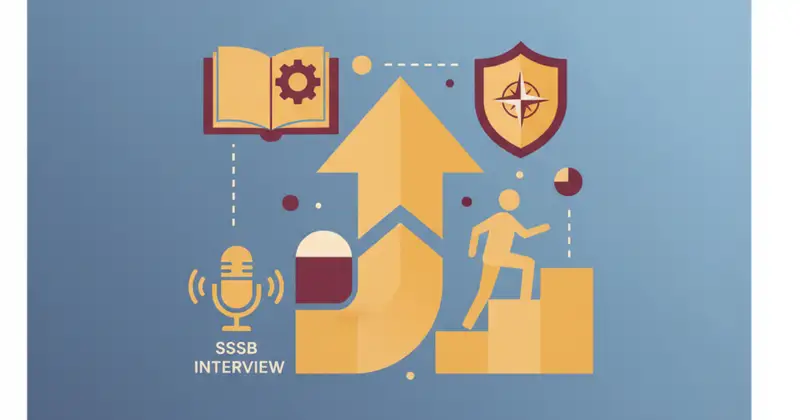
Aspiring to join the prestigious Indian Armed Forces through the National Defence Academy (NDA) is a dream shared by many young Indians. This comprehensive guide, tailored for beginners aiming for the 2026 examination, will walk you through every essential step, from understanding the exam structure to mastering the SSB interview. Prepare to embark on a journey that will equip you with the knowledge and strategies needed to achieve your goal.

NDA Preparation Strategy for Beginners — Complete Guide 2026
Do you dream of serving your nation in the Indian Armed Forces – the Army, Navy, or Air Force? If your answer is a resounding "Yes!", then the National Defence Academy (NDA) is your gateway to an extraordinary career filled with leadership, adventure, and unparalleled pride.
TrueJobs presents this comprehensive guide for beginners aspiring to crack the NDA exam in 2026. It's your roadmap to success, covering every stage from exam understanding to acing the SSB interview. Get ready to transform your dreams into reality!
What is NDA? Your Gateway to a Gallant Career
The National Defence Academy (NDA), located in Khadakwasla, Pune, is a premier joint services training institution for the Indian Army, Navy, and Air Force. Cadets train together for three years before proceeding to their respective service academies for pre-commissioning. NDA symbolizes courage, discipline, and leadership, offering rigorous military and academic training in an ideal environment.

Joining the NDA is not just about securing a job; it's about embracing a way of life dedicated to service, honor, and courage. The academy instills core values and develops well-rounded individuals capable of leading troops in challenging environments. The training at NDA is physically demanding and intellectually stimulating, preparing cadets for the responsibilities they will shoulder as officers in the Indian Armed Forces.
Understanding the NDA Examination Structure
The NDA selection process is a two-stage affair: a written examination conducted by the Union Public Service Commission (UPSC), followed by the Service Selection Board (SSB) Interview. Success in both stages is crucial for final selection.
NDA Written Examination
The written exam consists of two papers:
- Mathematics: This paper tests your understanding of concepts typically covered up to the 12th standard.
- General Ability Test (GAT): This paper is divided into two parts:
- Part A: English – Assesses your proficiency in the English language, including grammar, vocabulary, comprehension, and usage.
- Part B: General Knowledge – Covers a broad spectrum of subjects including Physics, Chemistry, General Science, History, Geography, and Current Events.
Each paper has a specific duration and maximum marks. It's vital to be aware of the negative marking scheme, as incorrect answers can significantly impact your score. A detailed understanding of the syllabus for both Mathematics and GAT is the first step towards effective preparation.
Eligibility Criteria for NDA 2026
Before you even begin preparing, ensure you meet the fundamental eligibility requirements. These typically include:
- Nationality: Indian citizen, or a subject of Nepal/Bhutan, or a Tibetan refugee who came over to India before a specific date with the intention of permanently settling in India.
- Age Limit: Candidates must fall within a specific age bracket, usually unmarried male/female candidates born between certain dates. This is a strict criterion, and even a day outside the specified range can lead to disqualification.
- Educational Qualification:
- For Army Wing of NDA: 12th Class pass of the 10+2 pattern of School Education or equivalent examination conducted by a State Education Board or a University.
- For Air Force and Naval Wings of NDA and for the 10+2 Cadet Entry Scheme at the Indian Naval Academy: 12th Class pass with Physics, Chemistry and Mathematics of the 10+2 pattern of School Education or equivalent examination conducted by a State Education Board or a University.
- Marital Status: Unmarried.
- Physical Standards: Candidates must meet stringent physical and medical standards prescribed by the Ministry of Defence. This includes height, weight, vision, and overall physical fitness. It's advisable to get a preliminary medical check-up to identify any potential issues early on.
Always refer to the official UPSC notification for the NDA exam for the most accurate and up-to-date eligibility criteria, as these can be subject to minor changes.
Phase 1: Mastering the Written Examination (Mathematics & GAT)
1. Deconstruct the Syllabus and Exam Pattern
Your preparation journey begins with a thorough understanding of the NDA syllabus. Don't just glance at it; internalize it. For Mathematics, identify topics like Algebra, Matrices and Determinants, Trigonometry, Analytical Geometry of two and three dimensions, Differential Calculus, Integral Calculus and Differential Equations, Vector Algebra, and Statistics and Probability. For GAT, list out all sub-topics under English and General Knowledge (Physics, Chemistry, General Science, History, Geography, Current Events).
- Mathematics: Focus on conceptual clarity. Many questions are application-based. Practice a wide variety of problems.
- English: Improve your vocabulary, grammar rules, comprehension skills, and sentence formation. Reading newspapers and books regularly can significantly help.
- General Knowledge: This is vast. Divide it into manageable sections.
- Physics & Chemistry: Revise 9th and 10th standard concepts thoroughly.
- General Science: Basic biology, human body, common diseases, etc.
- History: Focus on Indian History (Ancient, Medieval, Modern) and significant world events.
- Geography: Indian and World Geography, including physical features, climate, resources, etc.
- Current Events: Stay updated with national and international news, sports, awards, defense-related developments.
2. Create a Realistic Study Plan
A well-structured study plan is your backbone. Since you're aiming for 2026, you have ample time, but consistency is key. Divide your time judiciously among all subjects. Allocate more time to your weaker areas. Ensure your plan includes:
- Daily Study Hours: Aim for consistent study hours, even if it's just 2-3 hours initially, gradually increasing as the exam approaches.
- Subject Rotation: Don't stick to one subject for too long. Rotate between Mathematics, English, and GK sections to avoid burnout and keep your mind fresh.
- Revision Slots: Integrate regular revision into your schedule. Spaced repetition is highly effective.
- Mock Tests: Schedule dedicated slots for full-length mock tests, especially in the last few months.
3. Choose the Right Study Material
Quality over quantity. Don't hoard too many books. Stick to a few reliable sources:
- NCERT Textbooks: For Physics, Chemistry, Mathematics, History, and Geography (Classes 9-12) – these are indispensable. They form the foundation for most questions.
- Reference Books: For Mathematics, consider books specifically designed for NDA preparation. For English, a good grammar book and a vocabulary builder are essential.
- Current Affairs: Read a reputed daily newspaper (e.g., The Hindu, The Indian Express) and a monthly current affairs magazine.
- Previous Year Question Papers: Absolutely critical. Solve as many as you can to understand the exam pattern, question types, and time management.
4. Practice, Practice, Practice
Mere reading won't suffice. Active learning through practice is paramount.
- Mathematics: Solve problems daily. Understand the concepts, then apply them. Time yourself while solving to improve speed and accuracy.
- English: Practice grammar exercises, vocabulary building (flashcards, mnemonics), and reading comprehension passages.
- General Knowledge: Make concise notes. Use mind maps or flowcharts to remember facts. Regularly test yourself on historical dates, geographical locations, and scientific principles.
- Mock Tests: Take full-length mock tests under exam conditions. Analyze your performance afterward – identify strong and weak areas, time management issues, and silly mistakes.
5. Time Management and Strategy during the Exam
On exam day, effective time management is crucial. Know which sections you are strong in and attempt them first to build confidence. Don't get stuck on a single difficult question. Remember the negative marking and avoid wild guessing. Aim to attempt a sufficient number of questions with high accuracy.
Phase 2: Acing the SSB Interview – Beyond Academics
Clearing the written exam is just the first hurdle. The Service Selection Board (SSB) interview is a comprehensive personality assessment designed to evaluate your Officer Like Qualities (OLQs). This isn't about rote learning; it's about showcasing your inherent leadership potential, courage, determination, and suitability for a career in the armed forces.
Understanding the SSB Process
The SSB interview typically spans five days and involves a series of tests:
- Day 1: Screening Test (Stage I)
- Officer Intelligence Rating (OIR) Test: Verbal and Non-verbal reasoning.
- Picture Perception and Discussion Test (PP&DT): You're shown a hazy picture for 30 seconds, then write a story based on it, and finally discuss it in a group.
Only screened-in candidates proceed to Stage II.
- Day 2: Psychological Tests (Stage II)
- Thematic Apperception Test (TAT): Similar to PP&DT, but with clearer pictures. Write a story for each.
- Word Association Test (WAT): Write the first thought that comes to your mind for 60 words shown for 15 seconds each.
- Situation Reaction Test (SRT): Write your reactions to 60 everyday situations.
- Self-Description Test (SDT): Write about what your parents, teachers, friends, and you think about yourself.
- Day 3 & 4: Group Testing Officer (GTO) Tasks
- Group Discussion (GD): Discuss current affairs topics.
- Group Planning Exercise (GPE): Solve a practical problem as a group.
- Progressive Group Task (PGT): Solve obstacles with your group using given resources.
- Half Group Task (HGT): Similar to PGT, but with a smaller group.
- Individual Obstacles: Perform various physical obstacles individually.
- Command Task: You command a small group to complete an obstacle.
- Lecturette: Deliver a short speech on a given topic.
- Final Group Task (FGT): Another group task to assess leadership and teamwork.
- Day 5: Conference & Medical Examination
- Conference: A board of assessors discusses your performance, and you briefly appear before them.
- Medical Examination: For recommended candidates, a thorough medical check-up is conducted over several days.
Developing Officer Like Qualities (OLQs)
The SSB assesses 15 OLQs. You can't fake them; they need to be cultivated. Focus on:
- Effective Intelligence: Ability to use practical intelligence to solve problems.
- Reasoning Ability: Logical thinking and decision-making.
- Organizing Ability: Planning and execution skills.
- Power of Expression: Clear and concise communication.
- Social Adaptability: Ability to adjust to different people and situations.
- Cooperation: Working effectively in a team.
- Sense of Responsibility: Accountability for actions.
- Initiative: Proactiveness and taking charge.
- Self-Confidence: Belief in one's own abilities.
- Speed of Decision: Making timely and sound decisions.
- Ability to Influence: Persuading and motivating others.
- Liveliness: Enthusiasm and positive attitude.
- Determination: Perseverance towards goals.
- Courage: Facing challenges with bravery.
- Stamina: Physical and mental endurance.
Practical Tips for SSB Preparation
- Improve Communication Skills: Practice public speaking, participate in debates/discussions, and read extensively to enhance vocabulary and fluency.
- Enhance General Awareness: Stay updated on current affairs, national and international issues. This helps in GD and Lecturette.
- Develop Leadership Qualities: Take initiative in school/college activities, organize events, and be a team player.
- Work on Physical Fitness: Regular exercise, running, and sports are essential for the GTO tasks and overall medical fitness.
- Practice Psychological Tests: While you can't "prepare" for psychology in the traditional sense, understanding the format of TAT, WAT, SRT, and SDT and practicing writing responses can help you articulate your thoughts better under pressure. Focus on positive, constructive, and realistic responses.
- Be Yourself: The assessors are trained to spot fakeness. Be genuine, honest, and confident in who you are.
- Seek Guidance: If possible, attend mock SSB interviews or workshops to get feedback on your performance.
Holistic Development and Mindset for Success
Maintain Physical Fitness
A career in the armed forces demands peak physical condition. Start a regular fitness regimen early. Include:
- Running: To build stamina.
- Push-ups, Sit-ups, Chin-ups: For upper body strength.
- Sports: To improve agility, coordination, and teamwork.
- Yoga/Meditation: For mental clarity and stress management.
Good physical health also contributes significantly to mental well-being and confidence, which are critical for both the written exam and the SSB.
Cultivate a Positive Mindset
The journey to NDA can be challenging. A positive attitude, resilience, and unwavering determination are your greatest assets. Believe in your abilities, learn from setbacks, and stay motivated.
- Set Small Goals: Break down your preparation into smaller, achievable targets.
- Stay Consistent: Regular effort, even if small, yields significant results over time.
- Manage Stress: Take breaks, pursue hobbies, and ensure adequate sleep.
- Visualize Success: Imagine yourself achieving your goal and serving the nation.
Stay Updated and Informed
Beyond current affairs for the exam, stay informed about the Indian Armed Forces. Read about their operations, history, and achievements. This not only helps in the SSB interview but also reinforces your motivation and understanding of the career you aspire to join.
The NDA journey is a marathon, not a sprint. It requires dedication, discipline, and a genuine desire to serve. By following this comprehensive guide, understanding the demands of the examination and interview, and committing to holistic development, you can significantly enhance your chances of realizing your dream of joining the National Defence Academy in 2026. TrueJobs wishes you the very best in your pursuit of a gallant career!
Related Articles
- Latest NDA Exam Notification & Dates
- Top 10 SSB Interview Tips for Success
- Daily Current Affairs for Defence Exams
- Check NDA Written Exam Results
NDA Preparation Strategy 2026: Beginner's Guide
Related: NDA Exam Pattern | SSB Interview Tips
NDA FAQs
...Put this advice into practice
Your journey to the NDA requires discipline, a solid strategy, and unwavering determination. By following this structured guide, you are building a strong foundation for success. Stay focused on your goal, and you can achieve your dream of joining the Indian Armed Forces.
Reader questions: Interview
Can I join NDA after 12th?
Yes, candidates can apply after completing 12th with PCM subjects.
TrueJobs Editorial Team
TrueJobs editorial desk
This article is prepared from the sources referenced in the guide and reviewed for clarity, links and dated information. Read our editorial and corrections policy.
Continue This Topic
Follow the closest earlier and newer coverage so older archive posts keep real contextual crawl paths.
Government Jobs in Bihar — Complete Guide 2026
Government Jobs in Bihar — Complete Guide 2026 Bihar, a state rich in history and culture, is also a land of immense aspirations, particularly among...
Best Government Jobs for Graduates by Stream — Complete Guide 2026
Best Government Jobs for Graduates by Stream — Complete Guide 2026 Landing a government job in India is a dream for millions of graduates. The allure...
Read Next

Government Jobs in Bihar — Complete Guide 2026

How to Prepare for SSC CGL in 6 Months — Complete Strategy Guide
SSC 2026 Calendar Released: Complete Exam Dates, Vacancies & Smart Preparation Timeline

Best Government Jobs for Graduates by Stream — Complete Guide 2026
Explore Topics
Perfect Your Resume
Use our AI-powered Resume Builder to create ATS-optimized resumes.
AI Resume Builder