
Recruitment guide
SSC CGL 6-Month Prep Guide: Strategy & Tips — Explained
How to Prepare for SSC CGL in 6 Months — Complete Strategy Guide Are you aspiring to secure a prestigious government job in India? The Staff Selection...
Aspiring for a prestigious SSC CGL post? This 6-month guide provides a complete, strategic roadmap to crack the highly competitive SSC CGL 2026 exam. We cover the syllabus section, study plan, and essential tips for success.
How to Prepare for SSC CGL in 6 Months — Complete Strategy Guide
Are you aspiring to secure a prestigious government job in India? The Staff Selection Commission - Combined Graduate Level (SSC CGL) examination is one of the most sought-after gateways to a fulfilling career in various ministries, departments, and organizations under the Government of India. With its promise of job security, attractive salaries, and immense opportunities for career growth, SSC CGL attracts lakhs of candidates every year, making it a highly competitive yet rewarding pursuit.
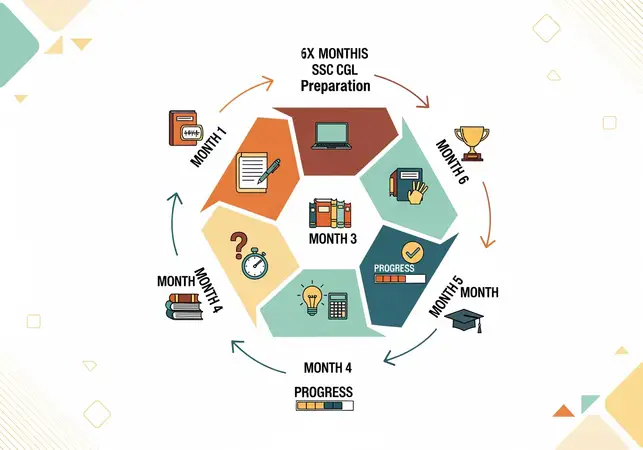
Preparing for an exam of this magnitude requires dedication, a well-structured plan, and consistent effort. If you're targeting the SSC CGL 2026 examination, a 6-month preparation window is not just sufficient but also ideal if utilized strategically. This TrueJobs guide offers a practical, actionable strategy to crack the SSC CGL exam within six months, covering everything from foundational concepts to advanced mock test analysis. Our aim is to provide a clear roadmap, ensuring every hour you invest is productive and moves you closer to your goal.
Before diving deep, it's crucial to understand the immense value an SSC CGL post brings. Beyond immediate financial benefits, posts like Assistant Audit Officer, Income Tax Inspector, Assistant Section Officer, and Sub-Inspector offer significant social standing, a stable work environment, and opportunities for continuous learning and development. This comprehensive guide will walk you through the essential steps, subject-wise strategies, and crucial tips to maximize your preparation within a six-month timeframe, transforming your aspirations into reality.
Understanding the SSC CGL Examination: Structure and Eligibility
Before embarking on your preparation journey, a thorough understanding of the SSC CGL examination pattern and eligibility criteria is paramount. This foundational knowledge will help you tailor your study plan effectively and ensure you meet all necessary requirements.
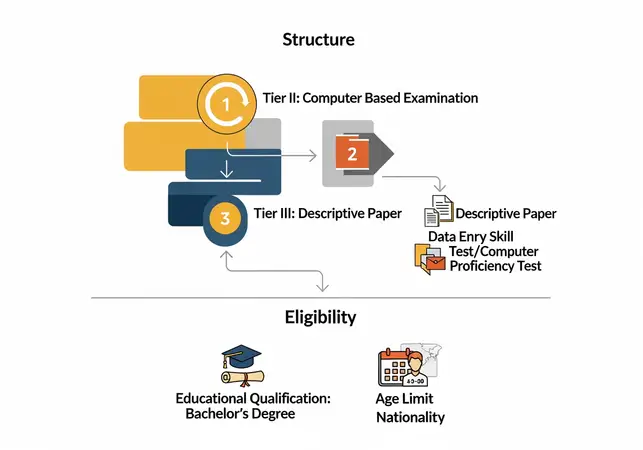
SSC CGL Exam Pattern Overview
The SSC CGL examination is typically conducted in four tiers, though the exact structure can vary slightly based on the specific notification. Generally, it comprises:
- Tier-I: Computer Based Examination (CBE) - This is a qualifying stage, testing General Intelligence & Reasoning, General Awareness, Quantitative Aptitude, and English Comprehension. Marks from this tier are considered for final merit.
- Tier-II: Computer Based Examination (CBE) - This tier is crucial for merit calculation and typically includes papers on Quantitative Abilities, English Language and Comprehension, Statistics (for specific posts), and General Studies (Finance & Economics for specific posts).
- Tier-III: Pen and Paper Mode (Descriptive Paper) - This tier assesses writing skills through essays, precis, letters, or applications, usually in English or Hindi.
- Tier-IV: Computer Proficiency Test/Data Entry Skill Test (CPT/DEST) - This is a qualifying stage for certain posts, evaluating computer skills.
It's important to note that the syllabus for Tier-I and Tier-II often overlaps significantly, especially for Quantitative Aptitude and English. This allows for integrated preparation, saving valuable time.
Eligibility Criteria
To be eligible for the SSC CGL examination, candidates generally need to meet the following criteria:
- Nationality: A citizen of India, or a subject of Nepal/Bhutan, or a Tibetan refugee who came over to India before a specific date with the intention of permanently settling in India, or a person of Indian origin who has migrated from certain countries with the intention of permanently settling in India.
- Educational Qualification: A Bachelor's Degree from a recognized University or equivalent. For certain posts like Junior Statistical Officer (JSO) and Assistant Audit Officer/Assistant Accounts Officer, specific educational qualifications (e.g., Bachelor's Degree with Statistics as one of the subjects or a Bachelor's Degree in any subject with Economics/Commerce/Mathematics/Statistics as a subject at degree level) might be required.
- Age Limit: The age limits vary for different posts, typically ranging from 18 to 32 years. Age relaxations are provided for reserved categories as per government rules.
Always refer to the official SSC CGL notification for the most accurate and up-to-date eligibility criteria, as these can be subject to change.
The 6-Month Strategic Study Plan: A Month-by-Month Breakdown
A 6-month preparation window is ample time if managed judiciously. Here’s a detailed, month-by-month strategy to cover all aspects of the SSC CGL syllabus, from foundational learning to advanced practice and revision.
Months 1 & 2: Building the Foundation (Conceptual Clarity & Basic Practice)
The initial two months are crucial for establishing a strong base. Focus on understanding core concepts and familiarizing yourself with the syllabus.
General Intelligence & Reasoning:
- Focus: Understand the types of questions asked (verbal, non-verbal, analytical).
- Topics: Series, analogies, coding-decoding, syllogism, blood relations, direction sense, mirror images, paper folding, embedded figures.
- Strategy: Start with basic theory from a good reasoning book. Practice 20-30 questions daily from each topic to grasp the logic.
General Awareness:
- Focus: Broad coverage of static GK and current affairs.
- Topics: History (Ancient, Medieval, Modern India), Geography (Indian & World), Polity (Indian Constitution), Economy (Basic concepts), Science (Physics, Chemistry, Biology fundamentals), Current Affairs (last 6-8 months).
- Strategy: Read NCERT books for History, Geography, and Science. Use a reliable GK compilation book. Dedicate time daily to reading newspapers and current affairs magazines/websites. Make short notes.
Quantitative Aptitude:
- Focus: Master fundamental arithmetic and advanced math concepts.
- Topics: Number System, LCM & HCF, Percentages, Profit & Loss, Simple & Compound Interest, Ratio & Proportion, Time & Work, Time & Distance, Averages, Data Interpretation.
- Strategy: Start with basic formulas and concepts. Practice a variety of questions from each topic. Focus on accuracy first, then speed. Learn tables up to 20, squares up to 30, and cubes up to 20.
English Comprehension:
- Focus: Improve grammar, vocabulary, and reading comprehension.
- Topics: Grammar rules (Tenses, Articles, Prepositions, Conjunctions, Subject-Verb Agreement), Vocabulary (Synonyms, Antonyms, Idioms & Phrases, One-word Substitutions), Reading Comprehension, Cloze Test, Para Jumbles.
- Strategy: Read English newspapers daily (e.g., The Hindu, The Indian Express). Maintain a vocabulary notebook. Practice grammar rules through exercises. Solve basic reading comprehension passages.
Overall Strategy for Months 1-2: Create a daily study schedule, allocating 2-3 hours to each subject. Focus on understanding concepts rather than rote learning. Solve previous year's Tier-I questions for each topic after completing it to understand the exam's demand.
Months 3 & 4: Deep Dive and Advanced Practice
With a solid foundation, these months are dedicated to delving deeper into topics, practicing advanced problems, and integrating Tier-I and Tier-II preparation.
Quantitative Aptitude (Tier-II specific):
- Focus: Geometry, Mensuration, Trigonometry, Algebra.
- Strategy: These topics are crucial for Tier-II. Dedicate significant time to understanding theorems, formulas, and their applications. Practice a high volume of questions, including complex ones.
English Language & Comprehension (Tier-II specific):
- Focus: Advanced grammar usage, complex vocabulary, comprehensive reading, and descriptive writing skills.
- Strategy: Continue daily reading. Practice advanced cloze tests, error detection, sentence improvement, and direct/indirect speech, active/passive voice. Start practicing essay and letter writing for Tier-III.
General Awareness (Advanced):
- Focus: Deeper understanding of concepts, especially for those targeting specific posts requiring General Studies (Finance & Economics).
- Strategy: Review static GK. Focus on economic concepts, financial institutions, budgeting, and government schemes. Continue rigorous current affairs preparation.
Reasoning (Advanced):
- Focus: Puzzles, seating arrangements, critical reasoning, statement and conclusion.
- Strategy: Practice complex reasoning problems to improve analytical skills and speed.
Overall Strategy for Months 3-4: Start taking sectional mock tests to identify weak areas. Begin solving previous year's Tier-II papers. Integrate descriptive writing practice into your routine, even if it's just once or twice a week.
Months 5 & 6: Mock Tests, Analysis, and Revision
The final two months are critical for consolidating your knowledge, refining your exam strategy, and boosting your confidence.
Month 5: Full-Length Mock Tests & Analysis
- Strategy: Start taking at least 2-3 full-length Tier-I mock tests per week. The key is not just taking the test but thoroughly analyzing your performance.
- Analysis: Identify recurring mistakes. Are they conceptual errors, silly mistakes, or time management issues? Revisit topics where you consistently score low. Understand why you got certain questions wrong.
- Time Management: Practice allocating time effectively to each section. Experiment with different section-attempting orders to find what works best for you.
- Revision: Dedicate specific slots for revising all subjects, focusing on your weak areas identified from mock tests.
Month 6: Intensive Revision & Final Polish
- Strategy: Increase mock test frequency to 3-4 per week. Focus on improving speed and accuracy based on previous analyses.
- Short Notes: Rely heavily on your self-made short notes for quick revision of formulas, concepts, and vocabulary.
- Previous Year Papers: Solve as many previous year's papers (both Tier-I and Tier-II) as possible under timed conditions. This gives you a real feel for the exam.
- Descriptive Paper Practice: Continue practicing essay, precis, and letter writing. Get them evaluated by a peer or mentor if possible.
- Current Affairs: Do a final comprehensive revision of current affairs for the past 8-10 months.
Overall Strategy for Months 5-6: Prioritize mock tests and their analysis. Don't introduce new topics in the last month; focus on strengthening what you already know. Maintain a positive mindset and manage exam stress effectively.
Subject-Wise Preparation Strategies and Resources
Each section of the SSC CGL exam demands a tailored approach. Here's how to optimize your preparation for each subject:
General Intelligence & Reasoning
This section is often considered a scoring one if approached systematically.
- Key Strategy: Practice is key. There's no substitute for solving a wide variety of questions. Focus on understanding the underlying logic rather than memorizing solutions.
- Tips:
- Start with easier topics to build confidence.
- For non-verbal reasoning, visualize the patterns.
- Practice puzzles and seating arrangements regularly to improve speed.
- Learn to identify question types that are time-consuming and decide whether to attempt them later.
- Recommended Resources: R.S. Aggarwal's "A Modern Approach to Verbal & Non-Verbal Reasoning," Kiran's SSC Reasoning Chapter-wise Solved Papers.
General Awareness
This section is vast and can be unpredictable. A balanced approach is necessary.
- Key Strategy: Cover static GK systematically and stay updated with current affairs. Don't try to master everything; focus on high-yield topics.
- Tips:
- Read NCERTs (Class 6-10) for History, Geography, and Science fundamentals.
- For Polity, focus on the Constitution, fundamental rights, duties, and key articles.
- For Economy, understand basic concepts like GDP, inflation, banking, and government schemes.
- Make concise notes for quick revision.
- Current affairs should be a daily habit – read newspapers, follow news apps, and refer to monthly current affairs compilations.
- Recommended Resources: Lucent's General Knowledge, NCERT books (Class 6-10), daily newspapers, monthly current affairs magazines/websites.
Quantitative Aptitude
This section often differentiates top scorers. Speed and accuracy are paramount.
- Key Strategy: Master concepts, learn shortcuts, and practice extensively.
- Tips:
- Build a strong foundation in arithmetic.
- Memorize formulas for Geometry, Mensuration, and Trigonometry.
- Practice mental calculations to save time.
- Solve questions using multiple methods to find the quickest approach.
- Data Interpretation (DI) requires regular practice to quickly analyze charts and graphs.
- Recommended Resources: R.S. Aggarwal's "Quantitative Aptitude for Competitive Examinations," M. Tyra's "Quicker Maths," Kiran's SSC Maths Chapter-wise Solved Papers.
English Comprehension
A good command of English is essential for both Tier-I and Tier-II.
- Key Strategy: Focus on improving grammar, expanding vocabulary, and enhancing reading speed and comprehension.
- Tips:
- Read diverse English content daily (newspapers, novels, articles) to improve comprehension and vocabulary.
- Maintain a vocabulary notebook with synonyms, antonyms, and example sentences.
- Practice grammar rules by solving error detection and sentence improvement questions.
- For descriptive writing (Tier-III), practice structuring essays, letters, and precis. Pay attention to grammar, vocabulary, and coherence.
- Recommended Resources: S.P. Bakshi's "Objective General English," Wren & Martin's "High School English Grammar and Composition," Norman Lewis' "Word Power Made Easy," daily newspapers.
Essential Tips for Success in 6 Months
Beyond subject-specific strategies, certain overarching principles will guide your 6-month preparation to success.
- Create a Realistic Study Schedule: Divide your 6 months into weekly and daily targets. Be flexible but consistent. Ensure your schedule includes time for all subjects, revision, and mock tests.
- Prioritize Weak Areas: Identify your strengths and weaknesses early on. Dedicate more time to improving your weaker sections without neglecting your strong ones.
- Consistent Revision: Regular revision is non-negotiable. Use flashcards, short notes, and mind maps. Spaced repetition techniques can be highly effective.
- Analyze Mock Tests Thoroughly: Taking mock tests is only half the battle. Spend an equal amount of time analyzing your performance, understanding mistakes, and refining your strategy.
- Solve Previous Year Papers: This is one of the most effective ways to understand the exam pattern, question types, and difficulty level. Aim to solve at least the last 5-7 years' papers.
- Stay Updated with Current Affairs: Make reading newspapers and current affairs magazines a daily habit. This helps not only in the GA section but also provides content for descriptive writing.
- Maintain Health and Well-being: Don't neglect your physical and mental health. Ensure adequate sleep, a balanced diet, and regular breaks. A fresh mind performs better.
- Stay Positive and Motivated: The journey can be challenging. Surround yourself with positive influences, celebrate small victories, and remind yourself of your goal.
- Join a Study Group (Optional): Discussing concepts and doubts with peers can provide new perspectives and clarify difficult topics.
- Practice Time Management: During mock tests, consciously work on managing your time. Learn to skip difficult questions and come back to them if time permits.
Checks to complete before you apply
Cracking the SSC CGL examination in 6 months is an ambitious yet entirely achievable goal with a structured approach, unwavering dedication, and smart work. This comprehensive guide from TrueJobs.co.in has outlined a clear roadmap, from understanding the exam structure and eligibility to a month-by-month study plan, subject-wise strategies, and crucial tips for success. Remember, consistency is your best friend, and self-belief is your greatest asset. By meticulously following this strategy, regularly assessing your progress, and adapting your plan as needed, you can significantly enhance your chances of securing a coveted position in the Government of India. Start today, stay focused, and turn your dream of a prestigious government job into a reality!
Read Also:
- Latest SSC CGL Notification and Vacancies
- Detailed SSC CGL Syllabus and Exam Pattern
- Download SSC CGL Previous Year Question Papers
- Check SSC CGL Exam Results
Related: SSC CGL Pattern | Study Materials
SSC CGL 6-Month Prep Guide
Related Resources
Reader questions: SSC CGL
Is 6 months enough to prepare for SSC CGL?
Yes, 6 months is an excellent timeframe for SSC CGL preparation, provided you follow a disciplined, well-structured study plan and dedicate consistent effort. Many successful candidates have cracked the exam within this period by focusing on conceptual clarity, regular practice, and thorough mock test analysis.
Which subjects are most important for SSC CGL?
ll four subjects (Quantitative Aptitude, English Language, General Intelligence & Reasoning, General Awareness) are crucial as they feature in both Tier 1 and Tier 2 (though General Awareness is not a separate paper in Tier 2, its knowledge is still beneficial). Quantitative Aptitude and English Language often have higher weightage and are critical for a good overall score in Tier 2.
How many hours should I study daily for SSC CGL?
Ideally, you should aim for 6-8 hours of focused study daily. This can be broken down into multiple sessions, with short breaks in between. Consistency is more important than the absolute number of hours; ensure your study time is productive and covers all subjects.
Are previous year papers enough for practice?
Previous year papers are an indispensable resource for understanding the exam pattern, question types, and difficulty level. They are excellent for practice and revision. However, combining them with high-quality mock tests and topic-wise practice questions from standard books provides a more comprehensive preparation. You can find many [SSC CGL previous year papers](/ssc-cgl-previous-year-paper) on TrueJobs.
How important is General Awareness for SSC CGL?
General Awareness is highly important. It forms 25% of the Tier 1 paper and can be a scoring section if prepared well, or a low-scoring one if neglected. While it's not a separate paper in Tier 2, strong GK helps in overall understanding. It's often unpredictable, so consistent reading of current affairs and static GK is vital.
Should I join a coaching institute or prepare by myself?
The choice depends on your learning style and discipline. Coaching can provide structured guidance, study materials, and peer interaction. However, many aspirants successfully prepare independently using online resources, books, and mock tests. If you're self-motivated and can stick to a plan, self-study is effective. If you need external discipline and structured learning, coaching might be beneficial.
Related Government Job Resources
Continue with active job hubs and related government job pages on TrueJobs.
Tools for this recruitment topic
Use only the tools relevant to the dates, eligibility or documents discussed above.
TrueJobs Editorial Team
TrueJobs editorial desk
This article is prepared from the sources referenced in the guide and reviewed for clarity, links and dated information. Read our editorial and corrections policy.
Continue This Topic
Follow the closest earlier and newer coverage so older archive posts keep real contextual crawl paths.
Government Jobs After 12th Pass — Complete Roadmap 2026
Government Jobs After 12th Pass — Complete Roadmap 2026 Congratulations on completing your 12th class! This milestone opens up a world of...
SSC CGL 2026 कैसे क्रैक करें? – Toppers की Strategy और 90 दिन का Study Plan
SSC CGL 2026 की तैयारी कैसे करें? जानें टियर 1 और 2 का पूरा सिलेबस, एग्जाम पैटर्न, बेस्ट बुक्स और 90 दिन का प्रैक्टिकल स्टडी प्लान।
Read Next

UPSC vs SSC — Which is Right for You? A Complete Comparison

SBI PO vs IBPS PO — Which Should You Choose? Complete Comparison
SSC 2026 Calendar Released: Complete Exam Dates, Vacancies & Smart Preparation Timeline

Contract vs Permanent Government Jobs in India: Salary, Stability & Your Career Choice
Explore Topics
Perfect Your Resume
Use our AI-powered Resume Builder to create ATS-optimized resumes.
AI Resume Builder