
Career guide
National Green Hydrogen Mission: Jobs & Future 2026 — Explained
India's National Green Hydrogen Mission aims to make the nation a green energy leader. Learn about its targets, funding, and the new jobs it's creating in the sustainable energy sector.
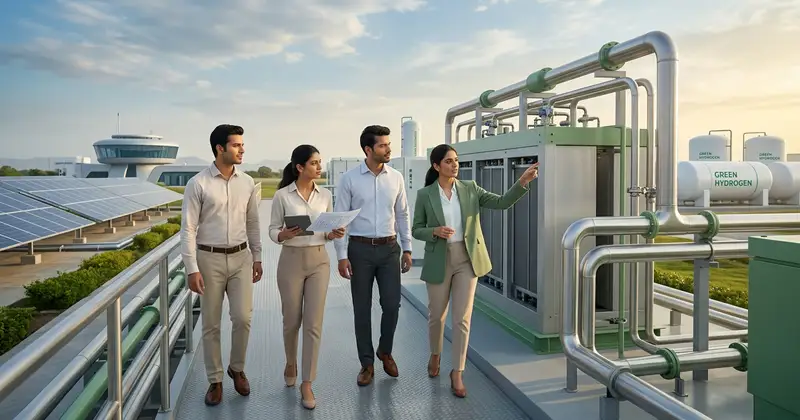
India is on the cusp of a monumental energy transformation. With a rapidly growing economy and an increasing demand for energy, the nation is strategically pivoting towards sustainable solutions to secure its energy future and meet its ambitious climate goals. At the heart of this transition lies the National Green Hydrogen Mission, a flagship initiative designed to position India as a global hub for the production, utilization, and export of Green Hydrogen. Approved by the Union Cabinet on January 4, 2023, this mission is not just an environmental endeavor; it's a comprehensive economic strategy poised to create new industries, generate employment, and significantly reduce the country's reliance on fossil fuel imports.
While the mission sets ambitious targets stretching to 2030, the year 2026 marks a crucial initial phase for laying robust foundations, scaling up pilot projects, and establishing the necessary infrastructure and policy frameworks. Understanding its targets, financial outlay, and key facts is essential for anyone interested in India's future, especially those looking at emerging career opportunities in the green energy sector.
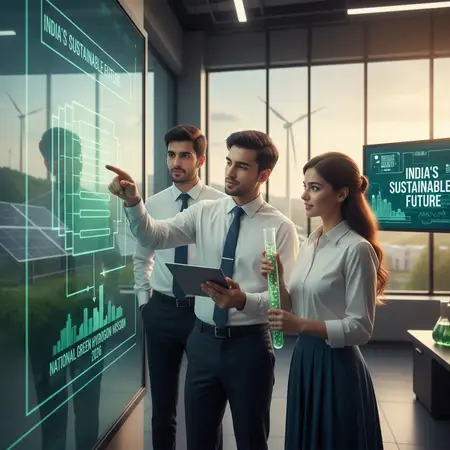
Unveiling India's Green Hydrogen Ambition: The National Green Hydrogen Mission
The National Green Hydrogen Mission represents India's unwavering commitment to decarbonizing its economy and achieving energy independence. At its core, the mission aims to foster the development and deployment of Green Hydrogen, which is produced by splitting water into hydrogen and oxygen using electrolysis powered by renewable energy sources like solar and wind. Unlike Grey Hydrogen (produced from fossil fuels, releasing CO2) or Blue Hydrogen (produced from fossil fuels with carbon capture), Green Hydrogen offers a truly zero-emission pathway.
Why is Green Hydrogen crucial for India?
- Energy Security: India imports over 80% of its crude oil and a significant portion of its natural gas. Green Hydrogen can drastically reduce this import dependency, saving valuable foreign exchange.
- Climate Goals: As the world's third-largest emitter of greenhouse gases, India has pledged to achieve Net Zero emissions by 2070. Green Hydrogen is a critical tool for decarbonizing hard-to-abate sectors like refining, fertilizers, steel, and heavy-duty transport.
- Economic Growth: The mission is expected to catalyze massive investments, create new manufacturing capabilities (especially for electrolysers), and foster an entire ecosystem around green energy.
- Global Leadership: By becoming a leading producer and exporter of Green Hydrogen, India can play a pivotal role in the global energy transition, enhancing its geopolitical standing.

The mission envisions India emerging as a global Green Hydrogen hub, not just meeting domestic demand but also catering to international markets. It's a strategic move to leverage India's abundant renewable energy potential and skilled workforce to build a sustainable, future-ready economy. This initiative is expected to open up numerous avenues for employment and innovation across various sectors, creating new opportunities for job seekers in India. /job-information
Ambitious Targets: A Vision for 2030 Driven by 2026 Momentum
The National Green Hydrogen Mission sets forth a clear and ambitious roadmap with specific targets primarily aimed at achieving significant milestones by 2030. While 2026 serves as a crucial interim period for establishing initial frameworks, pilot projects, and scaling up early initiatives, the broader impact and full realization of the mission's potential are targeted for the end of the decade. These targets underscore India's commitment to becoming a leader in the green energy space.
Here are the key targets of the Mission by 2030:
| Target Area | Specific Goal by 2030 |
|---|---|
| Green Hydrogen Production Capacity | Achieve at least 5 Million Metric Tonnes Per Annum (MMTPA) |
| Renewable Energy Capacity Addition | Add approximately 125 GW of associated Renewable Energy capacity |
| Cumulative Investment | Attract over INR 8 Lakh Crore (approx. $100 billion) in investments |
| Reduction in Fossil Fuel Imports | Cumulative reduction of over INR 1 Lakh Crore (approx. $12 billion) |
| Reduction in GHG Emissions | Cumulative reduction of nearly 50 Million Metric Tonnes (MMT) of annual greenhouse gas emissions |
| Job Creation | Creation of over 6 Lakh (600,000) jobs |
The journey to these 2030 targets will involve significant milestones and evaluations in the interim, with 2026 serving as a critical juncture for assessing early progress, refining strategies, and accelerating the deployment of green hydrogen projects. The government's focus in the initial years will be on creating the demand ecosystem, supporting domestic manufacturing of electrolysers, and establishing pilot projects across various end-use sectors. This phased approach ensures that the mission builds momentum and learns from early implementations to achieve its long-term goals effectively.
The Financial Backbone: Outlay and Strategic Interventions (SIGHT Program)
To power such an ambitious undertaking, the National Green Hydrogen Mission has been allocated a substantial financial outlay. The Union Cabinet approved an initial outlay of INR 19,744 crore (approximately $2.4 billion USD) for the mission. This significant investment is strategically distributed across various components to ensure comprehensive development of the Green Hydrogen ecosystem.
The breakdown of the outlay is as follows:
- SIGHT Program (Strategic Interventions for Green Hydrogen Transition): This is the largest component, receiving INR 17,490 crore. The SIGHT program is designed to provide financial incentives for two key aspects:
- Manufacturing of Electrolysers: Incentivizing domestic manufacturing of electrolysers, which are crucial for producing Green Hydrogen. This aims to reduce import dependence and build a robust local supply chain.
- Production of Green Hydrogen: Offering financial support to projects involved in the production of Green Hydrogen, making it more cost-competitive and encouraging large-scale adoption.
- Pilot Projects: INR 1,466 crore has been earmarked for supporting pilot projects in emerging end-use sectors and production pathways. These projects will demonstrate the viability and applications of Green Hydrogen in sectors like steel, mobility, shipping, and decentralized power generation.
- Research & Development (R&D): An allocation of INR 400 crore is dedicated to a comprehensive R&D program. This will focus on developing indigenous technologies, improving efficiency, and reducing the cost of Green Hydrogen production and utilization.
- Other Mission Components: The remaining INR 388 crore will cover various other aspects, including skill development, public awareness campaigns, project management, and the establishment of a robust regulatory framework.
The SIGHT program is particularly crucial as it directly addresses the initial cost barriers associated with Green Hydrogen. By providing targeted incentives, the government aims to bridge the economic viability gap, encouraging private sector investment and accelerating the transition. This financial backing is a clear signal of India's serious intent to establish a thriving Green Hydrogen economy, creating a fertile ground for innovation and job creation. /sarkari-naukri-basics
Pillars of Progress: Key Components and Implementation Strategy
The National Green Hydrogen Mission is built upon several interconnected pillars, each designed to address specific aspects of the Green Hydrogen ecosystem. The implementation strategy is multi-faceted, involving policy support, technological advancement, infrastructure development, and human resource development.
Key Components of the Mission:
- Demand Creation: The mission aims to stimulate both domestic and international demand for Green Hydrogen and its derivatives. This includes promoting its use in existing industrial applications (fertilizers, refineries) and exploring new applications in sectors like heavy-duty transport, shipping, and power generation.
- Supply-Side Measures: This involves scaling up the production of Green Hydrogen by incentivizing renewable energy generation and electrolyser manufacturing. The SIGHT program plays a pivotal role here, ensuring a steady and cost-effective supply.
- Regulatory Framework and Standards: Developing clear and consistent policies, regulations, and standards is crucial for market certainty and investor confidence. This includes defining Green Hydrogen, establishing safety protocols, and facilitating its trade.
- Research & Development (R&D): Continuous innovation is vital to reduce costs and improve efficiency. The mission supports R&D across the entire value chain, from advanced electrolyser technologies to hydrogen storage and transportation solutions.
- Pilot Projects: Demonstrating the practical applications of Green Hydrogen in various sectors helps de-risk new technologies and builds confidence among potential users and investors.
- Skill Development and Capacity Building: A new industry requires a skilled workforce. The mission emphasizes training programs and educational initiatives to prepare professionals for roles in Green Hydrogen production, maintenance, and research. This is an area where platforms like TrueJobs.co.in can play a crucial role in disseminating information about upcoming opportunities and required skills.
- International Collaboration: India seeks to collaborate with international partners on technology transfer, joint R&D, and establishing global supply chains for Green Hydrogen.
The implementation will involve active participation from various government ministries, public sector undertakings, and private sector companies. A dedicated mission secretariat will oversee the coordination and monitoring of the mission's progress, ensuring that targets are met and challenges are addressed effectively. The phased approach, with a strong emphasis on pilot projects and R&D in the initial years leading up to 2026, will allow for iterative learning and adaptation, ensuring the long-term success of the mission.
Transforming India: Economic, Environmental, and Employment Opportunities
The National Green Hydrogen Mission is poised to bring about a multi-dimensional transformation in India, with profound impacts on its economy, environment, and job market. The ripple effects of this initiative are expected to be far-reaching, creating a new paradigm for sustainable development.
Economic Benefits:
- Reduced Import Bill: By replacing fossil fuels with domestically produced Green Hydrogen, India stands to save over INR 1 Lakh Crore in cumulative fossil fuel imports by 2030, strengthening its economy.
- New Industries and Investments: The mission will catalyze the establishment of new manufacturing facilities for electrolysers, hydrogen storage, and fuel cells, attracting significant domestic and foreign investment (over INR 8 Lakh Crore by 2030).
- Export Potential: With its vast renewable energy resources, India aims to become a net exporter of Green Hydrogen and its derivatives, opening up new global markets.
- Technological Advancement: The focus on R&D will spur innovation, leading to the development of indigenous technologies and intellectual property in the green energy sector.
Environmental Benefits:
- Decarbonization: The most significant environmental impact will be the reduction of nearly 50 MMT of annual greenhouse gas emissions by 2030, contributing significantly to India's climate goals.
- Cleaner Air: Reduced reliance on fossil fuels will lead to improved air quality, especially in industrial areas and urban centers.
- Sustainable Energy Transition: Green Hydrogen
Reader questions: National Green Hydrogen
What is the National Green Hydrogen Mission?
It's a government initiative to make India a global hub for producing, using, and exporting Green Hydrogen, aiming for energy independence and decarbonization.
When was the Green Hydrogen Mission approved?
The Union Cabinet approved the National Green Hydrogen Mission on January 4, 2023, with an initial outlay of ₹19,744 crore.
What are the main goals of the mission by 2030?
The mission aims to develop 5 MMT of Green Hydrogen production capacity, add 125 GW of renewable energy capacity, and create over 6 lakh jobs.
How does this mission create jobs?
The mission will generate employment in manufacturing, renewable energy installation, hydrogen production plants, research, and infrastructure development across India.
TrueJobs Editorial Team
TrueJobs editorial desk
This article is prepared from the sources referenced in the guide and reviewed for clarity, links and dated information. Read our editorial and corrections policy.
Continue This Topic
Follow the closest earlier and newer coverage so older archive posts keep real contextual crawl paths.
Green Ammonia in India 2026: A Game-Changer for Energy & Jobs
As India targets a sustainable future, Green Ammonia emerges as a key player for 2026. This article explores its production via renewable energy, the government's National Green Hydrogen Mission, and its vast potential to transform India's energy security, economy, and job market for aspiring professionals.
PM Surya Ghar Muft Bijli Yojana 2026: Targets, Subsidy & Progress
Explore the PM Surya Ghar Muft Bijli Yojana, a major government initiative for free electricity via rooftop solar. This guide details the 2026 targets, subsidy benefits, application process, and progress.
Read Next

Green Ammonia in India 2026: A Game-Changer for Energy & Jobs

PM Surya Ghar Muft Bijli Yojana 2026: Targets, Subsidy & Progress

U-WIN Platform Explained: India's Digital Leap in Vaccination Management

ACC Battery Storage Scheme in India: Your Guide for Government Exams
Explore Topics
Perfect Your Resume
Use our AI-powered Resume Builder to create ATS-optimized resumes.
AI Resume Builder