
Career guide
Green Ammonia in India 2026: A Game-Changer for Energy — Explained
As India targets a sustainable future, Green Ammonia emerges as a key player for 2026. This article explores its production via renewable energy, the government's National Green Hydrogen Mission, and its vast potential to transform India's energy security, economy, and job market for aspiring professionals.
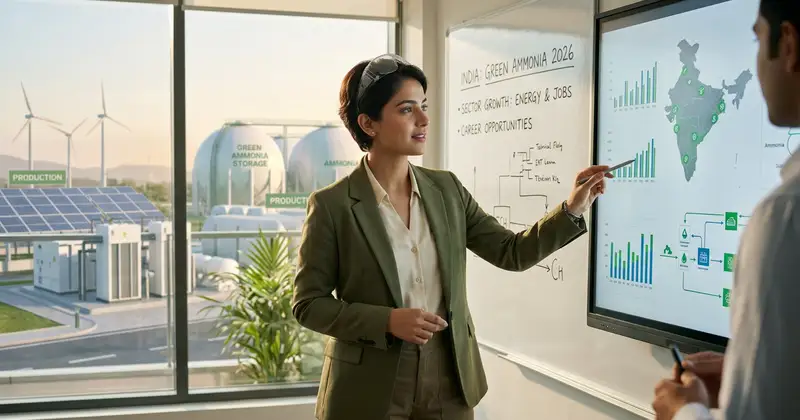
India stands at the cusp of a monumental energy transformation, driven by its ambitious climate goals and the urgent need for sustainable development. Among the many clean energy solutions gaining traction, Green Ammonia has emerged as a frontrunner, capturing significant attention in policy circles, industrial corridors, and investment forums. As we approach 2026, this clean fuel is not just a buzzword but a tangible reality for India's future, promising to reshape its energy landscape, boost its economy, and create a plethora of new career opportunities. This article delves into why Green Ammonia is making headlines in India, its profound implications for the nation, and why it matters to every aspiring professional and citizen.
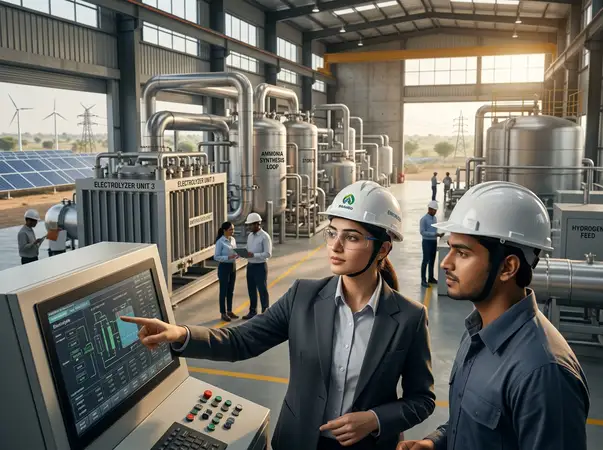
What is Green Ammonia and How is it Produced?
To understand the excitement around Green Ammonia, it's crucial to first grasp what it is and how it differs from conventional ammonia. Ammonia (NH₃) is a chemical compound primarily used in fertilizer production, but it also has potential as a clean fuel and hydrogen carrier. The 'green' prefix signifies its environmentally friendly production method.
Traditionally, ammonia is produced using the Haber-Bosch process, which combines hydrogen with nitrogen from the air. The hydrogen for this process is typically derived from natural gas (Grey Ammonia) or coal, both of which are fossil fuels and result in significant carbon dioxide emissions. If carbon capture and storage (CCS) technology is employed during this process, it's referred to as Blue Ammonia, which reduces emissions but doesn't eliminate the reliance on fossil fuels.
Green Ammonia, on the other hand, is produced through a truly sustainable pathway. The key distinction lies in the source of hydrogen. Instead of fossil fuels, Green Ammonia production utilizes hydrogen generated through the electrolysis of water, powered exclusively by renewable energy sources like solar, wind, or hydropower. The nitrogen is still sourced from the air, a readily available resource. This process ensures that the entire production chain, from hydrogen generation to ammonia synthesis, has a near-zero carbon footprint, making it a cornerstone of a decarbonized future.
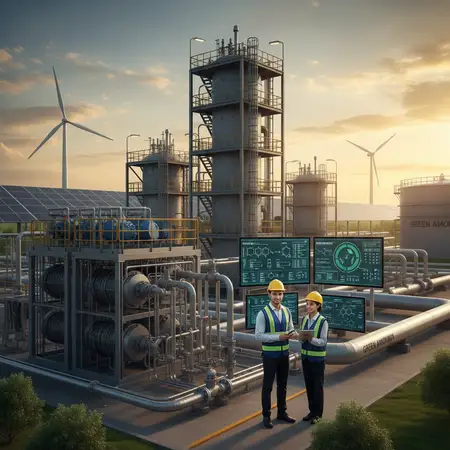
The core steps involve:
- Renewable Energy Generation: Solar, wind farms, or hydro plants generate clean electricity.
- Water Electrolysis: This clean electricity powers electrolyzers to split water (H₂O) into hydrogen (H₂) and oxygen (O₂).
- Nitrogen Separation: Nitrogen (N₂) is separated from atmospheric air.
- Ammonia Synthesis (Haber-Bosch): The green hydrogen and nitrogen are then reacted under high pressure and temperature in the Haber-Bosch process to produce Green Ammonia (NH₃).
This innovative approach positions Green Ammonia as a versatile energy vector, capable of storing and transporting renewable energy, and serving as a direct fuel or a feedstock for various industries without contributing to greenhouse gas emissions.
Why is Green Ammonia in the News for India in 2026?
The year 2026 is emerging as a critical inflection point for Green Ammonia in India, driven by a confluence of ambitious national policies, significant investment pledges, and the maturation of nascent projects. Several factors contribute to its prominence in the news:
1. The National Green Hydrogen Mission (NGHM)
India's ambitious National Green Hydrogen Mission, launched in 2023, is the primary catalyst. The mission aims to make India a global hub for Green Hydrogen production and export, targeting an annual production capacity of 5 million metric tonnes (MMT) by 2030. Green Ammonia, being a derivative and an efficient carrier of Green Hydrogen, is central to this strategy. 2026 is often cited as a key milestone for the initial phases of large-scale projects under this mission to become operational, demonstrating tangible progress and setting the stage for accelerated growth.
2. Policy Support and Incentives
The Indian government has rolled out significant policy support, including the Strategic Interventions for Green Hydrogen Transition (SIGHT) programme, which offers financial incentives for electrolyzer manufacturing and green hydrogen production. These incentives are designed to reduce the cost of production and encourage investment. By 2026, many of these policies are expected to have translated into concrete projects, with initial production capacities coming online, making the sector highly dynamic and newsworthy.
3. Major Industrial Investments and Partnerships
Leading Indian conglomerates and Public Sector Undertakings (PSUs) are making substantial investments in Green Ammonia projects. Companies across the energy, fertilizer, and infrastructure sectors are announcing partnerships and plans for gigawatt-scale renewable energy projects coupled with ammonia synthesis plants. These projects often have target commissioning dates around 2025-2026, signaling a rapid build-out phase. For instance, there are reports of projects aiming for capacities of several hundred thousand tonnes per annum (TPA) of Green Ammonia in this timeframe.
4. Global Demand and Export Potential
India sees Green Ammonia not just for domestic consumption but also as a significant export commodity. Countries like Japan, South Korea, and European nations are actively seeking reliable sources of clean energy carriers to meet their decarbonization goals. India's geographical advantage, abundant renewable energy potential, and growing manufacturing capabilities position it as a prospective global supplier. By 2026, initial export agreements and pilot shipments could begin, solidifying India's role in the global green energy market.
5. Technological Advancements and Cost Reduction
Continuous innovation in electrolyzer technology, coupled with decreasing costs of renewable energy generation, is making Green Ammonia increasingly viable. As production scales up, economies of scale are expected to drive down costs further, making it competitive with traditional ammonia. The period leading up to and including 2026 will be crucial for demonstrating this cost competitiveness and validating the commercial viability of large-scale Green Ammonia projects.
In essence, 2026 represents a pivotal moment when India's strategic vision for Green Ammonia begins to materialize into operational plants, significant production volumes, and tangible contributions to its energy security and climate commitments.
The Strategic Importance of Green Ammonia for India
The significance of Green Ammonia for India extends far beyond its environmental benefits, touching upon critical aspects of national security, economic growth, and industrial transformation.
1. Enhancing Energy Security
India is a major importer of crude oil, natural gas, and coal, making its energy security vulnerable to geopolitical fluctuations and volatile global prices. Green Ammonia, produced domestically using abundant renewable resources, offers a pathway to significantly reduce this reliance on imported fossil fuels. By diversifying its energy mix and creating indigenous clean energy carriers, India can bolster its energy independence and stability.
2. Achieving Decarbonization and Net-Zero Targets
India has committed to achieving Net-Zero emissions by 2070. Green Ammonia is a critical tool in this endeavor. It provides a carbon-free alternative for sectors that are difficult to electrify directly, such as:
- Fertilizer Production: The existing grey ammonia-based fertilizer industry is a major emitter. Transitioning to green ammonia can drastically reduce emissions from this vital sector.
- Shipping and Maritime Transport: Ammonia is emerging as a promising clean fuel for ships, offering a viable alternative to heavy fuel oil.
- Power Generation: Green Ammonia can be co-fired in thermal power plants or used in gas turbines for power generation, providing a flexible and dispatchable source of clean electricity.
- Industrial Feedstock: Used in various chemical processes, Green Ammonia can decarbonize industries like steel, cement, and petrochemicals.
3. Boosting Economic Growth and Industrial Development
The development of a robust Green Ammonia ecosystem will spur massive investments in renewable energy infrastructure, electrolyzer manufacturing, ammonia synthesis plants, pipelines, and port facilities. This will lead to significant economic growth, attract foreign direct investment, and foster the growth of ancillary industries. India's 'Make in India' initiative will receive a substantial boost through domestic manufacturing of components and technologies required for Green Ammonia production.
4. Positioning India as a Global Green Energy Leader
By becoming a major producer and exporter of Green Ammonia, India can establish itself as a global leader in the green energy transition. This not only enhances its international standing but also opens up new avenues for trade, technology exchange, and geopolitical influence in the emerging green economy. The export potential of Green Ammonia can contribute significantly to India's foreign exchange earnings.
5. Regional Development and Infrastructure Upgrade
Many Green Ammonia projects are planned for coastal regions or areas with high renewable energy potential. This will lead to the development of new industrial clusters, port infrastructure upgrades, and improved logistics networks, fostering balanced regional development across the country.
In essence, Green Ammonia offers a multi-faceted solution to India's energy, environmental, and economic challenges, making its development a strategic imperative for the nation's future prosperity and global leadership.
Green Ammonia: A Catalyst for Job Creation and Skill Development
One of the most compelling aspects of India's Green Ammonia push, particularly relevant for job seekers and professionals, is its immense potential for job creation and the demand for new skill sets. The entire value chain, from research and development to production and distribution, will necessitate a diverse and skilled workforce.
1. Manufacturing and Production Jobs
- Electrolyzer Manufacturing: Engineers, technicians, and skilled labor will be needed for designing, manufacturing, assembling, and testing electrolyzers, a core component of green hydrogen/ammonia production.
- Renewable Energy Equipment: Jobs in the manufacturing of solar panels, wind turbine components, and associated electrical equipment.
- Plant Operations: Chemical engineers, process operators, maintenance technicians, safety managers, and quality control specialists for the Green Ammonia synthesis plants.
2. Construction and Infrastructure Development
- Project Management: Civil, mechanical, and electrical engineers to oversee the construction of large-scale Green Ammonia plants, renewable energy farms, and associated infrastructure.
- Skilled Trades: Welders, pipefitters, electricians, heavy equipment operators, and construction workers will be in high demand for building these facilities.
- Logistics and Supply Chain: Professionals in procurement, inventory management, and transportation for moving raw materials and finished products.
3. Research, Development, and Innovation (R&D)
- Scientists and Researchers: Chemists, materials scientists, and chemical engineers to improve efficiency, reduce costs, and develop new applications for Green Ammonia.
- Data Scientists and AI Specialists: For optimizing plant operations, predicting maintenance needs, and managing complex energy grids.
4. Operations, Maintenance, and Services
- Maintenance Engineers & Technicians: Specialists in mechanical, electrical, and instrumentation maintenance for continuous plant operation.
- Safety and Environmental Professionals: Experts to ensure compliance with stringent safety and environmental regulations.
- IT and Automation Specialists: For managing industrial control systems and digital infrastructure of modern plants.
5. Ancillary and Supporting Industries
- Consulting Services: Energy consultants, environmental impact assessment specialists.
- Financial Services: Project finance, investment banking for green projects.
- Education and Training: Educators and trainers to develop and deliver new skill development programs.
Addressing the Skill Gap
The emergence of the Green Ammonia sector will necessitate significant investment in skill development and vocational training. Educational institutions, industry bodies, and government initiatives will need to collaborate to create specialized courses and certification programs. This presents a unique opportunity for individuals to reskill or upskill in areas like:
- Renewable energy system integration
- Electrolyzer operation and maintenance
- Chemical process engineering for ammonia synthesis
- Industrial automation and control systems
- Safety protocols for hydrogen and ammonia handling
TrueJobs.co.in will be a vital resource for job seekers looking for opportunities in this burgeoning sector. Keep an eye on our portal for updates on new roles and training programs as India's Green Ammonia ecosystem develops. /sarkari-result /job-information
Challenges and the Road Ahead for Green Ammonia in India
While the prospects for Green Ammonia in India are bright, the path to large-scale implementation is not without its challenges. Addressing these will be crucial for realizing its full potential.
1. Cost Competitiveness
Currently, Green Ammonia is more expensive to produce than Grey Ammonia, primarily due to the higher capital costs of electrolyzers and renewable energy infrastructure. The key challenge is to achieve cost parity or even become more competitive through:
- Economies of Scale: Scaling up production will drive down per-unit costs.
- Technological Advancements: Improving electrolyzer efficiency and reducing manufacturing costs.
- Policy Support: Continued government incentives, subsidies, and carbon pricing mechanisms can bridge the cost gap.
2. Scaling Up Renewable Energy Infrastructure
Producing Green Ammonia requires vast amounts of renewable electricity. India needs to rapidly expand its solar and wind power generation capacity, along with robust grid infrastructure to transmit this power to production sites. This entails significant land acquisition challenges, grid integration issues, and ensuring a stable, uninterrupted supply of renewable energy.
3. Technology and R&D
While the core technologies exist, continuous R&D is needed to:
- Improve the efficiency and lifespan of electrolyzers.
- Develop more efficient and cost-effective ammonia synthesis processes.
- Innovate in ammonia cracking technologies for easier hydrogen extraction.
- Enhance safety and handling protocols for large-scale storage and transportation.
4. Logistics, Storage, and Safety
Ammonia is a hazardous chemical requiring careful handling, storage, and transportation. Developing a robust and safe supply chain for Green Ammonia, including pipelines, specialized tankers, and storage facilities, is a significant undertaking. This requires adherence to stringent safety regulations and continuous training for personnel.
5. Policy Implementation and Regulatory Framework
While the National Green Hydrogen Mission provides a strong framework, consistent and agile policy implementation is vital. This includes:
- Streamlining regulatory approvals for projects.
- Ensuring long-term policy stability to attract sustained investment.
- Developing clear standards and certification mechanisms for Green Ammonia.
6. Global Collaboration and Market Development
India will need to foster international collaborations for technology transfer, market access, and investment. Building a global market for Green Ammonia, especially for export, requires establishing international standards and trade agreements.
Despite these challenges, India's proactive approach, combined with global technological advancements and increasing environmental awareness, positions it well to overcome these hurdles. The period up to 2026 will be instrumental in laying the groundwork for a thriving Green Ammonia economy.
Put this advice into practice
The narrative around Green Ammonia in India for 2026 is one of immense promise and strategic foresight. It represents a pivotal component in India's journey towards energy independence, a cleaner environment, and robust economic growth. From decarbonizing critical industrial sectors to fueling future transportation and creating a multitude of new job opportunities, Green Ammonia is poised to be a transformative force.
As India continues to invest heavily in renewable energy and green technologies, the momentum behind Green Ammonia is undeniable. The coming years, particularly leading up to and including 2026, will witness the commissioning of pioneering projects, the development of specialized skills, and the establishment of India as a significant player in the global green energy landscape. For individuals, this translates into exciting career pathways in a rapidly evolving sector, offering a chance to contribute to a sustainable future. TrueJobs.co.in encourages all aspiring professionals to stay informed about these developments and prepare for the opportunities that Green Ammonia will undoubtedly bring.
Frequently Asked Questions
Q1: What is the main difference between green and grey ammonia?
A: The primary difference lies in the source of hydrogen used for production. Grey ammonia uses hydrogen derived from fossil fuels (like natural gas or coal), leading to significant carbon emissions. Green ammonia uses hydrogen produced from the electrolysis of water, powered entirely by renewable energy
Related Resources
- National Green Hydrogen Mission (NGHM) Jobs 2024
- Government Jobs in the Renewable Energy Sector
- Sarkari Naukri and the Skill India Mission
TrueJobs Editorial Team
TrueJobs editorial desk
This article is prepared from the sources referenced in the guide and reviewed for clarity, links and dated information. Read our editorial and corrections policy.
Continue This Topic
Follow the closest earlier and newer coverage so older archive posts keep real contextual crawl paths.
U-WIN Platform Explained: India's Digital Leap in Vaccination Management
Explore India's U-WIN platform, the new digital system revolutionising the Universal Immunization Programme (UIP). Understand its features, benefits, and how it builds on the success of Co-WIN to digitise routine vaccinations for millions.
National Green Hydrogen Mission 2026: India's Blueprint for a Sustainable Future
India's National Green Hydrogen Mission aims to make the nation a green energy leader. Learn about its targets, funding, and the new jobs it's creating in the sustainable energy sector.
Read Next

U-WIN Platform Explained: India's Digital Leap in Vaccination Management
National Green Hydrogen Mission 2026: India's Blueprint for a Sustainable Future

CoWIN vs U-WIN: Differences, Purpose & Exam Relevance

PM Surya Ghar Muft Bijli Yojana 2026: Targets, Subsidy & Progress
Explore Topics
Perfect Your Resume
Use our AI-powered Resume Builder to create ATS-optimized resumes.
AI Resume Builder