
Career guide
India's Semiconductor Revolution: Plants 2026 — Explained
India is establishing a robust domestic semiconductor ecosystem. This article explores key plant locations, the companies driving this revolution, and the remarkable progress being made towards a self-sufficient future by 2026, highlighting massive job creation.

In an increasingly digital world, semiconductors are the literal building blocks of modern technology. From smartphones and laptops to automobiles and critical defense systems, these tiny chips power almost everything. Recognizing their strategic importance and the vulnerabilities exposed by global supply chain disruptions, India has embarked on an ambitious journey to establish a robust domestic semiconductor manufacturing ecosystem. This endeavor is not just about economic growth; it's about national security, technological self-reliance, and creating millions of high-skilled jobs. As we approach 2026, the country is witnessing significant strides in this direction, with major investments, policy support, and the establishment of groundbreaking facilities.
This article delves into the current landscape of India's semiconductor aspirations, exploring key plant locations, the companies driving this revolution, and the remarkable progress being made towards a self-sufficient future.
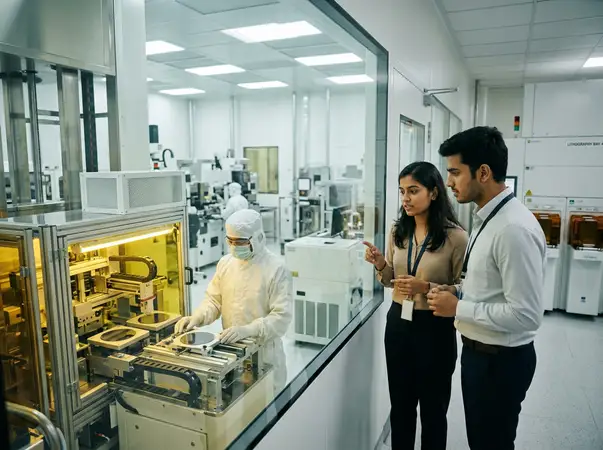
The Strategic Imperative: Why Semiconductors are Crucial for India
Semiconductors are often referred to as the 'new oil' due to their indispensable role in the global economy. For India, a nation rapidly digitizing and aspiring to be a global manufacturing hub, securing a domestic supply of these critical components is paramount. The COVID-19 pandemic highlighted severe vulnerabilities in global supply chains, leading to widespread chip shortages that impacted industries worldwide. This crisis underscored the urgent need for countries to reduce their reliance on a few concentrated manufacturing hubs.
For India, a robust semiconductor ecosystem offers multi-faceted benefits. Economically, it promises massive investments, job creation across various skill levels, and a significant boost to the 'Make in India' initiative. Strategically, it enhances national security by reducing dependence on foreign sources for critical components used in defense and telecommunications. Technologically, it fosters innovation, research and development, and positions India as a key player in the global technology landscape. The government's vision is clear: to move beyond being just a consumer of technology to becoming a producer, driving self-reliance (Atmanirbhar Bharat) in this crucial sector.
Government Initiatives and Policy Framework Driving Growth
India's journey into semiconductor manufacturing is underpinned by strong governmental support and a well-defined policy framework designed to attract global and domestic investors. The cornerstone of this effort is the India Semiconductor Mission (ISM), launched in 2021 with an outlay of INR 76,000 crore (approximately USD 10 billion). ISM acts as the nodal agency for facilitating and promoting semiconductor and display manufacturing in India.

Key schemes under ISM include:
- Scheme for Setting up of Semiconductor Fabs: Offers fiscal support of up to 50% of the project cost for setting up silicon semiconductor fabrication units.
- Scheme for Setting up of Display Fabs: Provides fiscal support of up to 50% of the project cost for setting up display fabrication units.
- Scheme for Setting up of Compound Semiconductors / Silicon Photonics / Sensors Fab and Semiconductor ATMP / OSAT Units: Offers fiscal support of up to 50% of the project cost for Assembly, Testing, Marking, and Packaging (ATMP) or Outsourced Semiconductor Assembly and Test (OSAT) units, as well as for compound semiconductor fabs.
- Design Linked Incentive (DLI) Scheme: Aims to nurture domestic companies, startups, and MSMEs to design and develop semiconductor chips and IP cores.
Beyond these, various state governments are also offering additional incentives, land subsidies, and infrastructure support to attract these capital-intensive projects. The proactive approach by both central and state governments, coupled with simplified regulatory processes, is creating a conducive environment for semiconductor investments.
Major Semiconductor Plant Projects and Locations by 2026
The year 2026 is poised to be a landmark for India's semiconductor ambitions, with several significant projects expected to commence operations or be well into advanced stages of construction. Gujarat has emerged as a frontrunner, attracting the lion's share of initial investments due to its industrial infrastructure, port connectivity, and proactive state policies.
1. Micron Technology (Sanand, Gujarat) - ATMP Facility
- Project Type: Assembly, Testing, Marking, and Packaging (ATMP) facility.
- Investment: Approximately USD 2.75 billion (INR 22,516 crore).
- Location: Sanand, Gujarat.
- Progress: Groundbreaking ceremony held in September 2023. Construction is in full swing, with Phase 1 expected to be operational by late 2024 or early 2025.
- Capacity: Expected to have a significant capacity for packaging and testing DRAM and NAND products.
- Impact: This facility is crucial for establishing a downstream ecosystem and will create thousands of direct and indirect jobs.
2. Tata Electronics & Powerchip Semiconductor Manufacturing Corp. (PSMC) (Dholera, Gujarat) - Semiconductor Fab
- Project Type: India's first commercial semiconductor fabrication plant.
- Investment: Approximately USD 11 billion (INR 91,000 crore).
- Location: Dholera Special Investment Region (SIR), Gujarat.
- Technology Node: Expected to produce chips based on 28nm technology, catering to automotive, power, and consumer electronics.
- Progress: Announced in February 2024, with construction expected to begin swiftly. Targets for production by 2026 are ambitious but indicate the rapid pace of development.
- Capacity: Projected to produce 50,000 wafers per month.
- Impact: A game-changer for India, establishing a crucial upstream capability in chip manufacturing.
3. CG Power and Industrial Solutions, Renesas Electronics & Stars Microelectronics (Sanand, Gujarat) - ATMP Facility
- Project Type: Semiconductor ATMP facility.
- Investment: Approximately USD 791 million (INR 7,600 crore).
- Location: Sanand, Gujarat.
- Partnership: A joint venture with CG Power as the majority stakeholder, Renesas (a leading Japanese semiconductor company) providing technology, and Stars Microelectronics (a Thai OSAT provider) offering technical support.
- Products: Focus on chips for automotive, consumer, and industrial applications.
- Progress: Approved in February 2024, construction expected to commence soon.
- Impact: Further strengthens India's ATMP capabilities and brings critical global expertise.
4. Tata Semiconductor Assembly and Test (TSAT) (Morigaon, Assam) - OSAT Facility
- Project Type: Outsourced Semiconductor Assembly and Test (OSAT) facility.
- Investment: Approximately USD 3.25 billion (INR 27,000 crore).
- Location: Morigaon, Assam.
- Progress: Approved in February 2024, marking a significant investment in India's Northeast region.
- Products: Will focus on packaging and testing for various applications, including automotive, mobile, and consumer electronics.
- Impact: Diversifies the geographical spread of semiconductor investments and creates opportunities in a new region.
While Gujarat leads the charge, other states like Uttar Pradesh, Karnataka, Telangana, and Odisha are actively developing policies and infrastructure to attract future investments, indicating a broader national ambition for semiconductor manufacturing.
Key Companies Driving India's Semiconductor Ambition
The success of India's semiconductor mission hinges on the collaboration between global technology giants and robust Indian conglomerates. Several key players are at the forefront of this transformation:
- Micron Technology (USA): A global leader in memory and storage solutions, Micron's investment in an ATMP facility in Gujarat is a significant vote of confidence in India's potential. It's expected to be a cornerstone for developing the downstream ecosystem.
- Tata Group (India): India's largest conglomerate, the Tata Group, is making aggressive strides in the semiconductor space. Tata Electronics is partnering with PSMC for the Dholera fab, while Tata Semiconductor Assembly and Test (TSAT) is setting up an OSAT plant in Assam. Their diverse industrial base and commitment to 'Make in India' make them a pivotal player.
- Powerchip Semiconductor Manufacturing Corp. (PSMC, Taiwan): A leading Taiwanese pure-play foundry, PSMC's technical expertise is critical for the success of India's first commercial fab. Their partnership with Tata Electronics brings invaluable manufacturing know-how.
- Renesas Electronics (Japan): A global leader in microcontrollers and automotive semiconductors, Renesas's collaboration with CG Power in the ATMP space brings advanced technology and market access.
- CG Power and Industrial Solutions (India): An Indian multinational, CG Power's foray into semiconductor ATMP, backed by Renesas and Stars Microelectronics, signifies the growing interest and capability of Indian companies in this high-tech sector.
- Stars Microelectronics (Thailand): An established OSAT provider, their technical support to the CG Power-Renesas venture is crucial for operationalizing the ATMP unit efficiently.
Beyond these direct investors, a host of ancillary industries, equipment suppliers, chemical manufacturers, and design service providers will form the broader ecosystem, creating a multiplier effect for economic growth and innovation.
Challenges and Opportunities in Building a Semiconductor Ecosystem
While India's semiconductor journey is off to a promising start, it is not without its challenges. However, these challenges are often accompanied by significant opportunities.
Challenges:
- High Capital Investment: Semiconductor manufacturing is one of the most capital-intensive industries globally, requiring billions of dollars for even a single fab.
- Advanced Technology Transfer: Acquiring and mastering cutting-edge fabrication technology requires deep expertise, strong IP protection, and trust from global leaders.
- Skilled Workforce Shortage: There is a significant demand for highly specialized engineers, scientists, and technicians in areas like VLSI design, materials science, process engineering, and equipment maintenance.
- Infrastructure Requirements: Fabs require uninterrupted power supply, vast quantities of ultra-pure water, and robust logistics infrastructure, which can be challenging to develop quickly.
- Global Competition & Geopolitics: The semiconductor industry is highly competitive and influenced by geopolitical dynamics and trade policies.
Opportunities:
- Massive Domestic Demand: India's rapidly growing digital economy, automotive sector, and consumer electronics market provide a huge captive market for chips.
- Strong Design Talent Pool: India has a well-established base of chip design engineers, which can be leveraged to build a complete ecosystem.
- Government Support: The substantial financial incentives and policy backing from the government significantly de-risk investments.
- Strategic Location: India's geographical position offers advantages for serving both domestic and international markets.
- Export Potential: Once established, Indian fabs can cater to global demand, positioning the country as a reliable alternative in the global supply chain.
Impact on Job Creation and Career Opportunities
The establishment of semiconductor plants is set to unlock a massive wave of job opportunities across various sectors and skill levels. This extends beyond direct manufacturing jobs to a vast ecosystem of supporting industries.
Direct Jobs:
- Engineers: VLSI Design, Process Engineering, Materials Science, Electrical & Electronics, Mechanical, Chemical, Automation, Robotics, Quality Control, R&D.
- Technicians: Equipment maintenance, cleanroom operations, testing, assembly, quality assurance.
- Researchers & Scientists: For advanced materials, new processes, and future technologies.
- Operators: For various stages of manufacturing and packaging.
Indirect Jobs:
- Construction & Infrastructure: Building the plants and associated infrastructure.
- Logistics & Supply Chain: Managing raw material imports and finished product exports.
- Ancillary Industries: Jobs in companies supplying chemicals, gases, equipment, and components to the fabs.
- Support Services: IT, HR, administration, security, environmental management, and facility management.
The government and industry are actively working on skill development initiatives to bridge the talent gap. Institutions are revamping curricula, and specialized training programs are being launched to prepare the workforce for these high-tech roles. For individuals seeking a challenging and rewarding career, the semiconductor sector offers immense potential. Keep an eye on career portals like TrueJobs.co.in for updates on relevant job openings and skill development programs. /career-guides-tips
The Road Ahead: India's Semiconductor Vision by 2026 and Beyond
By 2026, India aims to have its first commercial semiconductor fabrication plant well underway, with multiple ATMP/OSAT units operational, significantly enhancing its position in the global semiconductor value chain. The vision extends beyond just manufacturing; it encompasses fostering a complete ecosystem from design to packaging and testing, along with robust R&D capabilities.
The initial focus on mature nodes (like 28nm) and ATMP is a strategic move, allowing India to build foundational capabilities and attract investments before venturing into more advanced and capital-intensive technologies. The long-term goal is to achieve self-reliance, not just in consuming chips but in designing and producing them, making India a global hub for semiconductor innovation and manufacturing. This journey will require sustained government support, continuous technological upgrades, a steady supply of skilled talent, and strong international collaborations. The progress by 2026 will serve as a critical stepping stone towards realizing this ambitious and transformative vision.
Put this advice into practice
India's foray into semiconductor manufacturing represents a pivotal moment in its economic and technological trajectory. With significant investments from global giants like Micron and strategic partnerships involving Indian conglomerates like Tata, the dream of a self-reliant semiconductor ecosystem is rapidly becoming a reality. The proactive policies of the India Semiconductor Mission and the collaborative efforts of central and state governments are creating an unprecedented environment for growth. While challenges remain, the sheer scale of opportunity, coupled with India's vast talent pool and domestic market, positions the nation to emerge as a formidable player in the global chip industry.
By 2026, we can expect to see tangible progress with operational ATMP facilities and groundbreaking on advanced fabrication plants, ushering in a new era of technological prowess and job creation for India.
Frequently Asked Questions
Q1: What is the India Semiconductor Mission (ISM)?
A1: The India Semiconductor Mission (ISM) is a specialized and independent business division within the Digital India Corporation, established with an outlay of INR 76,000 crore (approximately USD 10 billion). Its primary objective is to drive India's semiconductor and display manufacturing ecosystem by formulating long-term strategies, attracting investments, and providing fiscal support and incentives to companies setting up facilities in India.
Q2: Which major companies are setting up semiconductor plants in India?
A2: Key companies include Micron Technology (for ATMP), Tata Electronics in partnership with Powerchip Semiconductor Manufacturing Corp. (PSMC) (for a fab unit), and a consortium of CG Power and Industrial Solutions, Renesas Electronics, and Stars Microelectronics (for ATMP). Tata Semiconductor Assembly and Test (TSAT) is also setting up an OSAT facility.
Q3: What types of jobs will be created in the semiconductor industry in India?
A3: The semiconductor industry will create a wide array of jobs, including highly specialized roles for VLSI design engineers, process engineers, materials scientists, electrical and electronics engineers, mechanical engineers, and chemical engineers. Additionally, there will be significant demand for skilled technicians, quality control personnel, research scientists, and operators, as well as indirect jobs in construction, logistics, and ancillary industries.
Q4: When are the first semiconductor plants in India expected to be operational?
A4: Micron Technology's ATMP facility in Sanand, Gujarat, is expected to commence operations for Phase 1 by late 2024 or early 2025. The Tata-PSMC fabrication plant in Dholera, Gujarat, and the CG Power-Renesas-Stars Microelectronics ATMP unit are targeting production or advanced construction by 2
Related Resources
- Latest Sarkari Naukri 2024
- Top Engineering Jobs in India
- Make in India: Job Opportunities
TrueJobs Editorial Team
TrueJobs editorial desk
This article is prepared from the sources referenced in the guide and reviewed for clarity, links and dated information. Read our editorial and corrections policy.
Continue This Topic
Follow the closest earlier and newer coverage so older archive posts keep real contextual crawl paths.
Chips to Startup Programme: What It Is and Why It Matters
A deep dive into India's ambitious Chips to Startup (C2S) Programme. Understand its core objectives, the support it offers, and its strategic importance for India's tech future.
India Semiconductor Mission 2.0: Key Features, Budget, & Career Impact
India's ambitious Semiconductor Mission 2.0 aims to establish the nation as a global hub for chip design and manufacturing. This article explores the mission's core features, its ₹76,000 crore budget, and the significant career opportunities it will create across the tech sector.
Read Next

Chips to Startup Programme: What It Is and Why It Matters

India Semiconductor Mission 2.0: Key Features, Budget, & Career Impact

Rare Earth Supply Chains in India 2026: Why They Matter for Competitive Exams

SabhaSaar Portal Explained: Boosting Panchayat Governance & Transparency
Explore Topics
Perfect Your Resume
Use our AI-powered Resume Builder to create ATS-optimized resumes.
AI Resume Builder