
Career guide
Rare Earth Supply Chains in India 2026: Why They — Explained
India's strategy for its rare earth supply chains by 2026 is a vital topic for competitive exam aspirants. This guide explores what REEs are, their strategic importance, and why this subject is crucial for exams.

In an increasingly technology-driven world, certain elements hold the key to national security, economic prosperity, and technological advancement. Among these, Rare Earth Elements (REEs) stand out as indispensable components of modern life, powering everything from smartphones and electric vehicles to advanced defense systems and renewable energy technologies. India, recognizing their strategic importance, is actively working to strengthen its rare earth supply chain. As we look towards 2026, understanding the dynamics of India's rare earth strategy is not just crucial for policy-makers and industries, but also for aspirants preparing for competitive government exams. This topic is a hotbed for questions across various subjects, reflecting its multi-faceted impact on India's future.
Let's delve into why these obscure yet vital elements are making headlines and why you, as an exam aspirant, need to pay close attention.
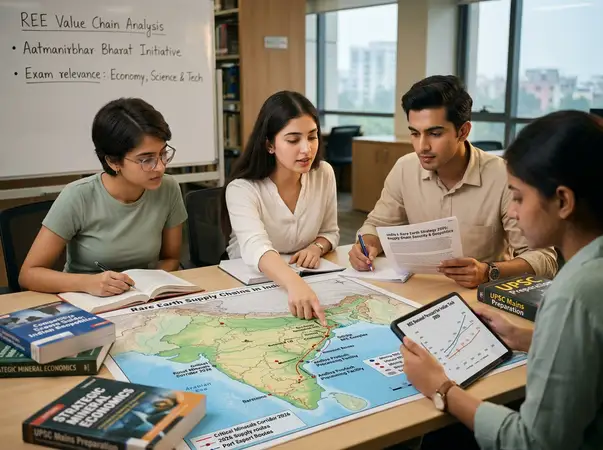
What are Rare Earth Elements (REEs)?
Rare Earth Elements (REEs) are a group of seventeen chemically similar metallic elements, comprising the fifteen lanthanides on the periodic table, plus scandium and yttrium. Despite their name, most REEs are not particularly rare in the Earth's crust; however, they are rarely found in economically viable, concentrated deposits. This makes their extraction and processing challenging and often environmentally intensive.
Properties and Applications of REEs
REEs possess unique magnetic, catalytic, and optical properties that make them irreplaceable in a wide array of high-tech applications. Their distinct characteristics allow for the miniaturization of electronic components, increased energy efficiency, and enhanced performance in various technologies. Here are some key applications:
- Electronics: Used in smartphones, laptops, flat-panel displays, and camera lenses (e.g., Europium for red phosphors, Cerium for polishing).
- Renewable Energy: Essential for wind turbine generators and electric vehicle (EV) motors (e.g., Neodymium and Praseodymium for powerful magnets).
- Defense: Critical for precision-guided munitions, stealth technology, radar systems, and fighter jets (e.g., Samarium-Cobalt magnets, Lanthanum for night vision goggles).
- Healthcare: Used in MRI contrast agents, medical lasers, and X-ray imaging (e.g., Gadolinium).
- Catalysis: Employed in automotive catalytic converters to reduce emissions and in petroleum refining (e.g., Cerium).
- Metallurgy: Used as alloying agents to improve the strength and heat resistance of metals.

The indispensable nature of REEs in these sectors underscores their strategic importance for any nation aiming for technological sovereignty and economic growth.
India's Current Rare Earth Landscape: Challenges and Opportunities
India possesses the world's fifth-largest reserves of REEs, primarily in monazite sands found along its coastal regions. However, despite these significant reserves, India's rare earth processing capabilities are limited. The country primarily exports raw or semi-processed rare earth minerals, relying heavily on other nations for refined products and advanced rare earth magnets.
Current State of Affairs
- Limited Processing Capacity: India's rare earth industry, dominated by Indian Rare Earths Limited (IREL), a public sector undertaking, focuses mainly on the initial stages of extraction and separation. Advanced processing into metals, alloys, and magnets is largely absent.
- Dependence on Imports: For high-value rare earth products, India remains dependent on imports, primarily from China, which controls a significant portion of the global rare earth supply chain, from mining to processing and manufacturing.
- Policy Framework: The Atomic Minerals Concession Rules, 2016, and the Mines and Minerals (Development and Regulation) Act, 1957, govern rare earth mining. There's a growing push for policy reforms to encourage private sector participation and value addition.
Opportunities for Growth
The current scenario presents both challenges and immense opportunities for India:
- Vast Reserves: Leveraging its substantial monazite reserves can reduce import dependence and establish India as a key player.
- Growing Domestic Demand: The rapid expansion of India's electronics, EV, and defense sectors creates a strong domestic market for rare earth products.
- Strategic Partnerships: Collaborating with countries like the USA, Japan, and Australia (part of the Quad alliance) to diversify supply chains and develop alternative sources offers a pathway to reduce reliance on single suppliers.
- Technological Advancement: Investing in R&D for advanced extraction, processing, and recycling technologies can create a sustainable and self-reliant rare earth ecosystem.
The Geopolitical Significance of REEs
The control over rare earth supply chains has evolved into a critical geopolitical tool, often referred to as the 'new oil' due to its strategic importance in modern economies and defense. China's near-monopoly on rare earth processing has given it considerable leverage in international relations.
Global Dominance and Supply Chain Vulnerabilities
China accounts for over 60% of global rare earth mining and more than 85% of rare earth processing. This dominance creates significant supply chain vulnerabilities for nations worldwide, including India. Any disruption, whether due to trade disputes, environmental regulations, or geopolitical tensions, can severely impact industries reliant on these elements.
India's Quest for Strategic Autonomy
For India, securing a robust and diversified rare earth supply chain is paramount for achieving strategic autonomy. This involves:
- National Security: Ensuring uninterrupted supply for its burgeoning defense sector, which relies on REEs for advanced weaponry and surveillance systems.
- Economic Resilience: Protecting its rapidly growing electronics, renewable energy, and EV industries from external shocks and price volatility.
- Technological Leadership: Fostering innovation and domestic manufacturing capabilities in high-tech sectors, reducing reliance on foreign technology.
- Balancing Geopolitical Influence: Reducing dependence on any single country for critical minerals helps India maintain its independent foreign policy stance and strengthen its position in global forums.
The push for rare earth self-reliance is therefore not just an economic endeavor but a cornerstone of India's broader geopolitical strategy.
India's Vision for 2026 and Beyond: Initiatives and Policies
India is actively formulating and implementing policies to bolster its rare earth supply chain, with a clear vision for enhanced self-reliance by 2026 and beyond. The focus is on moving beyond basic extraction to value-added processing and manufacturing.
Key Government Initiatives
- Policy Reforms: The government is exploring amendments to existing mining laws to de-monopolize the rare earth sector, allowing greater private sector participation in mining, processing, and value addition. This includes potentially delisting rare earth minerals from the 'atomic minerals' category to streamline regulatory processes.
- Strategic Alliances: India is actively engaging with countries like Australia, Japan, and the USA under frameworks like the Quad to establish alternative rare earth supply chains. Memoranda of Understanding (MoUs) and joint ventures are being explored to invest in overseas rare earth projects and develop shared processing facilities.
- Investment in R&D: Significant emphasis is being placed on indigenous research and development for efficient and environmentally friendly rare earth extraction, separation, and recycling technologies. Institutions like the Bhabha Atomic Research Centre (BARC) and various IITs are involved in these efforts.
- Production-Linked Incentive (PLI) Schemes: While not specifically for rare earths yet, the success of PLI schemes in sectors like electronics and automotive components could pave the way for similar incentives to boost domestic rare earth processing and magnet manufacturing.
- Mapping and Exploration: Enhanced efforts by agencies like the Geological Survey of India (GSI) to identify new rare earth deposits and accurately assess existing reserves are crucial for long-term planning.
Targeting 2026
By 2026, India aims to:
- Significantly increase its domestic processing capacity for key rare earth oxides.
- Reduce its reliance on a single country for refined rare earth products.
- Begin indigenous manufacturing of critical rare earth magnets and alloys.
- Establish robust recycling infrastructure for rare earth-containing products.
These efforts are geared towards securing a resilient supply chain that can support India's ambitious growth targets in sectors like defense, renewable energy, and advanced manufacturing.
Economic Implications for India
A robust and self-reliant rare earth supply chain holds transformative economic potential for India, promising growth, job creation, and enhanced industrial capabilities.
Boosting Domestic Manufacturing
Developing indigenous rare earth processing and manufacturing capabilities will directly support the 'Make in India' initiative. It will foster the growth of downstream industries that rely on rare earth components, such as:
- Electric Vehicle (EV) Industry: Localized production of powerful rare earth magnets for EV motors will reduce manufacturing costs and accelerate EV adoption.
- Renewable Energy Sector: Domestic sourcing of rare earths for wind turbine generators and solar panel components will enhance energy security and reduce project costs.
- Defense Production: A secure supply of REEs is vital for developing advanced defense technologies, reducing reliance on costly imports and boosting indigenous defense manufacturing.
- Electronics and Consumer Goods: Enabling local production of high-tech components for consumer electronics, reducing import bills, and fostering innovation.
Job Creation and Skill Development
The expansion of the rare earth sector, from mining and processing to manufacturing and recycling, will create numerous job opportunities across various skill levels. This includes:
- Geologists and mining engineers.
- Chemical engineers and metallurgists for processing plants.
- Skilled technicians for manufacturing and recycling facilities.
- Researchers and scientists in R&D.
This will necessitate significant investment in skill development programs to train a specialized workforce, contributing to overall human capital development.
Export Potential and Global Competitiveness
Once India establishes itself as a significant player in rare earth processing and manufacturing, it can potentially become an exporter of high-value rare earth products. This would not only generate foreign exchange but also enhance India's global competitiveness in advanced technology sectors, positioning it as a reliable alternative supplier in the global rare earth market.
Environmental and Social Considerations
While the economic and strategic benefits of rare earth mining and processing are undeniable, these activities come with significant environmental and social challenges. India's approach to developing its rare earth supply chain must prioritize sustainability and responsible practices.
Environmental Challenges
- Habitat Destruction: Mining operations can lead to deforestation and destruction of natural habitats, especially in ecologically sensitive coastal areas where monazite sands are found.
- Radioactive Byproducts: Monazite, a primary source of rare earths in India, contains thorium, a radioactive element. Its processing generates radioactive waste, requiring stringent handling and disposal protocols.
- Chemical Pollution: The extraction and separation of REEs involve the use of strong acids and other chemicals, which can contaminate soil and water if not managed properly. This can lead to heavy metal pollution and ecosystem damage.
- Energy Consumption: Rare earth processing is energy-intensive, contributing to greenhouse gas emissions if powered by fossil fuels.
Social Impact
- Displacement and Livelihoods: Mining projects can lead to the displacement of local communities and impact traditional livelihoods, necessitating robust rehabilitation and resettlement policies.
- Health Concerns: Exposure to radioactive materials and chemical pollutants can pose serious health risks to workers and nearby communities.
India's Commitment to Sustainable Practices
India is increasingly aware of these challenges and is striving to integrate sustainable practices into its rare earth strategy:
- Stringent Regulations: Implementing and enforcing strict environmental regulations for mining and processing operations, including waste management and pollution control.
- Technological Innovation: Investing in green technologies for rare earth extraction and separation that minimize environmental impact and reduce waste generation.
- Recycling and Circular Economy: Developing robust rare earth recycling programs from electronic waste and end-of-life products to reduce the need for virgin mining and conserve resources.
- Community Engagement: Ensuring transparent and equitable processes for land acquisition, compensation, and community development in areas affected by rare earth projects.
Balancing economic growth with environmental protection is a critical aspect of India's rare earth journey.
Why Rare Earths Matter for Competitive Exams
For aspirants preparing for UPSC, State PSCs, SSC, Banking, and other government competitive exams, the topic of Rare Earth Supply Chains in India is a goldmine of potential questions. Its multi-dimensional nature touches upon various subjects, making it a high-yield area for study.
Current Affairs and General Knowledge
- Recent government policies, initiatives (e.g., PLI schemes for related sectors, new mining laws).
- International agreements and collaborations (e.g., Quad discussions on critical minerals).
- Major rare earth discoveries or technological breakthroughs.
Economy
- Impact on India's GDP, industrial growth, and 'Make in India' initiative.
- Import-export dynamics, trade deficits, and balance of payments.
- Investment in infrastructure and R&D for the rare earth sector.
- Role of PSUs like IREL and potential for private sector involvement.
Science & Technology
- Properties and applications of specific REEs (e.g., Neodymium in magnets, Cerium in catalysts).
- Extraction, processing, and recycling technologies.
- Technological advancements in sectors reliant on REEs (EVs, renewable energy, defense).
Environment and Ecology
- Environmental impact of rare earth mining (deforestation, pollution, radioactive waste).
- Sustainable mining practices, circular economy concepts, and waste management.
- Government regulations and policies for environmental protection in mining.
International Relations and Geopolitics
- China's dominance in the rare earth market and its implications.
- India's strategic partnerships with other countries to diversify supply chains.
- Rare earths as a tool in geopolitical leverage and trade wars.
Example Questions You Might Encounter:
- "Which of the following elements is NOT considered a Rare Earth Element?"
- "What is India's primary source of Rare Earth Elements?"
- "Discuss the strategic importance of Rare Earth Elements for India's defense sector."
- "Analyze the environmental challenges associated with rare earth mining and India's efforts towards sustainable practices."
- "How does China's dominance in rare earth processing impact global supply chains and India's economic autonomy?"
Staying updated on this topic through reliable news sources, government reports, and analytical articles will be highly beneficial for your exam preparation. For more insights on current affairs, check out /current-affairs.
Put this advice into practice
The rare earth supply chain is far more than a niche topic; it's a critical determinant of India's future trajectory in technology, economy, and national security. As India sets its sights on 2026 and beyond, the concerted efforts to establish a resilient and self-reliant rare earth ecosystem will be pivotal. This journey involves navigating complex geopolitical landscapes, overcoming technological hurdles, and addressing significant environmental concerns. For competitive exam aspirants, understanding these intricate dynamics is not just about scoring marks; it's about grasping the fundamental forces shaping India's position in the 21st century. By staying informed on this vital subject, you equip yourself with knowledge that is both academically rewarding and deeply relevant to the nation's progress.
Keep an eye on the latest developments in this sector, as they will undoubtedly feature prominently in future examinations and policy discussions.
Frequently Asked Questions
Q1: What are Rare Earth Elements (REEs) and why are they important?
A1: Rare Earth Elements are a group of 17 metallic elements with unique magnetic, catalytic, and optical properties. They are crucial for a wide range of high-tech applications, including smartphones, electric vehicles, wind turbines, and defense systems. Their importance stems from their irreplaceable role in modern technology, making them strategically vital for national security and economic growth.
Q2: Does India have significant rare earth reserves?
A2: Yes, India possesses the world's fifth-largest reserves of Rare Earth Elements, primarily found in monazite sands along its coastal regions. However, its processing capabilities for converting these raw minerals into high-value refined products and magnets are currently limited.
Q3: What are the main challenges for India in its rare earth supply chain?
A3: India's main challenges include limited domestic processing and manufacturing capacity, heavy reliance on imports (especially from China) for refined rare earth products, and the need for significant investment in advanced extraction and separation technologies. Environmental concerns related to mining and processing, including radioactive byproducts, also pose a challenge.
Q4: How is India planning to strengthen its rare earth supply chain by 2026?
A4: India aims to strengthen its rare earth supply chain by 2026 through policy reforms to encourage private sector participation, forging strategic international alliances (e.g., with Quad partners), investing in indigenous R&D for advanced processing and recycling, and potentially implementing incentive schemes to boost domestic manufacturing of rare earth components.
Q5: Why is the topic of rare earth supply chains important for competitive exams?
A5: This topic is highly relevant for competitive exams because it covers multiple subjects such as Current Affairs (government policies, international relations), Economy (industrial growth, trade), Science & Technology (applications, processing), Environment (sustainable mining, pollution), and Geopolitics (strategic autonomy, global dominance). Questions can be framed on India's initiatives, global dynamics, and the impact of REEs on various sectors. Staying updated on this topic is crucial for comprehensive exam preparation across various government job exams like UPSC, SSC, and State PSCs. For more exam insights, visit /exam-preparation.
Related Resources
- UPSC Syllabus 2024
- Daily Current Affairs for Competitive Exams
- Indian Economy Notes for UPSC
TrueJobs Editorial Team
TrueJobs editorial desk
This article is prepared from the sources referenced in the guide and reviewed for clarity, links and dated information. Read our editorial and corrections policy.
Continue This Topic
Follow the closest earlier and newer coverage so older archive posts keep real contextual crawl paths.
National Quantum Mission: India's Leap into Quantum Technology
Discover India's National Quantum Mission (NQM), a major government initiative. Learn about its objectives, budget, timeline, and the future career opportunities it will create in quantum technology.
Chips to Startup Programme: What It Is and Why It Matters
A deep dive into India's ambitious Chips to Startup (C2S) Programme. Understand its core objectives, the support it offers, and its strategic importance for India's tech future.
Read Next
National Quantum Mission: India's Leap into Quantum Technology

Chips to Startup Programme: What It Is and Why It Matters

Quantum Communication in India: QKD, Hubs & Future Prospects

India's Semiconductor Revolution: Plants, Progress & Future by 2026
Explore Topics
Perfect Your Resume
Use our AI-powered Resume Builder to create ATS-optimized resumes.
AI Resume Builder