
Career guide
India Semiconductor Mission 2.0: Key Features, Budget — Explained
India's ambitious Semiconductor Mission 2.0 aims to establish the nation as a global hub for chip design and manufacturing. This article explores the mission's core features, its ₹76,000 crore budget, and the significant career opportunities it will create across the tech sector.
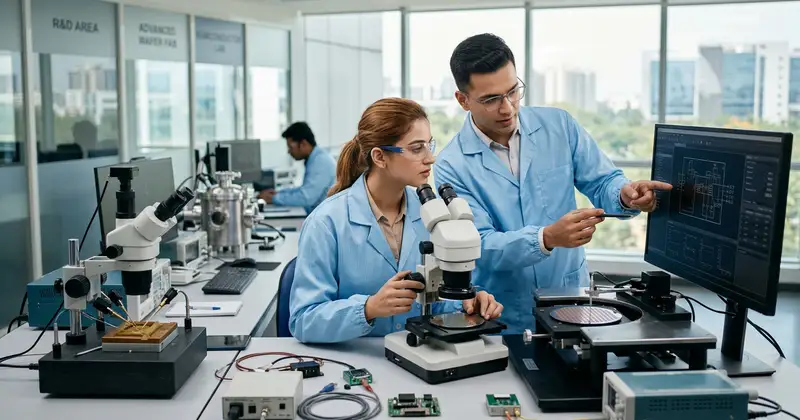
India is on the cusp of a technological revolution, and at its heart lies the ambitious pursuit of self-reliance in semiconductor manufacturing. Semiconductors, often referred to as the "brains" of modern electronics, are indispensable components powering everything from smartphones and laptops to automobiles, medical devices, and critical defense systems. The global chip shortage in recent years starkly highlighted the strategic importance of a robust domestic semiconductor ecosystem, revealing vulnerabilities in global supply chains and emphasizing the need for localized production capabilities. Recognizing this, the Indian government launched the India Semiconductor Mission (ISM) with a visionary goal to establish India as a global hub for semiconductor design and manufacturing.
Now, with the evolution into ISM 2.0, the mission gains renewed momentum, enhanced strategic focus, and significant budgetary support, positioning India as a key player in this high-stakes global industry. This comprehensive article delves into the core features of ISM 2.0, the substantial financial outlay supporting it, and its profound impact on career opportunities across various sectors in India.
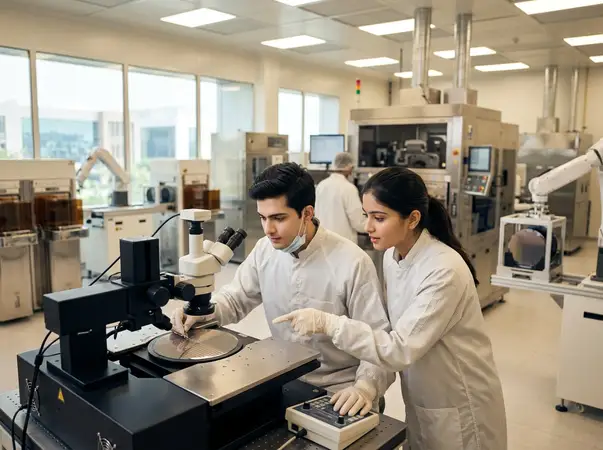
The journey towards a self-reliant semiconductor ecosystem is not merely an economic endeavor but a strategic imperative for national security and technological sovereignty. The recent global supply chain disruptions, exacerbated by geopolitical tensions and the unprecedented demand for digital devices during the pandemic, underscored the vulnerability of nations reliant on external sources for these critical components. India, with its vast talent pool, burgeoning digital economy, and significant domestic demand, is uniquely positioned to become a key player in this high-stakes industry, moving beyond being just a consumer to a significant producer.
ISM 2.0 builds upon the foundational efforts of its predecessor, refining strategies and offering more comprehensive incentives to attract global leaders and foster indigenous innovation, thereby creating a sustainable and competitive semiconductor landscape within the country.
Core Features of India Semiconductor Mission (ISM) 2.0
ISM 2.0 is designed as a holistic program, addressing various facets of the semiconductor value chain from design to manufacturing and packaging. It offers a suite of incentives and support mechanisms aimed at creating a vibrant and sustainable semiconductor ecosystem in India. The mission's structure is meticulously planned to attract significant investments, develop advanced technological capabilities, and nurture a skilled workforce, ensuring India's long-term competitiveness in the global semiconductor arena.
Scheme for Setting up Semiconductor Fabs in India
This scheme is arguably the most ambitious component of ISM 2.0. Semiconductor fabrication plants, or "fabs," are highly complex and capital-intensive facilities where integrated circuits (chips) are manufactured. Setting up a fab requires an investment of billions of dollars, advanced technology, and a highly skilled workforce, along with robust infrastructure like uninterrupted power and ultra-pure water. The government aims to provide significant fiscal support to attract global semiconductor majors and consortia to establish these high-tech manufacturing units in India, fostering both advanced logic and memory chip production.

- Strategic Importance: Establishing fabs is crucial for achieving self-sufficiency in chip manufacturing, reducing dependence on imports, and enhancing national security by securing critical components for defense and strategic sectors.
- Economic Impact: Fabs create a high number of direct and indirect jobs across a wide range of skill sets, stimulate ancillary industries such as chemicals, gases, and equipment maintenance, and drive technological advancement across sectors.
- Incentives: The scheme offers substantial financial incentives, typically a percentage of the capital expenditure, along with support for critical infrastructure like land, water, and power, which are essential for the continuous and highly sensitive operations of a fab.
- Technological Focus: While the goal is to attract advanced logic fabs for cutting-edge processors, there's also an emphasis on memory fabs and other specialized fabrication facilities that cater to India's specific needs and market demands, including chips for automotive and IoT applications.
Scheme for Setting up Display Fabs in India
Beyond semiconductors, display panels are another critical component with high import dependence, forming the primary interface for countless electronic devices. From smartphone screens and laptop monitors to televisions and automotive displays, the demand for high-quality display panels is ever-increasing. This scheme mirrors the semiconductor fab initiative, aiming to establish manufacturing units for various display technologies like LCD, OLED, and future display types such as MicroLED, reducing reliance on foreign manufacturers.
- Market Demand: India is one of the largest consumers of electronic devices globally, driving a massive and growing demand for display panels. Domestic manufacturing can significantly reduce import bills and strengthen the electronics manufacturing value chain.
- Value Addition: Localizing display manufacturing adds significant value to the electronics manufacturing ecosystem, creating a more integrated supply chain and fostering indigenous innovation in display technology.
- Technological Diversity: Support is extended to a range of display technologies, encouraging innovation and catering to diverse product requirements, from small wearable displays to large format TVs and automotive dashboards.
Scheme for Setting up Compound Semiconductors / Silicon Photonics / Sensor Fabs and Semiconductor ATMP / OSAT Facilities in India
This comprehensive scheme targets specialized areas within semiconductor manufacturing that are crucial for emerging technologies and offer a relatively lower entry barrier compared to advanced logic fabs, while still providing high value addition. It covers both front-end (fabrication of specialized chips) and back-end (assembly, testing, and packaging) processes, recognizing the diverse needs of the semiconductor industry.
- Compound Semiconductors: These are materials like Gallium Nitride (GaN) and Silicon Carbide (SiC) that offer superior performance in specific applications such as 5G communications, high-efficiency power electronics for electric vehicles (EVs) and charging infrastructure, and high-frequency radar systems. India aims to establish fabs for these niche but high-growth areas, crucial for next-generation technologies.
- Silicon Photonics: This technology integrates optical components with silicon-based microelectronic circuits, enabling high-speed data transmission with lower power consumption. It's critical for advanced data centers, telecommunications networks, and sophisticated sensing applications, addressing the ever-growing demand for bandwidth.
- Sensors: The mission supports the manufacturing of various types of sensors, including MEMS (Micro-Electro-Mechanical Systems) sensors, image sensors, and environmental sensors, which are vital for the Internet of Things (IoT), industrial automation, smart cities, automotive industry, and healthcare devices, forming the "eyes and ears" of smart systems.
- ATMP (Assembly, Testing, Marking, and Packaging) / OSAT (Outsourced Semiconductor Assembly and Test) Facilities: These are the "back-end" processes where fabricated silicon wafers are cut into individual chips, assembled into their final packages, tested for functionality, and marked. These facilities are less capital-intensive than fabs but are crucial for value addition, quality control, and ensuring chips are ready for integration into electronic products. Establishing ATMP/OSAT facilities can quickly build a robust foundation for the semiconductor ecosystem, providing immediate employment and technological capabilities.
Design Linked Incentive (DLI) Scheme
While manufacturing is critical, a strong design ecosystem is equally important for innovation and intellectual property (IP) creation, allowing India to move up the value chain from manufacturing to invention. The DLI scheme is tailored to support Indian companies, startups, and MSMEs involved in semiconductor design, fostering a culture of innovation and entrepreneurship.
- Nurturing Indigenous Design: The scheme aims to foster a culture of chip design and innovation within India, enabling companies to develop their own semiconductor products and reduce dependence on foreign designs.
- Financial Support: It provides financial incentives for design costs, deployment costs, and even royalty payments on net sales of the designed chips. This significantly reduces the financial burden and risks on design-focused companies, encouraging more ventures.
- IP Creation: By supporting design, the DLI scheme encourages the creation of valuable intellectual property, positioning India as a source of innovation in the global semiconductor landscape and enhancing its strategic technological assets.
- Ecosystem Development: It helps in creating a robust ecosystem of fabless design companies that can conceptualize and develop chips for various applications, from consumer electronics to industrial automation, telecommunications, and automotive sectors.
India Semiconductor Mission (ISM) Organisation
To ensure coordinated and effective implementation of these ambitious schemes, the India Semiconductor Mission (ISM) has been set up as an independent business division within the Ministry of Electronics and Information Technology (MeitY). Its role is pivotal in guiding the mission's trajectory, acting as the central orchestrator for India's semiconductor ambitions.
- Nodal Agency: ISM acts as the single point of contact for all stakeholders, facilitating approvals, providing guidance, and ensuring seamless execution of the schemes, streamlining the investment process.
- Strategic Guidance: It is responsible for formulating long-term strategies, identifying key technological areas for investment and development, and fostering collaborations with global industry leaders and academic institutions to leverage international expertise.
- Skill Development: A crucial mandate of ISM is to address the talent gap by promoting skill development programs, academic courses, and research initiatives in semiconductor design and manufacturing, creating a pipeline of skilled professionals.
- Policy Advocacy: ISM continuously evaluates the policy landscape, recommending necessary adjustments to ensure India remains competitive and attractive for semiconductor investments, adapting to global technological advancements and market dynamics.
Budgetary Support and Financial Outlay
The
Career Opportunities and Skills in Demand
The ISM 2.0 is expected to generate a massive demand for skilled professionals across the semiconductor value chain. This includes VLSI design engineers, process engineers, fabrication technicians, and research scientists. The mission will also create numerous indirect jobs in construction, logistics, and support services, providing a significant boost to the overall job market.
Strategic Importance and Global Context
India's push for semiconductor self-sufficiency is a strategic response to global supply chain vulnerabilities. By reducing import dependence, the mission aims to secure critical components for defense, telecommunications, and automotive sectors. This move aligns with global trends of nations securing their technological supply chains and asserting technological sovereignty.
Put this advice into practice
The India Semiconductor Mission 2.0 is a transformative initiative, poised to reshape India's technological landscape and create a wealth of high-skilled employment opportunities. By fostering a robust domestic semiconductor ecosystem, the mission strengthens national security and positions India as a key player in the global supply chain. This strategic push is set to catalyze long-term economic growth and innovation for the nation.
Reader questions: Career
What is the India Semiconductor Mission 2.0?
ISM 2.0 is an enhanced Indian government initiative to establish the country as a global hub for semiconductor design and manufacturing, offering significant financial incentives.
What kind of jobs will be created by the India Semiconductor Mission?
The mission will create numerous jobs in VLSI design, semiconductor fabrication, ATMP (testing and packaging), and for R&D professionals, engineers, and technicians.
What is the budget for the India Semiconductor Mission?
The program has a total financial outlay of ₹76,000 crore (approx. $10 billion) to support the development of the semiconductor and display manufacturing ecosystem.
TrueJobs Editorial Team
TrueJobs editorial desk
This article is prepared from the sources referenced in the guide and reviewed for clarity, links and dated information. Read our editorial and corrections policy.
Continue This Topic
Follow the closest earlier and newer coverage so older archive posts keep real contextual crawl paths.
India's Semiconductor Revolution: Plants, Progress & Future by 2026
India is establishing a robust domestic semiconductor ecosystem. This article explores key plant locations, the companies driving this revolution, and the remarkable progress being made towards a self-sufficient future by 2026, highlighting massive job creation.
SabhaSaar Portal Explained: Boosting Panchayat Governance & Transparency
Explore the SabhaSaar Portal, a transformative digital tool from the Ministry of Panchayati Raj. This guide covers its purpose, key features, and how it is revolutionizing local governance by making Gram Panchayat meetings more transparent, efficient, and accessible to all citizens.
Read Next

India's Semiconductor Revolution: Plants, Progress & Future by 2026

SabhaSaar Portal Explained: Boosting Panchayat Governance & Transparency

Chips to Startup Programme: What It Is and Why It Matters

e-Panchayat & eGramSwaraj 2026: Key Facts for Competitive Exams
Explore Topics
Perfect Your Resume
Use our AI-powered Resume Builder to create ATS-optimized resumes.
AI Resume Builder