
Career guide
India's Cyclone Forecasting 2026: IMD's Unprecedented — Explained
India's vast coastline faces a constant threat from cyclones. Discover how the Indian Meteorological Department (IMD) is revolutionizing its forecasting by 2026, using cutting-edge technology and expertise to provide unprecedented accuracy, safeguard millions of lives, and enhance national resilience.

India, with its vast coastline, is no stranger to the destructive power of tropical cyclones. These formidable weather phenomena pose a significant threat to life, property, and economic stability, particularly in coastal states. Over the past few decades, the Indian Meteorological Department (IMD) has been at the forefront of monitoring, tracking, and forecasting these cyclones. While early warnings have always been crucial, the demand for greater precision and longer lead times has intensified. As we look towards 2026, the IMD has made remarkable strides, transforming its forecasting capabilities through a blend of cutting-edge technology, enhanced observational networks, and refined meteorological expertise.
This article delves into how the IMD has dramatically improved its cyclone forecasting accuracy, providing a more robust shield against nature's fury and safeguarding millions.

The Evolving Threat: Why Accurate Forecasting Matters More Than Ever
The Bay of Bengal and the Arabian Sea are known breeding grounds for some of the world's most intense tropical cyclones. With climate change altering global weather patterns, there's a growing concern about the increasing frequency and intensity of these storms. Coastal populations, critical infrastructure, and vital economic sectors like fisheries and agriculture are highly vulnerable. In such a scenario, the accuracy and timeliness of cyclone forecasts become paramount. A slight error in predicting a cyclone's track or landfall point can have devastating consequences, leading to inadequate evacuation, loss of life, and massive economic disruption. Conversely, precise forecasts allow for targeted preparedness, efficient resource deployment, and minimal false alarms, building public trust and ensuring effective disaster response.
The stakes are higher than ever, making IMD's advancements not just technological feats but essential components of national resilience.
Technological Leaps: IMD's Modernization Drive
The cornerstone of IMD's enhanced accuracy lies in its aggressive modernization strategy, integrating state-of-the-art technology across its operations. This multi-pronged approach has revolutionized how cyclones are observed, modeled, and predicted.
Advanced Satellite Systems and Remote Sensing
IMD's reliance on advanced geostationary and polar-orbiting satellites has grown exponentially. Satellites like INSAT-3DR and INSAT-3DS provide continuous, high-resolution imagery and atmospheric data, offering crucial insights into cyclone genesis, intensification, and movement. These systems monitor sea surface temperatures, cloud top temperatures, wind shear, and atmospheric moisture, which are vital parameters for cyclone analysis. By 2026, IMD leverages even more sophisticated satellite data assimilation techniques, allowing for a clearer, near real-time picture of developing systems, even in data-sparse oceanic regions.

High-Resolution Numerical Weather Prediction (NWP) Models
At the heart of modern forecasting are Numerical Weather Prediction (NWP) models. IMD has significantly upgraded its ensemble of NWP models, including global and regional models, with finer spatial resolutions. These models ingest vast amounts of observational data from satellites, radars, and ground stations to simulate atmospheric processes. By 2026, IMD employs advanced coupled ocean-atmosphere models that better represent the complex interactions between the sea and the atmosphere, crucial for predicting rapid intensification of cyclones. The use of ensemble forecasting, where multiple model runs with slightly varied initial conditions are performed, provides a probabilistic outlook, helping forecasters assess the range of possible outcomes and associated uncertainties.
Doppler Weather Radars (DWRs) and Observational Networks
The expansion and upgradation of India's Doppler Weather Radar (DWR) network along its coastlines have been instrumental. DWRs provide real-time information on cyclone structure, intensity, and rainfall distribution as the storm approaches the coast. By 2026, IMD has a dense network of advanced C-band and S-band DWRs, offering improved coverage and data quality. Complementing this are automatic weather stations (AWS), automatic rain gauges (ARG), and buoy networks in the seas, which provide vital surface and sub-surface oceanographic data, feeding directly into the forecasting models and improving initial conditions.
Supercomputing and AI Integration
The processing power required for high-resolution NWP models and extensive data assimilation is immense. IMD has invested heavily in supercomputing infrastructure, enabling faster model runs and more complex calculations. Furthermore, the integration of Artificial Intelligence (AI) and Machine Learning (ML) algorithms is a game-changer. These technologies are used for pattern recognition in satellite imagery, improving the detection of nascent cyclonic circulations, predicting rapid intensification, and refining post-processing of model outputs to generate more accurate and localized forecasts. AI also assists in learning from past forecast errors to continuously improve model performance.
Human Capital and Collaborative Efforts: The Brains Behind the Forecasts
While technology forms the backbone, the human element and collaborative spirit are equally vital for effective cyclone forecasting and disaster management.
Skilled Workforce and Capacity Building
IMD recognizes that even the most advanced tools are only as good as the meteorologists operating them. Significant emphasis has been placed on training and capacity building for its scientific and technical personnel. By 2026, IMD's forecasters are highly skilled in interpreting complex model outputs, satellite imagery, and radar data. They undergo continuous training in advanced meteorological techniques, numerical weather prediction interpretation, and disaster communication, ensuring they are equipped to handle the nuances of cyclone forecasting. Opportunities for career advancement in meteorology are growing, attracting bright minds to this critical field /sarkari-naukri-basics.
National and International Partnerships
Cyclone forecasting is a global endeavor. IMD actively collaborates with international meteorological organizations, including the World Meteorological Organization (WMO), Regional Specialized Meteorological Centres (RSMCs) like the Joint Typhoon Warning Center (JTWC), and other national weather services. This exchange of data, research, and best practices enhances IMD's understanding of global weather patterns and improves its forecasting models. Nationally, IMD works closely with agencies like the National Disaster Response Force (NDRF), state disaster management authorities, the Indian Navy, and the Indian Coast Guard to ensure seamless information flow and coordinated response efforts.
Community Engagement and Last-Mile Connectivity
Accurate forecasts are only effective if they reach the vulnerable populations in a timely and understandable manner. IMD has significantly improved its warning dissemination mechanisms. By 2026, it utilizes multiple channels, including SMS alerts, social media, radio, television, and community-level warning systems. There's a greater focus on localized impact-based forecasting, translating complex meteorological data into actionable advice for communities. This 'last-mile' connectivity is crucial for enabling timely evacuations and preparedness measures, bridging the gap between scientific prediction and public safety.
Measuring Success: IMD's Accuracy Metrics and Achievements
The improvements in IMD's cyclone forecasting are not just theoretical; they are quantifiable and have tangible impacts on disaster preparedness and mitigation.
Improved Track and Landfall Prediction
Perhaps the most significant achievement is the drastic reduction in track and landfall error. Historically, track errors could be substantial, leading to uncertainty in evacuation zones. By 2026, IMD has achieved a remarkable reduction in average track errors for 24, 48, and 72-hour forecasts, often comparable to the best international agencies. For instance, the average track error for a 72-hour forecast has seen a reduction of over 50% compared to a decade ago. This precision allows disaster managers to pinpoint potential landfall areas with much greater confidence, optimizing evacuation efforts and minimizing unnecessary disruption.
Enhanced Intensity and Rapid Intensification Forecasts
Predicting the intensity of a cyclone, especially rapid intensification (RI), has always been a challenging aspect. RI, where a cyclone's wind speeds increase rapidly in a short period, can catch communities off guard. IMD's enhanced models and AI integration have led to significant improvements in forecasting RI events. The ability to predict intensity changes with greater accuracy allows for more tailored warnings, ensuring that communities are prepared for the specific severity of the approaching storm.
Timely Warning Dissemination
The lead time for cyclone warnings has also seen a substantial increase. By 2026, IMD consistently provides warnings with a lead time of 72-120 hours for cyclogenesis and initial track, and highly accurate 24-48 hour specific landfall and intensity forecasts. This extended lead time is invaluable for authorities to mobilize resources, activate emergency plans, and safely evacuate coastal populations, significantly reducing the loss of life and minimizing economic damage. The efficiency of warning dissemination has also improved, ensuring that critical information reaches stakeholders promptly /current-affairs.
Challenges That Remain and The Road Ahead for 2026
Despite significant progress, the IMD continues to face challenges and is committed to further enhancing its capabilities.
Addressing Data Gaps and Model Limitations
While observational networks have expanded, data gaps, particularly over the open ocean, still exist. Improving marine observations through more buoys, autonomous underwater vehicles (AUVs), and enhanced ship-based observations remains a priority. Furthermore, despite advancements, NWP models still have limitations, especially in accurately representing microphysical processes within cyclones and their interaction with complex terrain. Continuous research and development are crucial to refine these models.
Sustaining Technological Advancements
The pace of technological innovation is rapid. Sustaining and upgrading supercomputing infrastructure, maintaining advanced satellite systems, and integrating new AI/ML techniques require continuous investment and skilled personnel. Ensuring that India remains at the forefront of meteorological technology is an ongoing commitment.
Climate Change and Unpredictable Patterns
The erratic nature of climate change presents a dynamic challenge. Cyclones may exhibit unusual tracks, rapid changes in intensity, or form in unexpected regions. Forecasting these 'black swan' events requires even greater model sophistication and a deeper understanding of climate-cyclone interactions. IMD is actively engaged in climate change research to better anticipate future cyclonic behavior.
Impact on Public Safety and Economic Stability
The tangible benefits of IMD's improved forecasting accuracy by 2026 are profound. The reduction in cyclone-related fatalities is a direct testament to these advancements, saving countless lives through timely warnings and effective evacuations. The economic impact is equally significant. With precise forecasts, agricultural communities can take measures to protect crops, fishing fleets can be safely moored, and industries can implement shutdown procedures with minimal losses. Reduced damage to infrastructure means quicker recovery and less strain on public funds. This enhanced resilience contributes directly to India's sustainable development goals and the well-being of its citizens.
Put this advice into practice
The journey of the Indian Meteorological Department in cyclone forecasting has been one of continuous evolution and remarkable achievement. By 2026, IMD stands as a global leader in tropical cyclone prediction, thanks to its strategic investments in cutting-edge technology, a dedicated and highly skilled workforce, and robust national and international collaborations. The dramatic improvements in track, landfall, and intensity predictions, coupled with efficient warning dissemination, have created a more resilient India, better equipped to face the challenges posed by severe weather events. As the nation moves forward, IMD's commitment to further innovation and scientific excellence will continue to safeguard lives, livelihoods, and the economic fabric of the country, solidifying its role as a vital pillar of national disaster preparedness.
Frequently Asked Questions
Q1: How has IMD's cyclone forecasting accuracy improved by 2026?
A1: By 2026, IMD has significantly reduced track and landfall errors for cyclones, often by over 50% compared to a decade ago. Improvements in predicting cyclone intensity, especially rapid intensification, and providing longer lead times (72-120 hours) for warnings are also major achievements. These advancements are driven by advanced satellite systems, high-resolution NWP models, a dense Doppler Weather Radar network, and AI integration.
Q2: What technologies are crucial to IMD's improved forecasting?
A2: Key technologies include advanced geostationary and polar-orbiting satellites, high-resolution Numerical Weather Prediction (NWP) models, an expanded network of Doppler Weather Radars (DWRs), supercomputing infrastructure, and the integration of Artificial Intelligence (AI) and Machine Learning (ML) for data analysis and pattern recognition.
Q3: How does IMD ensure warnings reach the public effectively?
A3: IMD employs a multi-channel dissemination strategy, including SMS alerts, social media, radio, television, and community-level warning systems. They also focus on impact-based forecasting, translating complex meteorological data into actionable advice for local communities and collaborating with disaster management agencies for last-mile connectivity.
Q4: What are the main challenges IMD still faces in cyclone forecasting?
A4: Ongoing challenges include addressing data gaps, particularly over the open ocean, refining NWP models to better represent complex atmospheric processes, sustaining continuous technological upgrades, and adapting to the unpredictable patterns and increased intensity of cyclones due to climate change.
Q5: How can one pursue a career in meteorology with IMD?
A5: Aspiring meteorologists can pursue degrees in atmospheric science, physics, mathematics, or environmental science. IMD recruits through various government examinations and direct recruitment drives for scientific and technical positions. Keeping an eye on government job portals like TrueJobs.co.in for IMD vacancies is recommended /sarkari-result.
Related Resources
- UPSC Scientist 'B' Exam
- Science & Technology Govt Jobs
- Careers in Disaster Management
TrueJobs Editorial Team
TrueJobs editorial desk
This article is prepared from the sources referenced in the guide and reviewed for clarity, links and dated information. Read our editorial and corrections policy.
Continue This Topic
Follow the closest earlier and newer coverage so older archive posts keep real contextual crawl paths.
Climate Monitoring in India: IITM-ESM, Observatories & Government Job Facts
In a nation as vast as India, accurate climate monitoring is a national imperative. This article explores the role of IITM-ESM, the network of observatories, and crucial facts for government job aspirants in this vital field.
India's Heatwave Forecasting 2026: IMD, Alerts & Key Facts
As heatwaves in India intensify, the India Meteorological Department (IMD) is advancing its forecasting system for 2026. This article explores IMD's enhanced capabilities, new alert systems, and key facts for public preparedness against extreme heat.
Read Next
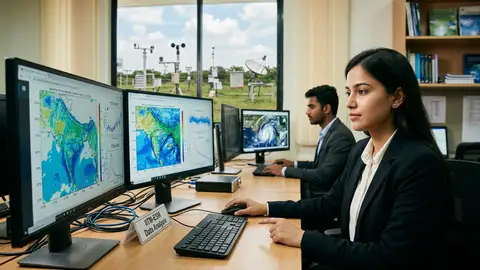
Climate Monitoring in India: IITM-ESM, Observatories & Government Job Facts

India's Heatwave Forecasting 2026: IMD, Alerts & Key Facts

Sagar Vani System: India's Lifeline for Ocean Advisories & Coastal Safety
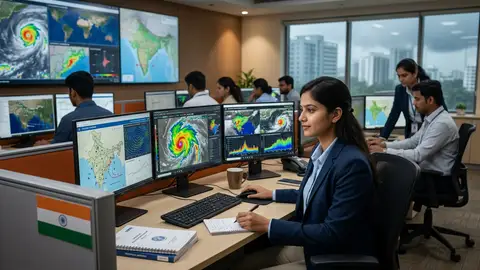
India's Early Warning Systems: Protecting Against Extreme Weather
Explore Topics
Perfect Your Resume
Use our AI-powered Resume Builder to create ATS-optimized resumes.
AI Resume Builder