
Recruitment guide
Climate Monitoring in India: IITM-ESM, Observatories — Explained
In a nation as vast as India, accurate climate monitoring is a national imperative. This article explores the role of IITM-ESM, the network of observatories, and crucial facts for government job aspirants in this vital field.
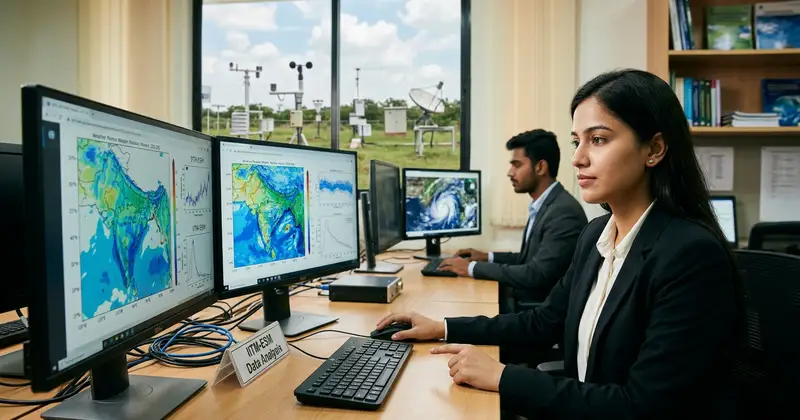
In a nation as vast and diverse as India, where livelihoods are intrinsically linked to the monsoon, and extreme weather events pose significant threats, accurate and timely climate monitoring is not just a scientific endeavor but a national imperative. From the scorching deserts of Rajasthan to the snow-capped Himalayas, and from the flood-prone plains of the Ganges to the cyclone-battered coastlines, India experiences a myriad of climatic conditions. Understanding, predicting, and adapting to these patterns, especially in the face of global climate change, requires sophisticated tools, dedicated institutions, and a robust network of observatories.
This article delves into the critical role of climate monitoring in India, highlighting the groundbreaking work of the IITM-ESM, the extensive network of observatories, and crucial facts for aspiring government job candidates looking to contribute to this vital field.
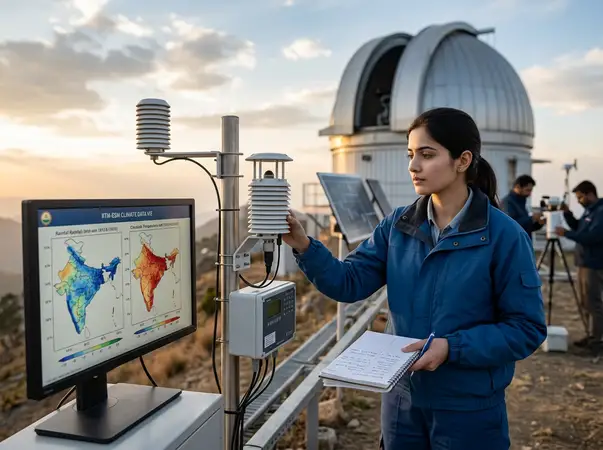
The Urgency of Climate Monitoring in India
India's unique geographical position and socio-economic landscape make it particularly vulnerable to the impacts of climate variability and change. The Indian monsoon, a lifeline for its agrarian economy, is notoriously complex and highly sensitive to global climate patterns. Erratic monsoons, characterized by prolonged dry spells or intense rainfall events, can lead to widespread droughts or devastating floods, impacting food security, water resources, and the national economy. Beyond the monsoon, India faces threats from tropical cyclones, heatwaves, cold waves, sea-level rise, and glacial melt, all of which necessitate a proactive and robust climate monitoring system.
Effective climate monitoring provides the foundational data for:
- Disaster Preparedness: Early warning systems for cyclones, floods, and heatwaves save lives and minimize economic losses.
- Agricultural Planning: Accurate weather forecasts and seasonal climate outlooks help farmers make informed decisions about crop selection, sowing, and harvesting.
- Water Resource Management: Understanding rainfall patterns and glacier melt is crucial for managing dams, reservoirs, and ensuring water availability.
- Public Health: Monitoring heatwaves and air quality helps mitigate health risks.
- Infrastructure Development: Climate data informs the design and location of resilient infrastructure.
- Policy Formulation: Long-term climate projections guide national and international climate change adaptation and mitigation strategies.

The urgency stems from the direct impact of climate events on millions of lives and the nation's sustainable development goals. Therefore, investing in advanced climate science and monitoring capabilities is an investment in India's future resilience.
IITM-ESM: India's Climate Modeling Powerhouse
At the forefront of India's climate modeling efforts is the Indian Institute of Tropical Meteorology - Earth System Model (IITM-ESM). Developed by the Indian Institute of Tropical Meteorology (IITM), Pune, under the Ministry of Earth Sciences (MoES), IITM-ESM is a sophisticated numerical model designed to simulate and predict Earth's climate system.
What is the IITM-ESM?
The IITM-ESM is a comprehensive Earth System Model that integrates various components of the Earth's climate, including:
- Atmospheric Model: Simulates atmospheric circulation, temperature, precipitation, and other weather phenomena.
- Oceanic Model: Represents ocean currents, temperature, salinity, and sea ice.
- Land Surface Model: Accounts for interactions between the land surface and the atmosphere, including vegetation, soil moisture, and hydrology.
- Sea Ice Model: Simulates the formation, movement, and melting of sea ice.
- Biogeochemical Cycles: Increasingly incorporates carbon cycle dynamics and other biogeochemical processes to understand their feedback on climate.
This integrated approach allows scientists to study complex interactions within the climate system and project future climate scenarios under different greenhouse gas emission pathways.
Significance and Contributions
The development of IITM-ESM marks a significant milestone for India, enabling it to contribute independently to global climate science and assessments. Its key contributions include:
- Monsoon Prediction: Improving the understanding and prediction of the Indian monsoon at seasonal and decadal scales.
- Climate Change Projections: Generating regional and national climate change projections crucial for impact assessment and adaptation planning. These projections feed into national policy documents and international reports.
- International Collaboration: IITM-ESM's outputs contribute to global initiatives like the Coupled Model Intercomparison Project (CMIP), which forms the basis for the Intergovernmental Panel on Climate Change (IPCC) assessment reports. India, through IITM-ESM, is now a key player in shaping global climate narratives.
- Capacity Building: Fosters expertise in climate modeling and data analysis within India, training a new generation of climate scientists.
The continuous refinement and validation of IITM-ESM using observational data are crucial for enhancing its predictive skill and reliability, making it an indispensable tool for India's climate resilience strategy.
India's Extensive Network of Climate Observatories
While models like IITM-ESM provide projections, they rely heavily on real-world data collected by a vast network of observatories across the country. These observatories are the eyes and ears of India's climate monitoring system, gathering crucial meteorological, oceanic, and atmospheric data.
India Meteorological Department (IMD)
Established in 1875, the IMD is the principal government agency responsible for meteorological observations, weather forecasting, and seismology. Its extensive network includes:
- Surface Observatories: Thousands of manual and automatic weather stations (AWS) recording temperature, humidity, pressure, wind speed/direction, and rainfall.
- Upper Air Observatories: Radiosondes and rawinsondes launched daily to measure atmospheric conditions at various altitudes.
- Radar Network: Doppler Weather Radars (DWRs) detect precipitation, track cyclones, and provide short-range forecasts.
- Agrometeorological Observatories: Specialized stations providing weather data relevant to agriculture.
- Satellite Data Reception: IMD uses data from Indian and international meteorological satellites.
IMD's data is vital for daily weather forecasts, extreme weather warnings, and contributes significantly to long-term climate studies.
Indian Space Research Organisation (ISRO)
ISRO's Earth observation satellites are game-changers in climate monitoring, providing a synoptic view of the Earth's surface and atmosphere. Key contributions include:
- INSAT Series: Geostationary satellites providing continuous weather monitoring, cloud imagery, and data for cyclone tracking.
- Oceansat Series: Dedicated to oceanographic studies, measuring sea surface temperature, ocean color, and wind vectors, crucial for understanding ocean-atmosphere interactions.
- Megha-Tropiques: A joint Indo-French satellite mission for studying the water cycle in the tropical atmosphere.
- Resourcesat Series: Provides data for land use, land cover, and vegetation analysis, which are important inputs for climate models.
ISRO's remote sensing capabilities complement ground-based observations, especially over data-sparse regions like oceans and mountainous terrains.
National Institute of Oceanography (NIO) and Other Marine Observatories
Under the Council of Scientific and Industrial Research (CSIR), the NIO focuses on oceanographic research. Its contributions to climate monitoring include:
- Ocean Drifters and Buoys: Deploying autonomous platforms to collect data on sea surface temperature, salinity, currents, and waves.
- Research Vessels: Conducting expeditions to gather deep-sea data, study ocean chemistry, and monitor marine ecosystems.
- Coastal Observatories: Monitoring sea-level rise and coastal erosion.
Understanding the oceans is critical as they absorb vast amounts of heat and carbon dioxide, playing a pivotal role in regulating global climate.
Specialized Observatories
Beyond these major players, various other institutions operate specialized observatories:
- High-Altitude Observatories: In the Himalayas, monitoring glacier health, snow cover, and atmospheric composition.
- Atmospheric Chemistry Observatories: Measuring greenhouse gases, aerosols, and air pollutants.
- Cryospheric Observatories: Monitoring glaciers, permafrost, and snow in the Himalayan region.
This multi-faceted approach, combining ground-based, airborne, and satellite observations, ensures a comprehensive understanding of India's climate system.
Key Institutions Driving Climate Research and Monitoring
Several other government institutions play crucial roles in supporting and conducting climate research and monitoring in India, often collaborating with IITM, IMD, and ISRO:
- Ministry of Earth Sciences (MoES): The overarching ministry that governs many of these institutions, including IITM, IMD, and NIO. It plays a central role in formulating policies and funding research in Earth sciences, including climate.
- National Centre for Medium Range Weather Forecasting (NCMRWF): Focuses on operational weather forecasting using numerical models, contributing to short-to-medium range climate predictions.
- National Remote Sensing Centre (NRSC), ISRO: Processes and disseminates satellite remote sensing data for various applications, including climate and environmental monitoring.
- Centre for Marine Living Resources and Ecology (CMLRE): Monitors marine ecosystems and their response to climate change.
- Indian National Centre for Ocean Information Services (INCOIS): Provides ocean data and advisory services, including tsunami warnings and ocean state forecasts.
These institutions collectively form a robust ecosystem for climate science, research, and application in India.
Career Opportunities in Climate Monitoring and Research
The growing emphasis on climate change and environmental sustainability has opened up numerous career pathways in government sectors related to climate monitoring and research. For those passionate about science and contributing to a resilient future, these roles offer significant opportunities.
Government Departments and Institutions
Key employers include:
- India Meteorological Department (IMD): Meteorologists, Scientific Assistants, Research Scientists.
- Indian Institute of Tropical Meteorology (IITM): Research Scientists, Project Scientists, Scientific Assistants, Post-doctoral Fellows.
- Indian Space Research Organisation (ISRO) / National Remote Sensing Centre (NRSC): Scientists/Engineers (specializing in remote sensing, atmospheric science, oceanography), Research Associates.
- Ministry of Earth Sciences (MoES) and its various autonomous bodies: Scientists, Project Managers, Data Analysts.
- National Centre for Medium Range Weather Forecasting (NCMRWF): Scientists, Scientific Assistants.
- National Institute of Oceanography (NIO): Scientists, Technical Officers, Research Fellows.
- Central and State Pollution Control Boards: Environmental Scientists, Air Quality Monitors.
- Universities and Research Institutions: Faculty positions, research fellows in departments like Environmental Science, Atmospheric Science, Oceanography, Geography.
Typical Roles and Responsibilities
- Meteorologist/Climate Scientist: Analyze weather data, develop forecasts, conduct climate modeling, research climate change impacts.
- Research Associate/Scientist: Conduct specialized research in atmospheric physics, oceanography, glaciology, environmental chemistry, using advanced models and data.
- Data Analyst: Process, interpret, and visualize large datasets from observatories and models. Proficiency in programming languages (Python, R, MATLAB) and GIS tools is often required.
- Remote Sensing Specialist: Analyze satellite imagery for climate parameters, land use, and environmental changes.
- Environmental Engineer: Focus on mitigation strategies, impact assessments, and sustainable solutions.
These roles often involve a blend of theoretical knowledge, computational skills, and practical fieldwork.
Exam Facts for Aspiring Climate Scientists/Meteorologists
To secure a government job in climate monitoring and research, candidates typically need a strong academic background and must clear competitive examinations. Here's what aspirants should know:
Educational Qualifications
- Bachelor's Degree: Often in Science (Physics, Mathematics, Chemistry, Environmental Science) or Engineering (Civil, Environmental, Computer Science).
- Master's Degree: Essential for most scientific roles. Specializations include Meteorology, Atmospheric Science, Oceanography, Environmental Science, Climate Science, Geophysics, Remote Sensing & GIS, Computer Science.
- Doctorate (Ph.D.): Highly preferred, and often mandatory, for senior research scientist positions.
Relevant Government Exams
- UPSC Civil Services Exam (CSE): While not directly for climate scientists, many aspects of environmental policy and disaster management are covered. Candidates with relevant optional subjects (e.g., Geography, Environmental Science, Public Administration) can contribute to policy-making roles. /upsc-civil-services-exam
- UPSC Engineering Services Exam (ESE): For engineering graduates, particularly those in Civil or Environmental Engineering, leading to roles in departments dealing with water resources, environment, etc.
- SSC Combined Graduate Level (CGL) Exam: For Scientific Assistant positions in IMD (often a separate notification or specific scheme). General awareness and science sections are relevant. /ssc-cgl
- Direct Recruitment by MoES/IMD/IITM/ISRO: These organizations frequently release their own recruitment notifications for Scientific Officer, Scientist 'B'/'C' and Research Associate positions. Selection typically involves a written exam followed by an interview. The written exam often covers subject-specific knowledge (e.g., Atmospheric Science, Oceanography, Physics, Mathematics) and general aptitude.
- GATE (Graduate Aptitude Test in Engineering): A good GATE score (in relevant papers like Environmental Science & Engineering, Physics, Mathematics, Computer Science) can be a prerequisite for some PSU or research institution recruitments, or for pursuing higher studies.
- UGC NET (National Eligibility Test): For aspiring lecturers and junior research fellows in universities. Environmental Sciences is a relevant subject.
Key Subjects and Skills to Focus On
- Core Sciences: Physics, Mathematics, Chemistry are foundational.
- Specialized Subjects: Atmospheric Dynamics, Physical Oceanography, Climate Dynamics, Remote Sensing, GIS, Environmental Modelling, Hydrology.
- Computational Skills: Proficiency in programming languages (Python, R, MATLAB), data analysis tools, Linux/Unix environments.
- Statistical Analysis: Essential for interpreting climate data and model outputs.
- Communication Skills: To present research findings and collaborate effectively.
Staying updated with current affairs related to climate change, national environmental policies, and global climate agreements is also highly beneficial for interviews and general awareness sections of exams. /current-affairs
Checks to complete before you apply
Climate monitoring in India is a multifaceted and critical endeavor, underpinned by advanced scientific institutions like IITM-ESM and a vast network of observatories. These efforts are indispensable for safeguarding India's economic stability, ensuring food and water security, and protecting its diverse ecosystems and vulnerable populations from the increasing threats of climate change. For young aspirants, this field offers not just a career but an opportunity to contribute meaningfully to national resilience and global climate action. By pursuing relevant education and preparing diligently for competitive examinations, individuals can become integral parts of India's ongoing mission to understand, predict, and adapt to its dynamic climate, securing a sustainable future for generations to come.
Frequently Asked Questions
Q1: What is the primary role of IITM-ESM in India's climate monitoring?
A1: The IITM-ESM (Indian Institute of Tropical Meteorology - Earth System Model) is India's indigenous climate model. Its primary role is to simulate and predict the Earth's climate system, including atmospheric, oceanic, and land surface interactions. This helps in understanding the complexities of the Indian monsoon, generating climate change projections for India, and contributing to international climate assessments like those by the IPCC.
Q2: Which government bodies are primarily involved in climate monitoring in India?
A2: Several key government bodies are involved. The India Meteorological Department (IMD) is responsible for weather observations and forecasting. The Indian Space Research Organisation (ISRO) provides satellite-based Earth observation data. The Indian Institute of Tropical Meteorology (IITM) focuses on climate research and modeling. The National Institute of Oceanography (NIO) monitors oceanic parameters, and the Ministry of Earth Sciences (MoES) oversees and coordinates these efforts.
Q3: What educational backgrounds are suitable for a career in climate science in India?
A3: A strong academic background is crucial. Typically, a Bachelor's degree in Physics, Mathematics, Environmental Science, or Engineering is a prerequisite
Related Resources
- ISRO Scientist/Engineer Jobs
- UPSC Geoscientist Exam Guide
- Government Jobs After M.Sc. Physics
Related Government Job Resources
Continue with active job hubs and related government job pages on TrueJobs.
Tools for this recruitment topic
Use only the tools relevant to the dates, eligibility or documents discussed above.
TrueJobs Editorial Team
TrueJobs editorial desk
This article is prepared from the sources referenced in the guide and reviewed for clarity, links and dated information. Read our editorial and corrections policy.
Continue This Topic
Follow the closest earlier and newer coverage so older archive posts keep real contextual crawl paths.
Sagar Vani System: India's Lifeline for Ocean Advisories & Coastal Safety
Explore the Sagar Vani System, a vital Indian government initiative providing real-time ocean advisories and coastal warnings. This system is a lifeline for millions, enhancing the safety of fishermen, protecting coastal communities from natural disasters, and supporting India's maritime economy.
India's Cyclone Forecasting 2026: IMD's Unprecedented Accuracy Boost
India's vast coastline faces a constant threat from cyclones. Discover how the Indian Meteorological Department (IMD) is revolutionizing its forecasting by 2026, using cutting-edge technology and expertise to provide unprecedented accuracy, safeguard millions of lives, and enhance national resilience.
Read Next

Sagar Vani System: India's Lifeline for Ocean Advisories & Coastal Safety

India's Cyclone Forecasting 2026: IMD's Unprecedented Accuracy Boost

Ramsar Sites in India 2026: Latest Additions & Exam Facts

India's Heatwave Forecasting 2026: IMD, Alerts & Key Facts
Explore Topics
Perfect Your Resume
Use our AI-powered Resume Builder to create ATS-optimized resumes.
AI Resume Builder