
Recruitment guide
Govt Job Medical Test 2026: Common Rejection Reasons — Explained
Understand the common reasons for medical rejection in government job recruitments for 2026. This guide covers vision standards, physical fitness, hidden conditions, and the appeal process to help you prepare.

You’ve cleared the written exam, aced the interview, and your name is on the merit list. The final step between you and your dream government job is the medical examination. For many aspirants, this stage is a source of great anxiety, often due to a lack of clear information. The medical test isn't just a formality; it's a crucial assessment to ensure you are physically and mentally fit to handle the responsibilities of the post for the duration of your service. As you prepare for recruitments in 2026, understanding the common pitfalls can help you prepare better and face the medical board with confidence.
This article breaks down the entire process, highlighting the most common reasons for medical rejection in government job recruitments.
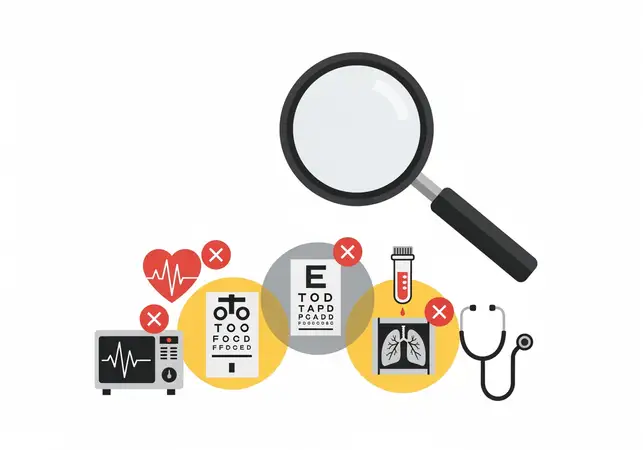
Understanding the Purpose of the Medical Examination
Before we dive into the specific reasons for rejection, it's important to understand why government bodies conduct these tests. The primary goal is to ascertain that a candidate possesses sound health and is free from any physical or mental defect that could interfere with the efficient performance of their duties. The standards are not meant to be exclusionary but are based on the specific requirements of the job.
Medical standards can be broadly categorised into two groups:
- Uniformed Services (Defence, Police, Paramilitary): These have the strictest medical standards. Roles in these services are physically demanding and require candidates to be in peak physical condition. Even minor deviations can lead to rejection.
- Non-Uniformed/Civil Services (Clerical, Administrative, Technical): The standards here are comparatively relaxed. The focus is more on ensuring the candidate doesn't have a chronic or debilitating condition that would hinder their ability to perform desk-based or technical tasks and lead to frequent absenteeism.
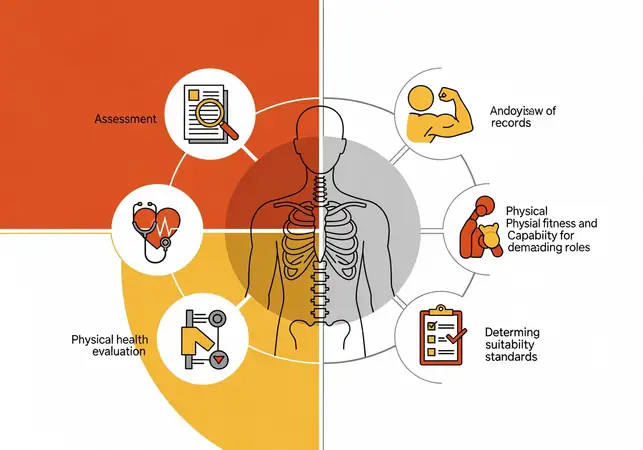
Knowing which category your desired job falls into will help you understand the level of scrutiny you can expect. You can find the detailed medical standards in the official recruitment notification, which is the most reliable source of information. Keep an eye on our /sarkari-result page for the latest notifications.
General Physical Standards: Height, Weight, and Chest
This is the first and most basic level of assessment. While these standards seem straightforward, many candidates are found unfit at this stage. The requirements vary significantly based on the service, post, and sometimes even the state.
Key Parameters:
- Height: A minimum height is specified for most uniformed services. There are often relaxations for female candidates and candidates from certain regions (e.g., hilly areas, North-Eastern states).
- Weight: Weight should be proportionate to height, as per the Body Mass Index (BMI) chart. Both underweight and overweight conditions can be grounds for temporary or permanent rejection. A healthy BMI range is generally considered to be between 18.5 and 24.9.
- Chest: This is primarily for male candidates in uniformed services. A minimum unexpanded chest measurement is required, along with a mandatory minimum expansion (usually 5 cm).
Here’s an illustrative table of typical standards. Remember, these are examples and you must check the official notification for your specific exam.
| Post/Service Type | Typical Height (Male) | Typical Height (Female) | Chest (Male Only) |
|---|---|---|---|
| Police Constable (State Police) | 168 - 170 cm | 155 - 157 cm | 81 cm with 5 cm expansion |
| Sub-Inspector (CAPF) | 170 cm | 157 cm | 80 cm with 5 cm expansion |
| Army Soldier (GD) | 170 cm | N/A | 77 cm with 5 cm expansion |
| Clerical/Bank PO | No specific minimum | No specific minimum | Not applicable |
Actionable Tip: If you are borderline on any of these parameters, start working on it now. A balanced diet and regular exercise can help manage weight. Specific exercises can also help improve chest expansion.
Vision and Eye Health: A Major Point of Scrutiny
Eyesight is one of the most common reasons for medical rejection, especially in jobs requiring sharp observation skills like the Railways, Defence, and Police. The standards are very specific and non-negotiable.
Common Vision-Related Rejection Reasons:
-
Distant & Near Vision: This is tested using the Snellen chart. The standard is expressed as a fraction, like 6/6 or 6/9. 6/6 vision is considered perfect. Many posts allow for correctable vision with glasses up to a certain limit (e.g., -4.0D for Myopia or +4.0D for Hypermetropia). However, the worst eye must also meet a minimum standard.
-
Colour Blindness: This is a critical test for jobs where colour recognition is vital (e.g., Loco Pilot in Railways, Electrical Engineers, Police, Defence). It is tested using the Ishihara chart, which consists of plates with numbers or patterns made of coloured dots. A candidate unable to read the plates is declared colour blind. For most such posts, this is a direct disqualification.
-
Squint (Strabismus): A condition where the eyes do not align properly. This is often a cause for rejection in uniformed services and roles requiring extensive screen time or public interaction.
-
Other Conditions: Any progressive or degenerative eye disease like glaucoma, keratoconus, or nystagmus (involuntary eye movement) can also lead to rejection.
A Note on LASIK/Corrective Surgery: Many government jobs now accept candidates who have undergone corrective eye surgery like LASIK, PRK, or ICL. However, there are usually strict conditions, such as a minimum time gap between the surgery and the medical exam (often 6 months to 1 year), a stable refractive error before surgery, and a certain minimum corneal thickness post-surgery. You must be prepared to present all medical documents related to your surgery.
ENT: Ear, Nose, and Throat Standards
Clear hearing and speech are essential for communication, a key aspect of almost every job. The ENT examination checks for any issues that could impair these functions.
Common ENT Rejection Reasons:
- Hearing Impairment: The ability to hear a forced whisper or conversational voice from a certain distance is a common test. For more precise evaluation, an audiometry test may be conducted. Any significant hearing loss can be a disqualifier.
- Chronic Ear Infections (CSOM): Chronic Suppurative Otitis Media, which involves a perforated eardrum and persistent discharge, is a common reason for rejection. While a healed perforation might be acceptable in some non-uniformed posts, an active infection is not.
- Nasal Deformities: A severely Deviated Nasal Septum (DNS) that obstructs breathing can be a cause for rejection, particularly in physically demanding roles where clear airways are crucial.
- Speech Impediments: Severe stammering or stuttering can be a ground for rejection in jobs that require frequent and clear public communication, such as teaching, public relations, or front-office roles.
Cardiovascular, Respiratory, and Other Systemic Issues
The medical board conducts a thorough examination of your internal systems to rule out any chronic or serious ailments. This is where a candidate who looks perfectly healthy on the outside might face issues.
Cardiovascular System:
- High Blood Pressure (Hypertension): A one-time high reading might be overlooked due to anxiety ('white coat hypertension'), but persistently high BP is a major concern. If your BP is consistently above 140/90 mmHg, you may be declared temporarily unfit and asked to get it controlled.
- Heart Murmurs & Other Conditions: Any abnormal heart sounds (murmurs) will be investigated further with an ECG or 2D Echo. Congenital heart diseases, even if operated on, can be a cause for rejection depending on the job's physical demands.
Respiratory System:
- Asthma: Evidence of active bronchial asthma, especially if it requires regular use of inhalers, is often a disqualifier for uniformed services.
- History of Tuberculosis (TB): A history of fully treated TB with no residual lung damage might be acceptable for some posts, but any sign of active disease or significant scarring on the X-ray is a cause for rejection.
Other Common Issues:
- Orthopedic Problems: Very important for police and defence. Conditions like knock knees, bow legs, flat feet, and spinal deformities (scoliosis, kyphosis) are checked. A certain degree of deviation is allowed, but severe cases are rejected.
- Hernia & Hydrocele: These conditions usually lead to temporary rejection. The candidate is advised to undergo corrective surgery and appear for a re-medical examination.
- Varicose Veins: Prominent and symptomatic varicose veins are a cause for rejection in jobs that require long hours of standing, such as in the police or paramilitary forces.
- Uncontrolled Diabetes: While well-controlled diabetes might be acceptable for many non-uniformed posts, uncontrolled sugar levels are a red flag.
- Dental Points: Some services, particularly in the armed forces, have a system of 'dental points' where a minimum number of healthy teeth are required for proper mastication.
The Appeal Process: What to Do If You Are Rejected
Being declared 'unfit' in the initial medical exam is not always the end of the road. In many cases, especially for temporary issues, you have the right to appeal.
- Understand the Reason: When you are declared unfit, you will be given a memo stating the exact reason. Read it carefully.
- Temporary vs. Permanent Unfitness: The memo will specify if the rejection is temporary or permanent. Temporary unfitness is for correctable issues (e.g., being underweight, hernia, hydrocele). You are given a specific timeframe (e.g., 1-3 months) to rectify the issue and appear for a re-medical.
- Applying for a Review Medical Board (RMB): If you believe the initial board's finding is incorrect, you can apply for a review. There is a set procedure and timeline for this, which involves submitting an application along with a certificate from a specialist government doctor challenging the initial finding.
- Preparation for Re-Medical: If you are appearing for a re-medical after correcting an issue, ensure you have all the necessary medical documents, including pre- and post-surgery reports, fitness certificates from the operating surgeon, etc.
The decision of the Review Medical Board is generally final. Therefore, it is crucial to follow the appeal process diligently. Getting your /admit-card for the medical exam is a huge achievement; don't let a solvable issue stop you at the last minute.
Conclusion: Health is as Important as Knowledge
Clearing the medical examination is a testament to your overall fitness for a long and demanding career in government service. As you prepare for the academic challenges of the 2026 recruitment cycle, do not neglect your physical health. Many of the conditions that lead to rejection are either preventable or manageable if detected early.
We recommend getting a comprehensive medical check-up done by a qualified doctor well in advance. This will give you a clear picture of your health status and allow you ample time to address any potential issues. Remember, the goal is not just to get a job but to build a successful and healthy career. Stay informed, stay healthy, and march towards your goal with confidence.
Frequently Asked Questions (FAQs)
1. Can I be rejected for having a tattoo in a government job medical test? It depends heavily on the service, and the size, location, and content of the tattoo. For uniformed services like the Army, Navy, Air Force, and Police, rules are very strict. Tattoos on the saluting hand or any visible part of the body (like the face or forearm) are generally a cause for rejection. Tattoos with religious symbols or names on the inner forearm may be permitted. Offensive or obscene tattoos are a strict no. For civil/non-uniformed posts, the rules are much more relaxed, and tattoos are generally not a problem unless they are on the face or deemed offensive.2. Is LASIK surgery allowed for government jobs? Yes, for a majority of government jobs, including many civil services and even some uniformed posts, candidates who have undergone LASIK surgery are now considered eligible. However, there are specific conditions: a minimum age at the time of surgery (e.g., 20 years), a minimum time lapse between surgery and the medical exam (usually 6-12 months), and post-surgery vision must meet the required standards without complications. You must declare that you have undergone surgery and provide all relevant medical records.
3. What happens if I have a temporary illness like a fever or a fracture during the medical test? If you have a temporary illness or injury at the time of your scheduled medical examination, you should immediately inform the recruitment authority with a valid medical certificate. In most genuine cases, the medical board will defer your examination to a later date. They will declare you 'temporarily unfit' and give you a new date after you have recovered. It is crucial not to hide such conditions, as they can affect your test results (e.g., fever can raise your heart rate and blood pressure).
4. Are the medical standards the same for male and female candidates? While the general health standards are the same for all candidates, some specific physical standards are different. For example, the minimum height and chest measurement requirements are different for male and female candidates in uniformed services. There are also specific gynaecological checks for female candidates to rule out any conditions that could interfere with their duties. The core principle remains the same: to ensure the candidate is fit for the job.
Medical Test for Govt Jobs 2026 Rejection Reasons
Related: Govt Job Prep | Health Tips
Related: Preparation Tips | Medical Guidelines
Related Resources
- Latest Government Jobs 2026
- Govt Job Selection Process Explained
- Police Constable Physical Test Standards
Related Government Job Resources
Continue with active job hubs and related government job pages on TrueJobs.
Tools for this recruitment topic
Use only the tools relevant to the dates, eligibility or documents discussed above.
TrueJobs Editorial Team
TrueJobs editorial desk
This article is prepared from the sources referenced in the guide and reviewed for clarity, links and dated information. Read our editorial and corrections policy.
Continue This Topic
Follow the closest earlier and newer coverage so older archive posts keep real contextual crawl paths.
Govt Job Application Rejected? 8 Common Reasons & How to Avoid Them
A rejected government job application is disheartening. This guide covers common mistakes, with actionable tips to ensure your next application is successful.
Govt Job Document Verification 2026: Checklist & Rejection Reasons
Cleared your government job exam? The final hurdle is Document Verification. Our complete 2026 guide provides a full checklist and explains common rejection reasons to ensure you're prepared.
Read Next

EWS Certificate for Govt Jobs 2026: Eligibility & How to Apply

Govt Job Document Verification 2026: Checklist & Rejection Reasons

Govt Job Application Rejected? 8 Common Reasons & How to Avoid Them

टाइपिंग स्पीड टेस्ट कैसे पास करें? SSC, कोर्ट और डेटा एंट्री जॉब्स के लिए तैयारी गाइड 2026
Explore Topics
Perfect Your Resume
Use our AI-powered Resume Builder to create ATS-optimized resumes.
AI Resume Builder