
Recruitment guide
Government Jobs Through Sports Quota in 2026 — Explained
For Indian athletes, the sports quota offers a unique path to a stable government career. This guide demystifies the process, detailing eligibility, key recruiting departments like Railways and PSUs, and how to prepare for 2026 vacancies. Learn how to leverage your sporting achievements for a secure future.

For many aspiring athletes in India, the dream extends beyond winning medals and representing the nation; it often includes securing a stable and respectable career. The Indian government, recognizing the immense talent and dedication required to excel in sports, offers a unique pathway to employment through the 'Sports Quota'. This provision is a game-changer for sportspersons, providing them with an opportunity to serve the nation in a different capacity while continuing to pursue their passion. If you're an athlete eyeing government job opportunities in 2026 and beyond, understanding where these vacancies truly originate and how to prepare is crucial. This comprehensive guide from TrueJobs.co.in will demystify the process, helping you navigate the world of government jobs through the sports quota.

Understanding the Sports Quota in Government Jobs: A Gateway for Athletes
The Sports Quota is a special reservation policy implemented by various central and state government departments, Public Sector Undertakings (PSUs), and other government bodies in India. Its primary objective is twofold: to reward and recognize the achievements of sportspersons who have brought laurels to the country or state, and to encourage sports by providing a secure future for talented athletes. This quota ensures that a certain percentage of vacancies (often ranging from 0.5% to 5%, though it varies by organization) are reserved specifically for individuals with proven sports achievements.
This isn't just about offering a job; it's about integrating sports talent into the national workforce. Many government organizations maintain their own sports teams, and recruiting accomplished athletes helps them maintain a strong presence in various inter-departmental and national sports events. For the athletes, it offers unparalleled job security, a steady income, and often, the flexibility to continue their training and participation in competitive sports.
It's important to note that while the quota provides a reserved pathway, it doesn't mean a guaranteed job. Candidates still need to meet specific eligibility criteria, undergo a selection process, and demonstrate their continued fitness and commitment to sports. The system is designed to identify genuine talent and provide them with a deserving career opportunity.
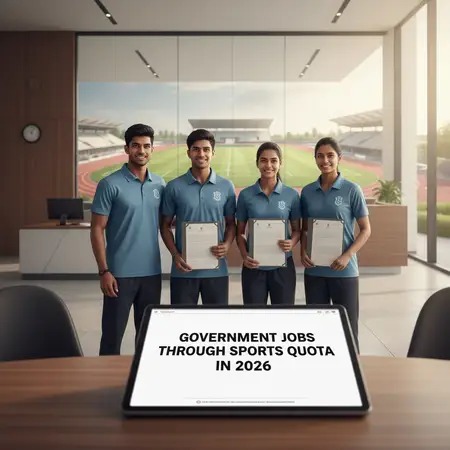
Eligibility Criteria for Sports Quota Jobs: Are You Game?
To qualify for a government job under the sports quota, candidates must meet a specific set of criteria that goes beyond general educational qualifications. These criteria primarily revolve around their sporting achievements, age, and educational background. While exact requirements can vary slightly between departments and specific job roles, here's a general overview:
1. Sports Achievements: The Core Requirement
This is the most critical aspect. Candidates must have represented at a certain level in a recognized sport. The levels generally accepted include:
- International Competitions: Representing India in events like the Olympics, World Championships, Asian Games, Commonwealth Games, etc.
- National Competitions: Participation in National Championships/Games organized by recognized National Sports Federations (NSFs) or the Indian Olympic Association (IOA).
- Inter-University Competitions: Representing a university in All India Inter-University Tournaments organized by the Association of Indian Universities (AIU).
- State-Level Competitions: Participation in State Championships organized by State Sports Associations recognized by the NSF.
- School National Games: Representing a state in the National School Games organized by the School Games Federation of India (SGFI).
Crucial Point: The sports achievements must be recent, typically within the last 3-5 years from the date of application. The certificates must be issued by the competent authority (e.g., National Federation, IOA, AIU, SGFI) and in the prescribed format. Unrecognized tournaments or local club-level achievements usually do not qualify.
2. Educational Qualifications
Most sports quota jobs require a minimum educational qualification, typically:
- 10th Pass: For Group C and D posts.
- 12th Pass: For many clerical or assistant-level positions.
- Graduation: For higher-level posts, often combined with administrative duties.
Specific job roles might demand specialized degrees or diplomas, but the sporting achievement remains paramount.
3. Age Limit
The general age limits for government jobs apply (e.g., 18-27 years for many central government posts). However, a significant advantage for sportspersons is the provision of age relaxation. Typically, a relaxation of 5 years (10 years for SC/ST candidates) is granted to eligible sportspersons. This means an athlete can apply for jobs until a later age than general candidates, accommodating their peak performance years in sports.
4. Medical Fitness
Candidates must be medically fit to perform the duties of the post. This often involves a medical examination conducted by the recruiting authority.
5. Specific Sport Recognition
Only achievements in sports recognized by the Ministry of Youth Affairs & Sports, Government of India, are considered. A list of such recognized sports is usually provided in the official notification.
Decoding the Recruitment Process: From Application to Appointment
The recruitment process for government jobs through the sports quota is unique, emphasizing practical sports skills alongside administrative checks. While it can vary slightly across different organizations, here's a general outline:
1. Notification Release
The process begins with the release of an official job notification by the recruiting body. This notification details the available vacancies, eligibility criteria (educational, age, sports achievements), recognized sports, application procedure, important dates, and selection methodology. You can find such notifications on TrueJobs.co.in or the official websites of the respective departments/PSUs.
2. Application Submission
Eligible candidates need to apply within the specified deadline, usually online or sometimes offline. This involves filling out an application form, uploading/attaching scanned copies of educational certificates, age proof, caste certificate (if applicable), and most importantly, all relevant sports achievement certificates. Ensure all documents are clear and verifiable.
3. Scrutiny of Applications
After the application deadline, the recruiting authority scrutinizes all applications. This stage involves verifying the authenticity and validity of the sports certificates, educational qualifications, and other submitted documents. Applications that do not meet the minimum criteria or have incomplete/incorrect information are rejected.
4. Sports Trials/Physical Fitness Test
This is a crucial stage unique to sports quota recruitment. Shortlisted candidates are called for sports trials or a physical fitness test. The nature of the trial depends on the sport:
- For Team Sports: Candidates might be assessed on their skills, game sense, and performance in a practice match or drill.
- For Individual Sports: Performance might be evaluated based on specific techniques, speed, strength, or a competitive trial.
- Physical Fitness Test: For roles requiring high physical standards (e.g., Police, Paramilitary), a comprehensive physical fitness test (running, long jump, high jump, etc.) may be conducted.
Expert coaches or a selection committee with sports background usually conduct these trials. The performance in these trials often carries significant weight in the final selection.
5. Interview (Optional)
Some departments may conduct an interview round to assess the candidate's personality, communication skills, general awareness, and commitment to the role and sports. However, many sports quota recruitments prioritize sports performance and may skip a formal interview for certain Group C/D posts.
6. Document Verification
Before final selection, a thorough document verification process is undertaken. Candidates must present all original certificates (educational, age, caste, sports, etc.) for verification against the submitted copies. Any discrepancy can lead to disqualification.
7. Medical Examination
Selected candidates will undergo a medical examination to ensure they meet the prescribed health standards for the post. This is a mandatory step for almost all government jobs.
8. Final Merit List and Appointment
Based on the performance in sports trials, interviews (if any), and successful document verification/medical examination, a final merit list is prepared. Candidates on this list are then offered appointment letters. The selection is purely based on merit within the sports quota, considering the level of achievement and performance in trials.
Where Do Sports Quota Vacancies Originate? Unveiling the Sources
Understanding the primary sources of sports quota vacancies is key to strategically planning your job search for 2026. These opportunities don't just appear; they are systematically created by various government bodies for specific reasons. Here's a breakdown of where these coveted positions truly come from:
1. Indian Railways: A Major Patron of Sports
The Indian Railways is arguably one of the largest employers of sportspersons in India. They have a rich history of promoting sports and maintaining robust railway sports teams across various disciplines. Vacancies frequently arise in different railway zones and production units for Group C and D posts. Railways recruit athletes to represent their zones in national and inter-railway competitions, and these athletes often go on to represent India. Their recruitment drives are a consistent source of sports quota jobs.
2. Ministry of Home Affairs (Police & Paramilitary Forces)
Forces like the Central Reserve Police Force (CRPF), Border Security Force (BSF), Indo-Tibetan Border Police (ITBP), Sashastra Seema Bal (SSB), Central Industrial Security Force (CISF), and various State Police Departments regularly recruit sportspersons. The physically demanding nature of these jobs makes athletes ideal candidates. They recruit for positions like Constable, Sub-Inspector, and other ranks, often forming their own departmental teams for national-level competitions. Their recruitment notifications are a significant source of opportunities.
3. Public Sector Undertakings (PSUs)
Many prominent PSUs across different sectors actively recruit sportspersons. These include:
- Oil & Gas: Oil and Natural Gas Corporation (ONGC), Indian Oil Corporation Ltd (IOCL), GAIL, HPCL, BPCL.
- Power: National Thermal Power Corporation (NTPC), Power Grid Corporation of India Ltd (POWERGRID).
- Mining & Manufacturing: Coal India Ltd (CIL), Bharat Heavy Electricals Limited (BHEL), Steel Authority of India Ltd (SAIL).
- Banking: State Bank of India (SBI), Punjab National Bank (PNB), Bank of Baroda, Canara Bank, and other Public Sector Banks.
PSUs often recruit athletes to enhance their corporate image, participate in inter-PSU tournaments, and fulfill their corporate social responsibility. These jobs are generally well-paying and offer excellent benefits.
4. Central Government Ministries and Departments
Various central government ministries and their attached/subordinate offices also release sports quota vacancies. Examples include:
- Department of Posts (India Post): Recruits Gramin Dak Sevaks (GDS) and other roles with sports quota.
- Staff Selection Commission (SSC): While SSC primarily conducts open competitive exams, some of the departments under its purview (e.g., Customs, Income Tax, CAG) may have specific sports quota recruitments or include sports achievements as a criterion for certain posts.
- Ministry of Defence (Civilian Posts): Certain civilian roles within the armed forces establishments might have sports quota.
5. State Government Departments
Similar to the central government, state governments also reserve positions for sportspersons in their various departments. Key areas include:
- State Police: A major recruiter for athletes.
- Education Department: For physical education teachers or support staff.
- Sports & Youth Affairs Departments: Direct recruitment for roles promoting sports.
- State PSUs: State-level public sector undertakings.
Each state has its own reservation policies and recruitment cycles, so it's essential to monitor state government job portals.
6. Autonomous Bodies and Other Organizations
Organizations like the Sports Authority of India (SAI), various national sports federations (though these are more sports-specific roles), and other autonomous bodies funded by the government may also have provisions for sports quota recruitment. These are less frequent but worth watching out for.
In essence, vacancies come from any government entity that recognizes the value of incorporating sports talent into its workforce, whether for departmental teams, maintaining physical fitness standards, or simply as a commitment to national sports development.
Key Sports Disciplines Recognized for Government Jobs
While the specific list can vary by the recruiting organization and the nature of the job, most government bodies recognize a broad spectrum of sports disciplines for their quota recruitments. It's crucial to check the official notification for the exact list of eligible sports. However, here's a comprehensive list of commonly recognized sports:
Individual Sports:
- Athletics (Track & Field)
- Archery
- Badminton
- Boxing
- Cycling
- Gymnastics
- Judo
- Shooting
- Swimming
- Table Tennis
- Taekwondo
- Weightlifting
- Wrestling
- Wushu
- Fencing
- Squash
- Tennis
- Triathlon
- Kayaking & Canoeing
- Rowing
- Sailing
- Equestrian
- Golf
Team Sports:
- Basketball
- Cricket
- Football
- Handball
- Hockey
- Kabaddi
- Kho-Kho
- Volleyball
- Baseball
- Rugby
Other Recognized Sports:
- Bodybuilding (often for Police/Paramilitary)
- Chess (less common for physical roles, but recognized for some administrative posts)
- Bridge
- Billiards & Snooker
- Softball
It's important for athletes to ensure their achievements are in a sport recognized by the Ministry of Youth Affairs & Sports, Government of India, and the specific recruiting body. Always refer to the latest notification for the definitive list.
Preparing for Sports Quota Applications: A Strategic Approach
Securing a government job through the sports quota requires more than just athletic prowess; it demands meticulous preparation and a strategic approach. Here's how you can best prepare for opportunities in 2026 and beyond:
1. Maintain and Update Sports Certificates
Your sports achievements are your most valuable asset. Ensure all your certificates are original, properly formatted, signed by the competent authorities, and up-to-date. Keep digital copies and multiple physical copies. If you've recently participated in a tournament, ensure you receive your certificate promptly. Verify that the issuing body is recognized by the government.
2. Stay Physically Fit and Game-Ready
Recruitment through sports quota often involves physical fitness tests and/or sports trials. Continuous training and maintaining peak physical condition are non-negotiable. Even if you're not actively competing, keep up with your sport-specific training to be ready for trials at short notice. Focus on endurance, strength, agility, and sport-specific skills.
3. Keep Educational Documents in Order
While sports achievements are key, basic educational qualifications are also mandatory. Ensure all your academic certificates (10th, 12th, Graduation, etc.) are readily available and in proper order. Have clear photocopies and digital scans.
4. Monitor Job Notifications Diligently
This is perhaps the most crucial step. Sports quota vacancies are not always as frequent or widely advertised as general vacancies. You need to be proactive:
- TrueJobs.co.in: Regularly visit our portal and set up job alerts for 'sports quota' or 'sarkari naukri for sportspersons'. We strive to bring you the latest notifications.
- Official Websites: Keep an eye on the career sections of major recruiters like Indian Railways, various Paramilitary Forces (CRPF, BSF, etc.), PSUs (ONGC, IOCL, Banks), and State Government portals.
- Employment News: This weekly publication by the Ministry of Information & Broadcasting often carries government job advertisements, including sports quota specific ones.
- National Sports Federations: Sometimes, federations might have information on upcoming recruitments.
Don't wait for 2026 to start looking; these opportunities arise throughout the year.
5. Prepare for General Aptitude (If Applicable)
While many sports quota recruitments focus solely on sports performance, some positions, especially at higher levels or those with significant administrative duties, might include a basic written test on general knowledge, reasoning, or quantitative aptitude. It's wise to have a basic understanding of these subjects. /exam-preparation
6. Understand the Application Process Thoroughly
Each notification will have specific instructions for applying. Read them carefully. Pay attention to the format of certificates, photograph specifications, and the mode of application (online/offline). Errors in application can lead to disqualification.
7. Get Caste Certificates (If Applicable)
If you belong to SC/ST/OBC categories, ensure you have your caste certificate in the prescribed format from the competent authority. This is essential for availing age relaxation and other benefits.
8. Practice Interview Skills (If Applicable)
While not always part of the process, if an interview is mentioned, practice your communication skills. Be ready to articulate your achievements, dedication to sports, and why you are a suitable candidate for the job.
By adopting this strategic approach, you significantly enhance your chances of securing a coveted government job through the sports quota.
Benefits and Career Growth for Athletes in Government Service
A government job through the sports quota offers a multitude of benefits that extend far beyond just employment. It's a pathway to a secure and fulfilling career, allowing athletes to leverage their unique skills and dedication. Here's a look at the advantages and career growth prospects:
1. Job Security and Stability
One of the most significant benefits of a government job is unparalleled job security. Unlike the often unpredictable nature of a professional sports career, a government job provides a stable income and a permanent position, offering peace of mind for athletes and their families.
2. Regular Income and Benefits
Government employees receive a fixed salary, along with various allowances (DA, HRA, TA, etc.), medical facilities, and a pension scheme (under the National Pension System). This financial stability is crucial, especially after an athlete's competitive career might slow down.
3. Opportunity to Continue Playing and Training
Many government organizations, particularly Railways, PSUs, and Police/Paramilitary forces, actively encourage their employee-athletes to continue playing. They often provide:
- Time Off for Training and Competitions: Special leave provisions for participation in national and international events.
- Sports Facilities: Access to internal sports facilities and coaching.
- Financial Support: Some organizations may offer additional support for equipment, travel, or specialized coaching.
This allows athletes to balance their professional duties with their passion for sports, often representing their department or even the nation while employed.
4. Respect and Recognition
Being a government employee, especially one recognized for sporting achievements, commands respect in society. It's a dual identity where you are both a civil servant and an accomplished athlete.
5. Career Progression and Promotions
Government jobs offer clear career progression paths. Athletes, like other employees, are eligible for promotions based on their performance, experience, and sometimes, further educational qualifications. Exceptional sporting achievements can also be considered during performance appraisals in some departments.
6. Post-Retirement Benefits
With the National Pension System (NPS), government employees receive a regular income post-retirement, ensuring financial independence in their later years.
7. Social Impact and Role Model Status
By serving in a government role, athletes continue to contribute to society. Their journey from sports to public service can inspire younger generations to pursue both academic excellence and sporting achievements.
8. Diverse Roles
Depending on the department and the athlete's qualifications, roles can range from clerical positions to more specialized administrative or even coaching roles within the organization's sports division. This diversity allows athletes to find a position that best suits their skills and interests.
In essence, government jobs through the sports quota provide a holistic package – combining the thrill of sports with the stability of a government career, making it an incredibly attractive option for India's talented athletes.
How to Find Sports Quota Job Notifications for 2026 and Beyond
Staying updated on sports quota job notifications is paramount to seizing these opportunities. Given that these vacancies might not always be as frequent or widely advertised as general recruitment drives, a proactive and multi-pronged approach is essential. Here’s how you can effectively track down these valuable announcements for 2026 and the years to come:
1. TrueJobs.co.in: Your Go-To Portal
As a leading government job portal, TrueJobs.co.in is dedicated to bringing you the latest and most relevant job notifications. We regularly update our website with vacancies from various central and state government departments, PSUs, and other organizations, including those under the sports quota. Make it a habit to:
- Visit Daily: Check our 'Sarkari Naukri' section /sarkari-naukri or use the search bar with keywords like "sports quota," "sportspersons," or specific department names.
- Set Up Job Alerts: Register on TrueJobs.co.in and set up email/SMS alerts for job categories related to 'Sports Quota' or 'Government Jobs for Athletes'. This ensures you receive notifications directly in your inbox as soon as they are published.
- Follow Our Social Media: We often share important updates and notifications on our social media channels.
2. Official Websites of Recruiting Organizations
Directly monitoring the 'Career' or 'Recruitment' sections of major government recruiters is highly effective:
- Indian Railways: Visit the websites of various Railway Recruitment Boards (RRBs) or Railway Recruitment Cells (RRCs) for specific zonal notifications.
- Paramilitary Forces: Check the official websites of CRPF, BSF, ITBP, SSB, CISF, Assam Rifles, etc.
- Public Sector Banks: Monitor the career pages of SBI, PNB, Bank of Baroda, and the Institute of Banking Personnel Selection (IBPS) for notifications.
- PSUs: Regularly visit the corporate websites of ONGC, IOCL, NTPC, BHEL, SAIL, etc.
- State Governments: Check the official job portals or public service commissions of your respective state.
- SSC: While less frequent for direct sports quota, keep an eye on SSC notifications for any relevant announcements.
3. Employment News / Rozgar Samachar
This weekly newspaper, published by the Ministry of Information & Broadcasting, Government of India, is a treasure trove of government job advertisements. It's available in both English and Hindi and is a reliable source for all central government vacancies, including sports quota positions. You can subscribe to it or read the e-paper version.
4. Reputable Newspapers
Major national and regional newspapers (especially their classifieds or recruitment sections) often carry advertisements for government jobs. While not as comprehensive as online portals, they can serve as an initial alert.
5. Networking and Sports Federations
Stay connected with your coaches, fellow athletes, and state/national sports federations. They often have an ear to the ground regarding upcoming opportunities or departmental recruitments that might not be widely advertised initially.
6. Government Job Alert Apps and Forums
Consider using reputable government job alert apps or joining online forums where job aspirants share information. Always cross-verify information from such sources with official notifications.
By combining these methods, you can create a robust system for tracking sports quota job notifications, ensuring you don't miss out on valuable opportunities in 2026 and the years to follow. Remember, timely application with accurate documentation is key to success.
Checks to complete before you apply
The sports quota in government jobs stands as a testament to India's commitment to nurturing and rewarding its athletic talent. For many sportspersons, it offers a golden opportunity to transition from the competitive arena to a stable and respectable career, providing job security, financial stability, and often,
Related Resources
- Latest Government Job Notifications
- Railway Recruitment Board (RRB) Jobs
- How to Prepare for Government Exams
Frequently Asked Questions (FAQs)
Here are answers to common questions about government jobs through the sports quota.
What is the sports quota in government jobs?
The sports quota is a reservation policy in Indian government departments and PSUs. It reserves a percentage of job vacancies for accomplished sportspersons to reward their achievements and encourage sports.
Which departments offer the most sports quota jobs?
Indian Railways, Police & Paramilitary Forces (under the Ministry of Home Affairs), and various Public Sector Undertakings (PSUs) are among the largest recruiters under the sports quota.
What is the basic eligibility for sports quota jobs?
Eligibility typically requires specific sports achievements at national or international levels, meeting educational qualifications for the post, being within the age limit, and passing a medical fitness test.
How can I find sports quota job notifications for 2026?
You can find notifications on dedicated job portals like TrueJobs.co.in, the official websites of recruiting organizations (e.g., Railways, PSUs), and in the Employment News (Rozgar Samachar).
Reader questions: Government Jobs
What is the sports quota in government jobs?
The sports quota is a reservation policy in Indian government departments and PSUs. It reserves a percentage of job vacancies for accomplished sportspersons to reward their achievements and encourage sports.
Which departments offer the most sports quota jobs?
Indian Railways, Police & Paramilitary Forces (under the Ministry of Home Affairs), and various Public Sector Undertakings (PSUs) are among the largest recruiters under the sports quota.
What is the basic eligibility for sports quota jobs?
Eligibility typically requires specific sports achievements at national or international levels, meeting educational qualifications for the post, being within the age limit, and passing a medical fitness test.
How can I find sports quota job notifications for 2026?
You can find notifications on dedicated job portals like TrueJobs.co.in, the official websites of recruiting organizations (e.g., Railways, PSUs), and in the Employment News (Rozgar Samachar).
Related Government Job Resources
Continue with active job hubs and related government job pages on TrueJobs.
Tools for this recruitment topic
Use only the tools relevant to the dates, eligibility or documents discussed above.
TrueJobs Editorial Team
TrueJobs editorial desk
This article is prepared from the sources referenced in the guide and reviewed for clarity, links and dated information. Read our editorial and corrections policy.
Continue This Topic
Follow the closest earlier and newer coverage so older archive posts keep real contextual crawl paths.
Government Jobs Accepting Apprenticeship Experience in 2026: Your Pathway to Success
Discover how your apprenticeship experience can unlock government job opportunities in 2026. This guide covers key sectors like PSUs and Railways, eligibility benefits, and strategies to secure your dream role in the Indian government sector.
Government Jobs for Architects in 2026: Your Path to Public Service
Discover the rewarding career path for architects in government service for 2026. This guide details job opportunities, key departments, salary, and how to secure a stable and impactful public sector role in India.
Read Next

Government Jobs Accepting Apprenticeship Experience in 2026: Your Pathway to Success

Government Jobs for Architects in 2026: Your Path to Public Service

Government Jobs 2026: Hindi Typing Roles (Clerk, Court, Secretariat)
Government Jobs After BPT in 2026: Physiotherapy Roles & Opportunities
Explore Topics
Perfect Your Resume
Use our AI-powered Resume Builder to create ATS-optimized resumes.
AI Resume Builder