
Career guide
Latest Ramsar Sites in India 2026: Latest Additions — Explained
Explore the complete guide to Ramsar Sites in India for 2026. This article covers latest additions, their significance, and key facts for government job exams.

Wetlands are among the most biodiverse and productive ecosystems on Earth, playing a crucial role in water purification, flood control, carbon sequestration, and supporting a vast array of flora and fauna. Recognizing their immense ecological and economic value, the international Ramsar Convention on Wetlands was established in 1971 to promote their conservation and wise use. India, a signatory to this vital convention, has been actively identifying and designating wetlands of international importance, known as Ramsar Sites. As we look towards 2026, the continuous efforts to expand this network highlight India's commitment to environmental stewardship.
For aspirants preparing for government job exams, staying updated on these new additions and understanding their significance is not just academic; it's a critical component of current affairs and environmental knowledge, often featuring prominently in competitive examinations.

Understanding Ramsar Sites: A Global Commitment
The Convention on Wetlands, known as the Ramsar Convention, is an intergovernmental treaty that provides the framework for national action and international cooperation for the conservation and wise use of wetlands and their resources. Adopted in the Iranian city of Ramsar in 1971 and entering into force in 1975, it is the only global environmental treaty that deals with a specific ecosystem.
What is a Ramsar Site?
A Ramsar Site is a wetland designated to be of international importance under the Ramsar Convention criteria. These criteria cover various aspects, including a site's ecological, botanical, zoological, limnological, or hydrological importance. Wetlands can be natural or human-made, permanent or temporary, with water that is static or flowing, fresh, brackish, or salt, including areas of marine water the depth of which at low tide does not exceed six metres.
The Importance of the Ramsar Convention
- Conservation and Wise Use: It encourages contracting parties to formulate and implement planning that promotes the wise use of all wetlands in their territory.
- International Cooperation: Facilitates collaboration on transboundary wetlands, shared wetland systems, and shared species.
- Ecological Network: Helps create a global network of wetlands critical for biodiversity conservation.
- Policy Development: Provides guidance and tools for national wetland policies, legislation, and management.
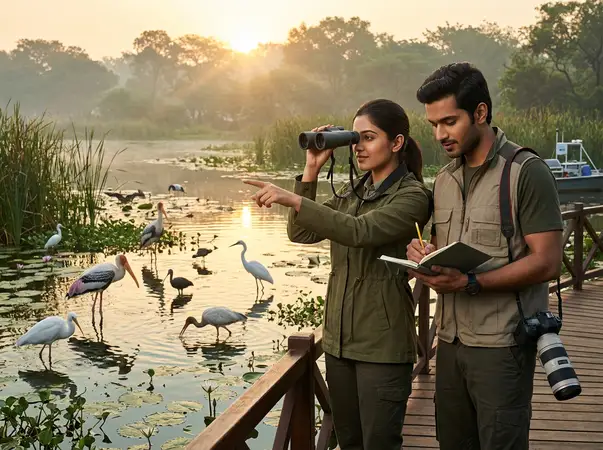
India became a Contracting Party to the Ramsar Convention on February 1, 1982, demonstrating its dedication to protecting its rich wetland heritage. Since then, the number of designated sites in India has steadily grown, reflecting increased awareness and conservation efforts.
India's Growing Ramsar Footprint: A Historic Overview
India is home to a diverse range of wetland ecosystems, from high-altitude Himalayan wetlands to vast coastal mangroves and freshwater lakes. These wetlands are vital for maintaining ecological balance, supporting livelihoods, and providing essential ecosystem services. India's journey with the Ramsar Convention began with the designation of Chilika Lake (Odisha) and Keoladeo National Park (Rajasthan) as its first Ramsar Sites in 1981.
Recent Expansion and National Commitment
Over the past few years, India has significantly accelerated its efforts to identify and designate new Ramsar Sites. This surge reflects a renewed national commitment to wetland conservation, recognizing their critical role in climate change mitigation and adaptation, biodiversity protection, and sustainable development. For instance, the period between 2021 and 2023 saw a remarkable increase in the number of designated sites, bringing the total to 80 as of early 2024.
The government's focus on wetlands is also evident through initiatives like the 'Amrit Dharohar' scheme, which aims to promote the unique conservation values of Ramsar Sites. This proactive approach suggests that the trend of adding new sites will likely continue, with more wetlands expected to join the international list by 2026 and beyond.
Why the Increase?
- Enhanced Surveys and Identification: More comprehensive national wetland inventories and surveys have helped identify previously unrecognized sites of international importance.
- Increased Awareness: Greater public and governmental awareness of the ecological and socio-economic benefits of wetlands.
- International Obligations: Fulfilling commitments under various international environmental agreements.
- Biodiversity Hotspots: Many newly designated sites are critical habitats for endangered species and migratory birds.
The Process of Designating a Ramsar Site in India
The designation of a wetland as a Ramsar Site is a multi-step process involving scientific assessment, stakeholder consultation, and governmental approval. Understanding this process is crucial for appreciating the significance of each new addition.
Key Steps Involved:
- Identification: State wetland authorities, research institutions, or NGOs identify potential wetland sites based on the Ramsar Convention's nine criteria for identifying wetlands of international importance. These criteria relate to the site's importance for specific biogeographical regions, rare or unique wetland types, or its support for vulnerable, endangered, or critically endangered species, among others.
- Scientific Assessment: Detailed ecological surveys and studies are conducted to gather data on the wetland's biodiversity, hydrological characteristics, ecosystem services, and threats. This assessment confirms whether the site meets one or more of the Ramsar criteria.
- Stakeholder Consultation: Local communities, indigenous groups, conservation organizations, and other relevant stakeholders are consulted to ensure their support and involvement in the management plan.
- Preparation of Information Sheet: A comprehensive Ramsar Information Sheet (RIS) is prepared, detailing the site's ecological characteristics, boundaries, management plans, and threats.
- National Approval: The RIS is submitted to the Ministry of Environment, Forest and Climate Change (MoEFCC), Government of India, for review and approval.
- Submission to Ramsar Secretariat: Once approved at the national level, the MoEFCC formally nominates the site to the Ramsar Secretariat, based in Gland, Switzerland.
- Designation: The Ramsar Secretariat reviews the nomination and, if all criteria are met, officially designates the wetland as a Ramsar Site. This designation is then publicly announced.
This rigorous process ensures that only truly significant wetlands are recognized, emphasizing the value and conservation needs of each designated site. The ongoing nature of this process means that new sites are constantly under consideration, paving the way for future additions like those anticipated by 2026.
Significance of Ramsar Sites: Why They Matter for India and Beyond
Designating a wetland as a Ramsar Site is more than just an honorary title; it brings tangible benefits and increased responsibility for its conservation. These sites are critical for ecological health, human well-being, and sustainable development.
Ecological Importance:
- Biodiversity Hotspots: Many Ramsar Sites are crucial habitats for a wide range of species, including migratory birds, fish, amphibians, and rare plants. They serve as breeding grounds, feeding areas, and stopovers for species on long migratory routes.
- Ecosystem Services: Wetlands provide invaluable services such as water purification, groundwater recharge, flood control, erosion prevention, and nutrient cycling.
- Climate Change Mitigation: Peatlands and mangroves, often designated as Ramsar Sites, are significant carbon sinks, playing a vital role in mitigating climate change by sequestering large amounts of carbon.
Socio-Economic Benefits:
- Livelihood Support: Wetlands support the livelihoods of millions of people through fisheries, agriculture, tourism, and the provision of essential resources like water and timber.
- Cultural Heritage: Many wetlands hold deep cultural and spiritual significance for local communities, often associated with traditional practices and beliefs.
- Research and Education: They serve as living laboratories for scientific research and educational outreach, fostering a deeper understanding of ecological processes.
Conservation and Management:
- Enhanced Protection: Designation brings international recognition and often leads to increased national and international funding for conservation efforts.
- Integrated Management: It encourages the development and implementation of comprehensive management plans that involve local communities and diverse stakeholders.
- Policy Influence: Ramsar status can influence national environmental policies and legislation, leading to stronger protection measures for wetlands.
The collective impact of these sites contributes significantly to India's environmental resilience and its global commitment to sustainable development goals.
Examining the \"New Ramsar Sites in India 2026\": What to Expect
While specific wetlands to be designated as Ramsar Sites in 2026 cannot be predicted with certainty, the ongoing trend and India's commitment suggest that more additions are highly probable. Aspirants for government jobs should focus on understanding the *process* and *criteria* for designation, as well as staying rigorously updated on *actual* announcements as they happen.
Anticipating Future Additions:
- Geographical Spread: Expect potential new sites from states that currently have fewer Ramsar Sites or those with significant wetland areas that are yet to be recognized.
- Diverse Wetland Types: Future additions might include a mix of coastal wetlands (mangroves, estuaries, coral reefs), inland wetlands (lakes, rivers, marshes, peatlands), and human-made wetlands (reservoirs, rice paddies).
- Focus on Critical Ecosystems: Wetlands supporting endangered species, migratory bird flyways, or providing critical ecosystem services (e.g., flood control in urban areas) are likely candidates.
- State-Led Initiatives: Many states are actively identifying and proposing their wetlands for Ramsar designation, indicating a bottom-up approach to conservation.
How to Prepare for Exams Regarding Future Sites:
Since we cannot predict the exact sites for 2026, your preparation should be dynamic:
- Stay Updated with Current Affairs: Regularly follow environmental news from official sources like the MoEFCC, Press Information Bureau (PIB), and reputable news agencies. Any new Ramsar designation will be a significant news item. /current-affairs
- Understand the Criteria: Be familiar with the nine criteria for Ramsar designation. This helps in understanding *why* a particular site is chosen.
- Track Recent Additions: Learn about the sites added in the immediate past (e.g., 2022, 2023, 2024). These recent additions often form the basis of exam questions.
- Geographical Knowledge: Be able to locate these sites on a map and know which state they belong to.
The "New Ramsar Sites in India 2026" topic, therefore, is less about a fixed list and more about a continuous process of national and international environmental commitment that requires ongoing attention from exam aspirants.
Key Facts and Figures for Government Job Exams
For government job aspirants, Ramsar Sites are a recurring topic in General Awareness, Environment, and Current Affairs sections. Here's a compilation of essential facts and figures that you must know, based on the current status (as of early 2024). Remember to update these with any new additions announced before your specific exam date.
General Facts:
- Total Ramsar Sites in India: 80 (as of January 2024).
- India Joined Ramsar Convention: February 1, 1982.
- First Ramsar Sites in India: Chilika Lake (Odisha) and Keoladeo National Park (Rajasthan) - designated in 1981.
- Largest Ramsar Site in India: Sundarbans Wetland (West Bengal).
- Smallest Ramsar Site in India: Renuka Wetland (Himachal Pradesh).
- State with the Most Ramsar Sites: Tamil Nadu (currently 16 sites).
Recent Additions (Example from 2022-2024 for illustrative purposes):
While specific 2026 additions are unknown, understanding recent trends is vital. For example, in January 2024, five new sites were added:
- Ankasamudra Bird Conservation Reserve (Karnataka)
- Aghanashini Estuary (Karnataka)
- Magadi Kere Conservation Reserve (Karnataka)
- Karaivetti Bird Sanctuary (Tamil Nadu)
- Longwood Shola Reserve Forest (Tamil Nadu)
These additions highlight the continuous expansion and the importance of tracking state-wise distribution.
Top States by Number of Ramsar Sites (as of early 2024):
| State | Number of Ramsar Sites |
|---|---|
| Tamil Nadu | 16 |
| Uttar Pradesh | 10 |
| Karnataka | 4 |
| Madhya Pradesh | 4 |
| Odisha | 6 |
| Jammu & Kashmir | 5 |
Key Concepts for Exams:
- Montreux Record: A register of Ramsar Sites where changes in ecological character have occurred, are occurring, or are likely to occur as a result of technological developments, pollution or other human interference. Currently, two Indian sites are on the Montreux Record: Keoladeo National Park (Rajasthan) and Loktak Lake (Manipur).
- Wetlands (Conservation and Management) Rules: India has its own rules to govern the conservation and management of wetlands, reinforcing the Ramsar Convention's objectives.
Regularly reviewing these facts and figures, and updating them as new information becomes available, is crucial for excelling in competitive exams. /exam-preparation
Preparing for Exams: How to Stay Updated on Ramsar Sites
Given the dynamic nature of Ramsar Site designations, a proactive approach is essential for government job aspirants. Here's how you can effectively stay updated and prepare for questions related to these critical environmental assets:
- Follow Official Sources: Regularly check the official website of the Ministry of Environment, Forest and Climate Change (MoEFCC), Government of India, and the Ramsar Convention website. Press releases from the Press Information Bureau (PIB) are also reliable sources for announcements.
- Read Reputable News: Subscribe to or regularly read national newspapers and online news portals that cover environmental news. Pay special attention to articles discussing biodiversity, conservation, and government environmental initiatives.
- Current Affairs Magazines/Websites: Utilize dedicated current affairs resources that compile important national and international news, including environmental updates. Many provide monthly or weekly digests that are invaluable for exam preparation. /current-affairs
- Create a Dedicated Study Log: Maintain a separate section in your notes or a digital document specifically for Ramsar Sites. Update it with new additions, noting the site's name, state, and any unique ecological features.
- Practice Map-Based Questions: Be prepared to identify Ramsar Sites on a map. Knowing their geographical location is often tested.
- Understand the 'Why': Don't just memorize names. Try to understand *why* a particular wetland was designated. What unique species does it support? What ecological service does it provide? This deeper understanding helps in tackling analytical questions.
- Previous Year Question Papers: Analyze past exam papers to understand the types of questions asked about Ramsar Sites and wetlands in general. This will guide your study focus. /sarkari-result
By
Frequently Asked Questions (FAQs) about Ramsar Sites in India
What is a Ramsar Site?
A Ramsar Site is a wetland of international importance designated under the Ramsar Convention. This designation recognizes its significant ecological, botanical, zoological, or hydrological value.
Why are Ramsar Sites important for government job exams in India?
Ramsar Sites are a key topic in the current affairs and environmental sections of many government job exams. Questions often cover new additions, locations, and their ecological significance.
Which state has the highest number of Ramsar Sites in India?
As of early 2024, Tamil Nadu has the highest number of Ramsar Sites in India, followed by Uttar Pradesh. This list is regularly updated with new additions.
Related Resources
- Latest Current Affairs 2026
- Environment & Ecology Notes
- India & International Conventions
Conclusion: Mastering Ramsar Sites for Exam Success
India's commitment to expanding its network of Ramsar Sites is a testament to its dedication to biodiversity conservation. For government job aspirants, these developments are a vital part of the exam syllabus. By staying updated on the latest additions and understanding their significance, you can confidently tackle questions on this topic. Use this guide as your foundation for exam preparation.
Reader questions: Ramsar Sites India
What is a Ramsar Site?
A Ramsar Site is a wetland of international importance designated under the Ramsar Convention. This designation recognizes its significant ecological, botanical, zoological, or hydrological value.
Why are Ramsar Sites important for government job exams in India?
Ramsar Sites are a key topic in the current affairs and environmental sections of many government job exams. Questions often cover new additions, locations, and their ecological significance.
Which state has the highest number of Ramsar Sites in India?
As of early 2024, Tamil Nadu has the highest number of Ramsar Sites in India, followed by Uttar Pradesh. This list is regularly updated with new additions.
TrueJobs Editorial Team
TrueJobs editorial desk
This article is prepared from the sources referenced in the guide and reviewed for clarity, links and dated information. Read our editorial and corrections policy.
Continue This Topic
Follow the closest earlier and newer coverage so older archive posts keep real contextual crawl paths.
Wetlands in India 2026: Ramsar Convention, Sites, and Why They Matter
Wetlands, the 'kidneys of the landscape,' are among Earth's most productive ecosystems. In India, these vital habitats are integral to our natural heritage. This article explores their significance, the Ramsar Convention, and India's conservation efforts for 2026.
Sagar Vani System: India's Lifeline for Ocean Advisories & Coastal Safety
Explore the Sagar Vani System, a vital Indian government initiative providing real-time ocean advisories and coastal warnings. This system is a lifeline for millions, enhancing the safety of fishermen, protecting coastal communities from natural disasters, and supporting India's maritime economy.
Read Next

Wetlands in India 2026: Ramsar Convention, Sites, and Why They Matter

Sagar Vani System: India's Lifeline for Ocean Advisories & Coastal Safety

WTO MC14 Yaoundé 2026: Key Issues, Outcomes & Exam Facts

Climate Monitoring in India: IITM-ESM, Observatories & Government Job Facts
Explore Topics
Perfect Your Resume
Use our AI-powered Resume Builder to create ATS-optimized resumes.
AI Resume Builder