
Recruitment guide
Facial Recognition in Exams 2026: Impact of Look — Explained
Discover how candidate look changes impact facial recognition accuracy in 2026 government exams and what steps can help ensure successful verification.

As technology continues to evolve, the use of facial recognition systems in exam settings has become increasingly prevalent, especially in government job examinations across India. In 2026, the integration of candidate facial recognition aims to enhance exam security, prevent impersonation, and streamline verification processes. However, one challenge that remains critical is how changes in a candidate’s appearance affect the accuracy of facial recognition matching.
Understanding Facial Recognition Technology in Exams
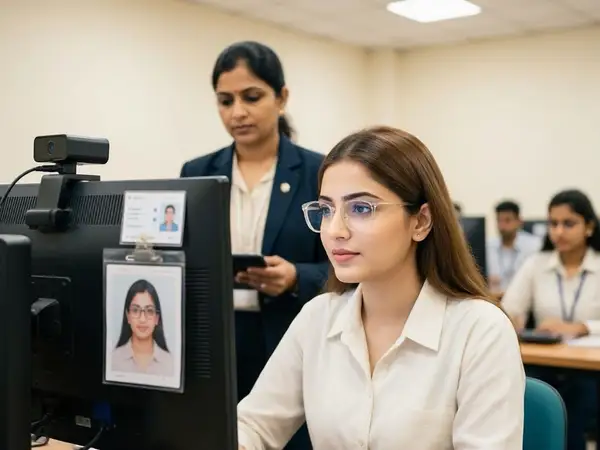
Facial recognition technology uses biometric software to identify or verify a person by analyzing facial features from images or video frames. In the context of exams, this technology is employed to authenticate candidates before and during the examination process to ensure that the registered candidate is the one actually taking the test.
Typically, facial recognition systems work by capturing a live image of the candidate, extracting unique facial features (like the distance between eyes, nose shape, jawline), and comparing these with the stored images in the database (usually from the candidate’s registration or admit card photo).
In government job exams, where large-scale verification is necessary, facial recognition offers a non-intrusive, quick, and relatively reliable way to uphold exam integrity.

How Candidate Look Changes Affect Facial Recognition Matching
The accuracy of facial recognition systems depends heavily on the quality and consistency of the facial data. However, candidates often undergo look changes that can impact this matching process. Some common changes include:
- Hairstyle and Hair Color: Changes in hair length, style, or color can affect the framing of the face, which some recognition algorithms rely upon.
- Facial Hair: Growing or shaving beards and mustaches can alter the perceived shape of the face.
- Makeup and Accessories: Use of makeup, glasses, or masks can obscure facial features.
- Aging and Weight Fluctuations: Natural aging or changes in weight may subtly modify facial contours.
- Expression and Posture: Variations in facial expression or head tilt can influence recognition.
These factors can cause a mismatch between the live captured image and the stored reference image, leading to false rejections or verification delays.
Technological Advancements Addressing Look Variations
Recent advancements in artificial intelligence and machine learning have improved the robustness of facial recognition systems against appearance changes. Key developments include:
- Deep Learning Algorithms: Modern systems use convolutional neural networks (CNNs) trained on diverse datasets to recognize faces under different conditions.
- 3D Facial Recognition: Captures facial geometry in three dimensions, making it less sensitive to lighting and angle changes.
- Multimodal Biometrics: Combining facial recognition with other biometric data like iris scans or fingerprint verification for higher accuracy.
- Continuous Learning: Systems that update and learn from new images to adapt to gradual appearance changes.
Despite these improvements, no system is entirely foolproof, especially when drastic look changes occur.
Challenges Specific to Indian Government Exams
India’s diverse demographics and exam logistics present unique challenges for facial recognition in exams:
- Large Candidate Volume: Millions of candidates appear for various government exams annually, requiring scalable and fast verification systems.
- Varied Environmental Conditions: Exam centers in rural and urban areas may have inconsistent lighting and camera quality.
- Cultural and Religious Attire: Some candidates may wear turbans, veils, or other coverings that partially obscure the face.
- Technical Infrastructure: Limited internet connectivity or hardware constraints can impact real-time facial recognition deployment.
These factors necessitate tailored solutions and fallback mechanisms to ensure fairness and inclusivity.
Best Practices for Candidates to Ensure Accurate Facial Recognition
Candidates can take several steps to minimize look-related mismatches during facial recognition verification:
- Maintain Consistency in Appearance: Try to keep your appearance similar to the photo submitted during registration, especially on exam day.
- Avoid Drastic Changes Before Exams: Avoid significant hairstyle changes, new facial hair styles, or heavy makeup shortly before the exam.
- Remove Accessories: Remove glasses, hats, or masks unless medically necessary or permitted.
- Follow Exam Guidelines: Read instructions carefully regarding facial recognition and biometric verification processes.
- Update Photos if Allowed: Some exam authorities permit updating registration photos if there is a significant appearance change—utilize this option if available.
Taking these precautions can help reduce verification delays and complications.
Role of Exam Authorities in Managing Facial Recognition Accuracy
Exam conducting bodies have a responsibility to ensure that facial recognition systems are implemented fairly and effectively. Some approaches include:
- Using High-Quality Images: Encouraging candidates to upload clear, well-lit photos during registration.
- Multiple Verification Steps: Combining facial recognition with manual ID checks or biometric scans as backup.
- Allowing Appeal Mechanisms: Providing candidates with options to report mismatches and verify identity through alternative methods.
- Training Staff: Equipping exam center personnel to handle technical glitches and assist candidates.
- Transparency: Informing candidates about how facial recognition works and its limitations.
These measures help maintain the integrity of exams while respecting candidate rights.
Future Trends in Facial Recognition for Exams
Looking ahead, several trends are poised to shape the future of facial recognition in exam settings:
- Improved AI Models: Continued refinement of AI to better handle look variations and spoof detection.
- Integration with Remote Proctoring: Facial recognition combined with AI-based proctoring tools for online exams.
- Privacy Enhancements: Use of decentralized data storage and encryption to protect candidate biometric data.
- Personalized Verification: Systems adapting dynamically to individual candidate’s appearance changes over time.
- Government Regulations: Development of clear policies around biometric data usage in exams.
These innovations aim to balance security, convenience, and privacy in exam administration.
Checks to complete before you apply
Facial recognition technology is transforming the way candidate verification is conducted in government exams, offering enhanced security and efficiency. However, changes in a candidate’s appearance remain a significant factor influencing the accuracy of facial recognition matching. While technological advancements continue to address these challenges, candidates and exam authorities must work together to ensure smooth verification processes. By understanding the impact of look changes and adopting best practices, the integrity of exams can be maintained without compromising fairness or accessibility.
For candidates preparing for upcoming government exams, staying informed about biometric verification procedures and adhering to guidelines can help avoid last-minute hurdles. Keep an eye on official notifications and updates related to /admit-card and /sarkari-result to stay ahead in your exam journey.
Frequently Asked Questions
Q1: Can wearing glasses affect facial recognition during exams?
A1: Yes, glasses can sometimes interfere with facial recognition accuracy, especially if they cause reflections or obscure key facial features. It is advisable to remove glasses during verification if permitted.
Q2: What should I do if my facial recognition fails at the exam center?
A2: Inform the exam staff immediately. Most centers have backup verification methods such as manual ID checks or fingerprint scans to resolve such issues.
Q3: Are facial recognition systems safe to use for government exams?
A3: Generally, these systems are designed with security and privacy in mind. However, candidates should ensure they are using official portals and follow guidelines to protect their data.
Q4: Can I update my photo if my appearance has changed significantly?
A4: Some exam authorities allow candidates to update their registration photo before the exam. Check the official exam notification or website for such provisions.
Q5: Does facial recognition work equally well for all candidates?
A5: While technology strives to be inclusive, factors like lighting, camera quality, and cultural attire can affect performance. Exam bodies often implement additional verification steps to ensure fairness.
Related Resources
Related Government Job Resources
Continue with active job hubs and related government job pages on TrueJobs.
Tools for this recruitment topic
Use only the tools relevant to the dates, eligibility or documents discussed above.
TrueJobs Editorial Team
TrueJobs editorial desk
This article is prepared from the sources referenced in the guide and reviewed for clarity, links and dated information. Read our editorial and corrections policy.
Continue This Topic
Follow the closest earlier and newer coverage so older archive posts keep real contextual crawl paths.
Photograph Mismatch Advisory 2026: Why Agencies Require Attested Certificate Uploads
Discover why government recruitment agencies require attested certificate uploads for photograph mismatches in 2026 and how to avoid common issues in your application.
Paper ID vs Digital ID at Exam Centre 2026: What Usually Works in Practice
Discover the practical differences between paper ID and digital ID at exam centres in 2026, and find out which method ensures smoother verification.
Read Next
Photograph Mismatch Advisory 2026: Why Agencies Require Attested Certificate Uploads

Paper ID vs Digital ID at Exam Centre 2026: What Usually Works in Practice

Identity Verified with Non-Aadhaar Option 2026: Correction Window & Detail Changes Explained
Recent Photo on Admit Card 2026: When You Must Carry Extra Passport Photos
Explore Topics
Perfect Your Resume
Use our AI-powered Resume Builder to create ATS-optimized resumes.
AI Resume Builder