
Recruitment guide
Lab Govt Jobs 2026: Assistant, Technician & Analyst — Explained
Discover upcoming government laboratory job opportunities for 2026 - complete guide to Lab Assistant, Technician, and Analyst roles in public sector organizations.

Government laboratory jobs represent one of the most sought-after and stable career paths for science graduates across India. These roles offer the unique opportunity to contribute to national development, cutting-edge research, and public welfare while enjoying the unparalleled security and benefits of public sector employment. As we approach 2026, numerous opportunities are anticipated for Lab Assistants, Technicians, and Analysts in a wide array of prestigious public sector organizations like the Defence Research and Development Organisation (DRDO), Bhabha Atomic Research Centre (BARC), Indian Council of Agricultural Research (ICAR), state health departments, and various other scientific and testing institutes.
This comprehensive guide details the upcoming vacancies, delves into the nuanced eligibility criteria, outlines the step-by-step application process, and provides robust preparation strategies to help you secure these highly technical and rewarding roles.

Types of Laboratory Government Jobs in 2026
1. Lab Assistant Positions
Lab Assistants form the backbone of any scientific laboratory, providing crucial support for research, experimentation, and routine testing activities. Their responsibilities often include preparing chemical solutions, cleaning and maintaining glassware, assisting senior scientists with experiments, managing laboratory inventory, and ensuring adherence to safety protocols. These positions are ideal for candidates beginning their careers in the scientific domain, offering a fantastic platform for learning and growth.
Key Recruiting Bodies Include:
- State Medical and Health Departments (for district and civil hospital labs)
- Food Safety and Standards Authority of India (FSSAI) and State Food Testing Laboratories
- Public Sector Undertakings (PSUs) like ONGC, IOCL, and NTPC (for their in-house quality control labs)
- Council of Scientific & Industrial Research (CSIR) laboratories
-
2. Laboratory Technicians
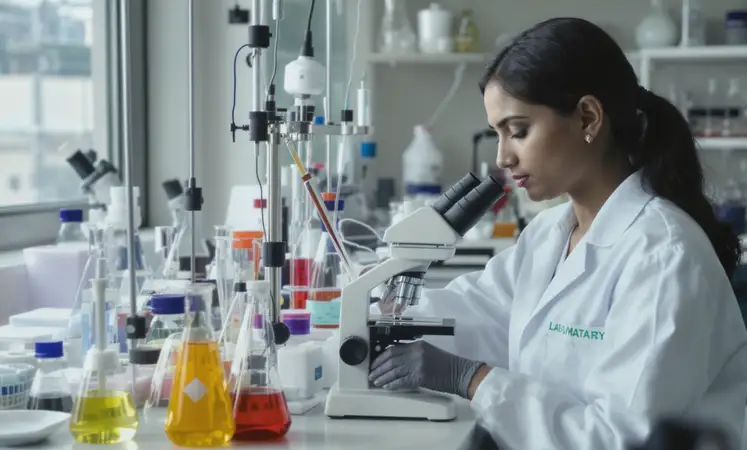
Laboratory Technicians are skilled professionals who handle and maintain sophisticated laboratory equipment, perform specialized sample analysis, and ensure the accuracy and reliability of test results. They require a more specialized skill set compared to lab assistants, often needing specific certifications or diplomas in laboratory techniques. Their role is more hands-on with the technical aspects of laboratory functioning.
Major Employers Include:
- Defense Research Organizations (DRDO, Naval Chemical & Metallurgical Laboratory)
- Agricultural Research Council (ICAR institutes and Krishi Vigyan Kendras)
- Central and State Pollution Control Boards (Environmental Testing Labs)
- Forensic Science Laboratories (FSL) at state and central levels
- National Institute of Biologicals and other quality control wings
3. Scientific Analysts
Scientific Analysts or Senior Lab Analysts are involved in advanced data interpretation, method development, rigorous quality control, and research-oriented tasks. They are typically required to have an in-depth theoretical knowledge and practical expertise in their specific field, such as chemistry, microbiology, or biochemistry. These positions carry greater responsibility and involve independent work and analysis.
Opportunities are Primarily Available In:
- Central and State Forensic Science Laboratories (for chemical, biological, and toxicological analysis)
- Pharmaceutical Quality Control Units under CDSCO and state drug control departments
- Industrial Research Units and PSUs involved in R&D
- Food and Drug Administration laboratories across various states
- Bureau of Indian Standards (BIS) for material testing and certification
Eligibility Criteria for Lab Roles
The eligibility criteria are the first and most crucial checkpoint for any candidate. While specific requirements vary by organization and post, the following table provides a generalized overview of the standard prerequisites for these roles.
Position Education Required Typical Age Limit (General Category) Key Skills & Certifications Lab Assistant BSc in Physics/Chemistry/Biology/Life Sciences or a Diploma in Medical Lab Technology (DMLT) 18-30 years Basic computer knowledge, understanding of lab safety procedures. Technician ITI in relevant trade (e.g., Chemical Plant Operator) or Diploma in Engineering/Technology (e.g., Chemical Engg.) + Relevant Certification (e.g., from a recognized institute) 21-35 years Proficiency in operating specific lab instruments (e.g., HPLC, Spectrophotometer), equipment calibration, maintenance skills. Analyst MSc or BTech/BE in a highly relevant field (e.g., Analytical Chemistry, Biotechnology, Microbiology, Food Technology). Some posts may require a PhD. Up to 40 years Advanced data analysis, method validation, research publication experience is often preferred, knowledge of regulatory guidelines (e.g., GLP). It is imperative to note that age relaxation applies for candidates belonging to SC, ST, OBC, PwD, and other reserved categories as per the latest government norms. Furthermore, many recruiting agencies specify a required minimum percentage of marks (often 55-60% or higher) in the qualifying degree. Detailed and precise notifications for each vacancy will be available on official websites and portals like TrueJobs.co.in/sarkari-result.
Application Process for 2026 Vacancies
The application process for government jobs is strictly formal and must be followed meticulously to avoid rejection. Missing a deadline or failing to upload a required document can lead to disqualification.
- Check Official Notifications: Regularly monitor the official websites of recruiting bodies (SSC, UPSC, state commissions, DRDO, BARC, etc.) and job portals like ours for the latest advertisements. Read the notification PDF thoroughly, paying close attention to the eligibility, application dates, and exam pattern.
- Registration: Register on the designated application portal (e.g., SSC portal, state employment board website) by providing basic details like name, date of birth, and contact information to generate a registration number.
- Filling the Application Form: Log in with your credentials and carefully fill out the detailed application form. This includes entering educational qualifications, personal details, and category information. Double-check all entries for accuracy.
- Uploading Documents: Scan and upload all required documents in the prescribed format and size. This typically includes educational certificates, category certificate (if applicable), photograph, signature, and photo ID proof.
- Payment of Fees: Pay the application fees online if applicable (via net banking, debit/credit card, or UPI). Fee concessions are available for reserved categories. Always keep a screenshot of the successful payment confirmation.
- Final Submission & Printout: Submit the final form and download the confirmation page or receipt for your records. This is a critical document for future reference and for downloading your admit card later.
Exam Preparation Strategies
A strategic and disciplined approach to preparation is key to cracking these competitive exams. The selection process for most technical government lab jobs is multi-stage.
Most selection processes include a combination of:
- Written Test: This is usually an objective-type test comprising two sections: Technical Knowledge (subject-specific questions from your field of study) and General Awareness (current affairs, general science, history, geography).
- Skill Test/Practical Assessment: For technician and assistant posts, a hands-on practical test to assess your ability to perform basic lab procedures, handle equipment, or identify apparatus is common.
- Document Verification: The final stage where your original certificates are verified for authenticity.
Recommended Study Plan and Resources:
- Core Technical Subjects: Revisit and master your graduation-level subjects. For chemistry roles, focus on Analytical, Organic, Inorganic, and Physical Chemistry. For biology, focus on Microbiology, Biochemistry, and Molecular Biology.
- NCERT Textbooks: Build a strong foundation with NCERT science textbooks (Class 10-12) for fundamental concepts in physics, chemistry, and biology.
- Previous Years' Question Papers: Solving previous years' papers is non-negotiable. It helps you understand the exam pattern, difficulty level, and important topics.
- Current Affairs: Regularly read a good current affairs magazine or follow a reliable online source for updates on national and international events, especially in the field of science and technology.
- Practice and Revision: Create concise notes for quick revision and take regular mock tests to improve your speed and accuracy.
Benefits of Government Laboratory Jobs
Pursuing a career in a government laboratory comes with a host of benefits that extend far beyond a mere paycheck, contributing to long-term financial and personal well-being.
- Job Security: Perhaps the most significant advantage is the assurance of a permanent position, free from the uncertainties of the private sector.
- Attractive Salary Structure: All positions are governed by the 7th Pay Commission, ensuring a competitive and regularly revised salary with basic pay, grade pay, and various allowances.
- Comprehensive Benefits Package: This includes medical insurance for the employee and family, generous housing allowances (HRA), dearness allowance (DA) adjusted for inflation, and travel allowances (TA).
- Work-Life Balance: Fixed working hours, ample paid holidays, and generous leave policies (earned leave, sick leave, maternity/paternity leave) ensure a healthy balance between professional and personal life.
- Professional Development: Government institutions often sponsor workshops, training programs, and sometimes even higher education to help employees upskill and grow professionally.
- Pension and Retirement Benefits: The New Pension Scheme (NPS) provides a secure financial cushion post-retirement, ensuring a stable future.
Future Trends in Public Sector Lab Jobs
The landscape of public sector laboratory work is evolving rapidly, driven by technological advancements and emerging national priorities. Candidates with skills aligned to these future trends will be highly valued.
Emerging focus areas for 2026-30 recruitment cycle:
- Biotechnology and Genetic Research: Increased investment in biotech research for healthcare, agriculture, and environmental sustainability will create new roles.
- Advanced Environmental Monitoring: With a focus on climate change, roles in monitoring air/water quality, waste management, and pollution control will expand.
- AI-Assisted Diagnostics and Data Analysis: Laboratories will increasingly integrate artificial intelligence for faster disease diagnosis, drug discovery, and complex data interpretation, requiring tech-savvy analysts.
- Food Safety and Automation: Automation in food testing labs for quicker and more accurate detection of contaminants and adulterants will be a key growth area.
- Nanotechnology and Material Science: Defence and industrial research units will focus more on advanced material science, creating niche opportunities for specialists.
Checks to complete before you apply
Laboratory government jobs provide a uniquely rewarding and stable career path for science graduates and diploma holders who are seeking meaningful employment at the forefront of scientific application. These roles offer a powerful combination of job security, societal contribution, and personal growth. By understanding the different types of roles available, meticulously meeting the eligibility criteria, navigating the application process with care, and adopting a systematic and thorough preparation strategy, dedicated candidates can successfully secure a technical position in India's most prestigious government institutions. For the latest and most accurate vacancy announcements, stay consistently updated through our dedicated portal at TrueJobs.co.in/government-jobs.
Frequently Asked Questions
Q1: When will the notifications for 2026 lab job vacancies be released?
A: Most government departments and agencies follow an annual recruitment cycle, releasing notifications typically 6-12 months before the actual recruitment year. To ensure you don't miss any opportunity, it is highly advised to start monitoring official websites and portals like TrueJobs.co.in/sarkari-result regularly from mid-2025 onwards.
Q2: Can a BSc Chemistry graduate apply for Scientific Analyst posts?
A: Yes, absolutely. A BSc in Chemistry is a fundamental qualification for many Analyst-level posts, especially in quality control, chemical analysis, and forensic labs. However, some advanced research positions may specifically require an MSc or higher degree. The exact subject requirements will always be explicitly mentioned in the individual job notification.
Q3: Is there any age relaxation for candidates with prior work experience?
A: Yes, many technical posts offer age relaxation beyond the standard category-based relaxation for candidates who possess relevant work experience in a recognized laboratory or institution. This relaxation can vary but is often up to 5 years. The specific rules will be detailed in the recruitment advertisement.
Q4: What is the typical exam pattern for Lab Technician roles?
A: The exam pattern for Lab Technician roles typically includes a written test comprising technical multiple-choice questions (MCQs) covering the specific trade or subject (approx. 70% weightage) and general aptitude questions covering reasoning, general awareness, and basic English/Hindi (approx. 30% weightage). Additionally, many state-level commissions and organizations include a practical skill test or trade test as a qualifying stage.
Q5: Are there good promotion opportunities in government laboratory jobs?
A: Yes, government jobs are renowned for their clear and structured career progression pathways. Most laboratory positions have a well-defined promotion hierarchy based on a combination of factors including seniority, performance in departmental exams, and overall work record. Time-bound advancements and opportunities to move into supervisory or managerial roles are standard benefits of a government career.
Related Government Job Resources
Continue with active job hubs and related government job pages on TrueJobs.
Tools for this recruitment topic
Use only the tools relevant to the dates, eligibility or documents discussed above.
TrueJobs Editorial Team
TrueJobs editorial desk
This article is prepared from the sources referenced in the guide and reviewed for clarity, links and dated information. Read our editorial and corrections policy.
Continue This Topic
Follow the closest earlier and newer coverage so older archive posts keep real contextual crawl paths.
Assistant Director Government Jobs 2026: Officer-Level Opportunities & Updates
Explore Assistant Director government job opportunities for 2026 with expected eligibility criteria, recruitment trends, and preparation strategies for officer-level vacancies.
Defence Support Staff Jobs 2026: Apply for Non-Combat Government Roles
Discover the latest non-combat Defence Support Staff job opportunities for 2026. Learn about eligibility, application steps, and selection process based on previous trends.
Read Next

Assistant Director Government Jobs 2026: Officer-Level Opportunities & Updates

Occupational Therapist Government Jobs 2026: Latest Public Sector Opportunities

Manager and Officer Government Jobs 2026: Latest Administrative Vacancies

Defence Support Staff Jobs 2026: Apply for Non-Combat Government Roles
Explore Topics
Perfect Your Resume
Use our AI-powered Resume Builder to create ATS-optimized resumes.
AI Resume Builder