
Recruitment guide
Govt Jobs 2026 for 1-Year Computer Diploma Holders — Explained
Have a 1-year computer diploma? Explore top government jobs for 2026. This guide details roles, eligibility, and prep for a successful public sector career.

In an increasingly digital world, computer literacy has become a fundamental skill across all sectors, and the Indian government is no exception. As India continues its journey towards comprehensive e-governance and digital transformation, the demand for individuals with foundational computer skills is steadily rising. For those holding a one-year computer diploma, 2026 is poised to offer a plethora of opportunities in various central and state government departments, public sector undertakings (PSUs), and autonomous bodies. This comprehensive guide from TrueJobs.co.in will explore the landscape of government jobs available for candidates with a one-year computer diploma, outlining potential roles, eligibility criteria, preparation strategies, and how you can position yourself for a successful career in the public sector.
The Growing Demand for Computer Skills in the Government Sector
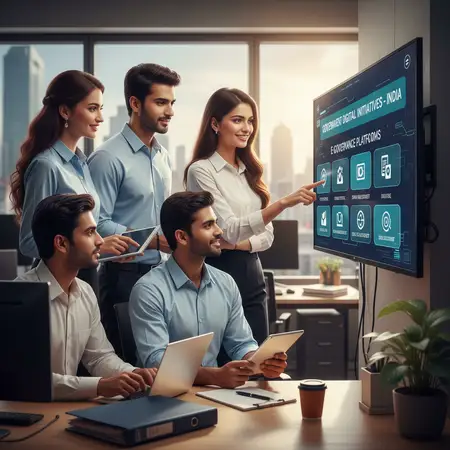
The Indian government has embraced technology as a cornerstone of its administrative and service delivery mechanisms. Initiatives like 'Digital India' have propelled a massive shift towards automation, online services, and data management across ministries and departments. This digital transformation has created a sustained and growing demand for personnel equipped with essential computer skills. From managing vast databases and processing online applications to maintaining digital records and facilitating e-governance services, computer proficiency is no longer just an advantage but a necessity for almost every administrative and operational role.
A one-year computer diploma, often focusing on fundamental concepts like operating systems, office automation software (MS Word, Excel, PowerPoint), basic programming, internet concepts, and data entry, serves as an excellent foundation for these roles. It demonstrates a candidate's readiness to adapt to modern office environments and contribute effectively to digital workflows. Government organizations are looking for individuals who can seamlessly integrate into tech-driven processes, ensuring efficiency, accuracy, and transparency in public service delivery. The year 2026 will likely see this trend continue, with more government functions moving online and requiring a digitally literate workforce.
Moreover, the emphasis on cybersecurity and data protection also indirectly benefits candidates with computer knowledge, as basic understanding of these concepts becomes increasingly relevant even in entry-level positions. The ability to handle digital information securely and efficiently is a valuable asset in any government office. Therefore, a one-year computer diploma acts as a crucial stepping stone, opening doors to a stable and respectable career in various government departments that are actively seeking to modernize their operations.
Common Government Job Roles for 1-Year Computer Diploma Holders
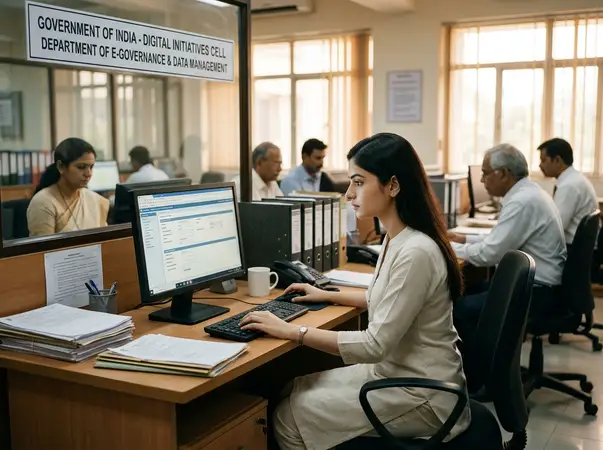
A one-year computer diploma can qualify you for a variety of entry-level and support roles across different government organizations. While specific job titles and responsibilities may vary, the core requirement often revolves around computer proficiency. Here are some of the most common roles you can target:
1. Data Entry Operator (DEO)
- Responsibilities: Inputting data into computer systems, maintaining databases, verifying data accuracy, generating reports.
- Departments: Almost all government departments, including SSC, State Governments, Railways, Banks, Courts, and PSUs.
- Key Skills: High typing speed and accuracy, attention to detail, knowledge of MS Office (especially Excel).
2. Junior Assistant / Lower Division Clerk (LDC) / Clerk-cum-Typist
- Responsibilities: General office administration, file management (both physical and digital), correspondence, preparing documents, data entry, assisting senior officials.
- Departments: SSC (CHSL), State PSCs, various Ministries, Banks, Railways, PSUs.
- Key Skills: Computer operation, typing, basic office software, organizational skills.
3. Computer Operator
- Responsibilities: Operating computer systems, managing peripherals, basic troubleshooting, data processing, maintaining system logs.
- Departments: Central and State Government offices, educational institutions, research organizations.
- Key Skills: OS knowledge, basic hardware understanding, MS Office, internet usage.
4. Steno-Typist / Personal Assistant (with Computer Knowledge)
- Responsibilities: Taking dictation (shorthand), transcribing, typing letters and documents, managing appointments, maintaining digital records.
- Departments: SSC (Stenographer), Courts, various Ministries, State Governments.
- Key Skills: Shorthand, typing speed, computer proficiency, MS Office.
5. Technical Assistant (Entry Level) / Office Assistant
- Responsibilities: Assisting with technical documentation, maintaining computer systems (basic level), providing IT support (first-level), managing digital archives.
- Departments: Scientific organizations, technical departments, PSUs, State IT departments.
- Key Skills: Basic hardware/software knowledge, networking fundamentals, MS Office.
6. Library Assistant (with Computer Skills)
- Responsibilities: Cataloging books, managing digital library systems, assisting users with computer resources, data entry related to library inventory.
- Departments: Government libraries, educational institutions, research centers.
- Key Skills: Library software knowledge (if specified), computer operation, data management.
It's crucial to regularly check official recruitment notifications on TrueJobs.co.in and departmental websites, as the specific requirements and job titles can vary. Many of these roles are often advertised under broader categories, but a computer diploma can significantly enhance your eligibility and performance in skill tests.
Eligibility Criteria and Educational Qualifications (Beyond Diploma)
While a one-year computer diploma is your primary asset, it's important to understand the complete set of eligibility criteria that government job aspirants must meet. These typically include age limits, nationality, and other educational qualifications in addition to your diploma.
1. Nationality and Age Limits
- Nationality: Generally, candidates must be citizens of India. Some posts may be open to subjects of Nepal or Bhutan, or Tibetan refugees who came to India before a specific date.
- Age Limit: Age criteria vary significantly based on the post and the recruiting agency. Common age limits range from 18 to 27 years or 18 to 30 years for entry-level positions. However, age relaxations are provided for reserved categories (SC/ST/OBC/PwD/Ex-Servicemen) as per government rules. Always refer to the specific notification for exact age requirements for the year 2026.
2. Educational Qualifications
The one-year computer diploma is usually required in conjunction with a foundational academic qualification:
- 10th Pass + Computer Diploma: For some very basic data entry or office assistant roles, a 10th pass certificate along with a recognized one-year computer diploma might suffice.
- 12th Pass + Computer Diploma: This is the most common combination. Many LDC, DEO, and Clerk-cum-Typist positions require a 12th pass certificate from a recognized board, along with a one-year computer diploma.
- Graduation + Computer Diploma: While a diploma is often sufficient for entry-level roles, some positions, especially those with slightly higher responsibilities or requiring a broader skill set, might ask for a Bachelor's degree in any discipline along with computer proficiency (which your diploma fulfills). For instance, certain assistant or managerial roles might prefer graduates but still require demonstrable computer skills.
Important Note on Diploma Recognition: Ensure your one-year computer diploma is from a recognized institution or body. This could be a government-approved institute, a university department, or a reputable private institution whose courses are recognized by relevant government authorities or educational boards (e.g., NIELIT, state technical education boards, AICTE). Diplomas from unverified or unrecognized institutions may not be accepted.
3. Other Essential Skills
- Typing Speed: Many roles, especially for Data Entry Operators, LDCs, and Steno-Typists, require a specific typing speed in English and/or Hindi. This is usually tested through a skill test. Common requirements are 30-35 words per minute (WPM) in English and 25-30 WPM in Hindi.
- Computer Proficiency Test (CPT): Beyond just holding a diploma, many exams include a CPT to assess practical skills in MS Word, Excel, PowerPoint, and internet usage.
- Shorthand: For Stenographer posts, shorthand proficiency is a mandatory skill in addition to computer knowledge.
Candidates are strongly advised to meticulously review the official notification for each specific job opening as eligibility criteria can vary. Any discrepancy in meeting these requirements can lead to disqualification.
Key Recruitment Agencies and Departments to Watch in 2026
To maximize your chances of securing a government job with a one-year computer diploma in 2026, it's crucial to know which agencies and departments are the primary recruiters for such profiles. These bodies regularly release notifications for positions requiring computer literacy.
1. Staff Selection Commission (SSC)
- SSC Combined Higher Secondary Level (CHSL) Exam: This is one of the most prominent examinations for 12th pass candidates. It recruits for positions like Lower Division Clerk (LDC), Junior Secretariat Assistant (JSA), Postal Assistant (PA), Sorting Assistant (SA), and Data Entry Operator (DEO). A one-year computer diploma significantly aids in the computer proficiency test and overall understanding required for these roles.
- SSC Stenographer (Grade C & D) Exam: While primarily focused on shorthand skills, computer proficiency is essential for transcribing and document management.
- SSC Multi Tasking Staff (MTS) Exam: Though not directly requiring a diploma, computer literacy is increasingly beneficial for MTS roles involved in office support.
2. Railway Recruitment Boards (RRB)
- The Indian Railways, being one of the largest employers, frequently recruits for various clerical and assistant positions.
- RRB Non-Technical Popular Categories (NTPC): Posts like Junior Clerk cum Typist, Accounts Clerk cum Typist, Junior Time Keeper, Trains Clerk, Commercial cum Ticket Clerk, and Goods Guard often have computer proficiency as a desirable or essential skill.
- Group D Posts: While mostly for technical roles, some administrative or office assistant roles within Group D might benefit from basic computer knowledge.
3. Banking Sector (IBPS, SBI, RBI)
- IBPS Clerk and SBI Clerk Exams: These exams recruit for clerical cadre positions in Public Sector Banks. Computer literacy is a fundamental requirement, and a diploma can be a strong credential. Responsibilities include data entry, customer service, and managing digital transactions.
- IBPS RRB Office Assistant (Multipurpose): Regional Rural Banks also recruit for similar roles where computer skills are vital.
- RBI Assistant: The Reserve Bank of India recruits assistants who require strong computer operating skills.
4. State Government Departments and State PSCs
- Each state's Public Service Commission (PSC) and various state-level departments (e.g., Revenue, Education, Health, Rural Development) regularly announce vacancies for Data Entry Operators, Junior Assistants, Clerks, and Computer Operators.
- These roles are often crucial for implementing state-specific e-governance initiatives and maintaining local administrative records.
- Look out for notifications from your respective State PSCs (e.g., UPPSC, BPSC, MPSC, RPSC, TNPSC, KPSC) and other state recruitment boards.
5. Public Sector Undertakings (PSUs)
- Many PSUs (e.g., Coal India, ONGC, NTPC, BHEL, various banks, insurance companies) recruit for administrative assistants, junior assistants, and data entry roles.
- These organizations, being large corporate entities, have a high demand for computer-literate staff to manage their extensive operations and digital infrastructure.
6. Central Government Ministries and Autonomous Bodies
- Various central government ministries (e.g., Ministry of Defence, Ministry of External Affairs) and autonomous bodies (e.g., ESIC, EPFO, various research institutes) also have their own recruitment drives for clerical and data processing roles where a one-year computer diploma would be highly beneficial.
To stay updated, regularly visit the official websites of these organizations and keep an eye on the 'Latest Jobs' section on TrueJobs.co.in. Setting up job alerts can also ensure you don't miss out on relevant opportunities in 2026.
Navigating the Application and Selection Process
Understanding the typical application and selection process is crucial for candidates aiming for government jobs with a one-year computer diploma. While there might be slight variations, the general steps remain consistent across most recruiting agencies.
1. Online Application Process
- Registration: The first step usually involves one-time registration on the recruiting agency's portal. This creates a unique ID and password for future applications.
- Form Filling: Candidates need to fill out a detailed application form with personal, educational, and contact information. Ensure all details are accurate to avoid disqualification.
- Document Upload: Scanned copies of photographs, signatures, educational certificates (including your computer diploma), and caste certificates (if applicable) need to be uploaded as per specified dimensions and file sizes.
- Application Fee: A non-refundable application fee is typically required, payable online through various modes (net banking, debit/credit card, UPI). Fee exemptions are often available for certain categories (e.g., women, SC/ST, PwD).
- Submission and Printout: After reviewing all details, submit the form and take a printout of the confirmation page for future reference.
2. Examination Pattern
The selection process for these roles generally involves multiple stages:
- Stage 1: Written Examination (Computer-Based Test - CBT)
- This is usually an objective-type, multiple-choice question (MCQ) exam.
- Common Subjects:
- General Intelligence & Reasoning: Analytical ability, problem-solving.
- General Awareness / General Knowledge: Current affairs, history, geography, polity, economics, general science.
- Quantitative Aptitude: Basic arithmetic, algebra, geometry, mensuration, data interpretation.
- English Language: Grammar, vocabulary, comprehension.
- Basic Computer Knowledge: Fundamentals of computers, MS Office, internet, operating systems (this is where your diploma helps significantly).
- Marking Scheme: Typically, there's negative marking for incorrect answers, so accuracy is vital.
- Stage 2: Skill Test / Computer Proficiency Test (CPT)
- Candidates who qualify the written exam are called for a skill test, which is often qualifying in nature but mandatory.
- Typing Test: Assesses typing speed and accuracy in English and/or Hindi.
- Data Entry Speed Test: Measures the speed and accuracy of data input.
- Computer Proficiency Test (CPT): Evaluates practical knowledge of MS Word (document creation, formatting), MS Excel (spreadsheet creation, formulas), MS PowerPoint (presentation creation), and basic internet usage.
- Stage 3: Document Verification (DV)
- Shortlisted candidates are required to present original documents (educational certificates, diploma, caste certificate, age proof, etc.) for verification.
- Stage 4: Medical Examination
- A general medical fitness test is conducted to ensure candidates meet the physical standards for the post.
It's important to start preparing early for both the written examination and the skill tests. Regular practice of typing and computer applications is as important as studying for the theoretical subjects.
Essential Skills and Preparation Strategies for Success
Securing a government job with a one-year computer diploma requires a combination of technical proficiency, academic knowledge, and strategic preparation. Here’s a detailed guide to help you get ready for 2026:
1. Master Your Technical Skills
Your one-year computer diploma provides the foundation, but continuous practice and enhancement are key:
- MS Office Suite: Gain expert-level proficiency in Word (document creation, formatting, mail merge), Excel (formulas, functions, charts, data analysis), and PowerPoint (presentation design, animations). Many skill tests focus heavily on these.
- Typing Speed and Accuracy: Dedicate daily time to typing practice. Aim for at least 35-40 WPM in English and 30-35 WPM in Hindi (if applicable) with high accuracy. Use online typing tutors and practice texts.
- Operating Systems: Be comfortable with Windows OS (file management, system settings, shortcuts). Basic knowledge of Linux might be an added advantage for some roles.
- Internet & Email: Understand safe browsing, effective searching, email etiquette, and managing attachments.
- Data Entry: Practice entering data quickly and accurately into various formats.
2. Academic Preparation for Written Exams
The written exam is often the first hurdle. A structured approach is vital:
- General Intelligence & Reasoning: Practice logical reasoning, analytical puzzles, series, coding-decoding, analogies. Use dedicated reasoning books and online quizzes.
- General Awareness / General Knowledge: Stay updated with current affairs by reading newspapers, magazines, and watching news. Focus on Indian history, geography, polity, economy, and basic science. Refer to standard GK books like Lucent's General Knowledge.
- Quantitative Aptitude: Revise fundamental arithmetic concepts (percentages, ratios, profit/loss, time & work, speed & distance), algebra, geometry, and data interpretation. Practice solving problems quickly and accurately.
- English Language: Improve grammar, vocabulary (synonyms, antonyms, idioms, phrases), and comprehension skills. Read English newspapers and practice cloze tests and sentence rearrangement.
- Basic Computer Knowledge: Review concepts covered in your diploma – hardware, software, networking basics, internet, security, and MS Office fundamentals.
3. Strategic Study Plan
- Create a Timetable: Allocate dedicated time for each subject, focusing more on your weaker areas.
- Utilize Resources: Use standard textbooks, online tutorials, and coaching materials. TrueJobs.co.in also provides valuable resources and exam preparation guides /exam-preparation.
- Previous Year Papers: Solve as many previous year's question papers as possible. This helps you understand the exam pattern, question types, and time management.
- Mock Tests: Regularly take full-length mock tests to simulate exam conditions. Analyze your performance to identify strengths and weaknesses.
- Revision: Consistent revision is key to retaining information. Make short notes for quick review.
4. Stay Updated and Vigilant
- Official Notifications: Regularly check the official websites of recruiting agencies and TrueJobs.co.in for the latest job notifications, syllabus changes, and exam dates.
- Job Alerts: Subscribe to job alerts on TrueJobs.co.in to receive timely updates on relevant vacancies.
- Networking: Connect with other aspirants to share information and motivation.
By combining strong technical skills with a well-structured academic preparation plan, you can significantly enhance your chances of securing a coveted government job in 2026.
Career Progression and Future Prospects
A government job secured with a one-year computer diploma is not just an entry point; it's a foundation for a stable and progressive career. The Indian government sector offers numerous avenues for growth, learning, and long-term security.
1. Stable Employment and Benefits
- Job Security: Government jobs are renowned for their stability and security, providing peace of mind.
- Attractive Benefits: Employees enjoy a range of benefits including competitive salaries (as per the 7th Pay Commission and subsequent revisions), allowances (DA, HRA, TA), pension schemes, healthcare facilities, paid leaves, and opportunities for housing and loans.
2. Opportunities for Promotion and Advancement
- Hierarchical Structure: Government departments have a well-defined hierarchical structure, allowing for systematic career progression.
- Internal Exams & Seniority: Promotions are typically based on a combination of seniority, performance appraisals, and qualifying internal departmental examinations. A Data Entry Operator can aspire to become a Senior Data Entry Operator, then an Assistant, and further up the administrative ladder. Similarly, a Lower Division Clerk can be promoted to Upper Division Clerk (UDC), Section Officer, and beyond.
- Skill Upgradation: Many departments encourage and sponsor employees for further training and skill development courses, including advanced computer certifications or management programs.
3. Further Education and Specialization
- Part-time/Distance Learning: Government employees often have the flexibility to pursue higher education (e.g., Bachelor's or Master's degrees) through part-time or distance learning modes, which can further enhance their career prospects and eligibility for higher-level posts.
- Specialized Roles: With additional qualifications and experience, you could potentially move into more specialized IT support, database management, or e-governance project roles within the government.
4. Diverse Work Experience
- Working in different departments or ministries can expose you to a wide array of administrative functions, public policies, and technological applications, enriching your professional experience.
- The skills gained in one department (e.g., data management in Railways) can be transferable and valuable in another (e.g., a state's revenue department).
5. Contribution to Nation Building
- Beyond personal growth, a government job offers the satisfaction of contributing directly to public service and national development through your daily work.
A one-year computer diploma is your ticket to entering this dynamic and rewarding sector. With dedication and continuous learning, the career path ahead is filled with opportunities for growth and impact.
Checks to complete before you apply
As we look towards 2026, the landscape of government jobs in India continues to evolve, placing a significant premium on digital literacy and computer skills. For candidates armed with a one-year computer diploma, this presents a golden opportunity to embark on a stable, respected, and rewarding career in the public sector. From Data Entry Operators and Junior Assistants to Computer Operators and Stenographers, various roles across central and state government departments, railways, banks, and PSUs actively seek individuals with foundational computer proficiency.
Success in this competitive environment hinges on a clear understanding of eligibility criteria, diligent preparation for written examinations, and consistent practice for skill tests like typing and computer proficiency. By staying updated with notifications from key recruiting agencies like SSC, RRB, IBPS, and State PSCs, and by leveraging resources from platforms like TrueJobs.co.in, you can strategically plan your job search. Remember, a government job offers not just employment, but a pathway to continuous learning, career progression, and the profound satisfaction of serving the nation. Start your preparation today, and position yourself for a bright future in 2026.
Frequently Asked Questions
Q1: Is a 1-year computer diploma sufficient for government jobs?
A: Yes, a one-year computer diploma is often sufficient for many entry-level government jobs, especially when combined with a 10th or 12th pass certificate. Roles like Data Entry Operator, Junior Assistant, Clerk, and Computer Operator frequently list a recognized one-year computer diploma or equivalent computer proficiency as a key requirement. However, always check the specific job notification for exact educational qualifications.
Q2: Which government departments offer jobs for computer diploma holders?
A: Numerous government departments and agencies offer jobs for candidates with a one-year computer diploma. Key recruiters include the Staff Selection Commission (SSC) for CHSL posts, Railway Recruitment Boards (RRB), Public Sector Banks (through IBPS and SBI exams), various State Government departments (via State PSCs), Public Sector Undertakings (PSUs), and various Central Government Ministries. The demand for computer-literate staff is widespread across the entire government sector.
Q3: What kind of computer skills are usually tested in government job exams?
A: Government job exams typically assess practical skills in office automation software and basic computer operations. This often includes proficiency in MS Word (document creation, formatting), MS Excel (spreadsheet functions, data management), MS PowerPoint (presentation creation), basic operating system knowledge (Windows), internet usage, and typing speed and accuracy (in English and/or Hindi). Some roles may also test basic hardware and networking concepts.
Q4: Can I apply for central government jobs with a
Related Resources
- Latest Government Jobs
- SSC Recruitment 2024-2025
- Railway (RRB) Vacancies
- Banking Sector Jobs (IBPS/SBI)
Related Government Job Resources
Continue with active job hubs and related government job pages on TrueJobs.
Tools for this recruitment topic
Use only the tools relevant to the dates, eligibility or documents discussed above.
TrueJobs Editorial Team
TrueJobs editorial desk
This article is prepared from the sources referenced in the guide and reviewed for clarity, links and dated information. Read our editorial and corrections policy.
Continue This Topic
Follow the closest earlier and newer coverage so older archive posts keep real contextual crawl paths.
Govt Jobs 2026: Local Language & Your Home-State Advantage
Discover how proficiency in your local language is creating a powerful 'home-state advantage' for government job aspirants. This guide covers key sectors, preparation tips, and the future outlook for language-based recruitment in India's Sarkari Naukri landscape for 2026.
Government Jobs Without Maths in Graduation: Your 2026 Guide
Think a government job is out of reach without a maths degree? Think again. This 2026 guide reveals numerous opportunities for Arts, Commerce, and Humanities graduates, with strategies to ace the exams.
Read Next

Govt Jobs 2026: Local Language & Your Home-State Advantage

Government Jobs Without Maths in Graduation: Your 2026 Guide

एसएससी सीजीएल सहायक प्रवर्तन अधिकारी 2026: योग्यता, वेतन, कार्य प्रोफाइल

Government Jobs with Driving Licence Requirement in 2026: Your Path to Stability
Explore Topics
Perfect Your Resume
Use our AI-powered Resume Builder to create ATS-optimized resumes.
AI Resume Builder