
Recruitment guide
Employee Retention Strategies India 2026 — Explained
Proven employee retention strategies for Indian companies in 2026 to reduce attrition and keep top talent.

Employee retention has become a critical challenge for Indian companies, with attrition rates reaching 20-25% in sectors like IT and BPO, and even higher in some high-growth startups and niche technology domains. This alarming rate of high turnover not only impacts productivity, operational efficiency, and project continuity but also incurs significant direct and indirect costs related to recruitment advertising, extensive onboarding processes, and continuous training of new hires. In India's dynamic, rapidly evolving, and fiercely competitive job market, where skilled talent is constantly sought after across industries from technology and manufacturing to healthcare and financial services, retaining top performers is no longer a luxury but a strategic imperative for sustained business growth and innovation.
The year 2026 demands a forward-thinking, holistic approach that goes beyond merely offering competitive salaries. It necessitates a deep understanding of employee aspirations and motivations, focusing instead on creating an environment where employees feel genuinely valued, deeply engaged, psychologically safe, and can clearly envision a prosperous future for themselves within the organization. This shift reflects a maturing workforce that increasingly prioritizes purpose, personal growth, and overall well-being alongside financial compensation. The Indian talent landscape, characterized by a young demographic and increasing global exposure, means that employees are more discerning than ever, seeking not just a job, but a career path, a supportive culture, and a sense of belonging.
Companies that fail to adapt their retention strategies risk losing their most valuable assets, jeopardizing their competitive edge and long-term viability in a rapidly expanding economy.
Understanding Why Employees Leave
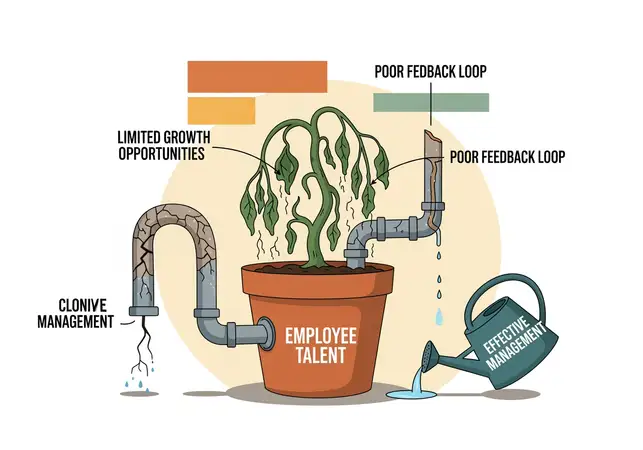
Understanding the root causes of employee attrition is the first step towards building effective retention strategies. The top reasons for attrition in India consistently include limited growth opportunities, ineffective or poor management, inadequate compensation packages, and a pervasive work-life imbalance. These factors rarely act in isolation; they often combine to create a cumulative sense of dissatisfaction, disengagement, and a feeling of being undervalued. Delving deeper into each of these areas reveals the complex interplay of factors that drive employees to seek opportunities elsewhere.
Limited Growth Opportunities
For many Indian professionals, especially those in the early and mid-stages of their careers, career progression is a paramount concern. When employees perceive a lack of clear promotional paths, opportunities for skill development, or challenging projects that stretch their capabilities, they quickly become disengaged. This isn't just about moving up the corporate ladder; it's also about acquiring new skills, taking on greater responsibilities, and seeing a tangible future for themselves within the organization. A stagnant career trajectory can lead to feelings of being undervalued and underutilized, prompting individuals to look for companies that offer more dynamic learning and advancement prospects.
This is particularly true in fast-paced sectors like IT, where skills can quickly become obsolete, and continuous learning is essential for staying relevant.
Ineffective or Poor Management
The adage "people don't leave companies, they leave managers" holds significant truth in the Indian context. Managers play a pivotal role in shaping an employee's daily experience. Poor management can manifest in various ways: micromanagement, lack of constructive feedback, unfair treatment, favoritism, poor communication, or an inability to advocate for their team members. A manager who fails to support, inspire, or develop their team can quickly erode morale, psychological safety, and trust. Employees under such leadership often feel unheard, unappreciated, and unsupported, leading to increased stress and a desire to escape a toxic work environment. Effective managers, conversely, act as mentors, coaches, and advocates, fostering a positive and productive team dynamic that significantly contributes to retention.
Inadequate Compensation Packages
While not the sole driver, compensation remains a critical factor. Inadequate compensation packages go beyond just a low base salary. It encompasses a lack of competitive benefits, bonuses, or other financial incentives that are standard in the industry. As the cost of living in major Indian cities rises, employees expect their compensation to reflect not only their skill and contribution but also their economic needs. When employees feel their pay is not commensurate with their responsibilities, market rates, or the value they bring to the organization, they are likely to explore options that offer better financial rewards.
This is further exacerbated by the transparency of salary information in today's digital age, making it easier for employees to benchmark their compensation against industry standards.
Pervasive Work-Life Imbalance
The demanding work culture prevalent in many Indian companies, often characterized by long working hours, weekend work, and constant availability, contributes significantly to work-life imbalance. This lack of boundaries between professional and personal life takes a toll on employees' mental and physical well-being. It can lead to burnout, stress, reduced productivity, and strained personal relationships. The younger generation, in particular, places a higher premium on work-life balance and overall well-being, seeking employers who respect their personal time and offer flexibility. Companies that fail to address this imbalance risk losing talent to organizations that prioritize employee well-being and offer more sustainable working models.
The Hidden Costs of Attrition
Understanding why employees leave is crucial, but equally important is recognizing the profound financial and operational impact of their departure. The costs associated with high employee turnover extend far beyond the immediate expenses of recruiting a replacement. These can be broadly categorized into direct and indirect costs.
Direct Costs of Attrition
- Recruitment Expenses: This includes advertising costs on job portals, fees paid to recruitment agencies, background check costs, and the time spent by HR personnel and hiring managers in screening resumes, conducting interviews, and coordinating the hiring process.
- Onboarding and Training Costs: Once a new hire is onboarded, significant resources are invested in their orientation, initial training programs, and the time spent by managers and colleagues in bringing them up to speed. This includes trainer salaries, materials, and the lost productivity of existing employees who are training the new hire.
- Severance and Exit Process Costs: Depending on company policy and employment contracts, there might be severance pay, administrative costs for processing final settlements, and exit interview expenses.
Indirect Costs of Attrition
- Lost Productivity: There is an immediate dip in productivity when an employee leaves, as their tasks may remain undone or fall on other team members. New hires also take time to reach full productivity, often several months, during which their output may be lower.
- Loss of Institutional Knowledge: Departing employees take with them valuable knowledge, experience, and client relationships that are often difficult to replace. This can impact project continuity, client satisfaction, and the organization's overall intellectual capital.
- Decreased Morale and Engagement: High turnover can create a ripple effect, leading to increased workload for remaining employees, stress, and a sense of instability. This can negatively impact team morale and overall employee engagement, potentially leading to further attrition.
- Damage to Employer Brand: A reputation for high turnover can deter potential candidates, making it harder to attract top talent in the future. This can also affect client perception and market standing.
- Reduced Customer Satisfaction: In customer-facing roles, employee turnover can disrupt client relationships, lead to inconsistent service, and ultimately impact customer satisfaction and loyalty.
- Loss of Innovation: Experienced employees often contribute significantly to innovation and problem-solving. Their departure can stifle new ideas and slow down organizational progress.
These combined direct and indirect costs can be substantial, often estimated to be 1.5 to 2 times an employee's annual salary, or even higher for specialized roles. This financial drain underscores why investing in retention strategies is not just a 'nice-to-have' but a critical business imperative for Indian companies aiming for sustainable growth in 2026 and beyond.
Strategic Imperatives for 2026: A Holistic Approach
As Indian companies navigate the complexities of a talent-driven economy, a reactive approach to employee retention is no longer sufficient. The year 2026 demands a proactive, holistic, and integrated strategy that places employees at the core of business objectives. This paradigm shift requires organizations to move beyond isolated HR initiatives and adopt a comprehensive framework that addresses all facets of the employee experience.
Moving from Reactive to Proactive
Instead of addressing attrition only after employees have resigned, companies must develop predictive models and early warning systems. This involves leveraging HR analytics to identify patterns, monitor key engagement metrics, and conduct regular pulse surveys to gauge employee sentiment before disengagement escalates. Proactive measures mean identifying potential flight risks and intervening with targeted support, development opportunities, or recognition programs.
Integrating HR Functions for a Seamless Experience
Effective retention is not solely the responsibility of the HR department; it's a collective effort involving leadership, managers, and even peers. A holistic approach integrates various HR functions – recruitment, learning & development, compensation & benefits, performance management, and employee relations – to create a cohesive and supportive employee journey. For instance, a robust onboarding process sets the stage for long-term engagement, while continuous performance feedback loops and clear career development plans ensure employees feel invested in and valued throughout their tenure.
Data-Driven Decisions and Employee-Centric Design
In 2026, HR strategies must be underpinned by robust data analytics. This includes analyzing attrition data to pinpoint specific departments, roles, or manager-employee relationships that are experiencing high turnover. It also involves using engagement survey results to identify areas for improvement in culture, leadership, or work-life balance. An employee-centric design philosophy means constantly soliciting feedback, understanding employee needs and aspirations, and co-creating solutions that genuinely resonate with the workforce. This approach ensures that retention strategies are not generic but tailored to the unique demographic and psychographic profiles of the company's employees.
Key Employee Retention Strategies for 2026
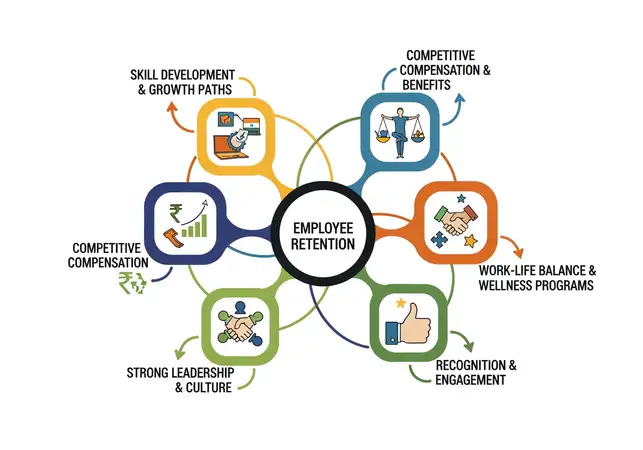
To effectively combat attrition and foster a thriving workforce, Indian companies must implement a multi-pronged strategy encompassing competitive rewards, robust development, empathetic leadership, and a supportive culture. Each element plays a crucial role in building an environment where employees choose to stay and grow.
Competitive Compensation & Total Rewards
While salary alone isn't enough, it remains a foundational element. Companies must ensure their compensation packages are not just adequate but genuinely competitive within their industry and geographical location. This goes beyond the basic pay structure to include a comprehensive total rewards package.
- Market Benchmarking: Regularly conduct salary and benefits benchmarking to ensure offerings are competitive with industry standards. This involves analyzing data from similar roles in competing organizations.
- Performance-Based Incentives: Implement transparent and fair performance-based bonuses, profit-sharing schemes, and stock options (especially relevant for startups and high-growth companies) that directly link employee contribution to financial reward.
- Comprehensive Benefits Package: Beyond statutory requirements like Provident Fund (PF) and Gratuity, offer robust health insurance (including family coverage), life insurance, retirement benefits, and wellness allowances. Consider unique benefits like educational assistance for dependents or subsidized childcare.
- Recognition Programs: Establish both monetary and non-monetary recognition programs. Monetary rewards could be spot bonuses or gift cards, while non-monetary recognition could include public appreciation, awards, or extra time off. Timely and specific recognition for achievements reinforces positive behavior and makes employees feel valued.
Career Development & Growth Opportunities
Employees, particularly in India's aspirational workforce, are keen on continuous learning and career advancement. Companies must provide clear pathways and resources for growth.
- Structured Learning & Development (L&D) Programs: Offer a mix of internal training, workshops, online courses, and certifications that align with current and future business needs. Focus on both technical skills and soft skills (e.g., leadership, communication, problem-solving).
- Mentorship & Coaching Initiatives: Establish formal mentorship programs where experienced employees guide junior colleagues, fostering knowledge transfer and personal growth. Coaching can help employees overcome specific challenges and unlock their potential.
- Internal Mobility & Succession Planning: Create clear pathways for promotions, cross-functional moves, and job rotations. Publicize internal job openings and encourage employees to apply. Develop robust succession plans to identify and prepare high-potential employees for future leadership roles.
- Personalized Development Plans (IDPs): Work with employees to create individualized development plans that outline their career goals, required skills, and the resources available to achieve them. Regular check-ins on IDP progress demonstrate commitment to employee growth.
- Reskilling and Upskilling Initiatives: In a rapidly changing technological landscape, invest in programs that help employees reskill for new roles or upskill to master emerging technologies, ensuring their continued relevance and value to the organization.
Related: Latest Engagement Trends | HR Toolkit
FAQs
Why is retention critical?Reduces costs and maintains productivityRelated Resources
- Government Job Salary Guide
- Career Growth in PSU Jobs
- Latest Sarkari Naukri Listings
Related Government Job Resources
Continue with active job hubs and related government job pages on TrueJobs.
Tools for this recruitment topic
Use only the tools relevant to the dates, eligibility or documents discussed above.
TrueJobs Editorial Team
TrueJobs editorial desk
This article is prepared from the sources referenced in the guide and reviewed for clarity, links and dated information. Read our editorial and corrections policy.
Continue This Topic
Follow the closest earlier and newer coverage so older archive posts keep real contextual crawl paths.
ATS-Friendly Resume: How to Beat Applicant Tracking Systems
Learn how to create an ATS-friendly resume that passes applicant tracking systems and gets you interviews.
Railway Recruitment 2026: 50,000+ Expected Vacancies, Department-Wise Full Update
Railway Recruitment 2026 is set to be a massive hiring drive with over 50,000 expected vacancies across NTPC, Group D, ALP, and JE. Get a complete breakdown of posts and eligibility.
Read Next
UPSC Civil Services Exam 2026: Prelims Result, Mains Admit Card, and Final Updates
UPSC Indian Forest Service 2026: Prelims Result, Mains Exam, Admit Card, Selection
UPSC NDA & NA II 2026: Notification, Application, Exam, and SSB Updates
UPSC CDS II 2026: Notification, Application, Exam Date, and Result
Explore Topics
Perfect Your Resume
Use our AI-powered Resume Builder to create ATS-optimized resumes.
AI Resume Builder