
Recruitment guide
UPSC NDA 2026 Eligibility Criteria & Selection Process — Explained
Planning to join the Armed Forces via UPSC NDA 2026? This guide covers the age limit, height, medical standards, and the complete selection process to help you prepare.
Aspiring to join the prestigious National Defence Academy (NDA) and serve the nation as an officer in the Indian Armed Forces? The Union Public Service Commission (UPSC) conducts the NDA examination twice a year, offering a golden opportunity for young, ambitious individuals to embark on a distinguished career in the Army, Navy, or Air Force. While the official notification for UPSC NDA 2026 is awaited, understanding the core eligibility criteria, including age limit, height, medical standards, and the comprehensive selection process, is crucial for early preparation. This detailed guide will walk you through the expected requirements for NDA 2026, based on previous year trends, to help you strategize your path to success.
UPSC NDA 2026 Age Limit Criteria
The age limit is one of the most stringent eligibility criteria for the UPSC NDA examination. Candidates must fall within a specific age bracket, and there are no relaxations for any category. Only unmarried male and female candidates are eligible to apply. It is important to note that the age calculation is based on the date of commencement of the course, not the date of the examination.
Official notification for UPSC NDA 2026 is awaited. However, as per previous year trends, the age criteria for NDA 2026 are expected to be as follows:
- For NDA-I 2026 (Course Commencing January 2027): Candidates must be born not earlier than 2nd July 2007 and not later than 1st July 2010.
- For NDA-II 2026 (Course Commencing July 2027): Candidates must be born not earlier than 2nd January 2008 and not later than 1st January 2011.

Candidates must ensure they meet these precise age requirements. Any deviation will lead to disqualification. It is highly recommended to refer to the official notification once it is released for the exact dates.
UPSC NDA 2026 Height and Weight Standards
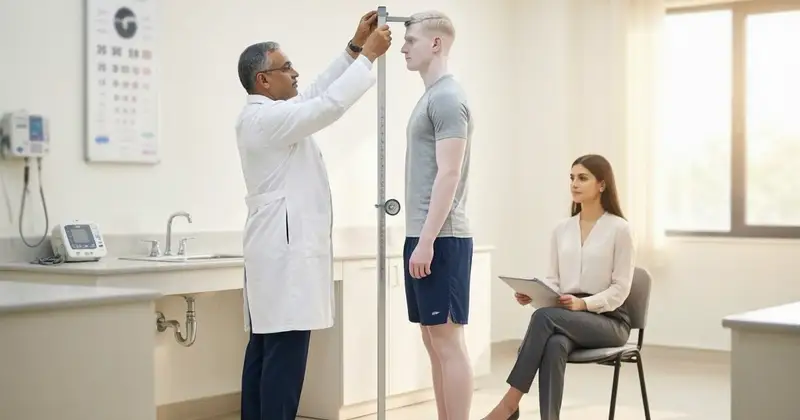
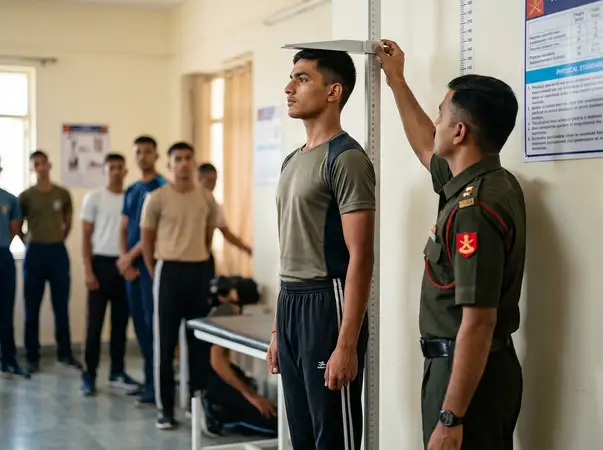
Physical standards, particularly height and weight, are critical for entry into the National Defence Academy. These standards vary slightly depending on the service wing (Army, Navy, or Air Force) and gender. Candidates must meet the minimum height requirements, and their weight must be proportionate to their height and age, as per the prescribed medical guidelines.
Official notification for UPSC NDA 2026 is awaited. As per previous year trends, the expected height and weight standards are:
Minimum Height Requirements:
- For Army and Navy: The minimum acceptable height is 157 cm.
- For Air Force: The minimum acceptable height is 162.5 cm.
- For Female Candidates: The minimum acceptable height is 152 cm for Army/Navy/Air Force. However, for entry into the Air Force, the minimum height for female candidates is also 162.5 cm for certain branches. Specific details will be provided in the official notification.
Relaxation in Height:
Certain relaxations in height are provided for candidates belonging to specific regions. As per previous year trends:
- Candidates from Gorkhas, Garhwalis, Kumaonis, and those from North Eastern regions of India and hilly areas of Uttarakhand: Minimum height 152 cm.
- Candidates from Lakshadweep: Minimum height 150 cm.
Weight Standards:
Weight must be proportionate to height and age. A general guideline for height-weight correlation is typically provided in the official notification. Here's an illustrative table based on previous year trends for male candidates:
| Height (cm) | Minimum Weight (kg) | Maximum Weight (kg) |
|---|---|---|
| 157 | 46 | 58 |
| 160 | 47 | 60 |
| 165 | 50 | 63 |
| 170 | 53 | 66 |
| 175 | 56 | 70 |
| 180 | 59 | 74 |
(Note: This table is illustrative and based on previous year trends. The exact weight range will be specified in the official notification, often with age-specific variations.)
For female candidates, similar proportionate weight standards are applied, typically with slightly lower weight ranges for corresponding heights. Candidates are advised to maintain a healthy lifestyle and ensure they meet these physical parameters.
UPSC NDA 2026 Detailed Medical Standards
The medical examination is a critical stage of the NDA selection process, designed to ensure that candidates are physically and mentally fit to undergo rigorous military training and serve in the armed forces. Strict medical standards are applied, and any deviation can lead to disqualification.
Official notification for UPSC NDA 2026 is awaited. Based on previous year trends, here are the expected detailed medical standards:
General Medical Standards:
- Sound Health: Candidates must be in good physical and mental health and free from any disease or disability that is likely to interfere with the efficient performance of military duties.
- Body Build: Well-built, with no evidence of weak constitution, bodily defects, or underweight/overweight issues beyond permissible limits.
- Skeletal System: No deformities of bones, joints, or spine (e.g., knock knees, flat feet, winged scapula, scoliosis).
- Hearing: Normal hearing in both ears. No history of recurrent ear infections or chronic ear discharge.
- Speech: No impediment in speech.
- Dental: A minimum of 14 dental points. Candidates should have a sufficient number of sound teeth for efficient mastication. No severe gum diseases or extensive dental caries.
- Cardiovascular System: No evidence of heart disease, hypertension, or other circulatory disorders.
- Respiratory System: No history of chronic lung diseases like asthma, tuberculosis, or other respiratory ailments.
- Digestive System: No chronic liver, kidney, or gastrointestinal disorders.
- Skin: No chronic skin diseases.
- Nervous System: No history of fits, mental breakdown, or any neurological disorder.
- Genito-Urinary System: No evidence of hydrocele, varicocele, or other genito-urinary defects.
Vision Standards:
Vision standards are particularly strict, especially for the Air Force. Specific requirements vary for each service.
- Distant Vision (Corrected):
- Army/Navy: Better eye 6/6, Worse eye 6/9.
- Air Force: 6/6 in one eye and 6/9 in other, correctable to 6/6 only for hypermetropia with a max +2.0 D. Myopia not allowed.
- Near Vision: N-5 in better eye, N-6 in worse eye.
- Colour Perception (CP):
- Army/Navy: CP-II.
- Air Force: CP-III (for pilots) and CP-II (for ground duties).
- Refractive Errors: For Army/Navy, permissible limits of myopia and hypermetropia apply. For Air Force, strict limits apply, and generally, candidates with myopia are not eligible for flying duties.
- LASIK/PRK Surgery: Candidates who have undergone LASIK/PRK surgery are generally not considered fit for the Air Force. For Army/Navy, specific conditions apply, including a minimum post-operative period and no complications. Detailed guidelines will be in the official notification.
Tattoo Policy:
Permanent body tattoos are generally not permitted. However, certain exceptions exist:
- Tattoos on the inner face of the forearms (from the inside of the elbow to the wrist) and on the reverse side of the palm/back (dorsal) side of the hand are sometimes permitted for certain tribes/communities where it is customary.
- Tribal tattoos as per custom and traditions of tribal communities are permitted on the body or face.
- The size and location of permitted tattoos are subject to strict scrutiny by the medical board.
It is advisable for candidates to avoid getting new tattoos if they intend to join the armed forces. For existing tattoos, consult the detailed guidelines in the official notification.
UPSC NDA 2026 Selection Process: A Comprehensive Guide
The UPSC NDA selection process is rigorous and multi-staged, designed to identify candidates with the intellectual, physical, and psychological attributes required for a career in the armed forces. The process typically involves a written examination, a Service Selection Board (SSB) interview, and a medical examination, followed by a final merit list.
Official notification for UPSC NDA 2026 is awaited. The selection process is expected to follow the pattern of previous years:
Stage 1: Written Examination
The first stage is a written examination conducted by UPSC. It consists of two papers:
- Mathematics (Paper I):
- Duration: 2.5 hours
- Maximum Marks: 300
- Syllabus: Algebra, Matrices and Determinants, Trigonometry, Analytical Geometry of two and three dimensions, Differential Calculus, Integral Calculus and Differential Equations, Vector Algebra, Statistics and Probability.
- General Ability Test (GAT) (Paper II):
- Duration: 2.5 hours
- Maximum Marks: 600 (divided into two parts)
- Part A - English (200 Marks): Questions on Grammar, Vocabulary, Comprehension, and Cohesion.
- Part B - General Knowledge (400 Marks): Covers Physics, Chemistry, General Science, History, Freedom Movement, Geography, and Current Events.
The total marks for the written examination are 900. Candidates must score minimum qualifying marks in each paper and overall to be shortlisted for the SSB Interview. /exam-preparation
Stage 2: Service Selection Board (SSB) Interview
Candidates who clear the written examination are called for the SSB Interview, a comprehensive personality and aptitude assessment spread over five days. The SSB interview is divided into two stages:
Stage I: Officer Intelligence Rating (OIR) and Picture Perception & Description Test (PP&DT)
- OIR: Verbal and Non-Verbal Reasoning tests.
- PP&DT: Candidates are shown a hazy picture for 3
Frequently Asked Questions (FAQs) about UPSC NDA 2026
What is the expected age limit for UPSC NDA-I 2026?
Candidates for NDA-I 2026 are expected to be born between 2nd July 2007 and 1st July 2010. Refer to the official notification for exact dates.
Are female candidates eligible for NDA 2026?
Yes, unmarried female candidates who meet all eligibility criteria are eligible to apply for the UPSC NDA examination.
What are the main stages of the NDA selection process?
The NDA selection process consists of two main stages: a written examination conducted by UPSC, followed by a Service Selection Board (SSB) interview for qualified candidates.
Related Resources
- How to Prepare for the SSB Interview
- Latest UPSC Jobs
- Defence Jobs in India After 12th
Reader questions: UPSC
What is the expected age limit for UPSC NDA-I 2026?
Candidates for NDA-I 2026 are expected to be born between 2nd July 2007 and 1st July 2010. Refer to the official notification for exact dates.
Are female candidates eligible for NDA 2026?
Yes, unmarried female candidates who meet all eligibility criteria are eligible to apply for the UPSC NDA examination.
What are the main stages of the NDA selection process?
The NDA selection process consists of two main stages: a written examination conducted by UPSC, followed by a Service Selection Board (SSB) interview for qualified candidates.
Related Government Job Resources
Continue with active job hubs and related government job pages on TrueJobs.
Tools for this recruitment topic
Use only the tools relevant to the dates, eligibility or documents discussed above.
TrueJobs Editorial Team
TrueJobs editorial desk
This article is prepared from the sources referenced in the guide and reviewed for clarity, links and dated information. Read our editorial and corrections policy.
Continue This Topic
Follow the closest earlier and newer coverage so older archive posts keep real contextual crawl paths.
UPSC NDA 2026 Admit Card, Exam Date & Reporting Instructions
Get the latest updates on the UPSC NDA 2026 Admit Card, exam dates, and reporting instructions. This guide covers how to download your hall ticket and essential exam day guidelines.
UPSC NDA 2 2026: Notification, Eligibility for 12th Pass & Apply Online
Dreaming of a career in the Indian Armed Forces? The UPSC NDA 2 2026 exam is your gateway. This guide covers notification, eligibility for 12th pass, and how to apply online.
Read Next

UPSC NDA 2026 Admit Card, Exam Date & Reporting Instructions

UPSC NDA 2 2026: Notification, Eligibility for 12th Pass & Apply Online

UPSC CDS 2 2026 Notification, Eligibility, and Apply Online

UPSC CSE 2026: Salary, Post List & Service Job Profiles Explained
Explore Topics
Perfect Your Resume
Use our AI-powered Resume Builder to create ATS-optimized resumes.
AI Resume Builder