
Exam update
UPSC CSE Final Result 2026: Decoding the Rank List — Explained
Understand the UPSC CSE Final Result 2026, including how the rank list is decoded and the critical service allocation process for aspiring civil servants.

The Union Public Service Commission (UPSC) Civil Services Examination (CSE) stands as one of India's most prestigious and challenging recruitment processes. Every year, lakhs of aspirants dedicate years to preparing for this examination, dreaming of serving the nation as an IAS, IPS, IFS, or other esteemed Group A and Group B officers. The journey is arduous, spanning multiple stages – Preliminary, Main, and Interview. For those who navigate these rigorous phases successfully, the announcement of the UPSC CSE Final Result is not just a list of names and ranks; it's the culmination of immense hard work, perseverance, and a gateway to a distinguished career in public service.
As we look towards the UPSC CSE Final Result 2026, understanding the intricacies of the rank list and the subsequent service allocation process becomes paramount for every aspiring civil servant. TrueJobs.co.in is here to guide you through what to expect, how the results are interpreted, and the crucial steps that follow.
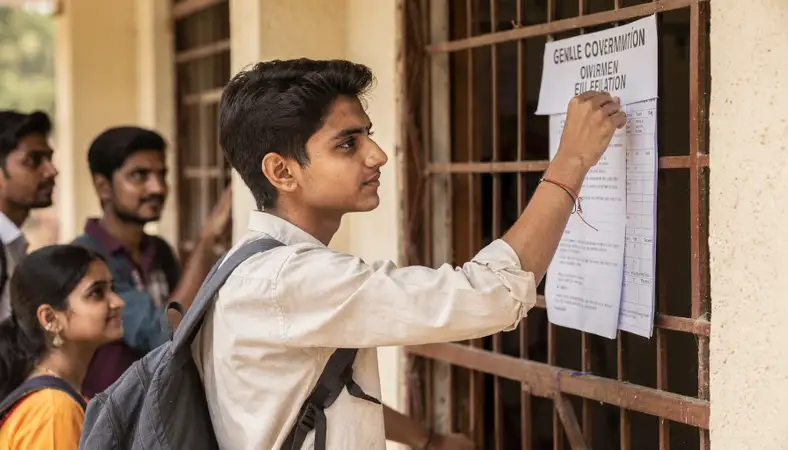
Understanding the UPSC Civil Services Examination (CSE)
The UPSC Civil Services Examination is a nationwide competitive examination conducted by the Union Public Service Commission for recruitment to various Civil Services of the Government of India, including the Indian Administrative Service (IAS), Indian Police Service (IPS), Indian Foreign Service (IFS), and a host of other central services. It is renowned for its comprehensive syllabus, demanding examination pattern, and the high level of competition it entails.
- Preliminary Examination: The first stage, serving as a screening test, consisting of two objective-type papers (General Studies Paper I and General Studies Paper II - CSAT). Marks from CSAT are qualifying only.
- Main Examination: The second stage, comprising nine descriptive papers, including two qualifying language papers and seven merit-ranking papers (Essays, General Studies I, II, III, IV, and two Optional Subject papers). This stage is critical as its marks are counted towards the final merit.
- Personality Test (Interview): The final stage, where candidates face a board that assesses their mental aptitude, critical thinking, general awareness, and suitability for a career in public service.
Only candidates who clear all three stages are considered for the final rank list. The entire process, from notification to final result, typically spans over a year, making it a test of not just knowledge, but also patience and resilience.

The Significance of the Final Result
The UPSC CSE Final Result is more than just a declaration; it's a life-altering event for thousands of candidates. It signifies the successful completion of one of the toughest examinations globally and marks the beginning of a new chapter in their professional lives. The result PDF, usually released on the official UPSC website, contains the roll numbers and names of the recommended candidates, arranged in order of merit.
The final merit list is prepared based on the total marks obtained by candidates in the Main Examination (written part) and the Personality Test (interview). The marks secured in the Preliminary Examination are not counted for determining the final merit. Therefore, a candidate's performance in the Mains and Interview stages is crucial for securing a good rank and, consequently, a preferred service.
For aspirants, tracking the release of the final result is a period of intense anticipation. While TrueJobs.co.in will always endeavor to provide timely updates and direct links to official announcements, candidates are advised to regularly check the official UPSC website for the definitive result declaration. You can also find updates on our dedicated results page: /sarkari-result
Decoding the UPSC CSE Final Rank List
Once the UPSC CSE Final Result 2026 is declared, candidates eagerly scour the rank list to find their name and, more importantly, their rank. Understanding how this rank list is structured and what information it conveys is vital:
- Merit-Based Ranking: The rank list is primarily ordered by the total marks obtained by candidates in the Main Examination and the Personality Test. The candidate with the highest total score secures Rank 1.
- Roll Number and Name: Each entry typically includes the candidate's roll number and full name.
- Marks Breakup: The result usually provides a detailed breakup of marks, including marks obtained in the written examination, marks in the interview, and the total aggregate score. This transparency helps candidates understand their performance across different stages.
- Category-wise Ranking: While the overall rank list is based on combined merit, UPSC also considers reservation policies. Candidates are often recommended against their respective categories (General, EWS, OBC, SC, ST, PwBD), and separate lists or indications might be provided for category-wise recommendations.
- Tie-Breaking Principles: In cases where two or more candidates secure identical total marks, UPSC employs specific tie-breaking rules. Historically, these have included factors like the candidate with higher marks in the compulsory papers of the Main Examination, or the candidate older in age, being ranked higher. The exact tie-breaking criteria are specified by UPSC in their official notifications.
A higher rank significantly increases a candidate's chances of being allocated their most preferred service and cadre, making every single mark count in this highly competitive examination.
The Crucial Process of Service Allocation
After the final rank list is out, the next critical step for successful candidates is the service allocation. This is the process where recommended candidates are assigned to specific Civil Services based on their rank, preferences, and the availability of vacancies in each service and category.
Factors Influencing Service Allocation:
- Rank in Merit List: This is the most significant factor. Candidates with higher ranks generally have a better chance of getting their top preferred services.
- Service Preferences: During the Detailed Application Form (DAF) submission, candidates are required to indicate their order of preference for various services. This preference list plays a crucial role in allocation.
- Category: Reservation policies apply to service allocation. Candidates are allocated services based on their category (General, EWS, OBC, SC, ST, PwBD) and the number of vacancies available for that category in each service.
- Medical Fitness: Different services have specific medical standards. Candidates must meet the medical fitness requirements for the service they are allocated to.
- Availability of Vacancies: The total number of vacancies notified for each service in a particular year directly impacts the allocation process.
Types of Services:
The UPSC CSE recruits for various Group A and Group B services. Some of the prominent ones include:
All India Services:
- Indian Administrative Service (IAS)
- Indian Police Service (IPS)
- Indian Forest Service (IFS) - Note: Recruited through a separate exam, but often mentioned in context of top services. For CSE, it's Indian Foreign Service.
Central Services (Group A):
- Indian Foreign Service (IFS)
- Indian Revenue Service (IRS - Income Tax)
- Indian Revenue Service (IRS - Customs & Indirect Taxes)
- Indian Audit and Accounts Service (IA&AS)
- Indian Civil Accounts Service (ICAS)
- Indian Corporate Law Service (ICLS)
- Indian Defence Accounts Service (IDAS)
- Indian Defence Estates Service (IDES)
- Indian Information Service (IIS)
- Indian Ordnance Factories Service (IOFS)
- Indian Postal Service (IPoS)
- Indian Railway Protection Force Service (IRPFS)
- Indian Trade Service (ITS)
- And many others.
Central Services (Group B):
- Armed Forces Headquarters Civil Service
- Delhi, Andaman & Nicobar Islands, Lakshadweep, Daman & Diu and Dadra & Nagar Haveli Civil Service (DANICS)
- Delhi, Andaman & Nicobar Islands, Lakshadweep, Daman & Diu and Dadra & Nagar Haveli Police Service (DANIPS)
- Pondicherry Civil Service (PCS)
- Pondicherry Police Service (PPS)
The Department of Personnel and Training (DoPT) plays a central role in the service and cadre allocation process, especially for the All India Services (IAS, IPS, IFS). Candidates allocated to IAS, IPS, and IFS are also assigned a specific state cadre, where they will primarily serve throughout their career, subject to deputations. This allocation is also based on rank, preference, and the Roster System.
What Happens After the Result: Next Steps for Qualified Candidates
The declaration of the UPSC CSE Final Result 2026 is just the beginning of a series of administrative procedures for the successful candidates. Here's a general overview of the next steps:
- Provisional Appointment & Document Verification: Initially, the appointments are provisional. Candidates will be required to undergo a thorough document verification process where all original academic, caste, and other relevant certificates are checked against the information provided in their application forms. Any discrepancy can lead to the cancellation of candidature.
- Medical Examination: All selected candidates must undergo a comprehensive medical examination to assess their physical and mental fitness for the respective services. The standards vary slightly depending on the service (e.g., IPS has stricter physical requirements).
- Service and Cadre Allocation: As discussed, this crucial process assigns candidates to their specific service (e.g., IAS, IPS, IRS) and, for All India Services, to a particular state cadre. This is typically done by the DoPT.
- Foundation Course (FC) at LBSNAA: For candidates allocated to IAS, IPS, IFS, and certain other Group A services, the journey begins with a common Foundation Course at the Lal Bahadur Shastri National Academy of Administration (LBSNAA) in Mussoorie. This course aims to impart a common understanding of public administration and foster camaraderie among the future civil servants.
- Service-Specific Training: After the Foundation Course, candidates proceed to their respective service-specific training academies. For example, IAS probationers continue their professional training at LBSNAA, IPS probationers go to the Sardar Vallabhbhai Patel National Police Academy (SVPNPA) in Hyderabad, and IFS probationers train at the Foreign Service Institute in New Delhi.
- Induction and Probation: Upon successful completion of training, candidates are formally inducted into their services and begin their probationary period, which typically lasts for two years. During probation, they undergo practical training in the field and are assessed for their performance and conduct.
It is imperative for selected candidates to stay vigilant and regularly check their registered email and the official websites of UPSC and DoPT for all subsequent notifications and instructions regarding document submission, medical examinations, and training schedules. TrueJobs.co.in will also strive to keep you informed about these crucial updates.
Preparing for Your Future: A TrueJobs Perspective
For those who see their name on the UPSC CSE Final Result 2026 list, congratulations! This is a monumental achievement, and it marks the beginning of a challenging yet immensely rewarding career dedicated to public service. Embrace this opportunity with humility, integrity, and a commitment to making a positive difference in the lives of millions.
For aspirants who may not have succeeded this time, remember that the UPSC CSE journey is a test of perseverance. Many successful civil servants have faced setbacks before achieving their goal. Analyze your performance, learn from your experience, and decide on your next steps – whether it's another attempt with renewed vigor, or exploring other promising government job opportunities. TrueJobs.co.in remains your dedicated partner in your career journey, offering resources, exam notifications, and preparation tips for a wide array of government sector jobs. Keep an eye on our portal for updates on various Sarkari Naukri and exam preparation guides.
How to follow this exam update
The UPSC CSE Final Result 2026, along with the subsequent rank list and service allocation, represents a defining moment for countless individuals. It is the culmination of years of relentless effort and the dawn of a career dedicated to serving the nation. Understanding the
Frequently Asked Questions (FAQs) about UPSC CSE Final Result 2026
Here are some common questions regarding the UPSC CSE Final Result and service allocation:
- When is the UPSC CSE Final Result 2026 expected?
The UPSC CSE Final Result 2026 is typically announced several months after the interview stage concludes, usually by April-May of the following year for the previous year's exam cycle. - How is the UPSC CSE rank list determined?
The rank list is based on the total marks obtained in the Main Examination (written part) and the Personality Test (interview). The preliminary exam is only qualifying. - What is service allocation in UPSC CSE?
Service allocation is the process where qualified candidates are assigned to various civil services (like IAS, IPS, IFS) based on their rank, preference, and category, subject to vacancy availability. - Which services are allocated through UPSC CSE?
Services include Indian Administrative Service (IAS), Indian Police Service (IPS), Indian Foreign Service (IFS), and various other Group A and Group B Central Services.
Related Resources
Reader questions: UPSC
When is the UPSC CSE Final Result 2026 expected?
The UPSC CSE Final Result 2026 is typically announced several months after the interview stage concludes, usually by April-May of the following year for the previous year's exam cycle.
How is the UPSC CSE rank list determined?
The rank list is based on the total marks obtained in the Main Examination (written part) and the Personality Test (interview). The preliminary exam is only qualifying.
What is service allocation in UPSC CSE?
Service allocation is the process where qualified candidates are assigned to various civil services (like IAS, IPS, IFS) based on their rank, preference, and category, subject to vacancy availability.
Which services are allocated through UPSC CSE?
Services include Indian Administrative Service (IAS), Indian Police Service (IPS), Indian Foreign Service (IFS), and various other Group A and Group B Central Services.
Related Government Job Resources
Continue with active job hubs and related government job pages on TrueJobs.
Tools for this recruitment topic
Use only the tools relevant to the dates, eligibility or documents discussed above.
TrueJobs Editorial Team
TrueJobs editorial desk
This article is prepared from the sources referenced in the guide and reviewed for clarity, links and dated information. Read our editorial and corrections policy.
Continue This Topic
Follow the closest earlier and newer coverage so older archive posts keep real contextual crawl paths.
UPSC NDA 2 Notification 2026: Exam Date, Vacancies & Eligibility
Get essential details on UPSC NDA 2 Notification 2026, including expected dates, eligibility, application process, syllabus, and crucial preparation tips for armed forces aspirants.
UPSC CSE Mains Result 2026: Your Guide to Qualifying & Interview Schedule
Your complete guide to the UPSC CSE Mains Result 2026. Learn how to check your result, understand the cut-off, and prepare for the crucial Personality Test stage.
Read Next

UPSC NDA 2 Notification 2026: Exam Date, Vacancies & Eligibility

UPSC CSE Mains Result 2026: Your Guide to Qualifying & Interview Schedule

UPSC NDA 2 Admit Card 2026: Download Link & Exam Centre Details

UPSC CSE Prelims Result 2026: Merit List & Cut Off Explained
Explore Topics
Perfect Your Resume
Use our AI-powered Resume Builder to create ATS-optimized resumes.
AI Resume Builder