
Recruitment guide
UPSC Combined Geo-Scientist 2026: Streams — Explained
Explore the prestigious UPSC Combined Geo-Scientist 2026 examination. This guide covers diverse streams, eligibility, salary, and career scope for aspiring geoscientists in India.

Are you an aspiring geoscientist, chemist, or hydrogeologist looking to contribute to India's vital resource management and environmental protection efforts? The Union Public Service Commission (UPSC) Combined Geo-Scientist Examination offers a prestigious pathway to a rewarding career in various Group 'A' posts under the Government of India. This highly competitive examination attracts thousands of brilliant minds each year, seeking to join esteemed organizations like the Geological Survey of India (GSI) and the Central Ground Water Board (CGWB). As we look ahead to the 2026 cycle, understanding the nuances of this examination – from the diverse streams it encompasses to the stringent eligibility criteria, attractive salary packages, and immense career growth opportunities – becomes paramount.
This comprehensive guide aims to shed light on every critical aspect of the UPSC Combined Geo-Scientist 2026 examination, helping you chart a clear path towards achieving your dream government job.

Understanding the UPSC Combined Geo-Scientist Examination
The UPSC Combined Geo-Scientist Examination is a national-level competitive exam conducted annually by the Union Public Service Commission (UPSC) for recruitment to Group 'A' posts in the Geological Survey of India (GSI), Ministry of Mines, and the Central Ground Water Board (CGWB), Ministry of Water Resources. These roles are critical for the exploration, assessment, and management of India's geological and hydrogeological resources, contributing significantly to the nation's development and environmental sustainability.
The examination is designed to select highly qualified individuals for specialized roles such as Geologist, Geophysicist, Chemist, and Junior Hydrogeologist. It is known for its rigorous selection process, which typically involves a Preliminary Examination, a Main Examination, and a Personality Test (Interview). Success in this exam not only offers a stable and secure government job but also provides an unparalleled opportunity to work on challenging projects of national importance, utilize cutting-edge technology, and collaborate with leading experts in the field.
For aspirants eyeing the 2026 examination, it's crucial to begin preparation early, understanding the structure, syllabus, and demands of each stage. While specific dates and detailed notifications for 2026 are yet to be released, the fundamental framework of the exam remains consistent year after year. This article will provide insights based on the established patterns to help you prepare effectively.
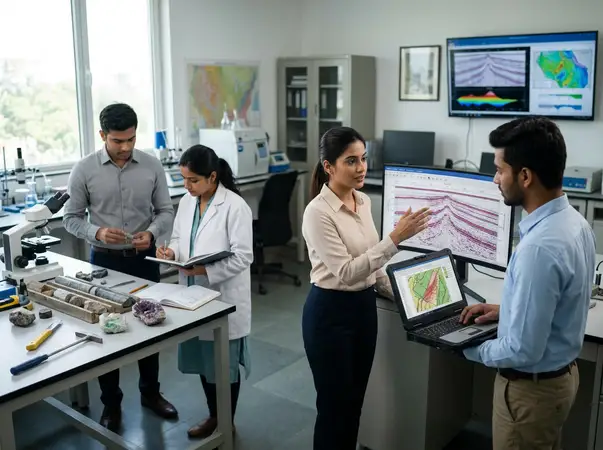
Streams and Disciplines Covered
The UPSC Combined Geo-Scientist Examination recruits for distinct scientific disciplines, each playing a unique role in geological and hydrogeological studies. Understanding these streams is the first step in identifying which role aligns with your academic background and career aspirations.
1. Geologist
Geologists are primarily involved in the study of the Earth's physical structure, substance, history, and the processes that act upon it. In government service, their responsibilities often include:
- Geological mapping and surveying.
- Mineral exploration and resource assessment.
- Study of natural hazards like earthquakes, landslides, and volcanic activity.
- Environmental geology, including pollution studies and waste management.
- Paleontological and stratigraphical studies.
They contribute significantly to understanding the Earth's crust, identifying potential resource deposits, and mitigating geological risks.
2. Geophysicist
Geophysicists apply principles of physics to study the Earth. They use methods like seismic surveys, gravity surveys, magnetic surveys, and electrical surveys to explore the subsurface. Their work is vital for:
- Exploration of oil, gas, and mineral deposits.
- Groundwater exploration and mapping.
- Studying the Earth's interior and its physical properties.
- Monitoring seismic activity and understanding plate tectonics.
- Environmental investigations, such as contaminant plume mapping.
Geophysicists often work with sophisticated instruments and data analysis techniques to interpret subsurface structures.
3. Chemist
Chemists in the GSI play a crucial role in the analytical aspects of geological and environmental studies. Their responsibilities include:
- Chemical analysis of rocks, minerals, soil, water, and gas samples.
- Developing and validating analytical methods for trace element analysis.
- Environmental monitoring and pollution assessment.
- Geochemical exploration for mineral deposits.
- Quality control and assurance in laboratories.
They provide essential data that informs geological interpretations, resource assessments, and environmental impact studies.
4. Junior Hydrogeologist (Scientist 'B')
Junior Hydrogeologists, primarily recruited for the Central Ground Water Board (CGWB), focus specifically on groundwater resources. Their key functions include:
- Groundwater exploration and resource assessment.
- Monitoring groundwater levels and quality.
- Developing strategies for sustainable groundwater management.
- Hydrogeological mapping and aquifer characterization.
- Advising on groundwater-related policies and projects.
With increasing concerns about water scarcity, the role of a Junior Hydrogeologist is becoming increasingly critical for national water security.
Eligibility Criteria for UPSC Combined Geo-Scientist 2026
Meeting the eligibility criteria is the foundational step for any aspirant. The UPSC sets strict guidelines regarding nationality, age, and educational qualifications. While specific dates for age calculation will be provided in the official notification for 2026, the general criteria remain consistent.
1. Nationality
A candidate must be either:
- A citizen of India, or
- A subject of Nepal, or
- A subject of Bhutan, or
- A Tibetan refugee who came over to India before 1st January 1962 with the intention of permanently settling in India, or
- A person of Indian origin who has migrated from Pakistan, Burma, Sri Lanka, East African countries of Kenya, Uganda, the United Republic of Tanzania, Zambia, Malawi, Zaire, Ethiopia, and Vietnam with the intention of permanently settling in India.
Candidates belonging to categories (2), (3), (4), and (5) must possess a certificate of eligibility issued by the Government of India.
2. Age Limit (as of a specified date, usually 1st January of the examination year)
For most posts, the age limit is generally:
- Minimum Age: 21 years
- Maximum Age: 32 years
Age Relaxation:
The UPSC provides age relaxation for candidates belonging to certain categories as per government rules. Common relaxations include:
- Scheduled Castes (SC) and Scheduled Tribes (ST): Up to 5 years
- Other Backward Classes (OBC): Up to 3 years
- Persons with Benchmark Disability (PwBD): Up to 10 years
- Ex-servicemen: As per government norms.
- Certain categories of Central Government employees: As per government norms.
It is crucial to refer to the official notification for the 2026 examination for precise age calculation dates and detailed relaxation rules. /sarkari-result
3. Educational Qualifications
The educational qualifications are specific to each stream. Candidates must possess a Master's degree from a recognized university or institution.
(i) For Geologist Group 'A' in Geological Survey of India:
- Master's degree in Geological Science or Geology or Applied Geology or Geo-Exploration or Mineral Exploration or Marine Geology or Oceanography or Petroleum Geosciences or Geochemistry or Earth Science & Resource Management or Geological Technology or Geophysical Technology from a recognized University.
(ii) For Geophysicist Group 'A' in Geological Survey of India:
- Master's degree in Geophysics or Applied Geophysics or Exploration Geophysics or Marine Geophysics or Integrated Geophysics or Physics or Applied Physics or Electronics from a recognized University.
(iii) For Chemist Group 'A' in Geological Survey of India:
- Master's degree in Chemistry or Applied Chemistry or Analytical Chemistry or Industrial Chemistry or Inorganic Chemistry or Organic Chemistry or Physical Chemistry or Marine Chemistry or Environmental Chemistry or Geo Chemistry from a recognized University.
(iv) For Junior Hydrogeologist (Scientist 'B'), Group 'A' in Central Ground Water Board:
- Master's degree in Geology or Applied Geology or Hydrogeology or Earth Science or Geological Technology or Hydrology or Geophysics or Applied Geophysics or Geophysical Technology from a recognized University.
Important Note: Candidates appearing in their final year of the qualifying Master's degree examination are generally eligible to apply, provided they produce proof of passing the examination along with the detailed application form (DAF) for the Main Examination. However, this is subject to the specific conditions mentioned in the official notification. It is always advisable to check the latest notification for any updates or changes in eligibility criteria.
4. Physical Standards
Candidates must be physically fit according to the physical standards for admission to the Combined Geo-Scientist Examination, as per regulations given in the official notification. This usually involves a medical examination to ensure candidates are suitable for the duties associated with these posts.
Examination Pattern and Syllabus (General Overview)
The UPSC Combined Geo-Scientist Examination is conducted in three stages: Preliminary Examination, Main Examination, and Personality Test (Interview). Understanding the structure and syllabus is crucial for effective preparation. /syllabus
1. Preliminary Examination (Objective Type)
This is a qualifying exam, designed to shortlist candidates for the Main Examination. It consists of two papers:
-
Paper I: General Studies (Common for all streams)
- Duration: 2 hours
- Maximum Marks: 200
- Topics: General Science, Current events of national and international importance, History of India and Indian National Movement, Indian and World Geography, Indian Polity and Governance, Economic and Social Development, Environmental Ecology, Bio-diversity and Climate Change.
- This paper assesses general awareness and analytical ability.
-
Paper II: Subject Specific (Geology/Geophysics/Chemistry/Hydrogeology)
- Duration: 2 hours
- Maximum Marks: 300
- Topics: Covers the core concepts of the chosen discipline at the Master's degree level.
- The syllabus for each subject is broad and detailed, covering fundamental principles and advanced topics.
Both papers are objective type (Multiple Choice Questions) with negative marking for incorrect answers. The marks obtained in the Preliminary Examination are not counted for the final merit list.
2. Main Examination (Descriptive Type)
The Main Examination is descriptive and consists of three papers for each stream. The marks obtained in the Main Examination and the Personality Test determine the final merit.
(i) For Geologist Stream:
- Paper I: Geology (3 hours, 200 marks)
- Paper II: Geology (3 hours, 200 marks)
- Paper III: Geology (3 hours, 200 marks)
Syllabus Highlights: Physical Geology, Structural Geology, Mineralogy, Petrology, Economic Geology, Stratigraphy, Paleontology, Hydrogeology, Engineering Geology, Environmental Geology, Remote Sensing & GIS, Geochemistry, Indian Mineral Deposits, etc.
(ii) For Geophysicist Stream:
- Paper I: Geophysics (3 hours, 200 marks)
- Paper II: Geophysics (3 hours, 200 marks)
- Paper III: Geophysics (3 hours, 200 marks)
Syllabus Highlights: Solid Earth Geophysics, Exploration Geophysics (Gravity, Magnetic, Electrical, Electromagnetic, Seismic, Radiometric methods), Geophysical well logging, Remote Sensing & GIS, Mathematical methods in Geophysics, Data Processing & Interpretation, etc.
(iii) For Chemist Stream:
- Paper I: Chemistry (3 hours, 200 marks)
- Paper II: Chemistry (3 hours, 200 marks)
- Paper III: Chemistry (3 hours, 200 marks)
Syllabus Highlights: Physical Chemistry, Inorganic Chemistry, Organic Chemistry, Analytical Chemistry, Environmental Chemistry, Geochemistry, Spectroscopic methods, Chromatography, Electroanalytical methods, Separation techniques, etc.
(iv) For Junior Hydrogeologist Stream:
- Paper I: Geology (3 hours, 200 marks)
- Paper II: Hydrogeology (3 hours, 200 marks)
- Paper III: Hydrogeology (3 hours, 200 marks)
Syllabus Highlights: Geology (similar to Geologist Paper I), Principles of Hydrogeology, Groundwater Hydraulics, Groundwater Exploration & Management, Groundwater Quality & Pollution, Isotope Hydrogeology, Remote Sensing & GIS in Hydrogeology, etc.
3. Personality Test (Interview)
- Maximum Marks: 200
- Candidates who qualify the Main Examination are called for a Personality Test.
- This stage assesses the candidate's general awareness, intellectual curiosity, critical thinking ability, communication skills, leadership potential, integrity, and suitability for a career in public service.
Aspirants are advised to consult the official UPSC notification for the detailed and updated syllabus for 2026 when it is released. Regular practice with previous year's papers and mock tests is highly recommended for all stages. /exam-preparation-tips
Salary Structure and Benefits
A career through the UPSC Combined Geo-Scientist Examination offers not just professional satisfaction but also a highly attractive salary package and a comprehensive set of benefits, typical of Group 'A' Gazetted Officer posts in the Central Government.
1. Pay Scale and Basic Pay
Upon selection, Geo-Scientists are recruited to Group 'A' posts, which fall under Pay Level 10 of the 7th Central Pay Commission (CPC). The entry-level basic pay for these posts is generally around ₹56,100/- per month.
2. Allowances and Perks
In addition to the basic pay, government employees are entitled to various allowances, which significantly increase the total in-hand salary. These include:
- Dearness Allowance (DA): A percentage of the basic pay, revised periodically to offset inflation.
- House Rent Allowance (HRA): Provided based on the class of the city of posting (X, Y, or Z category cities). It can range from 9% to 27% of the basic pay.
- Transport Allowance (TA): Provided to cover commuting expenses, varying based on the city and pay level.
- Medical Facilities: Comprehensive medical coverage for the employee and dependents under the Central Government Health Scheme (CGHS) or similar schemes.
- Leave Travel Concession (LTC): Allows employees to travel to their hometown or other places with family, with travel expenses reimbursed.
- Pension Scheme: Employees are covered under the National Pension System (NPS).
- Gratuity: A lump sum payment received at the time of retirement.
- Government Accommodation: Eligibility for government quarters, subject to availability.
- Education Allowance: For children's education, as per rules.
- Other Allowances: Depending on the specific department and nature of duty, other allowances like field allowance, special duty allowance, etc., may also be applicable.
3. Total In-Hand Salary
Considering the basic pay and various allowances, the gross salary for an entry-level Geo-Scientist can be approximately ₹75,000 to ₹90,000 per month, depending on the city of posting and other factors. After deductions (NPS contribution, income tax, etc.), the in-hand salary would be substantial, providing a comfortable living standard.
4. Job Security and Stability
One of the most significant benefits of a government job through UPSC is unparalleled job security and stability. These positions come with a lifelong career path, protection from economic downturns, and a clear framework for promotions and career progression.
Career Scope and Growth Prospects
A career as a Geo-Scientist in the Indian government is not just a job; it's an opportunity to be at the forefront of scientific research, resource management, and national development. The career path offers significant growth, diverse roles, and the chance to make a tangible impact.
1. Diverse Roles and Responsibilities
As detailed in the 'Streams and Disciplines' section, each role comes with unique responsibilities:
- Geologists: Engaged in fundamental geological mapping, mineral exploration, natural hazard assessment, and environmental geological studies across various terrains of India. They often work in challenging field conditions, contributing to the nation's resource inventory.
- Geophysicists: Utilize advanced geophysical techniques for subsurface exploration, identifying potential sites for mineral deposits, groundwater, and even seismic risk assessment. Their work involves sophisticated instrumentation and data interpretation.
- Chemists: Provide critical analytical support, conducting chemical analysis of geological and environmental samples. They are instrumental in geochemical exploration, environmental monitoring, and developing new analytical methodologies.
- Junior Hydrogeologists: Focus on the nation's groundwater resources – from exploration and assessment to sustainable management and quality monitoring. Their work directly impacts water security and agricultural sustainability.
These roles often involve extensive fieldwork, laboratory analysis, data interpretation, report writing, and collaboration with other scientific disciplines.
2. Departments and Organizations
Successful candidates are primarily recruited into:
- Geological Survey of India (GSI): India's premier national geological organization, responsible for geological mapping, mineral resource assessment, and geological hazard studies.
- Central Ground Water Board (CGWB): The national apex organization dealing with various aspects of groundwater resource assessment, development, and management.
These organizations offer a vast canvas for scientific exploration and application, with opportunities to work on projects that span the entire country.
3. Career Progression and Promotions
The career path for a Geo-Scientist is structured and offers excellent opportunities for advancement. Starting as a Group 'A' officer, one can expect promotions based on seniority, performance, and departmental requirements.
- Entry Level: Geologist/Geophysicist/Chemist/Junior Hydrogeologist (Scientist 'B')
- Next Levels: Senior Geologist/Geophysicist/Chemist/Hydrogeologist, Superintending Geologist/Geophysicist/Chemist/Hydrogeologist
- Higher Management: Director, Senior Director, Deputy Director General, Additional Director General, and ultimately to the highest positions like Director General of GSI or Chairman of CGWB.
These promotions bring increased responsibilities, leadership roles, and enhanced salary and benefits. The career trajectory allows for continuous learning, professional development, and specialization in various sub-fields.
4. Impact and Contribution
Working as a Geo-Scientist in the government means directly contributing to critical national objectives such as:
- Ensuring mineral and energy security.
- Managing and conserving precious groundwater resources.
- Mitigating natural disasters and hazards.
- Environmental protection and sustainable development.
- Scientific research and innovation in earth sciences.
The work is intellectually stimulating and offers the satisfaction of serving the nation through scientific expertise. It's a career that combines scientific rigor with public service, making it highly rewarding for those passionate about earth sciences. /government-jobs
Checks to complete before you apply
The UPSC Combined Geo-Scientist Examination 2026 presents a golden opportunity for individuals with a strong academic background in geology, geophysics, chemistry, and hydrogeology to embark on a distinguished career in public service. These Group 'A' posts offer not only a competitive salary, comprehensive benefits, and unparalleled job security but also the chance to contribute significantly to India's resource management, environmental sustainability, and scientific advancement.
Success in this challenging examination demands meticulous preparation, a deep understanding of the syllabus, consistent practice, and a clear strategy. By thoroughly understanding the streams, meeting the eligibility criteria, familiarizing yourself with the examination pattern, and envisioning the vast career scope, you can equip yourself to tackle this prestigious exam. Remember, while the journey is arduous, the destination—a fulfilling career as a Geo-Scientist with the Government of India—is immensely rewarding. Start your preparation today, stay focused, and aim for excellence. Your contribution to the nation's geological and hydrogeological future awaits!
Frequently Asked Questions
Q1: Is the UPSC Combined Geo-Scientist exam conducted every year?
A1: Yes, the Union Public Service Commission (UPSC) generally conducts the Combined Geo-Scientist Examination annually. The notification for the exam is typically released towards the end of the year, with the preliminary exam usually held in February or March of the following year.
Q2: Can final year students apply for the exam?
A2: Yes, candidates who are in their final year of the qualifying Master's degree examination are generally eligible to apply. However, they must typically provide proof of passing the examination along with the Detailed Application Form (DAF) for the Main Examination, which is usually submitted after the preliminary exam results are declared. Always refer to the official notification for the specific year for precise conditions.
Q3: What is the age relaxation for OBC/SC/ST candidates?
A3: As per government norms, OBC candidates are generally eligible for an age relaxation of up to 3 years, while SC/ST candidates can avail an age relaxation of up to 5 years. There are also relaxations for Persons with Benchmark Disability (PwBD) and ex-servicemen. The exact age calculation date and specific relaxation rules will be detailed in the official UPSC notification for the 2026 examination.
Q4: Are there any physical standards required for these posts?
A4: Yes, candidates must meet certain physical standards to be considered fit for appointment to Group 'A' posts. These standards are outlined in detail in the official examination notification and typically involve a medical examination to ensure the candidate is physically capable of performing the duties associated with the respective scientific roles, which may include fieldwork. /admit-card
Q5: What is the difference between a Geologist and a Junior Hydrogeologist?
A5: While both roles fall under earth sciences, a Geologist (recruited by GSI) has a broader scope, dealing with general geological mapping, mineral exploration, structural geology, and various geological hazards. A Junior Hydrogeologist (recruited by CGWB) specializes specifically in groundwater resources, focusing on groundwater exploration, assessment, management, and quality monitoring. Both require a Master's degree in relevant fields, but their primary areas of work and the organizations they serve differ.
Related Resources
- UPSC Exam Calendar
- General Studies Preparation Guide
- Latest Government Jobs
Related Government Job Resources
Continue with active job hubs and related government job pages on TrueJobs.
Tools for this recruitment topic
Use only the tools relevant to the dates, eligibility or documents discussed above.
TrueJobs Editorial Team
TrueJobs editorial desk
This article is prepared from the sources referenced in the guide and reviewed for clarity, links and dated information. Read our editorial and corrections policy.
Continue This Topic
Follow the closest earlier and newer coverage so older archive posts keep real contextual crawl paths.
UPSC ESE 2026: Eligibility, Salary & Career Growth for Engineers
The UPSC ESE 2026 offers a prestigious career for engineers. This guide details eligibility, salary, and career growth for IES aspirants.
UPSC Indian Statistical Service 2026: Eligibility, Syllabus & Career Path
Explore the UPSC Indian Statistical Service (ISS) 2026 exam. This guide covers eligibility, syllabus, selection process, salary, and career path for aspiring statisticians.
Read Next

UPSC ESE 2026: Eligibility, Salary & Career Growth for Engineers

UPSC Indian Statistical Service 2026: Eligibility, Syllabus & Career Path

UPSC Indian Forest Service (IFS) 2026: Complete Guide to a Green Career

UPSC Indian Economic Service 2026: Eligibility, Salary, Exam & Career
Explore Topics
Perfect Your Resume
Use our AI-powered Resume Builder to create ATS-optimized resumes.
AI Resume Builder