
Recruitment guide
Odisha Board 2027: Passing Marks & Grace Policy — Explained
Discover the Odisha Board passing marks and grace marks policy for 2027. Understand the criteria and how grace marks help students clear exams.

The Odisha Board of Secondary Education (BSE Odisha) and Council of Higher Secondary Education (CHSE Odisha) play a crucial role in shaping the academic journey of students across the state. As the 2027 examination session approaches, many students and parents are keen to understand the passing marks criteria and the grace marks policy implemented by the Odisha Board. This article offers a detailed overview of the Odisha Board passing marks and the grace marks system for 2027, helping students prepare effectively and understand how these policies might impact their results.
A clear grasp of these rules is not only vital for academic progression but also for meeting the eligibility criteria for numerous government job opportunities that require a minimum qualification of passing the 10th or 12th standard.
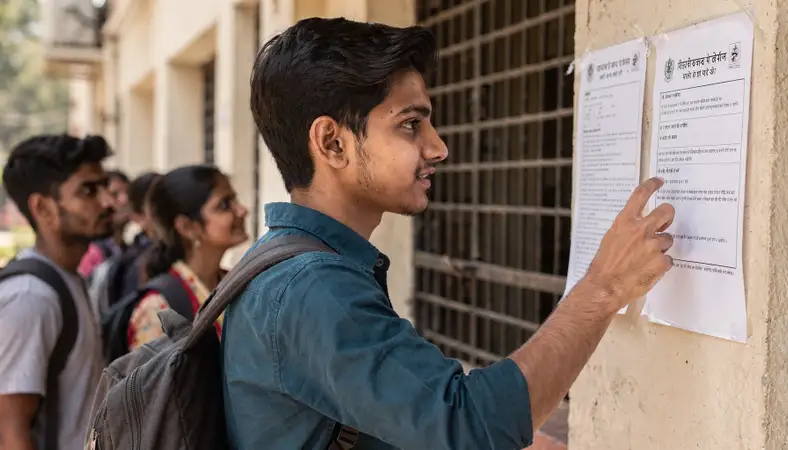
Understanding Odisha Board Passing Marks for 2027
Passing marks are the minimum marks a student must secure in each subject to be declared successful in their examinations. The Odisha Board has set clear guidelines regarding passing criteria for both secondary (Class 10) and higher secondary (Class 12) examinations. These standards are designed to ensure a uniform level of academic proficiency across the state and serve as a foundational benchmark for higher education and employment.
Passing Marks for Secondary Education (Class 10)
For Class 10 students under BSE Odisha, the passing marks policy is as follows:
- Minimum Marks per Subject: Students are required to score at least 33% marks in each subject to pass. This means for a paper worth 100 marks, a student must score a minimum of 33 marks.
- Practical and Theory Components: In subjects with practical exams, such as Science, students must secure 33% marks separately in both the theory and practical parts. Failing in either component, even if the combined total is above 33%, will result in failing the subject.
- Overall Aggregate: Apart from individual subjects, students must also meet the aggregate passing criteria as prescribed by the board. This ensures a consistent performance level across all subjects.
It is crucial for students to focus on all subjects equally, as a failure in even one subject means the student will not be awarded the Matriculation (Class 10) pass certificate and will be required to appear for compartmental or supplementary exams in the failed subjects.

Passing Marks for Higher Secondary Education (Class 12)
For CHSE Odisha students appearing for Class 12 exams, the passing criteria are slightly more rigorous, reflecting the advanced level of study:
- Minimum Marks per Subject: A minimum of 33% marks in each subject is necessary to pass. This applies to all streams, including Arts, Science, and Commerce.
- Practical and Theory Exams: Subjects with practical exams, like Physics, Chemistry, and Biology, require students to pass both the theory and practical components separately with 33% each. A student cannot compensate for a fail in practicals with high theory marks, or vice versa.
- Aggregate Marks: Students must meet the overall aggregate requirement to qualify for the next academic stage or for admission into higher education. Many universities and colleges have cut-offs based on the aggregate percentage, making overall performance important.
It is important to note that these passing marks are designed to maintain academic standards while providing students with a fair chance to succeed. A failure in the Class 12 board exams can delay a student's plans for higher education or applying for government jobs that require 12th pass as a basic eligibility criterion.
What Are Grace Marks and Why Are They Important?
Grace marks are additional marks awarded to students under specific circumstances to help them pass an exam or improve their overall performance. The Odisha Board’s grace marks policy aims to support students who narrowly miss the passing criteria, offering them a second chance without compromising the examination’s integrity. This system acts as a crucial safety net, acknowledging that a student's overall academic capability should not be judged solely on falling short by a mark or two in a particular subject.
Grace marks can be critical for students who have performed well overall but have fallen short by a few marks in one or two subjects. This policy helps reduce the number of failures and encourages students to continue their education without the setback of repeating an entire academic year. For many, this small concession can make a significant difference in their academic and professional trajectory, preventing a single exam from derailing their future plans.
Odisha Board Grace Marks Policy 2027: Key Features
The grace marks policy for the Odisha Board in 2027 follows a structured approach to ensure fairness and transparency. Here are the essential features:
- Maximum Grace Marks Allowed: The board may award up to 5 grace marks per subject, but this can vary based on the specific rules for the academic year. The total grace marks awarded across all subjects for a student is also capped.
- Applicable Subjects: Grace marks are typically awarded in theory papers where students have narrowly missed the passing threshold. They are generally not applied to internal assessment or project work components.
- Limit on Number of Subjects: Students can receive grace marks in a limited number of subjects, commonly up to two or three, depending on the board’s guidelines. This prevents over-reliance on the policy.
- Eligibility Criteria: Grace marks are granted only if the student’s marks are close to the passing marks—usually within 5 marks of the passing score. The decision is automatic and applied by the board's result processing system; students cannot apply for them.
- Non-Applicability: Grace marks are generally not awarded to improve grades beyond passing or in practical exams unless specified. Their sole purpose is to help a student achieve the minimum passing threshold.
These rules ensure that grace marks are used fairly and effectively to help deserving students without undermining the value of the examination.
Scenarios for Grace Mark Allocation
To better understand the policy, consider these common scenarios. A student scoring 30 marks in a 100-mark theory paper (3 marks short of 33%) would likely be awarded 3 grace marks to push them to the passing threshold. However, a student scoring 25 marks would not be eligible, as they are more than 5 marks short. Similarly, if a student fails two subjects by a small margin, grace marks may be applied to both, but only up to the permitted limit of subjects.
How to Calculate Passing Status with Grace Marks
Understanding how grace marks affect your results can ease exam stress and help you anticipate your results. Here’s a simple way to calculate your passing status with grace marks:
- Check your marks in each subject as provided in your mark sheet or online result.
- Identify subjects where you scored slightly below the passing marks (e.g., 28, 29, or 30 out of 33 required for a 100-mark paper).
- Determine if you qualify for grace marks based on the board’s criteria (typically being within 5 marks of passing).
- Add the grace marks (up to the maximum allowed per subject, e.g., 3 marks for a score of 30) to your original score.
- Verify if the adjusted score meets or exceeds the passing marks of 33%.
- If yes, you pass that subject; if not, you may need to reappear or take supplementary exams for that subject.
For example, if the passing mark is 33 and you scored 30, and the board allows 3 grace marks, your adjusted score becomes 33, and you clear the subject. It is important to remember that the board's system automatically does this calculation during result preparation.
Impact of Passing Marks and Grace Marks on Government Job Aspirants
Many students appearing for Odisha Board exams aim to qualify for government jobs or competitive exams. Passing marks and grace marks policies directly influence the eligibility criteria for various government job applications, making them a critical area of focus.
- Minimum Qualification: Most government jobs, such as those in the Indian Army, Railways, or state government clerical posts, require candidates to have passed Class 10 or Class 12 exams as a basic non-negotiable qualification. Without a pass certificate, a candidate is ineligible to apply.
- Aggregate Marks Consideration: Some job notifications, especially for higher-level posts, consider the aggregate percentage of marks. Here, grace marks can play a subtle role by helping a student pass a subject, which in turn prevents a 'fail' status from dragging down the overall aggregate score.
- Supplementary Exams: Students who fail to pass even after the application of grace marks may need to clear supplementary exams to meet eligibility. This can cause a delay in applying for jobs that have strict age limits or specific recruitment cycles.
- Confidence and Preparation: Understanding these policies helps candidates plan their preparation strategically. Knowing there is a small buffer can reduce anxiety, allowing students to focus on performing their best across all subjects without the fear of a minor shortfall ruining their chances.
Therefore, being aware of passing marks and grace marks can directly impact a student’s career trajectory, especially in the government job sector where educational qualifications are meticulously verified.
Frequently Asked Questions About Odisha Board Passing and Grace Marks
Q1: What is the minimum passing mark for Odisha Board exams in 2027?
A1: The minimum passing mark is generally 33% in each subject for both Class 10 (BSE) and Class 12 (CHSE) exams. This rule applies to both theory and practical components separately where applicable.
Q2: How many grace marks can a student receive from the Odisha Board?
A2: Typically, up to 5 grace marks per subject can be awarded, but the exact number may vary as per the board’s guidelines each year. There is also usually a limit on the total number of subjects (e.g., 2) in which grace marks can be applied.
Q3: Are grace marks applicable to practical exams?
A3: Generally, grace marks are awarded only in theory papers. Practical exams usually require students to secure the passing marks of 33% on their own merit without the aid of grace marks.
Q4: Can grace marks improve a student’s grade beyond passing?
A4: No, grace marks are intended only to help students reach the minimum passing threshold (33%). They are not used to upgrade a student's division or percentage beyond the pass/fail boundary.
Q5: Where can I check the official Odisha Board exam results and updates?
A5: Students can check exam results and related information on the official Odisha Board websites (bseodisha.ac.in for Class 10 and chseodisha.nic.in for Class 12) or trusted portals like TrueJobs. For updates, visit Sarkari Result.
Checks to complete before you apply
Understanding the Odisha Board passing marks and grace marks policy for 2027 is essential for students aiming to clear their exams and pursue further studies or government job opportunities. While the passing marks set the academic standards, grace marks provide a compassionate safety net for those who come close to the threshold. Staying informed about these policies helps students manage their expectations, plan their academic strategies effectively, and reduce unnecessary stress. As you prepare for your exams, focus on achieving a strong score beyond the minimum to keep all future doors open.
For the latest updates on Odisha Board exams, results, and related government job notifications, stay connected with TrueJobs.co.in. Our comprehensive guides and timely information will support your educational and career goals every step of the way.
For more details on exam results, visit Sarkari Result and for admit card information, check Admit Card.
Related Resources
Related Government Job Resources
Continue with active job hubs and related government job pages on TrueJobs.
Tools for this recruitment topic
Use only the tools relevant to the dates, eligibility or documents discussed above.
TrueJobs Editorial Team
TrueJobs editorial desk
This article is prepared from the sources referenced in the guide and reviewed for clarity, links and dated information. Read our editorial and corrections policy.
Continue This Topic
Follow the closest earlier and newer coverage so older archive posts keep real contextual crawl paths.
Odisha Board Topper List 2027 for Class 10 and 12: Complete Guide
Explore the Odisha Board Topper List 2027 for Class 10 and 12. Learn how toppers are selected, where to check results, and tips to excel in board exams.
Odisha Board Revaluation Result 2027 and Scrutiny Process: Complete Guide
Explore the Odisha Board Revaluation Result 2027 and scrutiny process. Understand application steps, result checking, and key points for students seeking revaluation.
Read Next

Punjab Board Passing Marks & Grace Marks Policy 2027: Complete Guide

Meghalaya Board Passing Marks & Grace Marks Policy 2027 Explained

Odisha Board Topper List 2027 for Class 10 and 12: Complete Guide

Odisha Board Revaluation Result 2027 and Scrutiny Process: Complete Guide
Explore Topics
Perfect Your Resume
Use our AI-powered Resume Builder to create ATS-optimized resumes.
AI Resume Builder