
Recruitment guide
Kerala Board 2026: Passing Marks & Grace Policy — Explained
Kerala Board SSLC & Plus Two students need 30-35% marks to pass in 2026. Learn the detailed grading system, grace marks policy, and SAY exam eligibility.

Kerala Board exam candidates for 2026 must secure a minimum of 30% to 35% marks to qualify for higher education, depending on the specific subject and evaluation category. The Kerala Pareeksha Bhavan for SSLC and the Directorate of Higher Secondary Education (DHSE) for Plus Two have established a structured grading system that combines Terminal Evaluation (TE), Continuous Evaluation (CE), and Practical Evaluation (PE). Understanding these benchmarks is critical for students in Thiruvananthapuram, Kochi, and across the state to plan their preparation effectively.
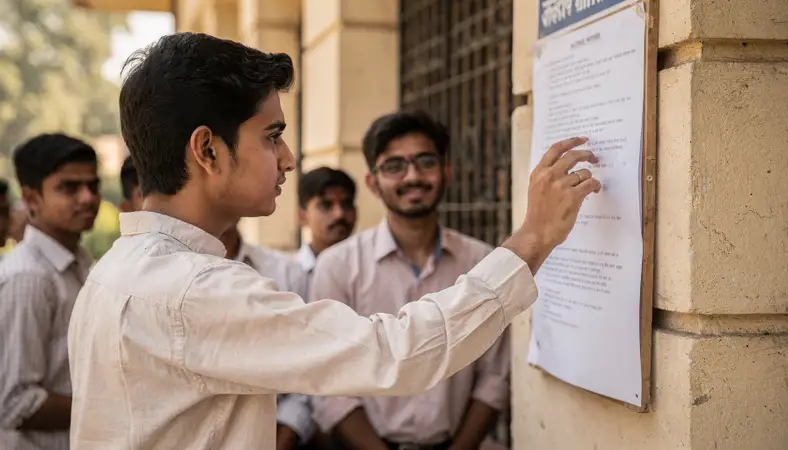
Kerala Board Exam 2026: Quick Overview
| Feature | SSLC (Class 10) Details | Plus Two (Class 12) Details |
|---|---|---|
| Minimum Passing Marks | 30% (D+ Grade) in each subject | 30% in TE and 30% Aggregate |
| Evaluation Components | TE + CE | TE + CE + PE (for Science) |
| Max Grace Marks | Capped based on activity type | Subject to government notification |
| Official Website | keralapareekshabhavan.in | dhsekerala.gov.in |
| SAY Exam Eligibility | Up to 3 subjects failed | Up to 1 subject failed |
What are the Kerala SSLC Passing Marks for 2026?
For the Secondary School Leaving Certificate (SSLC) 2026, students must obtain at least a D+ grade in every subject. This requires a minimum of 30% of the total marks allocated to each paper. The evaluation is split between the Terminal Evaluation (written exam) and Continuous Evaluation (internal marks based on assignments and class performance).
In subjects like Mathematics, Social Science, and English, which usually carry 100 marks (80 TE + 20 CE), a student needs at least 24 marks in the written exam and a total of 30 marks including internal assessment. For subjects with 50 marks (40 TE + 10 CE), the passing requirement is 12 in the written exam and 15 in total. Failure to secure a D+ in even one subject will result in the candidate being marked as 'Needs Improvement' and they must appear for the Save A Year (SAY) exam.

Kerala Plus Two (Class 12) Passing Marks Criteria 2026
The DHSE Kerala Plus Two passing criteria are more rigorous than the SSLC level. Students must secure a minimum of 30% marks in the Terminal Evaluation (TE) separately for each subject. Additionally, an overall aggregate of 30% (TE + CE + PE) is required to be declared successful. This ensures that students demonstrate academic proficiency in written theory as well as practical applications.
For Science stream students, the 100-mark subjects are typically divided into 60 marks for TE, 20 marks for PE, and 20 marks for CE. To pass Physics, Chemistry, or Biology, you must score at least 18 marks in the written theory exam. For Commerce and Humanities subjects without practicals, the split is usually 80 TE and 20 CE, requiring 24 marks in the written theory exam. Scoring high in CE and PE helps boost the overall grade, but it cannot compensate for a failure in the theory component.
Understanding the Kerala Board Grace Marks Policy 2026
The Kerala Government provides grace marks to students who excel in co-curricular activities, including sports, arts, and youth organizations. These marks are added to the Terminal Evaluation scores to help students improve their overall grade or clear a subject they might have otherwise failed. However, grace marks cannot be used to secure an A+ grade in a subject where the student has not already performed exceptionally well in the TE.
- Sports: National-level participants can receive up to 25 marks, while State-level winners (A Grade) typically receive 20 marks. District-level achievements also carry weightage ranging from 5 to 10 marks.
- NCC/NSS: Students with NCC B or C certificates or those who have completed two years of NSS service with a national camp certificate are eligible for 7 to 10 marks.
- Student Police Cadet (SPC): Active cadets with the required attendance and camp participation are eligible for 10 grace marks.
- Arts & Culture: Winners of the Kerala School Kalolsavam (State level) receive grace marks based on their grade: A Grade (20 marks), B Grade (15 marks), and C Grade (10 marks).
- Little KITEs: Members of the Little KITEs IT Clubs who secure 'A' grade in the evaluation are eligible for 5 grace marks.
How to Calculate Kerala Board Percentage from Grades?
The Kerala Board uses a 9-point grading system. While the official marksheet primarily shows grades, many national-level entrance exams and universities outside Kerala require a percentage. To calculate the approximate percentage, students use the midpoint of the grade range or the specific scorecards issued for higher education purposes.
| Grade | Percentage Range | Grade Point | Performance |
|---|---|---|---|
| A+ | 90% – 100% | 9 | Outstanding |
| A | 80% – 89% | 8 | Excellent |
| B+ | 70% – 79% | 7 | Very Good |
| B | 60% – 69% | 6 | Good |
| C+ | 50% – 59% | 5 | Above Average |
| C | 40% – 49% | 4 | Average |
| D+ | 30% – 39% | 3 | Marginal / Pass |
| D | 20% – 29% | 2 | Needs Improvement |
| E | Below 20% | 1 | Needs Improvement |
For calculating the TGP (Total Grade Point), add the grade points of all subjects. For example, if you have 10 subjects and secure A+ in all, your TGP is 90. This system is designed to reduce the pressure of competitive marks while maintaining a clear standard for academic merit.
Save A Year (SAY) and Improvement Exams 2026
The Kerala Board provides a second chance to students who do not meet the passing criteria through the SAY (Save A Year) exams. These are typically conducted within 45 to 60 days of the result declaration, usually in June or July. This allows students to join higher education courses in the same academic year without losing a full year of study.
SSLC students can appear for up to three subjects in the SAY exam. Plus Two students are generally allowed to appear for one subject in the SAY exam if they failed, or one subject for Improvement if they passed but want to increase their score. If a student fails more than the allowed number of subjects, they must sit for the regular exams the following year. You can track the /sarkari-result section on TrueJobs for immediate updates on SAY exam schedules and registration dates.
Impact of Grace Marks on Higher Education Admissions
While grace marks help in passing or improving grades, their impact on professional course admissions like MBBS (NEET) or Engineering (KEAM) is limited. Most entrance-based admissions consider only the raw marks obtained in core subjects or have specific normalization formulas that may exclude grace marks. However, for degree admissions in Kerala University, MG University, or Calicut University, these marks can significantly boost the index score used for merit lists.
Students should verify with their school authorities that their grace mark eligibility is correctly updated in the 'Sampoorna' portal before the board exams commence. Any discrepancy in the sports or arts certificates can lead to the forfeiture of these bonus marks. For those looking to enter the workforce early, check our guide on /government-jobs for 10th and 12th pass opportunities in the railway and postal sectors.
Subject-Wise Passing Marks Breakdown
To ensure clarity, let us look at the specific marks required for the most common subjects in the 2026 board exams. Most students struggle with the distinction between theory and internal marks, so this breakdown is essential.
SSLC Subject Breakdown (100 Mark Papers)
- Terminal Evaluation (TE): 80 Marks (Passing: 24)
- Continuous Evaluation (CE): 20 Marks (No separate minimum)
- Total Required: 30 Marks out of 100
Plus Two Science Subject Breakdown (Physics/Chemistry)
- Terminal Evaluation (TE): 60 Marks (Passing: 18)
- Practical Evaluation (PE): 20 Marks (No separate minimum)
- Continuous Evaluation (CE): 20 Marks (No separate minimum)
- Total Required: 30 Marks out of 100 (Combined)
Frequently Asked Questions
What is the minimum passing mark for Kerala Plus Two in 2026?
Students must score at least 30% in the Terminal Evaluation (TE) of each subject. Additionally, the combined score of TE, CE, and PE must be at least 30% of the total marks to pass the subject.
Can I get grace marks if I fail a subject?
Yes, grace marks can be used to reach the passing threshold of a subject. If a student is short of a few marks to reach the D+ grade, the eligible grace marks from sports, NCC, or arts are added to the TE score to help them pass.
How many subjects can I write
Checks to complete before you apply
Understanding the Kerala Board's passing criteria and grace marks policy is essential for 2026 exam success. Carefully review the official notifications from Pareeksha Bhavan and DHSE for the latest updates. Strategic preparation focusing on all evaluation components is key to achieving the required scores.
Related Resources
Related Government Job Resources
Continue with active job hubs and related government job pages on TrueJobs.
Tools for this recruitment topic
Use only the tools relevant to the dates, eligibility or documents discussed above.
TrueJobs Editorial Team
TrueJobs editorial desk
This article is prepared from the sources referenced in the guide and reviewed for clarity, links and dated information. Read our editorial and corrections policy.
Continue This Topic
Follow the closest earlier and newer coverage so older archive posts keep real contextual crawl paths.
Kerala Board Topper List 2026: SSLC and Plus Two Result Analysis
Kerala SSLC & Plus Two 2026 results expected May 2026. Analysis of toppers, district performance, and impact on Kerala PSC exam eligibility for over 8 lakh students.
Kerala Board Revaluation Result 2026: SSLC and Plus Two Scrutiny Guide
Official details and links for "Kerala Board Revaluation Result 2026: SSLC and Plus Two Scrutiny Guide" in one place.
Read Next

Kerala Board Topper List 2026: SSLC and Plus Two Result Analysis

Kerala Board Revaluation Result 2026: SSLC and Plus Two Scrutiny Guide

Uttarakhand Board Class 10 Result 2026: Date, Direct Link, and Grading System

Kerala Board Improvement Exam Form 2026: How to Apply & Fees
Explore Topics
Perfect Your Resume
Use our AI-powered Resume Builder to create ATS-optimized resumes.
AI Resume Builder