
Recruitment guide
Haryana Board 2027: Passing Marks & Grace Policy — Explained
Explore the Haryana Board passing marks and grace marks policy for 2027. Get detailed info on eligibility, marks criteria, and exam preparation tips.

The Haryana Board of School Education (HBSE) plays a pivotal role in conducting examinations and declaring results for secondary and senior secondary students in the state. As the academic year 2027 approaches, students and parents alike are keen to understand the passing marks criteria and the grace marks policy implemented by the board. These factors are crucial for students to successfully clear their exams and move forward in their academic and career paths. A thorough grasp of these rules can alleviate anxiety and help in formulating a strategic approach to exam preparation and result analysis.
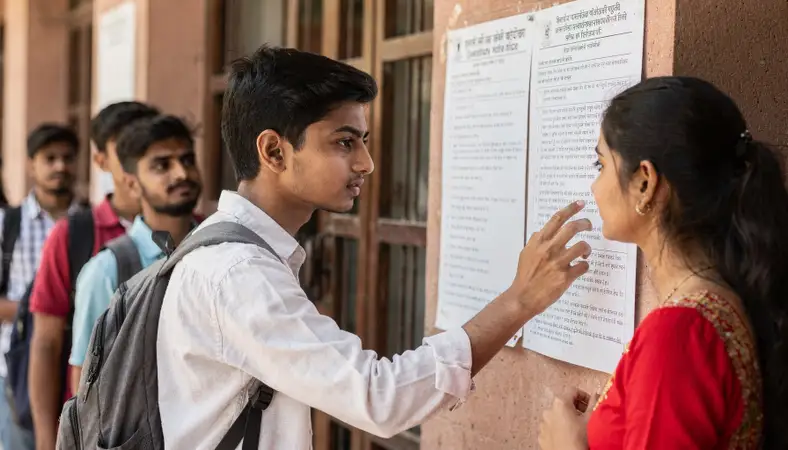
Understanding Haryana Board Passing Marks for 2027
Passing marks refer to the minimum marks a student must obtain in each subject to be declared successful in the examination. The Haryana Board has set clear guidelines for passing criteria to maintain academic standards while providing fair opportunities for students. This system ensures a uniform benchmark of minimum competency across all subjects and streams, which is vital for the credibility of the board's certifications.
For the academic session 2027, the passing marks criteria for HBSE examinations are as follows:
- Class 10 (Secondary): Students must secure at least 33% marks in each subject, including theory and practical components, if applicable.
- Class 12 (Senior Secondary): Similar to Class 10, a minimum of 33% marks in each subject is mandatory to pass.

These passing marks ensure that students have attained a basic understanding of the subject matter. Failure to meet these criteria results in the student being declared unsuccessful and needing to reappear for the examination or supplementary exams. It is important to note that this 33% rule is a standard across most major Indian education boards, providing a consistent national framework for evaluation.
Breakdown of Passing Marks in Theory and Practical Exams
Many subjects, especially in Class 12, include both theory and practical components. The Haryana Board mandates passing in both segments separately to ensure comprehensive knowledge and skills. This dual requirement emphasizes the board's focus on both theoretical understanding and practical application, which is particularly critical for science and vocational streams.
| Subject Type | Theory Passing Marks | Practical Passing Marks | Overall Passing Marks |
|---|---|---|---|
| Science (Physics, Chemistry, Biology) | 33% | 33% | 33% |
| Mathematics | 33% | NA | 33% |
| Social Science | 33% | NA | 33% |
| Languages (Hindi, English, etc.) | 33% | NA (Internal Assessment may apply) | 33% |
| Vocational Subjects | 33% | 33% | 33% |
Students must ensure they meet the minimum passing marks in both theory and practical parts to avoid failure in that subject. For instance, a student scoring 40% in Physics theory but failing the practical exam (scoring below 33%) will be considered fail in Physics, regardless of the high theory score, and will have to reappear for the practical exam.
Understanding Internal Assessment Components
Beyond pure theory and practicals, some subjects include an Internal Assessment (IA) component. This can consist of projects, classwork, periodic tests, and viva voce. The marks from this component are added to the theory marks. Students must also secure an aggregate of 33% when the theory and internal assessment marks are combined to pass the subject.
What is Grace Marks and How Does It Work?
Grace marks are additional marks awarded to students under certain conditions to help them pass the exam or improve their overall score. The Haryana Board implements a grace marks policy to support students who have narrowly missed the passing criteria. This policy acts as a compassionate measure, acknowledging that a student's performance in a high-pressure exam environment may not always fully reflect their understanding of the subject.
Grace marks are not a right but a concession provided at the discretion of the board. They help maintain student morale and reduce the number of failures. The policy is governed by specific rules and ceilings to prevent its misuse and to uphold the integrity of the examination process.
Haryana Board Grace Marks Policy 2027 Explained
For the year 2027, the Haryana Board has outlined the following key points regarding grace marks. It is crucial for students to understand these nuances to accurately assess their results and possibilities.
- Maximum Grace Marks Allowed: Up to 5 marks per subject. The total grace marks awarded across all subjects for a single student also has an overall cap, typically decided by the board.
- Eligibility: Students who have scored at least 28 marks out of 100 in a subject may be eligible for grace marks to reach the passing threshold of 33. This means if a student scores 27, they are generally not considered for grace in that subject.
- Purpose: Grace marks can be awarded to help students pass a subject or improve their overall percentage for division classification. For example, they can be used to push a student from 32% to 33% in a subject, or from 59% to 60% overall to secure a First Division.
- Limitations: Grace marks cannot be used to pass a subject if the student has scored below 28 marks, nor can they be used to improve marks beyond the maximum allowed per subject or the overall aggregate cap set by the board.
Grace marks are typically added after the evaluation process and before the final declaration of results. The process is automated or manually applied by a committee based on the predefined rules.
Subject-wise vs. Aggregate Grace Mark Application
The grace marks policy can be applied in two ways. First, subject-wise, where marks are added to a specific paper to help the student pass that particular subject. Second, aggregate, where grace marks can be used to improve the student's total percentage to achieve a higher division (e.g., from second to first division), provided the student has passed in all subjects independently.
How Grace Marks Impact Overall Results and Division
Grace marks can influence not only a student’s pass/fail status but also their division classification, which is important for future academic and career opportunities. The division is calculated based on the aggregate percentage of all subjects.
- Pass Status: This is the primary function. Students who are short by a few marks in one or two subjects may receive grace marks to clear the exam successfully, saving them from the need to take a compartment exam.
- Division Improvement: The divisions are typically classified as: First Division (60% and above), Second Division (45% to 59%), and Third Division (33% to 44%). Grace marks can help improve the overall percentage, potentially upgrading a student from second division to first division, which can be a significant boost for college admissions.
- Merit List Consideration: While grace marks aid in passing, they do not usually influence merit lists or scholarships. Merit lists are typically prepared based on actual marks secured by the examination, excluding any grace marks awarded.
Understanding this policy helps students and parents set realistic expectations regarding exam outcomes and plan the next steps, whether it's celebrating a pass or preparing for supplementary examinations.
Steps to Check Passing Marks and Grace Marks Details
Staying informed is key to navigating the examination process smoothly. Students can stay updated on passing marks and grace marks policies by following these detailed steps:
- Visit Official Sources: Regularly check the official Haryana Board website (bseh.org.in) for the latest notifications, circulars, and detailed examination bye-laws. Trusted educational portals like TrueJobs.co.in also provide timely updates and analysis.
- Download Official Documents: When released, download the official exam guidelines, scheme of studies, and circulars for the academic year 2027. These PDF documents contain the exhaustive rules.
- Review the Details: Meticulously review the detailed subject-wise passing criteria and grace marks rules mentioned in the official documents. Pay close attention to any footnotes or special clauses.
- Scrutinize Your Marksheet: Once results are declared, check the digital or physical marksheet carefully. Some boards explicitly mention the award of grace marks in a separate column or footnote, while others simply show the final total after grace marks have been applied.
- Address Discrepancies: In case of any discrepancies or if you believe you were eligible for grace marks that were not awarded, students should first contact their school authorities. The school can then escalate the query to the board helpline or the concerned examination department for clarification and resolution.
For more information on exam results and admit cards, visit Sarkari Result and Admit Card sections on our portal.
Tips for Students to Secure Passing Marks Without Relying on Grace Marks
While grace marks provide a valuable safety net, students should aim to clear exams confidently on their own merit. Relying on them is a strategy of last resort. Here are some actionable and detailed tips for robust preparation:
- Consistent Study: Create a realistic study schedule and stick to it. Regular revision and a deep understanding of concepts help avoid last-minute exam stress and ensure knowledge retention.
- Practice Previous Papers: Solving past year question papers familiarizes students with the pattern, marking scheme, weightage of chapters, and the style of questions asked. Time yourself to improve speed and accuracy.
- Focus on Weak Areas: Honestly identify and dedicate more time to improve on subjects or topics where your scores are consistently low. Don't ignore difficult chapters.
- Time Management: Allocate sufficient time for each subject based on its difficulty and your proficiency. Avoid neglecting practical components and internal assessments, as they contribute significantly to the final score.
- Seek Guidance: Utilize teachers’ support for doubt clearance. Consider group studies or coaching classes if you need structured guidance outside school hours.
- Understand the Syllabus and Blueprint: Know the entire syllabus and the unit-wise marks distribution. This helps in prioritizing topics during revision.
These strategies enhance confidence, build a strong knowledge foundation, and significantly reduce dependency on grace marks.
Checks to complete before you apply
The Haryana Board passing marks and grace marks policies for 2027 are designed to maintain academic standards while providing students with fair opportunities to succeed. Understanding the minimum passing criteria of 33% per subject, the critical nuances of separate passing in theory and practical exams, and the specific conditions under which grace marks are awarded (up to 5 marks per subject, with a 28-mark floor) can help students and parents prepare better for exams and interpret results accurately. While grace marks offer a crucial assistance to borderline cases, the best and most reliable approach remains thorough preparation, consistent effort, and strategic studying.
Stay informed through reliable sources like the official HBSE website and TrueJobs.co.in, and plan your studies effectively to achieve success in the HBSE examinations on your own merit.
Frequently Asked Questions
Q1: What is the minimum passing percentage for Haryana Board exams in 2027?
The minimum passing percentage for both Class 10 and Class 12 Haryana Board exams is 33% in each subject individually, including both theory and practical components where applicable.
Related Government Job Resources
Continue with active job hubs and related government job pages on TrueJobs.
Tools for this recruitment topic
Use only the tools relevant to the dates, eligibility or documents discussed above.
TrueJobs Editorial Team
TrueJobs editorial desk
This article is prepared from the sources referenced in the guide and reviewed for clarity, links and dated information. Read our editorial and corrections policy.
Continue This Topic
Follow the closest earlier and newer coverage so older archive posts keep real contextual crawl paths.
Haryana Board Topper List 2027 for Class 10 and 12: Complete Guide
Explore the Haryana Board Topper List 2027 for Class 10 and 12. Learn how to check results, understand topper trends, and get preparation tips for success.
Haryana Board Revaluation Result 2027 and Scrutiny Process: Complete Guide
Get detailed information on Haryana Board Revaluation Result 2027 and scrutiny process including eligibility, application procedure, and expected timelines.
Read Next

Himachal Pradesh Board Passing Marks & Grace Marks Policy 2027 Explained

Haryana Board Revaluation Result 2027 and Scrutiny Process: Complete Guide

Haryana Board Topper List 2027 for Class 10 and 12: Complete Guide

Haryana Board Improvement Exam Form 2027: Complete Guide to Apply Online
Explore Topics
Perfect Your Resume
Use our AI-powered Resume Builder to create ATS-optimized resumes.
AI Resume Builder