
Recruitment guide
GPSC Class 1 & 2 2026 Syllabus PDF | Prelims & Mains — Explained
Get the complete GPSC Class 1 & 2 2026 syllabus PDF including prelims and mains subject-wise topics. Plan your preparation for Gujarat PSC exams effectively.

Secure your dream role in the Gujarat Public Service Commission (GPSC) Class 1 & 2 services. This guide from TrueJobs.co.in provides the complete 2026 Prelims & Mains syllabus, subject-wise topics, and exam pattern for effective preparation.
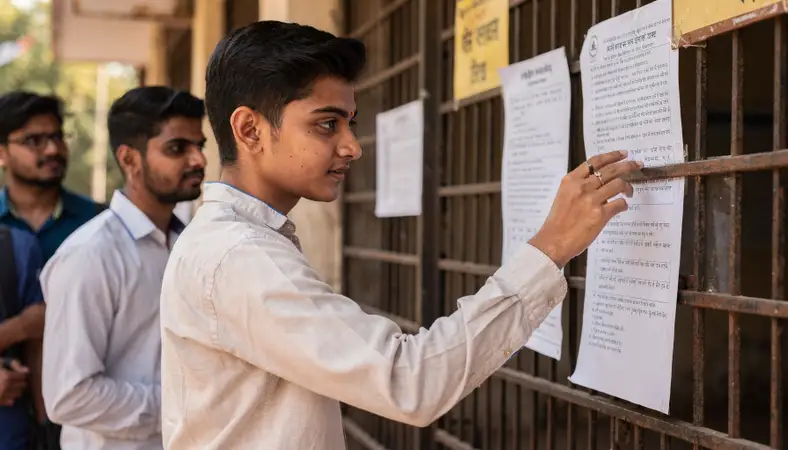
GPSC Class 1 & 2 2026 Syllabus PDF: Complete Prelims & Mains Subject-Wise Topics
Embarking on a journey to secure a coveted position in the Gujarat Public Service Commission (GPSC) Class 1 & 2 services requires meticulous planning and a deep understanding of the examination landscape. The GPSC Class 1 & 2 examination is one of the most prestigious competitive exams in Gujarat, offering roles such as Deputy Collector, Deputy Superintendent of Police, Assistant Commissioner of State Tax, and many more. Aspiring candidates must familiarize themselves thoroughly with the GPSC Class 1 & 2 Syllabus 2026 to strategize their preparation effectively.
This comprehensive guide from TrueJobs.co.in aims to provide an in-depth look at the complete Prelims and Mains syllabus, subject-wise topics, and the exam pattern. A clear understanding of the syllabus is not just about knowing what to study, but also about understanding the depth and breadth of topics expected, enabling candidates to allocate their time and resources judiciously. It acts as a roadmap, guiding you through the vast ocean of knowledge required to ace this challenging examination.
Understanding the GPSC Class 1 & 2 Examination Structure
The GPSC Class 1 & 2 examination is typically conducted in three stages: the Preliminary Examination, the Main Examination, and the Interview. Each stage is designed to assess different facets of a candidate's knowledge, analytical ability, and personality. The Prelims act as a screening test, while the Mains and Interview determine the final merit.

GPSC Class 1 & 2 Syllabus 2026 Overview
The GPSC Class 1 & 2 examination is structured to test a candidate's general awareness, analytical skills, and depth of knowledge across various subjects. Below is a summary of the exam stages and their components:
| Exam Type | Papers | Marks | Time |
|---|---|---|---|
| Prelims | 2 (General Studies Paper-1 & General Studies Paper-2) | 400 (200 each) | 2 Hours each |
| Mains | 6 (Gujarati, English, Essay, General Studies-1, 2, 3) | 900 (150 each) | 3 Hours each |
| Interview | Personality Test | 100 | N/A |
This overview highlights the multi-faceted nature of the examination. Candidates must excel in both objective (Prelims) and subjective (Mains) formats, followed by a rigorous personality assessment.
GPSC Class 1 & 2 Prelims Syllabus 2026
The Preliminary Examination is the first hurdle and is objective in nature, consisting of two papers. Its primary purpose is to filter candidates for the Mains examination. The questions are designed to test general knowledge, current affairs, and basic analytical abilities. While the marks obtained in the Prelims are not counted for the final merit list, clearing this stage is absolutely essential.
General Studies Paper-1 (200 Marks, 2 Hours)
This paper covers a broad spectrum of subjects, focusing on India's past, cultural richness, political framework, economic landscape, and geographical features. A balanced approach to these subjects is crucial for success.
- History:
- Ancient History of India: Indus Valley Civilization, Vedic period, Mahajanapadas, Mauryan Empire, Gupta Empire, Post-Gupta period, major dynasties and their contributions to art, architecture, literature, and science.
- Medieval History of India: Delhi Sultanate, Mughal Empire, Bhakti and Sufi movements, rise of regional kingdoms, administrative systems, economic and social life during medieval times.
- Modern History of India: Advent of Europeans, British rule, socio-religious reform movements, Indian National Movement (1857 to 1947), various phases of freedom struggle, important personalities and events.
- History of Gujarat: Ancient, Medieval, and Modern history of Gujarat, prominent dynasties (Maitrakas, Solankis, Vaghelas), Sultanate period, Maratha rule, integration into the Indian Union, significant movements and leaders from Gujarat.
- Cultural Heritage:
- Indian Cultural Heritage: Indian art forms (classical dance, music, drama), architecture (temple architecture, Mughal architecture), literature (classical Indian literature, regional literature), philosophy, religions, festivals, and fairs.
- Cultural Heritage of Gujarat: Folk dances, music, traditional crafts, festivals (Navratri, Uttarayan, Rann Utsav), literature (prominent Gujarati authors and their works), architecture (stepwells, temples), tribal culture, and traditions specific to Gujarat.
- Indian Polity and Constitution:
- Constitutional Framework: Preamble, Fundamental Rights, Directive Principles of State Policy, Fundamental Duties, salient features of the Indian Constitution.
- Union and State Government: Structure and functions of Parliament, State Legislatures, President, Governor, Prime Minister, Chief Minister, Council of Ministers.
- Judiciary: Supreme Court, High Courts, Judicial Review, Judicial Activism, Lok Adalat.
- Local Self-Government: Panchayati Raj Institutions, Municipalities, 73rd and 74th Constitutional Amendments.
- Constitutional Bodies: Election Commission, UPSC, SPSC, CAG, Finance Commission, National Commissions for SC/ST/OBC.
- Public Policy and Governance: Issues related to good governance, e-governance, role of civil services, rights-based approaches (RTI, RTE, Lokpal and Lokayukta).
- Indian Economy and Planning:
- Basic Concepts: National Income, GDP, GNP, inflation, poverty, unemployment, economic growth and development.
- Sectors of Economy: Agriculture, Industry, Services – their characteristics, challenges, and government initiatives.
- Economic Reforms: Liberalization, Privatization, Globalization (LPG reforms) and their impact.
- Planning in India: Five-Year Plans, NITI Aayog, economic policies, fiscal policy, monetary policy.
- Public Finance: Budget, taxation, public debt, deficit financing.
- Gujarat Economy: Key features, major industries, agricultural scenario, infrastructure development, socio-economic indicators, state government schemes.
- Geography:
- Physical Geography of India: Physiographic divisions, climate, soils, natural vegetation, drainage system, natural resources.
- Human Geography of India: Population distribution, density, growth, migration, urbanization, human development.
- Economic Geography of India: Major crops, minerals, industries, transportation, trade.
- Geography of Gujarat: Physical features, climate, rivers, soils, forests, agriculture, mineral resources, industrial development, population characteristics, major cities and towns.
- Environmental Science: Ecology, biodiversity, climate change, environmental pollution, conservation efforts, disaster management.
General Studies Paper-2 (200 Marks, 2 Hours)
This paper focuses on contemporary issues, scientific advancements, logical reasoning, and current events. It tests a candidate's awareness of the world around them and their ability to think critically.
- Indian Economy & Planning: (Topics largely overlap with Paper-1, but can involve more current economic trends, government schemes, and policy impacts.)
- Development Economics: Sustainable development, inclusive growth, social sector initiatives, poverty alleviation programs.
- International Economic Relations: WTO, IMF, World Bank, regional economic groupings, India's foreign trade policy.
- Financial System: Banking, capital market, financial institutions, RBI and its role.
- Current Economic Issues: Recent economic surveys, budget highlights, government initiatives for economic growth and social welfare.
- General Science & Technology:
- Physics, Chemistry, Biology: Basic concepts, everyday applications, discoveries, and inventions.
- Information and Communication Technology (ICT): Fundamentals of computers, internet, mobile technology, e-governance initiatives, cyber security.
- Space Technology: Indian space program, ISRO's achievements, satellites, remote sensing, applications.
- Defence Technology: Indian missile systems, defence research and development.
- Biotechnology: Genetic engineering, medical biotechnology, agricultural biotechnology, ethical issues.
- Energy: Renewable and non-renewable energy sources, energy conservation, nuclear energy.
- Environmental Science: Pollution, climate change, biodiversity, environmental impact assessment, conservation.
- Recent Developments: Scientific and technological advancements in various fields, government policies promoting science and technology.
- General Mental Ability:
- Logical Reasoning: Series, coding-decoding, blood relations, directions, syllogism, analogies, classification, statement and conclusion, data sufficiency.
- Quantitative Aptitude: Numbers, percentages, profit and loss, ratio and proportion, average, time and work, time and distance, simple and compound interest, probability, permutations and combinations.
- Data Interpretation: Tables, bar graphs, pie charts, line graphs.
- Problem Solving: Analytical reasoning, decision making.
- Current Affairs of Regional, National, and International Importance:
- Regional (Gujarat): Important events, government schemes, socio-economic developments, personalities, places in news.
- National: Major government policies, national events, significant appointments, awards, sports, defence, economy, social issues, judicial pronouncements.
- International: International relations, major global events, international organizations, important summits, treaties, conflicts, global economic trends.
- Awards and Honours: National and international awards, Padma Awards, Nobel Prizes, sports awards.
- Books and Authors: Prominent new releases and their authors.
Strategy for Prelims Examination
The Prelims require a strong foundation in static subjects combined with up-to-date knowledge of current affairs. Candidates should focus on:
- Broad Coverage: Ensure all topics are covered, as questions can come from any part of the syllabus.
- Conceptual Clarity: Understand the basic concepts rather than rote memorization.
- Regular Revision: Consistent revision is key to retaining a vast amount of information.
- Mock Tests: Practice numerous mock tests to improve speed, accuracy, and time management.
- Current Affairs Integration: Link current events with static syllabus topics for better understanding and recall.
GPSC Class 1 & 2 Mains Syllabus 2026
The Main Examination is descriptive in nature and is the most crucial stage for determining a candidate's final ranking. It comprises six papers, each testing the candidate's in-depth knowledge, analytical ability, and writing skills. The Mains syllabus demands a more comprehensive and analytical approach compared to the Prelims.
Paper-1: Gujarati Language (150 Marks, 3 Hours)
This paper assesses the candidate's proficiency in the Gujarati language, which is essential for administrative roles in Gujarat.
- Essay: Ability to write a well-structured, coherent, and insightful essay on a given topic in Gujarati.
- Precis Writing: Summarizing a given passage in Gujarati while retaining its core meaning.
- Letter Writing: Formal and informal letter writing, applications, official correspondence.
- Report Writing: Writing reports on various events or issues.
- Grammar: Comprehensive knowledge of Gujarati grammar including idioms, proverbs, synonyms, antonyms, sentence correction, vocabulary.
- Translation: Translation from English to Gujarati and vice-versa.
Paper-2: English Language (150 Marks, 3 Hours)
This paper evaluates the candidate's command over the English language, which is vital for communication and official documentation.
- Essay: Writing a comprehensive and analytical essay on a given topic in English.
- Precis Writing: Summarizing a given passage in English effectively.
- Letter Writing: Drafting various types of letters (official, informal, business).
- Report Writing: Preparing reports on diverse subjects.
- Grammar: In-depth understanding of English grammar rules, including tenses, voice, narration, articles, prepositions, conjunctions, vocabulary, idioms, phrases, common errors.
- Translation: Translation from Gujarati to English and vice-versa.
Paper-3: Essay (150 Marks, 3 Hours)
This paper is designed to assess a candidate's ability to articulate thoughts, analyze complex issues, and present a well-reasoned argument in a structured essay format. Candidates are usually given a choice of topics.
- Types of Essays: Philosophical, socio-economic, political, scientific, environmental, current affairs-based topics.
- Structure and Content: Introduction, body paragraphs (with arguments, examples, data), conclusion. Emphasis on logical flow, coherence, depth of analysis, and originality of thought.
- Language and Style: Clarity, precision, appropriate vocabulary, and engaging writing style.
Paper-4: General Studies-1 (150 Marks, 3 Hours)
This paper delves deeper into the historical, cultural, and geographical aspects, demanding analytical and critical thinking.
- History of India:
- Ancient to Modern: Detailed study of major periods, socio-economic and political structures, administrative systems, art, architecture, literature, philosophical thoughts.
- Indian National Movement: Causes, phases, prominent leaders, ideologies, impact, post-independence consolidation.
- History of Gujarat: Comprehensive coverage of Gujarat's history from ancient times to modern, including its role in the freedom struggle and post-independence developments.
- Cultural Heritage:
- Indian Cultural Heritage: In-depth study of Indian art forms, architecture (including regional styles), literature, philosophy, religions, and their evolution.
- Cultural Heritage of Gujarat: Detailed exploration of Gujarat's unique cultural identity, folk traditions, performing arts, crafts, festivals, religious practices, and literary contributions.
- Geography:
- Physical Geography: Geomorphology, climatology, oceanography, biogeography, environmental geography, and their relevance to India and Gujarat.
- Economic Geography: Resources (land, water, forest, mineral, energy), agriculture, industries, transport, trade, and their regional patterns in India and Gujarat.
- Human and Social Geography: Population dynamics, settlements, urbanization, tribal communities, social issues, and regional development concerns in India and Gujarat.
Frequently Asked Questions (FAQs)
What is the GPSC Class 1 & 2 exam structure?
The GPSC Class 1 & 2 examination consists of three stages: Preliminary Examination, Main Examination, and Interview. Prelims are screening, while Mains and Interview determine final merit.
Where can I download the GPSC Class 1 & 2 2026 syllabus PDF?
The complete GPSC Class 1 & 2 2026 syllabus PDF, covering both Prelims and Mains subject-wise topics, is available for download within this comprehensive guide on TrueJobs.co.in.
What roles are offered through the GPSC Class 1 & 2 examination?
Successful candidates can secure prestigious roles such as Deputy Collector, Deputy Superintendent of Police, Assistant Commissioner of State Tax, and various other Class 1 & 2 positions in Gujarat.
Related Resources
- GPSC Exam Dates 2026
- How to Prepare for GPSC Exams
- Latest Gujarat Govt Jobs
Related Government Job Resources
Continue with active job hubs and related government job pages on TrueJobs.
Tools for this recruitment topic
Use only the tools relevant to the dates, eligibility or documents discussed above.
TrueJobs Editorial Team
TrueJobs editorial desk
This article is prepared from the sources referenced in the guide and reviewed for clarity, links and dated information. Read our editorial and corrections policy.
Continue This Topic
Follow the closest earlier and newer coverage so older archive posts keep real contextual crawl paths.
BPSC 71st CCE 2026 Mains Syllabus PDF: GS, Optional, Essay and Marks Breakdown
Get the complete BPSC 71st CCE 2026 Mains syllabus PDF covering General Studies, Optional subjects, Essay, and marks distribution to plan your preparation.
MPSC Rajyaseva 2026 Syllabus PDF: Prelims & Mains Subject-Wise Topics
Explore the detailed MPSC Rajyaseva 2026 syllabus PDF covering prelims and mains subject-wise topics to plan your preparation effectively.
Read Next

BPSC 71st CCE 2026 Mains Syllabus PDF: GS, Optional, Essay and Marks Breakdown

MPPSC State Service 2026 Syllabus PDF: Prelims & Mains Subject-Wise Topics

India Post GDS 2026 Correction Window: What You Can Edit and Step-by-Step Guide

Best Books for BPSC CCE (2026): Prelims and Mains Subject-Wise Booklist
Explore Topics
Perfect Your Resume
Use our AI-powered Resume Builder to create ATS-optimized resumes.
AI Resume Builder