
Career guide
Postal & Mail Operations Govt Jobs 2026: Roles, Salary — Explained
Discover stable and rewarding government careers in India's postal services for 2026. This guide details various roles from GDS to Inspector, salary structures, eligibility criteria, and promotion opportunities within India Post.

In an era increasingly dominated by digital communication, the enduring relevance and critical function of India's postal services often go unnoticed. Yet, the Indian Post Office, a cornerstone of national connectivity for centuries, continues to play a pivotal role in the lives of millions, particularly in rural and remote areas. Beyond delivering letters, India Post has evolved into a multi-faceted organization offering banking, insurance, and e-commerce services, making it a vibrant and dynamic sector for government job aspirants. For those seeking stable, respectable, and impactful careers, government jobs in postal, sorting, and mail operations present a compelling opportunity.
This comprehensive guide from TrueJobs.co.in delves into the various roles available, the expected salary structures, and the promising career progression paths within this vital sector, offering insights for those eyeing opportunities in 2026 and beyond.
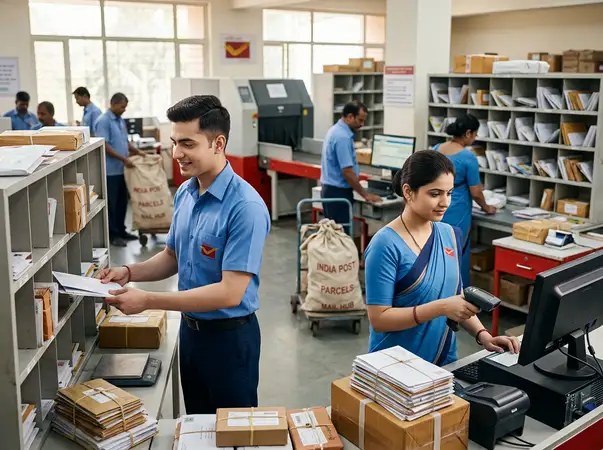
The Enduring Relevance of Postal Services in India
India Post, operating under the Department of Posts, Ministry of Communications, is the largest postal network in the world. With over 1.5 lakh post offices spread across the country, it serves as a lifeline for communication, financial inclusion, and public service delivery. While traditional mail delivery remains a core function, India Post has strategically diversified its services to adapt to modern demands and technological advancements. This diversification ensures its continued relevance and opens up new avenues for employment.
Beyond sending letters and parcels, India Post now offers a wide array of services including:
- Financial Services: India Post Payments Bank (IPPB), Savings Schemes (PPF, NSC, KVP, Sukanya Samriddhi Yojana), Money Order services.
- Insurance: Postal Life Insurance (PLI) and Rural Postal Life Insurance (RPLI) provide affordable insurance coverage.
- Retail Services: Sale of railway tickets, passport application services, bill payments, and even Aadhaar enrolment/update services.
- E-commerce Logistics: Partnering with e-commerce giants for last-mile delivery, especially in remote areas.
- Government Schemes: Facilitating the delivery of various government benefits and subsidies.
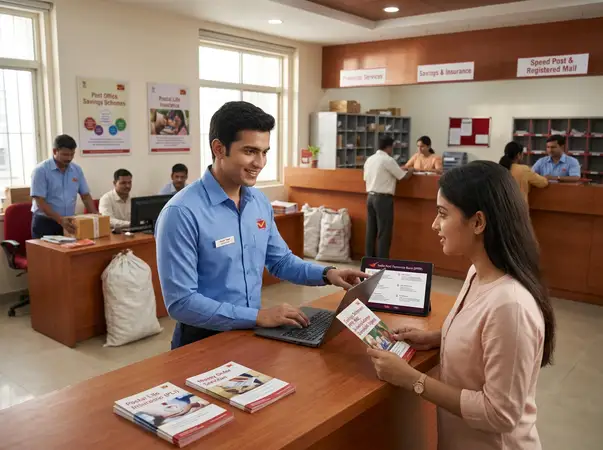
This expansion means that postal employees are no longer just mail carriers; they are often financial advisors, customer service representatives, and technology facilitators, playing a crucial role in bridging the digital divide and ensuring inclusive growth. The stability, security, and prestige associated with a central government job, coupled with the vast network and diverse functions of India Post, make it an attractive career choice for thousands of aspirants every year. As India continues to grow, the need for robust logistics and accessible financial services will only increase, further solidifying the importance of the postal department and the career opportunities it offers.
Key Roles in Postal, Sorting & Mail Operations
The postal department offers a diverse range of roles, each critical to the smooth functioning of its vast network. These positions cater to various educational backgrounds and skill sets, providing opportunities for both freshers and experienced individuals. Here's a detailed look at some of the prominent roles:
1. Gramin Dak Sevak (GDS)
GDS roles are foundational to India Post's rural outreach. These are branch postmasters (BPM), assistant branch postmasters (ABPM), and Dak Sevaks. They are community-based roles, often part-time, ensuring postal and financial services reach the deepest corners of rural India.
- Responsibilities: Managing branch post offices, selling stamps and stationery, delivering mail and parcels, facilitating IPPB transactions, promoting various government schemes, and collecting deposits for postal savings schemes.
- Eligibility: 10th pass with basic computer knowledge.
- Selection: Merit-based on 10th standard marks.
2. Multi-Tasking Staff (MTS)
MTS personnel provide essential support services across various departments within post offices and administrative units.
- Responsibilities: Office maintenance, record keeping, handling and dispatching dak (mail), assisting senior officials, carrying files and other papers, and general upkeep.
- Eligibility: 10th pass.
- Selection: Written examination (Paper I & Paper II).
3. Postman / Mail Guard
These are perhaps the most recognizable faces of India Post, directly involved in mail delivery and collection.
- Postman: Delivers letters, parcels, money orders, and other postal articles to households and businesses. Collects mail from letterboxes.
- Mail Guard: Works in Railway Mail Service (RMS) offices, responsible for guarding mail bags during transit, sorting mail, and ensuring secure dispatch.
- Eligibility: 10th or 12th pass, depending on the circle/notification. Knowledge of local language is crucial.
- Selection: Written examination (Paper I & Paper II) and a local language test.
4. Postal Assistant (PA) / Sorting Assistant (SA)
These are clerical cadre positions, forming the backbone of administrative and operational efficiency in post offices and mail processing centers.
- Postal Assistant (PA): Works at the counter, handles customer queries, sells stamps, registers/parcels, accepts deposits for various schemes, and manages cash. Also involved in back-office operations like account maintenance and data entry.
- Sorting Assistant (SA): Primarily works in Railway Mail Service (RMS) offices, responsible for sorting mail according to destinations, preparing mail bags, and ensuring timely dispatch. Requires accuracy and efficiency.
- Eligibility: 12th pass with basic computer knowledge.
- Selection: Written examination (Paper I & Paper II) and a Data Entry Skill Test (DEST).
5. Junior Accountant (JA)
These roles are crucial for managing the financial aspects of the postal department.
- Responsibilities: Maintaining accounts, preparing financial statements, auditing, processing payments, and managing budgets.
- Eligibility: Bachelor's degree from a recognized university.
- Selection: Written examination focusing on accounting principles, general knowledge, and quantitative aptitude.
6. Inspector Posts
A supervisory and administrative role, Inspector Posts oversees the functioning of a group of post offices and ensures adherence to postal regulations and service standards.
- Responsibilities: Inspecting post offices, investigating complaints, managing staff, promoting business development, and ensuring efficient service delivery.
- Eligibility: Bachelor's degree.
- Selection: Through UPSC Civil Services Exam (Group B) or departmental promotion exams.
7. Assistant Superintendent of Post Offices (ASPO) / Divisional Superintendent
Higher administrative roles responsible for managing divisions or sub-divisions, overseeing operations, and implementing departmental policies.
- Eligibility: Promoted from Inspector Posts or through competitive exams.
Each of these roles contributes uniquely to the vast network of India Post, offering a sense of purpose and public service. The specific requirements and selection procedures may vary slightly depending on the recruitment cycle and the specific circle (state/region) for which vacancies are announced. Aspirants are always advised to refer to the official notification for the most accurate and up-to-date information.
Eligibility Criteria for Postal Jobs
While specific requirements can vary slightly with each recruitment notification, there are general eligibility criteria that apply across most government jobs in the postal sector. Aspiring candidates should always refer to the official notification for the exact details for a particular recruitment drive. However, here are the common parameters:
1. Nationality
- A candidate must be a citizen of India.
- A subject of Nepal or Bhutan.
- A Tibetan refugee who came over to India before 1st January 1962 with the intention of permanently settling in India.
- A person of Indian origin who has migrated from Pakistan, Myanmar, Sri Lanka, Kenya, Uganda, Tanzania, Zambia, Malawi, Zaire, Ethiopia, or Vietnam with the intention of permanently settling in India.
Candidates belonging to categories other than Indian citizens will require a certificate of eligibility issued by the Government of India.
2. Age Limit
Age limits are a crucial factor and typically vary by post and category. The cut-off date for age calculation is usually mentioned in the official notification.
- Gramin Dak Sevak (GDS): Generally 18 to 40 years.
- Multi-Tasking Staff (MTS) / Postman / Mail Guard: Generally 18 to 27 years.
- Postal Assistant (PA) / Sorting Assistant (SA): Generally 18 to 27 years.
Age Relaxation: Government rules provide for age relaxation for reserved categories:
- SC/ST: 5 years
- OBC: 3 years
- PwBD (Persons with Benchmark Disabilities): 10 years (additional for SC/ST/OBC as per rules)
- Ex-servicemen: As per government rules.
3. Educational Qualification
The minimum educational qualification depends heavily on the specific role:
- GDS / MTS: 10th Standard pass from a recognized Board.
- Postman / Mail Guard: 10th or 12th Standard pass from a recognized Board, depending on the specific notification.
- Postal Assistant (PA) / Sorting Assistant (SA): 12th Standard pass or equivalent from a recognized Board/University.
- Junior Accountant / Inspector Posts: Bachelor's Degree from a recognized University.
Additional Qualifications:
- Computer Knowledge: For roles like GDS, PA, SA, and MTS, a basic understanding of computer operations (e.g., a certificate of basic computer training for at least 60 days from a recognized institute) is often required or preferred.
- Local Language Knowledge: For most posts, especially GDS, Postman, and MTS, candidates must have studied the local language of the respective postal circle/state at least up to the 10th standard. This is often tested during the selection process.
4. Other Requirements
- Physical Standards: While not as stringent as defense services, certain roles like Postman or Mail Guard might have basic physical fitness requirements, especially related to carrying mail and mobility.
- Driving License: For Postman/Mail Guard roles, a valid driving license for two-wheeler or light motor vehicle might be a desirable or essential qualification in some circles, especially for delivery duties.
It is paramount for all applicants to meticulously review the official recruitment notification released by the Department of Posts or the Staff Selection Commission (SSC) for specific job roles. These notifications contain the most accurate and up-to-date eligibility criteria, application procedures, and important dates. /sarkari-result
The Recruitment Process: Your Path to a Postal Career
The recruitment process for government jobs in postal, sorting, and mail operations is generally structured and competitive, designed to select the most suitable candidates. While the specifics can vary depending on the post (e.g., GDS vs. PA/SA), the overall stages typically involve application, examination, and document verification.
1. Application Process
- Online Application: Most recruitment drives for India Post are conducted online. Candidates need to visit the official website of India Post or the Staff Selection Commission (SSC) (for PA/SA, MTS, Postman) to fill out the application form.
- Registration: This usually involves a one-time registration, followed by filling in personal details, educational qualifications, and uploading scanned copies of photographs and signatures.
- Application Fee: A non-refundable application fee is typically required, with exemptions for certain categories (e.g., women, SC/ST, PwBD, Ex-servicemen).
- Choosing Preferences: For some posts, candidates may need to indicate their preferences for circles, divisions, or specific post offices.
2. Selection Stages
The selection process usually involves one or more of the following stages:
a. Merit-Based Selection (Primarily for GDS)
For Gramin Dak Sevak (GDS) posts, selection is primarily based on the marks obtained in the 10th standard. A merit list is prepared based on the aggregate percentage of marks. There is no written examination for GDS posts.
b. Written Examination (For MTS, Postman, PA/SA, etc.)
For most other roles like MTS, Postman, Postal Assistant, and Sorting Assistant, a competitive written examination is conducted. This usually comprises multiple-choice questions (MCQs) and may be divided into different papers or sections.
- Paper-I (General Awareness / Aptitude Test): This is common for many posts and tests a candidate's general knowledge, reasoning ability, quantitative aptitude, and English language skills.
- Paper-II (Local Language Test): Often for Postman/Mail Guard and MTS, this paper assesses proficiency in the local language of the respective postal circle. It may involve translation, letter writing, or essay writing in the local language.
- Computer Knowledge Test: For roles like PA/SA, a separate section or paper might test basic computer skills, including working knowledge of MS Word, Excel, and PowerPoint.
Common Subjects for Written Exams:
- General Knowledge: Indian History, Geography, Polity, Economy, Current Affairs, General Science.
- Mathematics: Arithmetic, Algebra, Geometry, Mensuration, Trigonometry, Statistics.
- Reasoning Ability: Verbal and Non-verbal reasoning, analogies, series, coding-decoding, syllogism.
- English Language: Grammar, Vocabulary, Comprehension, Sentence Structure.
- Computer Knowledge: Basics of computers, MS Office, Internet, Operating Systems.
Candidates can find detailed syllabus information on the official websites or through resources like /syllabus and /exam-preparation.
c. Skill Test / Data Entry Skill Test (DEST)
For roles like Postal Assistant and Sorting Assistant, a Data Entry Skill Test (DEST) is mandatory. Candidates are usually required to achieve a certain typing speed and accuracy on a computer.
d. Physical Efficiency Test (PET) / Driving Test (for specific roles)
For Postman/Mail Guard, a physical efficiency test (e.g., cycling, walking) or a driving test (if a driving license is a prerequisite) might be conducted.
3. Document Verification (DV)
Candidates who qualify in the written examination and/or skill test are provisionally selected for document verification. This stage involves verifying all original documents submitted during the application process, including:
- Educational certificates (10th, 12th, Degree)
- Age proof (Birth Certificate/10th Marksheet)
- Caste certificate (if applicable)
- PwBD certificate (if applicable)
- Domicile certificate
- Computer knowledge certificate (if required)
- Driving License (if required)
- Passport size photographs
4. Final Merit List & Appointment
Based on the performance in the examination/skill test and successful document verification, a final merit list is prepared. Candidates on this list receive an offer of appointment, followed by medical examination and joining formalities. /admit-card for examination call letters and /sarkari-result for results are crucial links during this process.
The entire recruitment process emphasizes transparency and merit, ensuring that deserving candidates get the opportunity to serve in the Indian postal department. Staying updated with official notifications is key to navigating this process successfully.
Salary Structure & Benefits for Postal Employees
One of the primary attractions of government jobs, including those in the postal sector, is the stability, respectable salary, and comprehensive benefits package. The salary structure is based on the 7th Central Pay Commission (CPC) recommendations, ensuring uniformity and regular revisions. Here's an overview of the typical salary and benefits for various postal roles:
1. Gramin Dak Sevak (GDS) Salary
GDS posts are part-time and typically have a Time Related Continuity Allowance (TRCA) rather than a full-fledged salary scale. The TRCA varies based on the working hours (4 hours/day or 5 hours/day).
- BPM (Branch Postmaster): TRCA for 4 hours/day: Approx. ₹12,000 - ₹29,380; for 5 hours/day: Approx. ₹14,500 - ₹35,480.
- ABPM/Dak Sevak: TRCA for 4 hours/day: Approx. ₹10,000 - ₹24,470; for 5 hours/day: Approx. ₹12,000 - ₹29,380.
In addition to TRCA, GDS employees may receive some allowances like office maintenance allowance and fixed stationery charges.
2. Multi-Tasking Staff (MTS) Salary
MTS comes under Pay Level 1 of the 7th CPC.
- Pay Scale: ₹18,000 - ₹56,900
- Basic Pay: ₹18,000
- Gross Salary (approx.): ₹25,000 - ₹30,000 per month (including allowances, varies by city)
3. Postman / Mail Guard Salary
Postman/Mail Guard positions fall under Pay Level 3 of the 7th CPC.
- Pay Scale: ₹21,700 - ₹69,100
- Basic Pay: ₹21,700
- Gross Salary (approx.): ₹30,000 - ₹38,000 per month (including allowances, varies by city)
4. Postal Assistant (PA) / Sorting Assistant (SA) Salary
PA/SA roles are at Pay Level 4 of the 7th CPC, offering a higher entry-level salary.
- Pay Scale: ₹25,500 - ₹81,100
- Basic Pay: ₹25,500
- Gross Salary (approx.): ₹35,000 - ₹45,000 per month (including allowances, varies by city)
5. Junior Accountant (JA) Salary
Junior Accountants also fall under Pay Level 4 of the 7th CPC, similar to PA/SA.
- Pay Scale: ₹25,500 - ₹81,100
- Basic Pay: ₹25,500
- Gross Salary (approx.): ₹35,000 - ₹45,000 per month (including allowances, varies by city)
6. Inspector Posts Salary
Inspector Posts is a Group B Non-Gazetted post under Pay Level 7 of the 7th CPC.
- Pay Scale: ₹44,900 - ₹1,42,400
- Basic Pay: ₹44,900
- Gross Salary (approx.): ₹60,000 - ₹75,000 per month (including allowances, varies by city)
Note: Gross salary estimates are approximate and include various allowances. The actual in-hand salary will be less due to deductions like NPS, income tax, etc. These figures are subject to change based on government revisions.
Allowances and Benefits
Beyond the basic pay, postal employees enjoy a range of allowances and benefits that significantly enhance their overall compensation and quality of life:
- Dearness Allowance (DA): Revised periodically (usually twice a year) to offset inflation.
- House Rent Allowance (HRA): Varies based on the class of city (X, Y, Z).
- Transport Allowance (TA): Provided for commuting to and from the workplace.
- Medical Benefits: Central Government Health Scheme (CGHS) or similar medical facilities for employees and their dependents.
- Pension Scheme: Covered under the National Pension System (NPS).
- Leave Benefits: Generous leave policies including Earned Leave, Half Pay Leave, Casual Leave, Maternity/Paternity Leave.
- Gratuity: Paid at the time of retirement.
- Children Education Allowance: For eligible employees.
- Festival Advances: Interest-free advances during festivals.
- Loan Facilities: Access to various government-backed loan schemes at favorable rates.
- Job Security: High level of job security, a hallmark of government employment.
The combination of a competitive salary, robust allowances, and excellent benefits makes a career in the postal department highly desirable for many government job aspirants in India.
Career Growth & Promotion Opportunities
A career in the Indian postal department is not just about job security; it also offers well-defined pathways for career growth and promotion. Employees have ample opportunities to advance to higher positions through a combination of experience, performance, and departmental examinations. This structured progression ensures that dedicated individuals can climb the organizational ladder and take on more challenging and rewarding roles.
1. Internal Promotional Examinations
The primary mechanism for career advancement within India Post is through departmental competitive examinations. These exams are conducted periodically, allowing eligible employees to move from one cadre to a higher one. Some key promotional avenues include:
- GDS to MTS: Gramin Dak Sevaks with a few years of service can appear for departmental exams to become Multi-Tasking Staff.
- MTS to Postman/Mail Guard: MTS employees, after fulfilling the requisite service period, can take exams to be promoted to Postman or Mail Guard.
- Postman/Mail Guard to Postal Assistant/Sorting Assistant: This is a significant jump. Postmen/Mail Guards with a minimum of 3-5 years of regular service can appear for the departmental examination for promotion to the PA/SA cadre.
- Postal Assistant/Sorting Assistant to Inspector Posts: PAs/SAs with a specified period of service (typically 5-8 years) can appear for the Inspector Posts departmental examination. This is a highly sought-after promotion, leading to a Group B Gazetted officer position.
- Inspector Posts to Assistant Superintendent of Post Offices (ASPO): Inspectors can further be promoted to ASPO based on seniority, performance, and departmental selection processes.
- ASPO to Divisional Superintendent and Higher Roles: Progression continues to higher administrative and managerial positions like Divisional Superintendent, Senior Superintendent, and eventually to roles at the Circle or Directorate level.
2. Benefits of Departmental Promotions
- Enhanced Salary and Perks: Each promotion comes with a significant increase in pay scale, allowances, and overall benefits.
- Increased Responsibilities: Higher roles involve more administrative and supervisory duties, offering a greater sense of challenge and impact.
- Skill Development: Promotions often require new skill sets, encouraging continuous learning and professional development through training programs.
- Prestige and Authority: Moving up the ranks brings greater prestige and authority within the department and the community.
3. Training and Development
India Post invests in the training and development of its employees. Various training programs are conducted at regional training centers and the Postal Staff College, Ghaziabad, to equip employees with the necessary skills for their current roles and future advancements. These include:
- Induction training for new recruits.
- Refresher courses on new technologies and services (e.g., IPPB, core banking solutions).
- Managerial and leadership development programs for supervisory and administrative cadres.
4. Lateral Entry and Other Opportunities
While departmental promotions are the primary route, there can also be opportunities for lateral entry into certain specialized roles or through competitive examinations conducted by bodies like the UPSC for Group A services (e.g., Indian Postal Service). However, for most operational and clerical roles, the internal promotion system is the most common path for growth.
The clear and transparent career progression policy in the postal department provides a strong incentive for employees to perform well and continuously upgrade their skills. It assures a rewarding long-term career for those who are dedicated and aspire to grow within the organization.
Preparing for a Career in Postal Services
Securing a government job in the postal sector requires diligent preparation and a strategic approach. Given the competitive nature of these examinations, a well-planned study regimen is essential. Here’s a guide to help aspirants prepare effectively for opportunities in 2026 and beyond:
1. Understand the Exam Pattern and Syllabus
- Official Notification: Always start by thoroughly reading the official recruitment notification. This is your primary source for the exact syllabus, exam pattern, marking scheme, and eligibility criteria for the specific post you are applying for.
- Common Subjects: Most postal exams (MTS, Postman, PA/SA) include sections on General Knowledge, Mathematics, Reasoning, and English Language. Some roles also require Computer Knowledge and a Local Language Test.
- GDS Specifics: For GDS, focus on excelling in your 10th standard board exams, as selection is merit-based on these marks.
2. Build a Strong Foundation in Core Subjects
- General Knowledge: Stay updated with current affairs, read newspapers daily, and refer to general knowledge yearbooks. Focus on Indian history, geography, polity, economy, and basic science.
- Mathematics: Practice quantitative aptitude from standard textbooks. Focus on topics like percentages, profit & loss, time & work, speed & distance, simple & compound interest, data interpretation, etc.
- Reasoning Ability: Solve a
Related Resources
- 10th Pass Government Jobs
- SSC CHSL Exam Guide
- Latest Sarkari Naukri Updates
Frequently Asked Questions (FAQs)
What are the main jobs available in India Post?
Key roles include Gramin Dak Sevak (GDS), Multi-Tasking Staff (MTS), Postman/Mail Guard, and Postal/Sorting Assistant (PA/SA).
What is the basic eligibility for postal jobs?
Eligibility typically requires Indian citizenship, an age between 18-40 years (with relaxations), and a 10th or 12th pass certificate depending on the role.
Are there promotion opportunities in India Post?
Yes, employees can advance through internal departmental examinations, moving from roles like MTS or Postman to Postal Assistant or even Inspector of Posts.
Put this advice into practice
Government jobs in India's postal services offer stable, respectable, and impactful career paths. From Gramin Dak Sevak to Inspector Posts, diverse roles cater to various qualifications. With promising salary structures, comprehensive benefits, and clear promotion avenues, India Post remains a vital employer. Aspiring candidates should focus on understanding eligibility, exam patterns, and continuous skill development to secure a rewarding future in this essential sector.
Reader questions: Banking
What are the main jobs available in India Post?
Key roles include Gramin Dak Sevak (GDS), Multi-Tasking Staff (MTS), Postman/Mail Guard, and Postal/Sorting Assistant (PA/SA).
What is the basic eligibility for postal jobs?
Eligibility typically requires Indian citizenship, an age between 18-40 years (with relaxations), and a 10th or 12th pass certificate depending on the role.
Are there promotion opportunities in India Post?
Yes, employees can advance through internal departmental examinations, moving from roles like MTS or Postman to Postal Assistant or even Inspector of Posts.
Related Government Job Resources
Continue with active job hubs and related government job pages on TrueJobs.
Tools for this recruitment topic
Use only the tools relevant to the dates, eligibility or documents discussed above.
TrueJobs Editorial Team
TrueJobs editorial desk
This article is prepared from the sources referenced in the guide and reviewed for clarity, links and dated information. Read our editorial and corrections policy.
Continue This Topic
Follow the closest earlier and newer coverage so older archive posts keep real contextual crawl paths.
Government Jobs for Home State Posting in 2026: Your Ultimate Guide
Dreaming of a government job in your home state in 2026? This guide details strategies for PSC, SSC, and Banking exams to secure a career close to home.
Government Jobs in Audit & Accounts 2026: CAG, CGA, Railways & PSUs
Explore a secure government career in Audit and Accounts for 2026. This guide covers roles in CAG, CGA & PSUs, eligibility, and key exams like SSC CGL.
Read Next

Government Jobs for Home State Posting in 2026: Your Ultimate Guide

Government Jobs in Audit & Accounts 2026: CAG, CGA, Railways & PSUs

SSC Selection Post Phase XIV 2026: Vacancies, Eligibility & Apply Online

Government Jobs in Regulatory Bodies 2026: Your Guide to SEBI, RBI, NABARD & More
Explore Topics
Perfect Your Resume
Use our AI-powered Resume Builder to create ATS-optimized resumes.
AI Resume Builder