
Career guide
Fisheries Subsidies at WTO MC14: India's Critical — Explained
As the WTO's 14th Ministerial Conference (MC14) tackles fisheries subsidies, India's position is crucial. This article delves into the global fish crisis, the complexities of the negotiations, and why India's stand is vital for its fishing communities and as a voice for developing nations.

The global fishing industry, a cornerstone of food security and livelihoods for millions, finds itself at a critical juncture. At the heart of this challenge are fisheries subsidies – financial support provided by governments to their fishing fleets. While intended to boost the industry, these subsidies often have unintended, detrimental consequences, contributing significantly to overfishing, depletion of marine resources, and distorting market competition. The World Trade Organization (WTO) has been grappling with this complex issue for decades, aiming to create a global agreement that fosters sustainable fishing practices.
As the 14th Ministerial Conference (MC14) approaches, the discussions around fisheries subsidies are set to intensify, and India's position in these negotiations is not just a matter of national interest but a crucial voice for developing nations worldwide. Understanding India's stand is key to appreciating the delicate balance between economic development, food security, and environmental sustainability on a global scale.
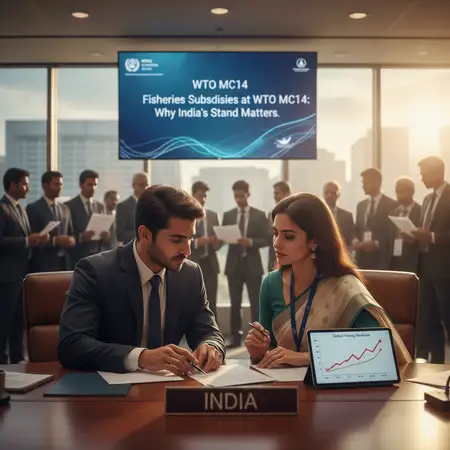
The Global Fish Crisis: Understanding Fisheries Subsidies and Their Impact
Fisheries subsidies are government payments or other forms of support that reduce the cost of fishing or increase the revenue of fishers. These can take many forms: fuel subsidies, tax exemptions, grants for new vessels or gear, port infrastructure development, or even price support. While some subsidies can be beneficial, such as those supporting research or fisheries management, many others are considered harmful. These 'harmful subsidies' directly contribute to overcapacity (too many boats chasing too few fish) and overfishing (catching fish faster than they can reproduce).
The consequences of harmful subsidies are profound and far-reaching. Ecologically, they lead to the collapse of fish stocks, damage marine ecosystems, and threaten biodiversity. Economically, they distort global markets, making it difficult for smaller, less-subsidized fleets to compete. This often disproportionately affects artisanal and small-scale fishers in developing countries, who rely on healthy fish stocks for their daily sustenance and income. Socially, the depletion of fish stocks threatens the livelihoods of millions, exacerbates poverty, and can lead to food insecurity, especially in coastal communities. The United Nations Food and Agriculture Organization (FAO) estimates that about 34% of global fish stocks are overfished, and another 60% are fished at their maximum sustainable levels.
Harmful subsidies are a major driver of this unsustainable trend, estimated to be around USD 35 billion annually, with a significant portion going to large-scale industrial fleets.
The WTO's Decade-Long Quest: From Doha to MC12 and Beyond
The WTO's journey to regulate fisheries subsidies began over two decades ago, stemming from a mandate in the 2001 Doha Ministerial Declaration to clarify and improve WTO disciplines on fisheries subsidies, with a view to their elimination. The goal was to contribute to the sustainability of marine resources. The negotiations proved to be incredibly complex, balancing the diverse interests of fishing nations, from large industrial powers to small island developing states.

After years of deadlock, a significant breakthrough occurred at the 12th Ministerial Conference (MC12) in June 2022. WTO members adopted the Agreement on Fisheries Subsidies, a landmark achievement aiming to prohibit harmful subsidies that contribute to illegal, unreported, and unregulated (IUU) fishing, fishing of overfished stocks, and fishing on the unregulated high seas. This agreement marked the first-ever WTO agreement with an environmental focus and a crucial step towards ocean sustainability.
However, the MC12 agreement was not comprehensive. Key elements, particularly disciplines on subsidies contributing to overcapacity and overfishing (OCOF), were left for future negotiations. Members committed to continuing negotiations with a view to recommending comprehensive disciplines on OCOF subsidies at MC13 (which was held in February 2024 in Abu Dhabi) and subsequent Ministerial Conferences. The ongoing discussions leading up to MC14 are focused precisely on this 'unfinished business' – designing rules for OCOF subsidies and ensuring a fair playing field for all.
MC14: The Critical Juncture for Comprehensive Disciplines
The upcoming MC14 is poised to be a critical juncture for finalizing the remaining aspects of the fisheries subsidies agreement. The primary objective is to establish comprehensive disciplines on subsidies that contribute to overcapacity and overfishing (OCOF). This category of subsidies is the most contentious because it directly impacts the economic viability of fishing operations and involves significant financial outlays by many governments.
Negotiators are grappling with several complex issues: defining what constitutes OCOF subsidies, determining appropriate exemptions, and, most importantly, agreeing on the scope and duration of Special and Differential Treatment (S&DT) for developing and least-developed countries (LDCs). Developed nations often push for broad prohibitions with limited exceptions, arguing that all harmful subsidies, regardless of the country's development status, contribute to the global crisis. Conversely, developing nations, including India, argue that they need policy space to develop their fishing sectors and support their vulnerable artisanal fishers, who have historically contributed minimally to the overfishing problem compared to large industrial fleets from developed countries. The outcome of MC14 will significantly shape the future of global fisheries management and the livelihoods of millions.
India's Maritime Heritage and Vulnerable Fishing Communities
India boasts a vast coastline stretching over 7,500 kilometers, dotted with numerous fishing villages and communities. The fisheries sector is not merely an economic activity; it's a way of life and a significant contributor to the nation's food security. It employs over 14 million people directly and indirectly, predominantly in the artisanal and small-scale sector. These fishers, often using traditional methods and smaller boats, depend entirely on the health of marine ecosystems for their daily catch and income. For many, fishing is a hereditary profession, deeply intertwined with their cultural identity and socio-economic fabric.
The Indian fishing fleet is characterized by a large number of small-scale, traditional vessels, alongside a smaller but growing mechanized sector. While the mechanized sector contributes significantly to export earnings, the artisanal sector is crucial for domestic food supply and supports a vast network of ancillary industries, from net making to fish processing and marketing. The government provides various forms of support to this sector, including fuel subsidies, assistance for motorization, and infrastructure development, aimed at improving the livelihoods of fishers and enhancing their productivity. This support is vital for these communities, many of whom live below the poverty line and have limited alternative employment opportunities.
Any WTO agreement that restricts India's ability to provide such support could have severe socio-economic repercussions for these vulnerable populations.
Key Aspects of India's Stand at WTO MC14: Preserving Livelihoods and Policy Space
India's position at the WTO MC14 negotiations on fisheries subsidies is multifaceted, reflecting its unique socio-economic context and its role as a voice for the developing world. At its core, India advocates for a balanced outcome that promotes sustainability without unduly penalizing developing nations or undermining the livelihoods of its artisanal fishers.
Firstly, India strongly emphasizes the need for robust Special and Differential Treatment (S&DT) provisions for developing countries. It argues that developing nations, particularly those with a large number of low-income, resource-poor, and artisanal fishers, should be allowed to continue providing subsidies for a significant transition period. India has proposed a 25-year exemption for its small-scale artisanal fishers, arguing that their historical contribution to global overfishing has been negligible compared to the large industrial fleets of developed nations. This exemption would allow India to continue supporting its vulnerable communities while they adapt to new regulations and explore alternative livelihoods.
Secondly, India highlights the principle of 'polluter pays' and historical responsibility. It argues that developed nations, which have historically contributed the most to the depletion of global fish stocks through extensive subsidies and industrial fishing practices, should bear a greater burden of responsibility in phasing out harmful subsidies. India believes that the agreement should not create an equal burden for countries that have contributed disproportionately to the problem and those that have not.
Thirdly, India seeks to preserve its policy space to develop its fisheries sector, which is critical for food security and employment. It argues that blanket prohibitions on subsidies, without considering the specific developmental needs and socio-economic realities of developing countries, would be inequitable and counterproductive. India's stand is not against sustainability but for an equitable path to achieving it, one that recognizes the diverse capacities and historical responsibilities of WTO members.
The Socio-Economic Ripple Effect in India: Why This Agreement Matters
The outcome of the WTO fisheries subsidies agreement holds immense socio-economic implications for India. A stringent agreement without adequate S&DT provisions could have a cascading negative effect across the country, particularly in coastal regions.
- Livelihoods at Stake: Millions of artisanal and small-scale fishers in India depend directly on government support, such as fuel subsidies or assistance for equipment modernization, to sustain their operations. Removing or severely restricting these subsidies without viable alternatives could push these communities further into poverty and debt.
- Food Security Concerns: Fisheries are a vital source of protein for a significant portion of the Indian population. Any measure that severely impacts the domestic fishing industry could threaten food security, especially for vulnerable populations who rely on fish as an affordable source of nutrition.
- Regional Economic Impact: Fishing communities often form the backbone of regional economies in coastal states. Restrictions on subsidies could lead to widespread unemployment, migration, and social unrest, impacting the economic stability of these regions.
- Development Goals: India is actively working to modernize its fisheries sector, promote sustainable aquaculture, and enhance the value chain to boost exports and improve fisher incomes. An overly restrictive WTO agreement could impede these developmental goals, limiting India's ability to invest in necessary infrastructure and capacity building.
For job seekers interested in government roles related to fisheries, marine science, or rural development, understanding these policy debates is crucial. Government bodies like the Department of Fisheries, Ministry of Fisheries, Animal Husbandry & Dairying, and various state-level fisheries departments are directly involved in implementing policies that stem from such international agreements. Opportunities in these sectors, from research to extension services, are intrinsically linked to the health and regulation of the fisheries industry. You can explore relevant government job opportunities and exam updates on /sarkari-result">TrueJobs.co.in.
Beyond Borders: India's Leadership in the Developing World
India's stand on fisheries subsidies at the WTO extends beyond its national interests; it resonates deeply with the concerns of other developing nations and LDCs. Many of these countries share similar challenges: large populations dependent on small-scale fishing, limited financial resources to transition to new fishing practices, and a historical contribution to overfishing that is minimal compared to developed countries.
By advocating for robust S&DT, a long transition period, and the principle of historical responsibility, India positions itself as a leader and a voice for equitable global trade rules. Its arguments highlight the need for a nuanced approach that considers socio-economic realities alongside environmental imperatives. This solidarity among developing nations strengthens their collective bargaining power within the WTO, ensuring that the final agreement is not solely dictated by the interests of developed countries. The outcome of these negotiations will set a precedent for how global trade rules address environmental sustainability while accommodating the developmental aspirations and poverty alleviation efforts of the Global South.
A fair and equitable agreement is crucial not only for sustainable fisheries but also for fostering trust and cooperation in the multilateral trading system.
Navigating the Future: India's Strategy and the Path Forward
As MC14 approaches, India's strategy will likely involve continued diplomatic engagement, coalition-building with like-minded developing countries, and a steadfast commitment to its core demands for S&DT and policy space. The negotiations are expected to be intense, requiring flexibility and strategic maneuvering from all parties.
India will need to balance its national interests with the broader goal of marine sustainability. This could involve proposing innovative solutions for monitoring and enforcement that are less burdensome for small-scale fishers, exploring alternative livelihood programs, and investing in sustainable aquaculture. The government's focus will be on ensuring that any agreement allows India to continue supporting its vulnerable fishing communities while simultaneously promoting responsible fishing practices.
The path forward is complex, but India's consistent advocacy for an equitable and pragmatic approach offers a ray of hope for a global agreement that truly balances environmental protection with socio-economic development. The success of MC14 in finalizing comprehensive disciplines on fisheries subsidies will be a testament to the WTO's ability to address pressing global challenges through multilateral cooperation.
Put this advice into practice
The ongoing negotiations at the WTO regarding fisheries subsidies are a testament to the intricate relationship between global trade, environmental sustainability, and socio-economic development. India's unwavering stand at MC14, championing the cause of its millions of artisanal fishers and advocating for meaningful Special and Differential Treatment, is not just a national plea but a powerful voice for the entire developing world. It underscores the critical need for an equitable agreement that recognizes historical responsibilities, respects developmental needs, and provides adequate policy space for nations striving to uplift their vulnerable populations.
The outcome of these discussions will have profound implications for marine ecosystems, global food security, and the livelihoods of countless individuals. For India, securing an agreement that allows it to continue supporting its small-scale fishers while transitioning towards more sustainable practices is paramount. As TrueJobs.co.in, we believe that understanding such critical policy debates is essential for citizens and aspiring government employees alike, as these decisions shape the very fabric of our nation's future and the opportunities within various government sectors.
Frequently Asked Questions
Q1: What are fisheries subsidies and why are they a problem?
A1: Fisheries subsidies are financial or other forms of support provided by governments to their fishing industry. While some are beneficial, many are 'harmful' because they encourage overcapacity (too many boats) and overfishing (catching too many fish), leading to the depletion of marine resources, damage to ecosystems, and distortion of global markets.
Q2: What was achieved at WTO MC12 regarding fisheries subsidies?
A2: At the 12th Ministerial Conference (MC12) in 2022, WTO members adopted the Agreement on Fisheries Subsidies. This landmark agreement prohibits subsidies contributing to illegal, unreported, and unregulated (IUU) fishing, fishing of overfished stocks, and fishing on the unregulated high seas. However, disciplines on subsidies contributing to overcapacity and overfishing (OCOF) were left for future negotiations.
Q3: What is India's main demand at WTO MC14 regarding fisheries subsidies?
A3: India's main demand is for robust Special and Differential Treatment (S&DT) for developing countries. It advocates for a significant transition period, proposing a 25-year exemption for its small-scale artisanal fishers from certain subsidy prohibitions, arguing that they have contributed negligibly to global overfishing and need policy space to support their livelihoods and develop their sector.
Q4: How does the WTO fisheries subsidies agreement impact Indian fishers?
A4: A stringent agreement without adequate S&DT could severely impact millions of Indian artisanal and small-scale fishers who rely on government support (like fuel subsidies) for their livelihoods. It could threaten food security, lead to unemployment in coastal regions, and hinder India's developmental goals for its fisheries sector.
Q5: Why is India's stand important for other developing nations?
A5: India's stand resonates with many developing countries and LDCs that face similar challenges regarding their fishing communities and developmental needs. By advocating for equitable S&DT and the principle of historical responsibility, India acts as a crucial voice, strengthening the collective bargaining power of the Global South within the WTO and striving for a fair and balanced global trade agreement.
Related Resources
- Sarkari Naukri in Agriculture & Allied Sectors
- Understanding Indian Civil Services (ICS)
- Latest Government Schemes for Youth Employment
TrueJobs Editorial Team
TrueJobs editorial desk
This article is prepared from the sources referenced in the guide and reviewed for clarity, links and dated information. Read our editorial and corrections policy.
Continue This Topic
Follow the closest earlier and newer coverage so older archive posts keep real contextual crawl paths.
Investment Facilitation for Development Agreement: Meaning & Status
Dive into the Investment Facilitation for Development (IFD) Agreement. This article breaks down its meaning, objectives, and what it means for India's economic future. An essential read for government job aspirants.
WTO E-commerce Moratorium: Impact on Your Competitive Exam Prep
Preparing for competitive exams like UPSC or SSC? Understand the WTO E-commerce Moratorium, India's stance, and its impact. This guide is essential for your prep.
Read Next

Investment Facilitation for Development Agreement: Meaning & Status

WTO E-commerce Moratorium: Impact on Your Competitive Exam Prep

India-UK CETA 2026: What It Is & Why It Matters for Exams

WTO MC14 Yaoundé 2026: Key Issues, Outcomes & Exam Facts
Explore Topics
Perfect Your Resume
Use our AI-powered Resume Builder to create ATS-optimized resumes.
AI Resume Builder